
China gets the automotive headlines in 2026. The aggressive, allegedly heavily-subsidised cheap car export strategy has reshaped global production economics. But it is the South Korean carmakers, Hyundai, Kia and even KGM, formerly SsangYong, that have come of age this decade through engineering excellence, bold design, visionary product planning and sheer value for money. Korea is the actual fear of the rest of the world. Here is why.
The pattern is impossible to miss once you look. Every year since 2020, a Korean vehicle has stood out above all others in some way, embarrassing what Japan, Germany, France, Italy and America offered. Australian buyers have been responding accordingly. Hyundai and Kia between them now own multiple top-five segment positions and the trend is accelerating, not stalling.
Korea won the EV technology race nobody noticed
China dominates the electric vehicle segment in many parts of the world with extraordinarily cheap models that have democratised the technology. But the Hyundai Motor Group, which includes Kia, makes the best affordable EVs.
The Hyundai Ioniq 5 and Kia EV6 were the first mainstream EVs to deliver 800-volt charging architectures, vehicle-to-load capability, and other advancements that were previously the provenance of Porsche-level price points. HMG invested billions in electrification well before most mainstream rivals during the 2010s. The early Hyundai Ioniq hatch, the Kona Electric and the Kia Niro EV gave Korea the operational experience to deliver next-generation models when the market actually arrived.
The Ioniq 5 N is the proof point. A 478kW grand-touring hot EV that genuinely redefines what an electric performance car can do, complete with simulated combustion noises, simulated gear shifts and a chassis that takes track abuse for hours. No European brand has matched it yet. The Tesla Model 3 Performance gets close on numbers but not on driving experience.
The Ioniq 5 is the car of the decade
The Ioniq 5 has been on sale since 2021 and remains a leading candidate for car of the decade. It still turns heads with crisp, timeless design that references Hyundai's 1970s Pony. The interior packaging is the best in its segment. The driving experience has a loping, relaxed refinement that embarrasses most other SUVs of any drivetrain type.
For Australian buyers shopping a mid-size electric SUV, the Ioniq 5 remains the benchmark. Tesla Model Y outsells it on raw volume. The Ioniq 5 outsells the Model Y on owner satisfaction and design longevity. The cars solve different problems for different buyers.
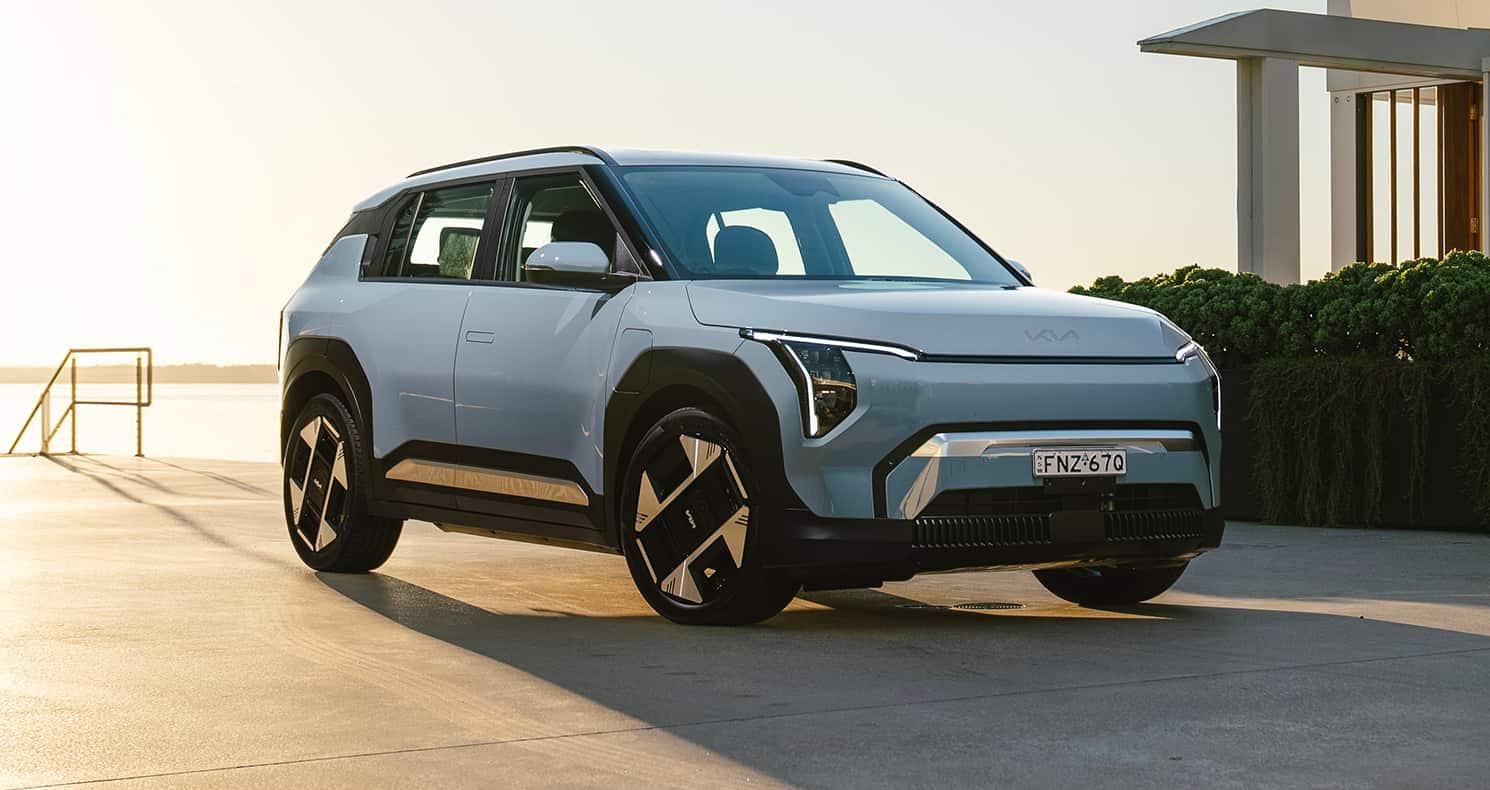
The Kia EV3 is the small SUV EV to beat in 2026
In 2026, the Kia EV3 is arguably the best small SUV EV for the money on a number of fronts. Areas where Chinese vehicles often struggle, including unintrusive advanced driver assistance systems, user-friendly vehicle controls, regional steering and suspension tuning, and Australia-wide servicing access, the EV3 simply nails.
This is the under-rated part of the Korean story. Hyundai and Kia tune their cars specifically for Australian conditions. Suspension, steering, ADAS calibration and software localisation all happen with Australian engineering input. Most Chinese rivals deliver Australian-market cars with Chinese-spec calibration that requires adapting. The EV3 doesn't require adapting. It just works.
The Kia Stinger spirit lives on in the EV6
Everybody remembers the Kia Stinger of 2017, an ambitious but ultimately doomed final attempt at a large, rear-drive family sedan in the mould of the Holden Commodore and Ford Falcon. A glorious failure. It cemented Kia a place in the hearts of performance family sedan fans.
The spirit lives on in the Kia EV6, the just-as-talented but far-sleeker cousin to the Ioniq 5. The EV6 melds the packaging, practicality and performance of a VF SS or Falcon XR6 Turbo within an EV proposition. It is the closest spiritual successor to the Australian large performance sedan that any global manufacturer has built.
Millennials and Gen Z buyers are increasingly rejecting traditional SUVs as daggy. Kia is poised to step up with a cool, sleek, sophisticated liftback EV6 that feels more mature and more charming than a Tesla Model 3. The market is moving Kia's way.
The Kia Picanto holds the floor on price
For most of this decade, it has been Korea that has offered Australia's cheapest new car in the Kia Picanto. Yes, it is old and one of the smallest on the market. But the Picanto still offers genuine value at a sub-$20,000 driveaway price point that the Chinese brands have only recently begun matching.
The Picanto matters because it is the entry point to the Kia ownership experience. Younger buyers who start with a Picanto often graduate to a Cerato, then a Sportage, then an EV6 or Sorento. Brand loyalty in Australia is built at the affordable end of the lineup. China is just starting to play that long game.
KGM is the wildcard
The formerly SsangYong KGM has spent the last few years rebuilding credibility. The Musso ute and the incoming Musso EV give the brand a genuine path back into Australian tradie consciousness. Pricing will be aggressive. Specification will be generous. The challenge is dealer network coverage, which remains thinner than Hyundai and Kia.
Watch the Musso EV closely. If KGM can deliver a sub-$60,000 driveaway electric ute with credible range and a working warranty, the brand suddenly becomes interesting to fleet buyers who can't justify the price premium of the Ford F-150 Lightning or BYD Shark 6 PHEV.
What Australian buyers should do with this
If you are shopping a mainstream new car in Australia in 2026, the Korean options should be on every shortlist. Hyundai i30 against Mazda 3. Kia Sportage against Toyota RAV4. Ioniq 5 against Tesla Model Y. EV3 against BYD Atto 3. EV6 against BMW i4. Every one of those cross-shops favours the Korean entry on objective value, even if subjective brand preference might pull in other directions.
Negotiate hard. Hyundai and Kia dealers are usually flexible because they have strong allocation and want to keep market share growing. EOFY 2026 will deliver some of the sharpest Korean pricing of the decade.
Carseekers tracks every Hyundai, Kia and KGM model price move across Australia. Korea is winning the decade quietly. Australian buyers are the beneficiaries.
Considering finance for your next car? Loanseekers can help you explore car loan options.
The finer details
Your questions answered.
Why are Korean cars considered better than Chinese cars in 2026?
Korean carmakers like Hyundai and Kia have decades of accumulated engineering credibility, established Australian dealer networks, regional suspension and ADAS tuning, and proven long-term reliability data. Chinese brands offer aggressive value but typically lack the established service infrastructure and Australian-specific calibration.
What is the best Korean EV to buy in Australia in 2026?
It depends on size and budget. The Kia EV3 is the small SUV EV benchmark. The Hyundai Ioniq 5 remains the best mid-size electric SUV. The Kia EV6 is the choice for buyers wanting a sleek, performance-leaning liftback EV. All three offer Australian-specific tuning that most Chinese rivals don't.
How much does the Kia Picanto cost in Australia?
The Kia Picanto remains one of Australia's cheapest new cars, with driveaway pricing typically under $20,000. It is the entry point to the Kia range and is targeted at young buyers, first-car shoppers and downsizers prioritising low purchase and running costs.
Is the Ioniq 5 N better than the Tesla Model 3 Performance?
On engineering depth and driving experience, the Ioniq 5 N is unmatched in the affordable performance EV segment. It introduces simulated gear changes, simulated combustion noises and a chassis that sustains track abuse for hours. The Tesla Model 3 Performance is faster in a straight line on paper but lacks the engagement of the Ioniq 5 N.
What is KGM and why does it matter?
KGM is the rebranded SsangYong. The brand is rebuilding Australian credibility through the Musso ute and the incoming Musso EV. Pricing will be aggressive and specification generous, but dealer network coverage remains thinner than Hyundai or Kia. Worth watching, particularly for fleet buyers.
Should I buy a Korean car or a Chinese car in 2026?
It depends on priorities. Korean cars offer mature dealer networks, established resale value data, and Australian-tuned dynamics. Chinese cars offer aggressive entry pricing and rapidly improving feature sets. For long-term ownership confidence, Korean still wins. For pure value-driven short-term purchase, Chinese options are credible alternatives.