The knock on electric vehicles has always been the same: fast in a straight line, boring everywhere else. That criticism had some merit in the early days of mass-market EVs, but the landscape has shifted dramatically. There are now several electric cars on sale in Australia that deliver genuine driving engagement.
Here's what buyers need to know about the EVs that actually reward the person behind the wheel.
The Key Update
The performance EV segment in Australia has grown rapidly. Established brands like Porsche, Hyundai, Ford and Mercedes-AMG now offer electric models that have been specifically engineered for driving enjoyment, not just straight-line acceleration.
The Hyundai Ioniq 5 N stands out as the most talked-about entry. With 448kW and 770Nm from its dual-motor setup, it can rotate on the throttle like a rear-drive sports car, even though it's technically a crossover SUV. Priced at $115,000 before on-road costs, it undercuts the Porsche Taycan GTS by roughly $175,000 while offering a seven-year warranty that actually covers non-competitive track use.
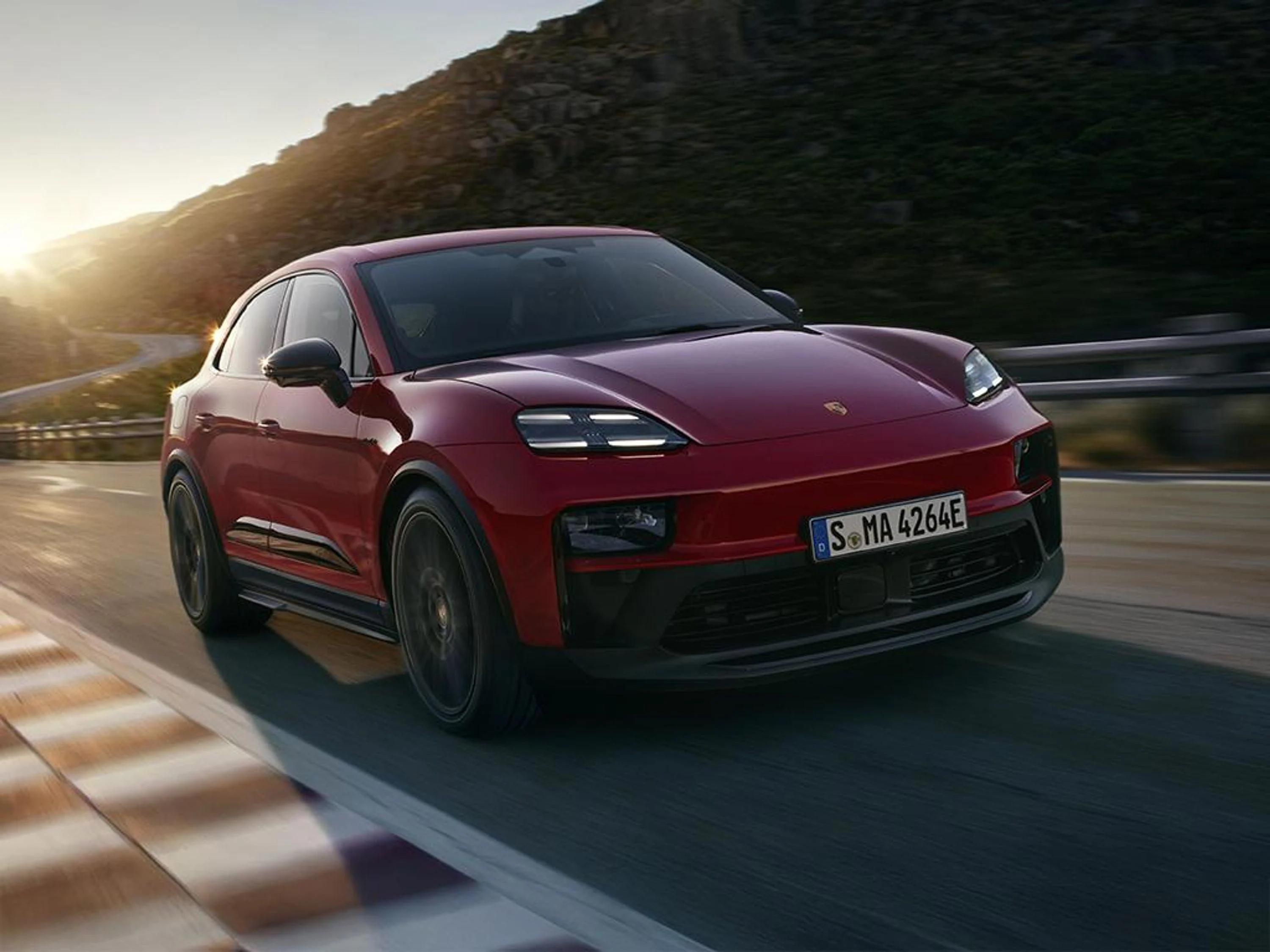
The Porsche Macan Electric and Taycan remain the benchmarks for chassis tuning in the EV world. They feel like proper Porsches, with steering weight and body control that justify the premium. The Ford Mustang Mach-E has also surprised buyers with its composed ride and well-balanced chassis.
At the more accessible end, the MG4 XPower packs serious performance into a sub-$50,000 package, while the Abarth 500e brings character and personality that most city-focused EVs completely lack.
Why This Matters
For buyers who care about how a car drives, the expanding performance EV market means there are now real choices at multiple price points. You no longer have to spend Porsche money to get an EV that does more than commute quietly.
This also affects pricing dynamics. As more performance EVs enter the Australian market, competition is intensifying. The Ioniq 5 N, for example, has forced other brands to reconsider their pricing, because Hyundai has set a new benchmark for performance per dollar in the EV space.
If you're shopping in the $100,000-plus bracket and performance matters to you, the EV options now rival combustion alternatives on driving enjoyment while offering dramatically lower running costs.
The Best Time to Act
Performance EVs tend to hold their pricing well at launch, but discounts appear once initial demand stabilises. The Ioniq 5 N is still relatively new to the Australian market, so don't expect big dealer flexibility just yet. However, the broader EV market is seeing increased promotional activity, particularly from brands trying to meet emissions targets.
Watch for end-of-financial-year campaigns in June 2026. Manufacturers with aggressive EV sales targets often release their strongest incentives during this period. The Porsche Macan Electric and Taycan may not see headline discounts, but Porsche dealers have historically been more flexible on accessories, servicing packages and delivery charges during target periods.
The MG4 XPower is already competitively priced, but MG regularly runs driveaway promotions that bring the effective price down further.
Smart Buyer Moves
Use Carseekers to get pricing across multiple dealers before you commit. Even on vehicles with strong demand, dealer-to-dealer pricing can vary by several thousand dollars depending on stock levels and monthly targets.
If you're considering the Ioniq 5 N, ask about demonstrator stock. Early buyers who placed orders at launch sometimes flip their allocations, and these near-new units can save you the wait and often come with negotiable pricing.
For the MG4 XPower and Abarth 500e, check whether your state offers EV stamp duty exemptions or registration discounts. These incentives vary by state but can reduce your effective purchase price by $2,000 to $5,000 depending on where you live.
Always factor in total cost of ownership. EVs with lower purchase prices often deliver the biggest savings over five years when you account for electricity versus fuel, reduced servicing requirements and lower brake wear.
Bottom Line
The idea that EVs are only good for quiet commuting is outdated. There are now electric vehicles on sale in Australia that deliver the kind of driving excitement that was previously reserved for high-performance combustion cars.
Whether your budget is $45,000 or $300,000, there's an EV that will put a smile on your face. Compare your options through Carseekers, get competitive quotes, and take advantage of the growing competition in this space.
Considering finance for your next car? Loanseekers can help you explore car loan options.
The finer details
Your questions answered.
Which electric cars are the most fun to drive in Australia?
The Porsche Taycan, BMW i4 M50, Tesla Model 3 Performance, Kia EV6 GT, and BYD Yangwang U9 represent the most driver-focused EVs available or arriving in Australia. The Taycan is the most consistently praised for driving engagement. At more accessible price points, the Kia EV6 GT and Tesla Model 3 Performance deliver genuine performance thrills.
Do electric cars handle well compared to petrol sports cars?
Modern electric performance cars handle exceptionally well due to low centres of gravity from floor-mounted batteries and instant torque for precise throttle response. The main trade-offs are heavier weight and the absence of engine sound feedback. Models like the Porsche Taycan and BMW i4 M50 are genuinely engaging on Australian roads and mountain passes.
Is the Tesla Model 3 Performance worth buying in Australia for driving fun?
Yes. The Tesla Model 3 Performance offers supercar-level acceleration, balanced chassis dynamics, and an over-the-air update capability that has improved the car since launch. At its price point in Australia it represents accessible performance that rivals more expensive petrol sports cars on raw numbers, though the driving feedback is different in character.
What is the most affordable fun electric car to buy in Australia?
The MG 4 XPOWER is among the most affordable performance EVs in Australia, offering dual-motor all-wheel drive and genuine sports car acceleration at a sub-$50,000 price. The BYD Seal AWD and standard Tesla Model 3 Long Range also offer strong performance at accessible price points with good resale prospects.
Are electric sports cars cheaper to run than petrol sports cars in Australia?
Significantly cheaper on fuel. An electric performance car driven 15,000km per year costs roughly $700 to $900 in electricity at home charging rates, compared to $3,500 to $6,000 in petrol for a performance-equivalent petrol car. Servicing costs are also lower. The higher purchase price is the main financial barrier, not running costs.
Will electric cars eventually replace petrol sports cars in Australia?
For everyday performance driving, EVs are already competitive and improving. For enthusiasts who value the sensory experience of internal combustion — sound, smell, mechanical connection — petrol sports cars will retain a strong following. The collector value of performance ICE vehicles is likely to increase as new examples become rarer, following the trajectory of manual transmission cars.