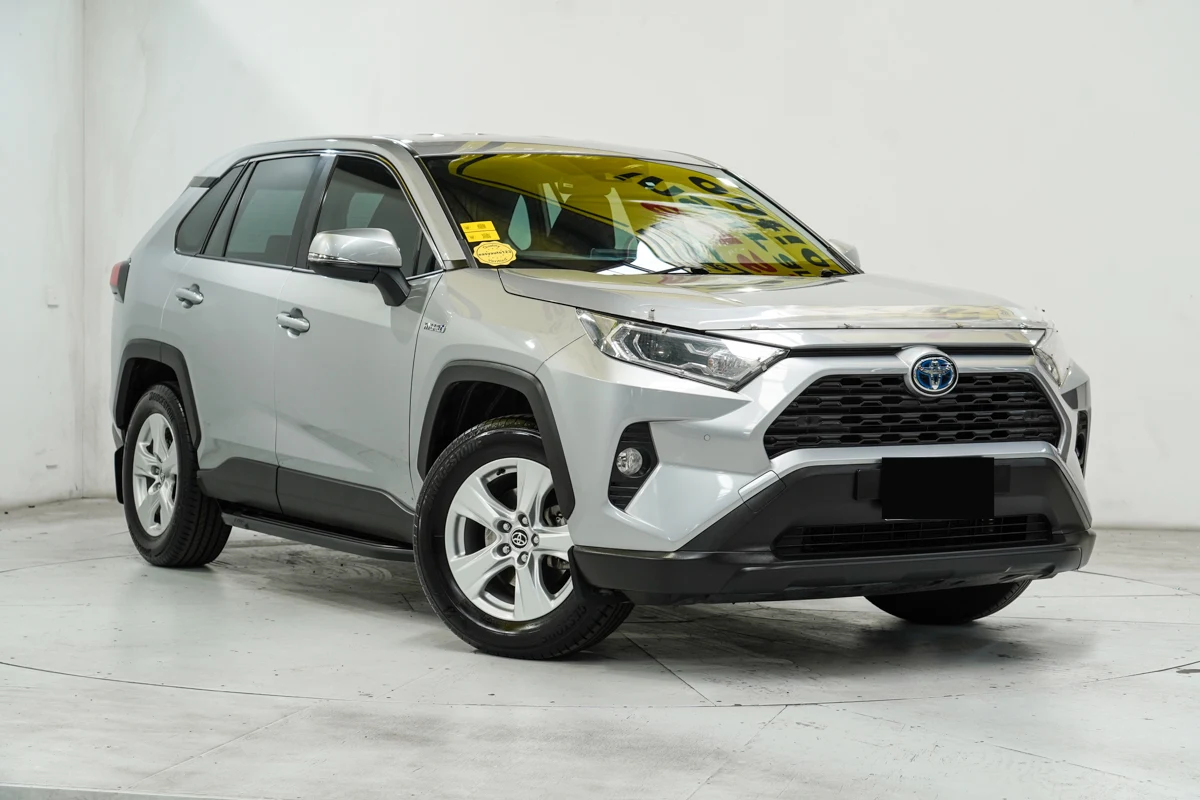

The engineer in charge of the new Toyota RAV4 has admitted he secretly drove a Chinese-built car as part of developing Toyota's next-generation family SUV. His verdict: the software and autonomous driving tech is impressive, but Toyota is not going to copy it if it compromises the brand's reputation for quality and reliability. For Australian buyers, this is the clearest signal yet that the established Japanese giant is taking the Chinese threat seriously, even if it will not admit it openly.
A Toyota engineer driving a BYD
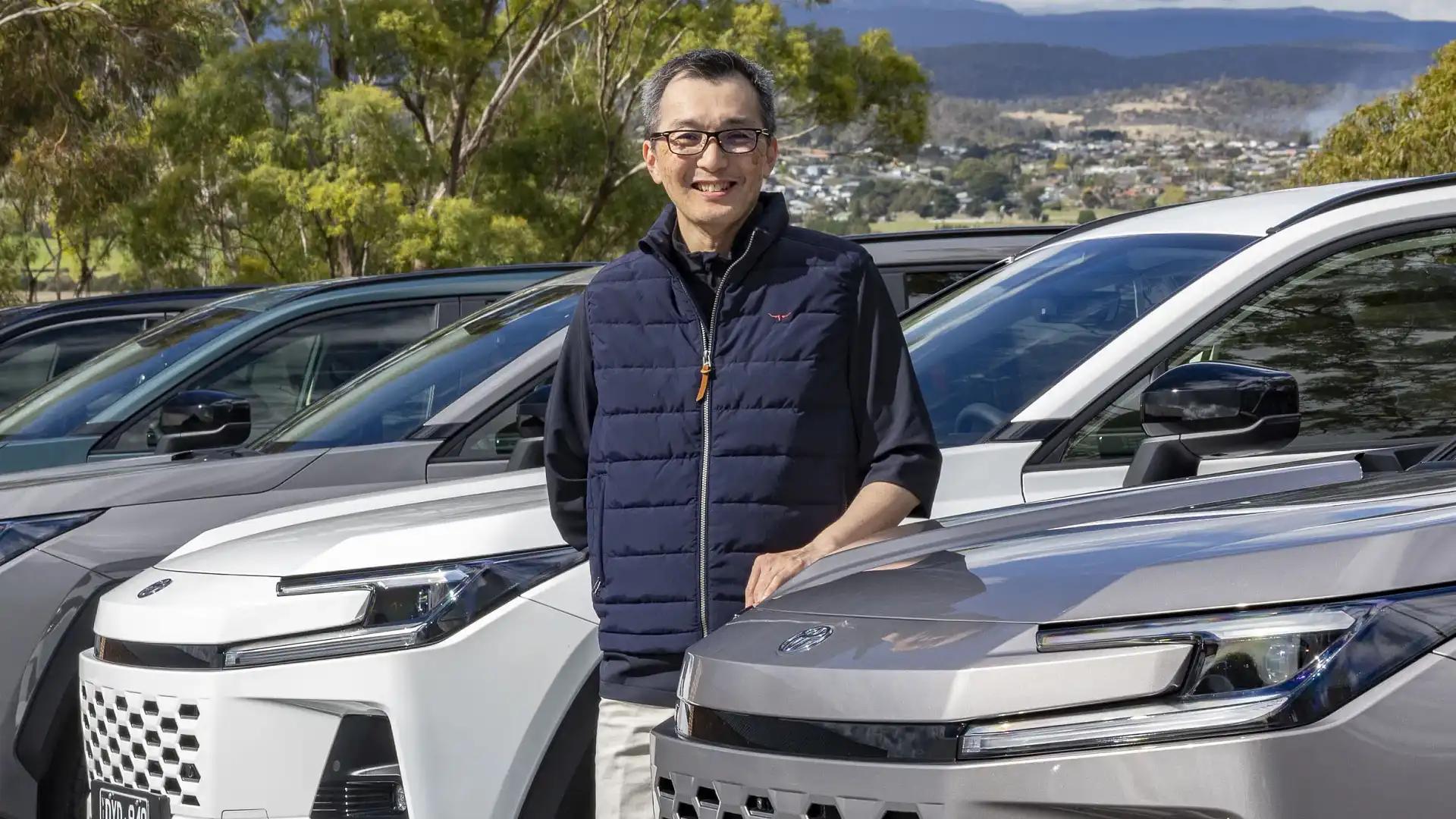
Toyota RAV4 chief engineer Yoshinori Futonagane told Drive through an interpreter that he has personally driven a Chinese car as part of the new SUV's development program.
He could not reveal the model, but BYD is a strong candidate. It is the main Chinese brand selling cars in Japan, which means Toyota could easily acquire one for benchmarking. BYD is also the world's largest Chinese carmaker by volume.
"Their software looks very advanced, they build a lot into that. But to be honest, their cars aren't bad either. They're actually not too bad," Futonagane said through the interpreter.
"I have to say their autonomous driving, [their] self-driving technology is amazing, incredibly advanced."
It is understood that Futonagane's answer was more positive in the original Japanese, but translated to "not too bad" in English. That kind of reserved language from a Toyota engineer is unusually flattering when it comes from a country where understatement is the norm.
Toyota will not copy, but it is watching
Futonagane was clear that Toyota will not chase Chinese brands if doing so compromises core priorities.
"We're focused, we're watching that very closely, but from our point of view, we're not going to stray from our priorities of safety, security and quality," he said.
"And so we have to try and put all of those ideas they've got in China through that filter, and we have to say, 'Look, it's amazing, but what could we use?' It's not necessarily everything."
This is exactly the right framing for Toyota. The brand's competitive moat is not the latest infotainment software or the flashiest LiDAR-enabled driver assistance. It is the durability of the HiLux, the resale of the Kluger, and the absolute certainty that the LandCruiser you buy today will start every morning for the next 25 years.
Toyota CEO has already sounded the alarm
Futonagane's measured comments contrast with the bluntness of former Toyota CEO Koji Sato. In March, before being succeeded by Kenta Kon in April, Sato told a supplier conference: "Unless things change, we will not survive. I want everyone to acknowledge this sense of crisis."
That is one of the strongest competitive warnings any Toyota CEO has issued in the modern era. Sato also announced Toyota would scrap what it felt were excessive quality standards, freeing up production efficiency. One example: 10,000 vehicle wiring harnesses were being scrapped each month due to plastic discolouration that did not affect function.
The broader message from Toyota's leadership has been consistent. The brand has the engineering and the manufacturing scale to compete, but it needs to move faster and waste less.
Mitsubishi engineer says similar
Futonagane is not alone. Mitsubishi engineering fellow Kaoru Sawase opened up to Australian media at the Tokyo motor show last year on his verdict after driving the BYD Shark 6 plug-in hybrid ute on Mitsubishi's tough Tochigi off-road proving ground.
"I have [had an] experience to drive the BYD vehicle. Especially on our very tough course, on the Tochigi proving ground, we have a very special off-road course, and I drive such a car," Sawase said, partially through a translator.
His verdict on the Shark 6's off-road capability was more reserved than Futonagane's was on Chinese software. "At this moment, the BYD Shark and other vehicles, the off-road capability is not so high at this moment. They can climb uphill, but it doesn't last very long. For a while they climb it up, but they then stop; the system protection kicks in. My feeling is that the electrified off-road vehicle development is a challenge."
But Sawase also acknowledged what Chinese engineers do well. "On the other hand, we have a lot to learn from the Chinese manufacturers in a sense that, until the protection system kicks in, the performance for the electric motor controlling the tyres is quite good until the heat goes up and the system stops. The performance and the control is quite good, and we have to learn from that."
What this means for the new RAV4
The new RAV4 is one of Toyota's most important global product launches in years. Australia has been the RAV4 Hybrid's biggest per-capita market since the third-generation launched, and Toyota Australia has spent years managing supply constraints rather than demand.
Futonagane's comments suggest the new RAV4 will pick up some software lessons from Chinese rivals (likely in the infotainment and connected-services experience) while staying conservative on hardware-heavy upgrades like LiDAR-equipped autonomous driving. That fits Toyota's broader pattern of being a late adopter of leading-edge tech, then perfecting it once the supply chain is mature.
For Australian RAV4 buyers, expect a more polished cabin experience, faster infotainment, better connected-car features and a longer EV-only mode on the plug-in hybrid version. Expect Toyota to deliberately undershoot Chinese rivals on raw self-driving capability, because the brand's risk tolerance for level-3 ADAS failures is low.
Buyer implications
This story is worth Australian buyers paying attention to for one practical reason. Toyota has not historically admitted, in public, that the established brands have catching up to do. The fact a senior Toyota engineer is on the record saying Chinese software and autonomous driving is 'incredibly advanced' tells you the competitive dynamic in 2026 is fundamentally different from 2022.
If you are buying a new family SUV now, your shortlist should genuinely include a BYD Sealion 6 or 7, a GWM Haval H6, an MG HS, alongside the Toyota RAV4 Hybrid. Even Toyota's own engineers are admitting the Chinese rivals have caught up on tech.
Where Toyota still pulls ahead is the after-sale experience: dealer network density, parts availability, resale value and the certainty of a 10-plus year ownership. Those are not flashy spec-sheet items, but they are what 70 per cent of repeat Toyota buyers cite as the reason they bought another one.
What to do if you are shopping today
If you want the next RAV4, wait. The new model is due in Australia later in 2026 and will represent a significant generational upgrade. Even with current RAV4 stock available at sharp dealer prices, the gap between today's car and the new one is going to be substantial.
If you cannot wait, the current RAV4 Hybrid remains an excellent buy, particularly at the recently-discounted EOFY drive-away prices Toyota Australia has been offering. Dealer wait times have shortened from 12 to 18 months down to two to four months for most variants.
If you are open to Chinese alternatives, the BYD Sealion 6 PHEV is the closest functional rival to the RAV4 PHEV, at a meaningfully lower price. The GWM Haval H6 Hybrid sits below the RAV4 Hybrid in price and has been steadily improving in build quality.
For the latest pricing across all of these alternatives, Carseekers tracks Australian drive-away offers across major brands and updates them daily.
Considering finance for your next car? Loanseekers can help you explore car loan options.
The finer details
Your questions answered.
What did the Toyota RAV4 engineer say about Chinese cars?
Toyota RAV4 chief engineer Yoshinori Futonagane confirmed through an interpreter that he had secretly driven a Chinese car as part of developing the next RAV4. He described the software as 'very advanced' and the autonomous driving as 'incredibly advanced', while saying Toyota will not copy approaches that compromise quality.
Will the new Toyota RAV4 use Chinese-style software?
Toyota's RAV4 chief engineer has indicated the brand is watching Chinese software developments closely but will filter ideas through Toyota's quality and safety priorities. Expect the new RAV4 to pick up some infotainment and connected-services improvements, but not Chinese-style level-3 autonomous driving systems at launch.
When does the new Toyota RAV4 arrive in Australia?
Toyota Australia has not confirmed an exact date, but the new RAV4 is expected to arrive in Australian showrooms later in 2026. Pricing and specifications will be released closer to launch. Dealer wait times on the current RAV4 Hybrid are around two to four months, which gives some buyers reason to wait.
Is the BYD Sealion 6 a real alternative to the Toyota RAV4?
Yes. The BYD Sealion 6 PHEV competes directly with the Toyota RAV4 Plug-in Hybrid on size, segment and powertrain, at a significantly lower price point. Toyota's chief engineer's own admission that Chinese software is more advanced suggests the dealer-floor experience may favour BYD on tech, while Toyota retains the edge on resale and dealer support.
Why did Toyota's previous CEO warn about Chinese competition?
Former Toyota CEO Koji Sato said in March 2026, before being succeeded by Kenta Kon in April, that 'unless things change, we will not survive', describing the competitive situation as a 'sense of crisis'. The statement was made at a supplier conference, with Sato announcing Toyota would scrap excessive quality standards that wasted production efficiency.
Should I buy a Toyota RAV4 now or wait for the new one?
If you can wait until late 2026 or early 2027, the new RAV4 is a significant generational upgrade with improved infotainment, longer PHEV electric range and better cabin tech. If you need a car now, the current RAV4 Hybrid remains excellent value and dealer wait times have dropped to two to four months. Chinese alternatives like the BYD Sealion 6 are also worth shortlisting at the moment.