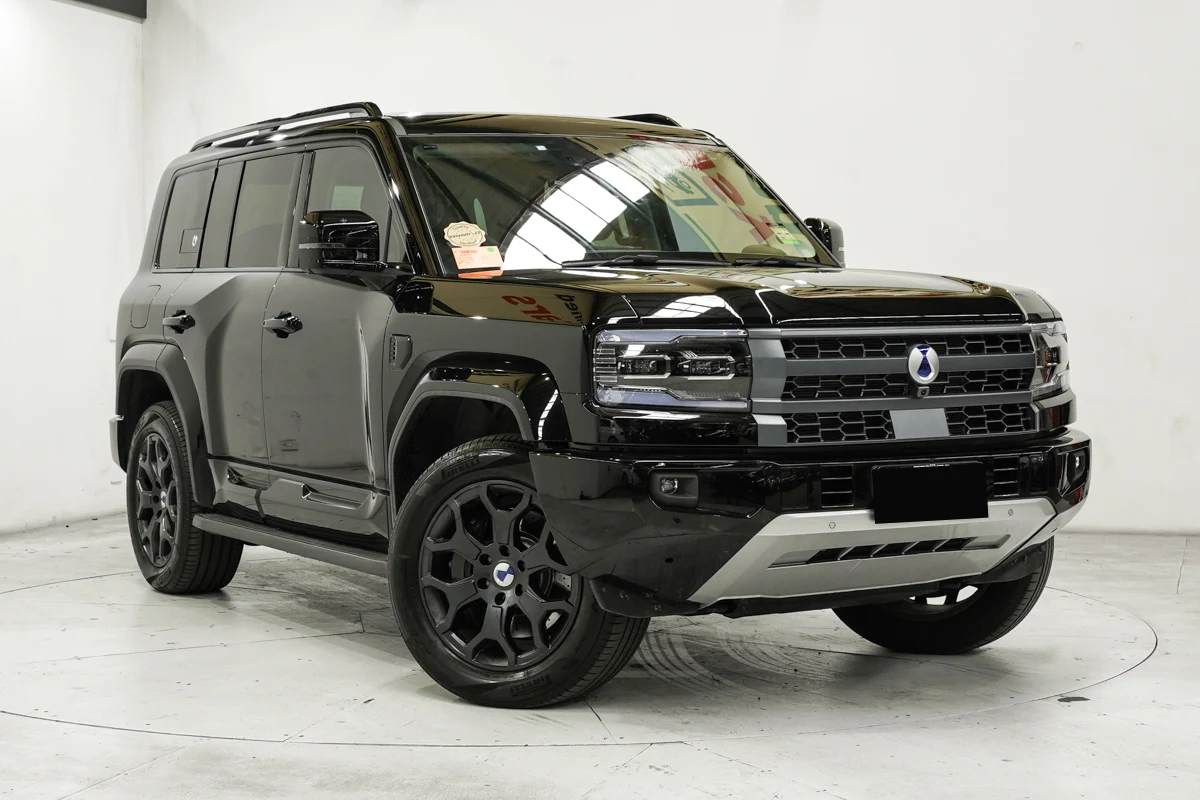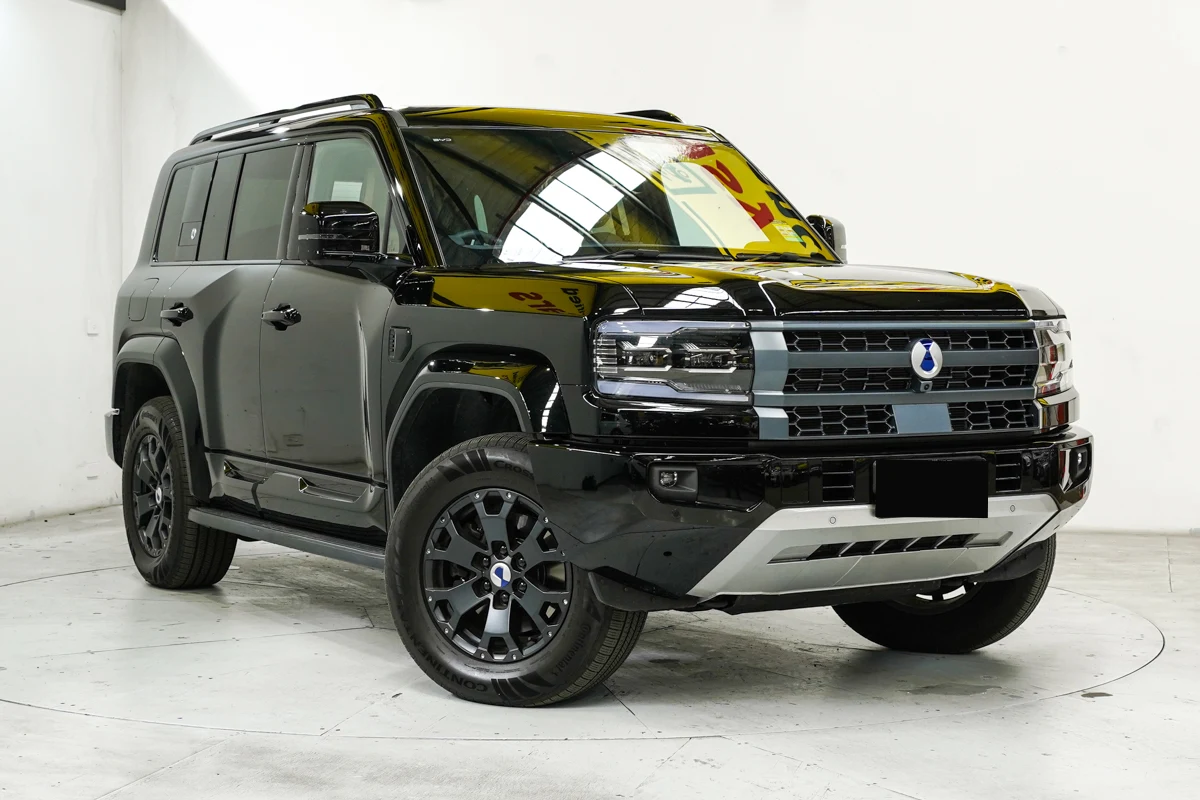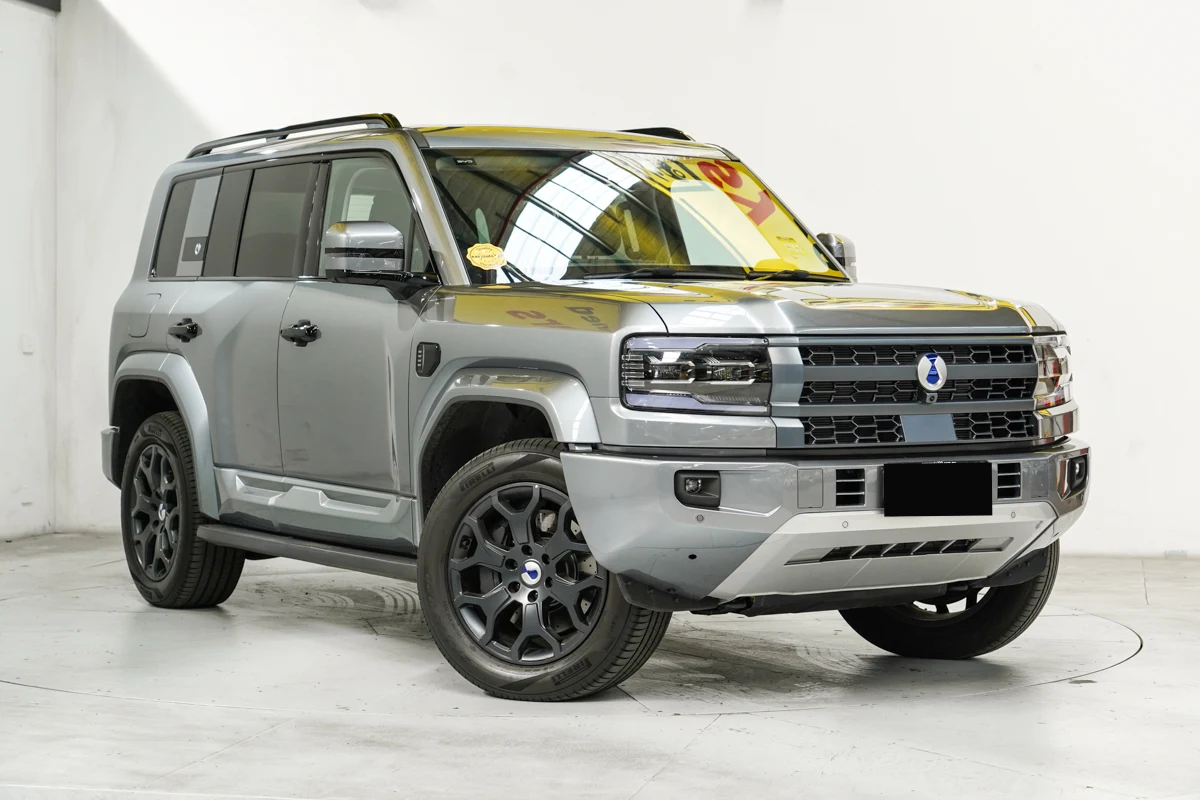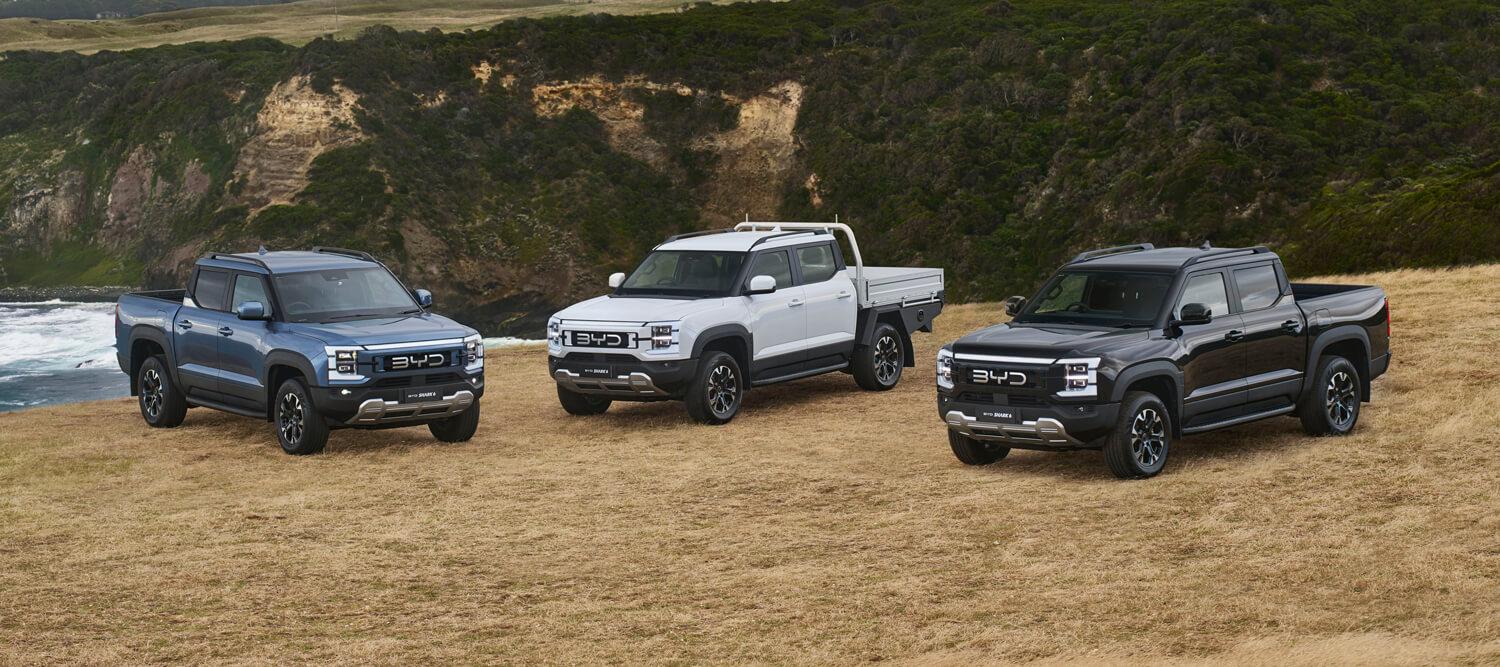

Denza is a premium sub-brand of BYD and the Denza B5 is best thought of as the BYD Shark 6's posher, tougher cousin. Where the Shark 6 is a thoroughly competent all-wheel drive ute that suits light to moderate off-roading, the B5 is a 4WD wagon with a low-range gear-set on the rear axle and diff locks front and rear.
Those stark mechanical differences set the two apart in terms of effectiveness in off-road scenarios. But it does not mean the Shark 6 is woeful off-road. It is not. It is simply that the B5 is much better.
For Australian buyers eyeing a PHEV ute and wondering what comes next, the B5 is a preview of where BYD is heading. Bigger, more capable, more premium, and considerably more expensive than the Shark 6 we know.
What the Denza B5 actually is
The B5 is a luxury 4WD wagon with 16 drive modes, a low-range gear-set, and twin lockers. It shares the same DMO platform, short for Dual Mode Off-road, as the Shark 6, and uses the same 1.5-litre turbocharged four-cylinder plug-in hybrid system paired with dual electric motors.
In the B5 those outputs climb to 425kW and 760Nm. The current Shark 6 makes 321kW and 650Nm. The updated Shark 6 due soon will use a 2.0-litre turbo engine and dual motors for a claimed 350kW and 700Nm. Even the new Shark numbers fall short of the B5.
Where the B5 separates itself is in the off-road hardware. A low-range gear-set on its rear axle, front and rear diff locks, electronic torque vectoring at the front, and well-calibrated off-road traction control. This is a genuine, hardware-equipped 4WD wagon, not an AWD with marketing speak.
Why the Shark 6 cannot match it off-road
The Shark 6 does not have 4WD. It does not have high-range or low-range gearing. It does not have any locking differentials. It does not even have a driveshaft connecting the rear wheels.
The Shark is essentially an all-wheel drive SUV whose off-road performance hinges on electronic traction control. It has a single-speed reduction gear that handles electric-only and hybrid operation, switching modes based on throttle demand and battery state. It has an all-wheel drive split between the front and rear via separate motors. It offers Eco, Normal and Sport drive modes plus Sand, Snow, Mud and Mountain terrain modes.
In theory, a single-speed reduction gear and a smart off-road traction control system can mimic high and low-range 4WD systems in light to moderate off-roading. In the real world, that is often not the case. A single-speed reduction approach is mechanically constrained. Off-road traction control can be slow to act, clunky in application, and not up to the toughest challenges. The Shark 6 is effective, but only within its parameters.
Where the Shark 6 still earns its money
None of this is a takedown of the Shark 6. It is the most successful new ute launch BYD has had globally. In Australia, the Shark 6 has reset what buyers expect from a PHEV dual-cab. Cheap to fuel on the commute, capable enough for the standard tradie or weekend warrior, well-equipped inside, and priced aggressively against the Ranger and HiLux.
For most Australian ute buyers, the Shark 6's all-wheel drive and terrain control is more than enough. The 4WD enthusiasts who genuinely need diff locks and low range are a small portion of the dual-cab market. The Shark 6 is built for the much larger group of buyers who need a ute for the suburbs, the school run, towing a trailer, and the occasional gravel road camping trip.
The Shark 6's value proposition is also unmatched in the PHEV ute segment. The Ford Ranger PHEV is more expensive. Toyota does not yet field a credible PHEV HiLux for Australian buyers. The Shark 6 stands largely on its own.
The B5 is for the buyer who wants both
The Denza B5 Leopard, as it is known in some markets, brings together the genuine 4WD hardware of a Prado or LandCruiser with the electrified powertrain of the modern PHEV world. Low range. Diff locks. Torque vectoring. Plus a plug-in hybrid system that delivers a competitive electric driving range on top of a petrol engine for long-distance touring.
This plug-in hybrid system optimises a combination of driver-assist technology, including 16 drive modes with many designed for specific off-road scenarios, plus nicely dialled-in off-road traction control and mechanical diff locks. The result is a vehicle that is formidable in most off-road situations.
In action, all those modes adjust vehicle systems, throttle, and engine output to give the driver the best chance of getting through every off-road challenge. That is a meaningful step beyond what the Shark 6 can do, and a step beyond what most current 4WD wagons sold in Australia offer too.
Where the B5 would sit if it lands in Australia
A Denza B5 in Australia would likely play in Toyota Prado, Ford Everest, and Nissan Patrol territory on capability. On price, it would be expected to land in the $80,000 to $110,000 drive-away zone given its premium positioning and the cost of the hardware it carries.
That is not Shark 6 money. The B5 is a different buyer. It is for the family that wants real four-wheel drive capability without giving up the modern features and PHEV economics that buyers expect in 2026.
Denza has been making cautious noises about Australia. The brand needs the right dealer footprint, the right service infrastructure, and the right launch lineup to land in our market without stumbling. BYD's local team has the experience to set Denza up properly, and the B5 would be a strong opening play.
What this means for the Shark 6 conversation
Here is the punchline. The Shark 6 was never meant to be the off-road king. Critics who have called the Shark 6 a fraud because it lacks low range and diff locks are missing the brief. The Shark 6 is a PHEV dual-cab built for daily use with light off-road duty. It does that brilliantly.
The B5 is what BYD does when the brief is different. When the brief is real off-road. When the brief is premium. When the brief is to take on Prado and Everest. The existence of the B5 demonstrates that BYD has the engineering depth to build a serious 4WD when it chooses to. The Shark 6 is not that, by design.
If you have been holding out on a Shark 6 because you want a more capable 4WD PHEV, the answer is here. It is called the B5 and it is built by BYD's premium sub-brand. Australia just needs to wait for it to officially arrive.
What buyers should do today
If you need a PHEV ute in your driveway now, the Shark 6 remains the best buy in its category. Drive it on its intended terrain and it is excellent. Drive it past those limits and you will be disappointed, but that is the case with most AWD utes.
If you need a properly capable 4WD wagon now, your choices are still the Prado, the Everest, the Patrol, or the Pajero Sport in Australia. None of them is a PHEV yet. Keep the B5 in mind for 2027 or 2028 as your next move if Denza launches locally.
And if you are simply curious about where BYD goes next, watch Denza. The B5 is the first sign that BYD's family of brands has room for genuine premium 4WD product, not just smart-priced family movers. Carseekers will be tracking when, not if, Denza confirms an Australian arrival.
Considering finance for your next car? Loanseekers can help you explore car loan options.
The finer details
Your questions answered.
Is the Denza B5 coming to Australia?
Denza is BYD's premium sub-brand and Australia has not yet been confirmed for the B5. BYD has signalled plans to bring Denza-branded models to Australia in the medium term, with the B5 a strong candidate given the local appetite for capable 4WDs and PHEVs. Expect more concrete announcements in the next 12 to 24 months.
What is the difference between the Denza B5 and the BYD Shark 6?
The B5 is a luxury 4WD wagon with a low-range gear-set on its rear axle, twin diff locks, electronic torque vectoring and 16 drive modes. The Shark 6 is an AWD ute with no low range, no driveshaft to the rear wheels and a single-speed reduction gearbox. Both share the DMO platform but the B5 is the serious off-roader.
Can the BYD Shark 6 actually go off-road?
Yes, but within limits. The Shark 6 handles well-maintained dirt tracks, gravel roads and light off-road work. It is not built for prolonged sand driving, rock crawling or 4WD-only tracks. Treat it as an AWD with terrain modes, not a low-range capable 4WD.
Why does the BYD Shark 6 not have a driveshaft to the rear wheels?
The Shark 6's plug-in hybrid system uses separate electric motors front and rear plus a 1.5-litre engine. The rear wheels are driven solely by their electric motor. There is no mechanical driveshaft connecting front and rear. It saves weight and packaging but it limits true 4WD capability.
How powerful is the Denza B5 versus the BYD Shark 6?
The B5 produces 425kW and 760Nm with its plug-in hybrid system. The current Shark 6 makes 321kW and 650Nm. The next updated Shark 6 will move to a 2.0-litre turbocharged engine and dual electric motors for a claimed 350kW and 700Nm. The B5 still has the edge on outright output.
Should Australians buy a BYD Shark 6 or wait for the Denza B5?
If you are a daily-driving ute buyer who only needs light off-road capability, the Shark 6 is in dealerships now at a strong price. If you need real off-road ability and you want a premium feel with diff locks and low range, wait for confirmation on the Denza B5. Different tools for different buyers.