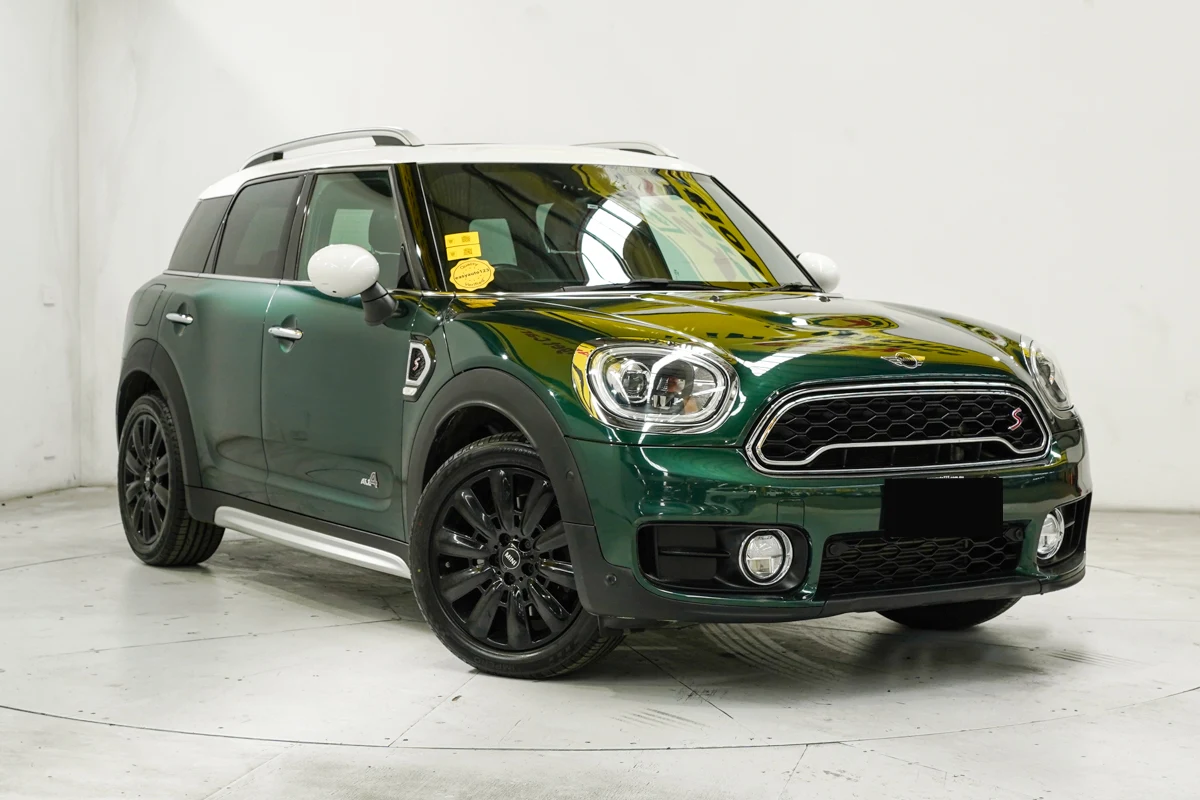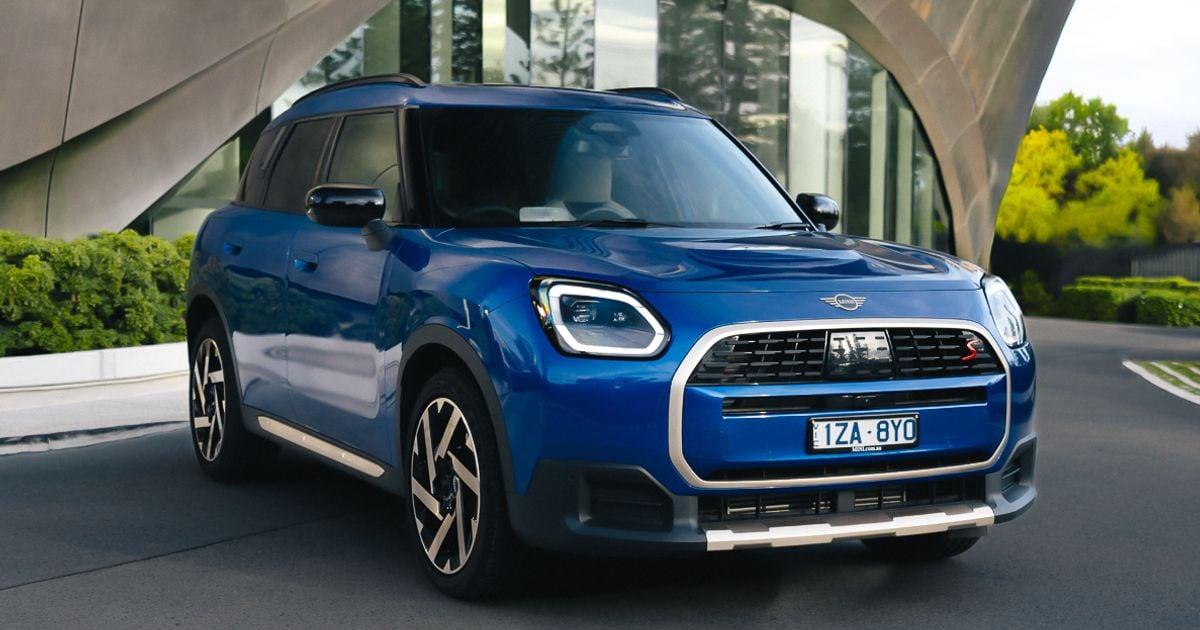
Mini Australia has detailed the 2026 Countryman lineup, and it borrows almost everything from the heavier update applied to the related BMW X1 earlier this year. The headline changes are 48V mild-hybrid tech for the petrol cars, a new silicon carbide inverter that frees up extra range from the existing battery in the EVs, and a price hike of up to $4000 depending on variant.
If you've been waiting for a meaningful update before signing for a Countryman, this is it. If you were ready to pull the trigger on a pre-update car, the math is more interesting than Mini's marketing would suggest.
What actually changes under the bonnet
The petrol Countryman C and S both move to Euro 6e-compliant powertrains with a 48V mild-hybrid system bolted on. Power lifts modestly — to 125kW and 280Nm in the C, and 160kW and 360Nm in the S — without sacrificing the fuel consumption or emissions of the cars they replace. In practice that means slightly punchier off-the-line response, smoother stop-start behaviour, and a small efficiency dividend in stop-go driving.
The Countryman E and SE All4 EVs keep the same 64kWh battery pack but gain Mini's new silicon carbide inverter. The result is WLTP range jumping to 501km for the single-motor E (up from 462km) and 467km for the dual-motor SE All4 (up from 433km). The brand also reckons brake regeneration and real-world urban efficiency improve, which usually matters more day-to-day than the lab figure on the brochure.
The Countryman JCW continues unchanged on the spec sheet — still 400Nm and the same aggressive trim package — but has been recertified to meet Euro 6e. Unlike the related BMW X1, there is still no plug-in hybrid Countryman, which closes off the option for buyers who want some electric daily-driving range without committing to a full EV.
What it costs and where the value sits
Pricing before on-road costs
2026 Mini Countryman C: $54,490 (up $3500)
2026 Mini Countryman S All4: $60,490 (up $500)
2026 Mini JCW Countryman All4: $75,490 (up $3500)
2026 Mini Countryman E: $68,990 (up $4000)
2026 Mini Countryman SE All4: $73,990 (unchanged)
For context, the Countryman still lands roughly $10,000 under its BMW X1 sibling on like-for-like spec, and the JCW gap to the X1 M35i is closer to $20,000. Both cars share platforms, engines and a lot of switchgear, so the Mini is genuinely the cheaper way into the same hardware — just with louder design choices inside and out.
The biggest price jumps land on the cheapest petrol C and the entry EV (the E), where Mini has loaded most of the powertrain change. The Countryman SE All4 EV is the most interesting buy on paper: same price as before, more range, dual motors, and the full Mini lifestyle package.
How buyers should think about the timing
The updated range is on sale now, with production-built 2026 cars landing from March 2026 onwards. Dealers will still have pre-update stock to clear before then, which is where the negotiation actually happens.
If you're after the longest-range Countryman E or the most efficient mild-hybrid drive, waiting for the new cars makes sense. Dealers know the new model is coming and will push the existing stock with discounts or accessory packs to move it. Ask for drive-away pricing on remaining 2025-build cars, and benchmark it against the 2026 sticker, plus a realistic estimate of fuel savings or extra range over your ownership window.
If you can't see a $3000 to $4000 difference being clawed back in fuel, range or resale, the pre-update car is the smarter deal — particularly in S and SE All4 trims, where the spec change is the smallest.
Dealer behaviour to watch for
The Countryman sits in a corner of the market where Mini dealers compete more with each other than with rival brands. That's good news for buyers prepared to push. Run quotes through at least two or three Mini dealers, ideally including one outside your immediate metro area where stock pressure is different. You'll see the gap between asking and acceptable land within a few quotes.
Watch for two patterns. The first is dealers framing the price increase as fixed and the EV range as the reason — when the actual driver is Euro 6e compliance, not customer-facing features. The second is window-dressed pricing: accessory packs added at quote time so the line item looks smaller. The right comparison is total drive-away across the same spec, with the same options.
If you're cross-shopping the Countryman against the BMW X1, get drive-away quotes on both, on the same day, with the same finance scenario. The shared hardware means you can shop on price and design alone, which is unusual in the premium small SUV segment.
You can compare current Mini Countryman and BMW X1 prices on Carseekers without dealer follow-up, then take the lowest market quote into the dealer when you're ready.
Where it leaves the Countryman in 2026
This is a mid-life refresh, not a new generation. Mini is keeping the third-gen Countryman fresh by leaning on shared BMW Group engineering rather than redesigning the car. For buyers, that's mostly good — improved efficiency, more EV range, smoother petrol drivetrains — at the cost of a price step that lands harder on the cheaper variants.
The Countryman still does what makes Mini Mini: a premium small SUV with sharper styling, a brighter interior and a more interesting brand story than the German rivals it shares parts with. If you were already sold on the badge, the updates make the car better. If you were on the fence, the bigger question is whether you'd rather have the X1's plug-in hybrid option, which Mini doesn't offer at any price.
Considering finance for your next car? Loanseekers can help you explore car loan options.
The finer details
Your questions answered.
How much does the 2026 Mini Countryman cost in Australia?
The 2026 Mini Countryman starts at $54,490 before on-road costs for the Countryman C, with the petrol S All4 at $60,490, the JCW at $75,490, the Countryman E EV at $68,990 and the SE All4 EV at $73,990. Most variants are up between $500 and $4000 versus the previous model.
What is the range of the 2026 Mini Countryman E and SE All4 EVs?
Mini quotes up to 501km of WLTP range for the single-motor Countryman E and 467km for the dual-motor Countryman SE All4. Both figures are improvements thanks to a new silicon carbide inverter and the same 64kWh battery pack.
Is the 2026 Mini Countryman a hybrid?
The Countryman C, S and JCW are all 48V mild-hybrid petrol cars, which means a small electric motor assists the engine but the car cannot be driven on electric power alone. The Countryman E and SE All4 are full battery EVs. Mini does not offer a plug-in hybrid Countryman in Australia.
How does the Mini Countryman compare to the BMW X1?
The two share a platform, engines and most of the underlying tech. The Countryman undercuts the equivalent BMW X1 by roughly $10,000 across the lineup and around $20,000 in JCW versus X1 M35i form. The big functional gap is the plug-in hybrid X1, which Mini does not offer.
When are 2026 Mini Countryman deliveries in Australia?
The updated range is open for orders now, with the changes applied to production from March 2026 onwards. Buyers should expect a mix of pre-update and post-update stock in showrooms in the meantime, which is worth confirming with the dealer before signing.
Should I buy a 2025 Mini Countryman or wait for the 2026?
The 2026 cars get more EV range and 48V mild-hybrid power, but cost up to $4000 more. If you mainly care about urban running and resale, the new model is the safer pick. If you can buy a runout 2025 Countryman at a sharp drive-away price, especially in S or SE All4 spec, the savings will usually beat the efficiency improvements over typical ownership.