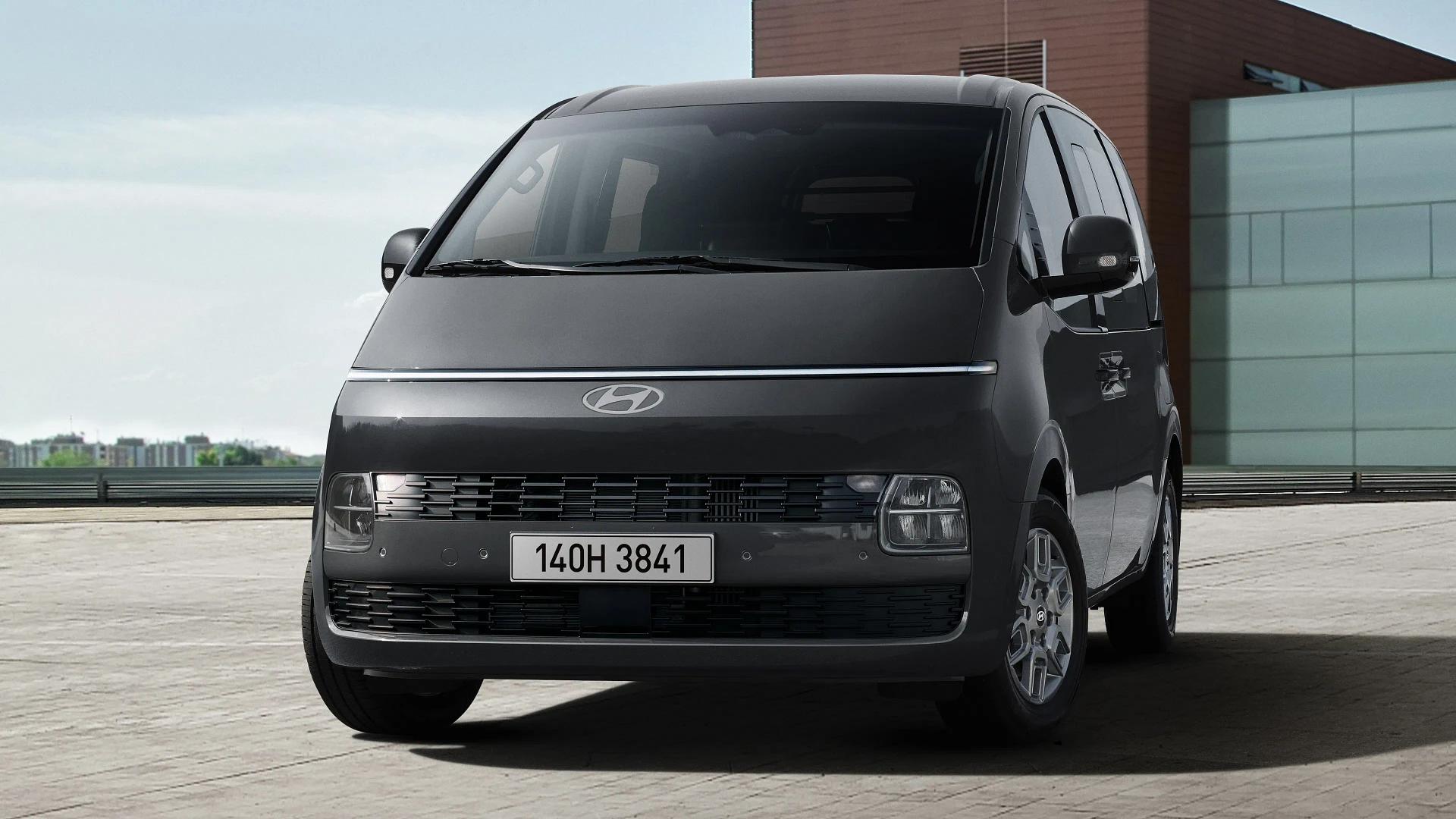
Commercial vans rarely shake up a market, but Hyundai has done something this week that no brand in Australia has attempted before. The 2027 Hyundai Staria Load arrives with a hybrid powertrain, a refreshed interior, and a price list that needs reading carefully before anyone places an order.
There is genuinely useful news here. There is also a trade-off Hyundai buried quietly in the details, and it changes the calculation for a large share of buyers.
Australia's First Hybrid Commercial Van Arrives This June
The 2027 Staria Load launches with three powertrains across five variants. Diesel hits showrooms this month at $49,990 plus on-road costs, a $2,250 increase on the outgoing model. The hybrid follows in June at $53,490 for the base grade and $61,240 for the Premium. Electric pricing remains unconfirmed, with the van expected in the second half of 2026.
The hybrid borrows its 1.6-litre turbo-petrol setup directly from the Kia Carnival Hybrid, producing 180kW combined through a six-speed automatic. The diesel carries over unchanged at 130kW and 430Nm through an eight-speed automatic.
All variants receive updated exterior styling, a new 12.3-inch infotainment touchscreen, keyless entry, push-button start, and over-the-air software updates as standard features.
The Towing Trade-Off Buried in the Announcement
Here is what Hyundai did not lead with: the hybrid cannot tow. At all.
The diesel is rated to 2500 kilograms braked, which is the number fleet operators and tradies depend on. The hybrid has a payload advantage at 1039 kilograms versus the diesel's 997 kilograms, but zero towing capacity. If your operation ever involves a trailer, the hybrid is immediately off the list and only diesel or EV applies.
The EV does recover 2000 kilograms of towing capacity, but it has no confirmed price yet. Buyers who need towing and want electrification are being asked to wait for a product that may not arrive until late 2026.
Pricing Reality: What Each Variant Actually Costs in Your State
Every Staria Load figure Hyundai published is before on-road costs. In most Australian states, on-roads on a van at this price point add $2,000 to $4,000 when stamp duty, registration, and CTP insurance are included.
The hybrid Premium jumped $8,500 over the previous diesel Premium. That is a meaningful premium in a segment where commercial operators hold vehicles for six to eight years and measure returns in fuel savings against capital cost.
For ABN holders running this van as a business vehicle, the hybrid's position under current FBT rules is worth a conversation with an accountant before signing. Novated lease buyers should specifically check how the non-plug-in hybrid classification affects their package calculation.
Dealer Behaviour to Expect in April and June
Only the diesel is available now. Any dealer telling you a hybrid is ready before June is working from a timeline that does not exist. April stock is diesel only.
Hyundai's strong fleet relationships mean volume buyers typically have priority on early stock. Retail buyers walking in without a fleet account may find limited room on pricing at launch. The deletion of the five-seat Crew variant also narrows the line-up, so dealers may push remaining multi-passenger stock that is no longer being replenished.
If you are buying diesel and happy with the base spec, the lack of optional extras at this trim level gives you a genuine conversation starter on delivery costs and dealer accessories margin.
Calculating Whether the Hybrid Actually Pays for Itself
The hybrid's case is a fuel savings argument. At current petrol and diesel prices, a van covering 30,000 kilometres annually saves roughly $1,800 to $2,200 per year on fuel compared with the diesel. Against a $3,500 hybrid price premium, the payback period is under two years for high-kilometre operators.
At 15,000 kilometres annually, the payback stretches to four years or more. For operators running light loads on short routes, the diesel's lower purchase price and simpler drivetrain may make more practical sense.
Work out your actual annual kilometres before committing to either variant. A Carseekers advisor can run the numbers against the Toyota HiAce Hybrid and other upcoming van options to give you a side-by-side cost comparison specific to your usage pattern.
June Timing and the EOFY Window for Fleet Buyers
Diesel is available now with April delivery. The hybrid window opens in June, which places it directly inside the financial year run-out period for fleet purchases. Corporate and government buyers typically accelerate decisions in June to hit budget deadlines, which means early hybrid stock will face real demand competition.
If you want a hybrid and do not need it by 30 June, September and October are likely to deliver calmer buying conditions and more room for dealer negotiation. The post-EOFY period is historically quieter for commercial vans.
The EV version is a second-half 2026 story with no price. If EV is your preference, waiting costs you nothing except time. Committing to diesel or hybrid now locks in a price but eliminates the EV option for your current replacement cycle.
A Smarter Position for Van Buyers Right Now
The 2027 Staria Load hybrid is a legitimate commercial choice for urban businesses running consistent kilometres without towing requirements. It is not a universal upgrade, and the premium is only justified if the maths work for your specific operation.
Before entering a showroom, confirm three things: your annual kilometre count, whether towing is ever a requirement, and whether your purchase structure benefits from hybrid classification. The answers to those three questions determine which variant is actually right for you.
The EV remains a future decision. Today's market is diesel or hybrid, and the right answer depends entirely on what your business actually needs from a van.
Considering finance for your next car? Loanseekers can help you explore car loan options.
The finer details
Your questions answered.
How much does the 2027 Hyundai Staria Load Hybrid cost in Australia?
The 2027 Hyundai Staria Load Hybrid is priced from $53,490 in Australia. This is the first hybrid powertrain available in the Staria Load commercial van, and the pricing represents Hyundai's entry into hybrid technology for the Australian light commercial segment. Confirm drive-away pricing with your Hyundai dealer.
Is the Hyundai Staria Load Hybrid a good choice for a tradie or small business?
For businesses running primarily urban routes where the hybrid's fuel savings are maximised, yes. The Staria Load hybrid offers meaningfully lower fuel costs than the petrol equivalent. The catch is a payload or feature trade-off Hyundai embedded in the spec update — confirm the specific payload rating and features against your actual requirements before signing.
What is the fuel economy of the Hyundai Staria Load Hybrid?
Hyundai has published fuel consumption figures for the Staria Load Hybrid showing a significant improvement over the non-hybrid variant in combined cycle testing. Real-world results for delivery or trade vans doing mixed city and highway routes will depend heavily on route profile. Request a real-world fuel economy figure from your fleet manager or Hyundai if available for your use case.
Does the Hyundai Staria Load Hybrid have a higher payload than the petrol version?
The 2027 Staria Load refresh introduced a trade-off between the hybrid system's added weight and payload capacity. Hyundai has not been fully transparent about the specific change. Confirm the exact payload rating for the hybrid variant against your typical load requirements before committing, as fleet operators who operate at maximum payload will notice any reduction.
How does the Hyundai Staria Load Hybrid compare to a Toyota HiAce diesel?
The HiAce diesel remains the benchmark for Australian light commercial van reliability and parts availability. The Staria Load Hybrid offers lower fuel costs on urban routes but does not match HiAce on payload flexibility or resale values. For mixed urban-regional operations, the HiAce diesel is typically the safer choice; for predominantly urban fleets the hybrid case is more compelling.
Is the Hyundai Staria Load Hybrid available for novated leasing in Australia?
Yes. The Staria Load Hybrid is eligible for business vehicle financing arrangements including novated leasing. Hybrid vehicles for business use also benefit from standard vehicle tax deductions. Consult your accountant or salary packaging provider to confirm the specific financial benefits available for your situation.