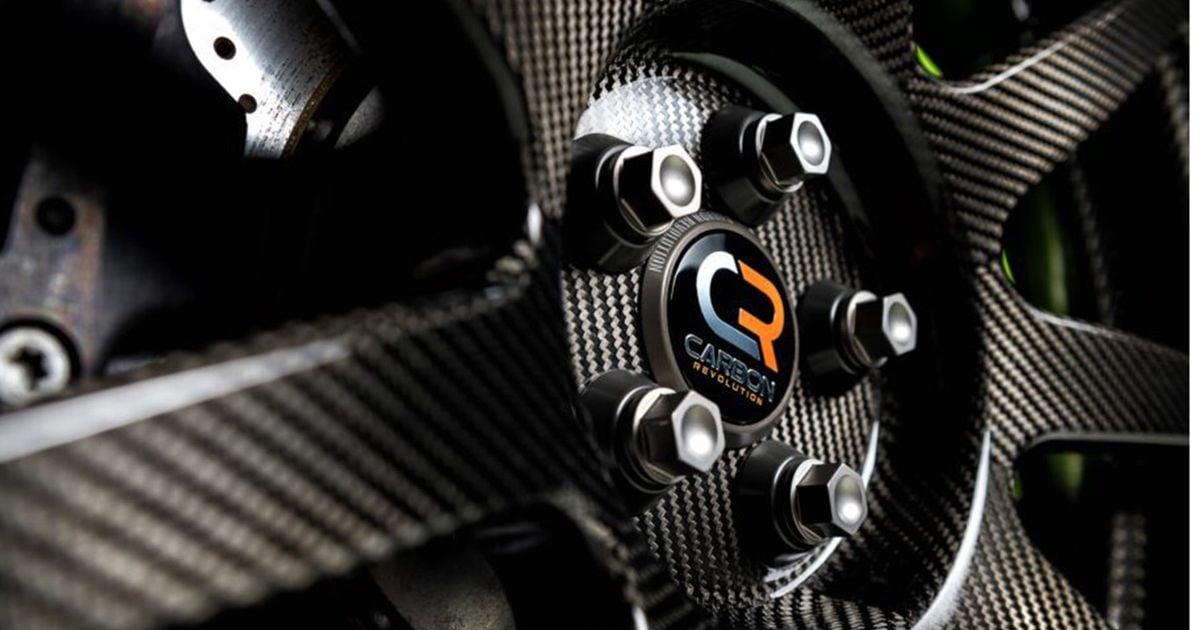
Australia keeps losing automotive manufacturers, so when one comes back from the brink it matters. Geelong-based Carbon Revolution, the only company in the world building one-piece carbon-fibre wheels at production scale, has exited voluntary administration as a private company under new American ownership.
For Australian buyers, the headline is straightforward. The carbon-fibre wheels fitted to halo cars like the Ford Mustang Dark Horse, Chevrolet Corvette ZR1 and Lamborghini Temerario are still being built in Victoria, and the 350 staff in Geelong still have jobs.
The bigger question, the one that matters more if you care about Australia's industrial base, is whether Carbon Revolution stays an Australian manufacturer in any real sense once its new US owners start making the harder calls.
Why this restructure happened in the first place
The numbers behind the administration were ugly. Carbon Revolution racked up $347 million in losses over four years before being placed into voluntary administration in March 2026.
The company had also been suspended from the New York-based Nasdaq in February 2026 after its valuation collapsed and it stopped meeting listing requirements.
That is the kind of damage that usually ends in liquidation or a fire-sale to a competitor. Instead, the business has been bought out of administration by Orion Infrastructure Capital (OIC), a New York investment firm, and reformed as a private company.
What the administrators actually said about Australia
This is the part Australian buyers and policymakers should read carefully. Administrators McGrathNicol described Carbon Revolution's Australian production base as a "high-cost environment".
They also flagged that the distance from Geelong to the company's major customers in the United States and Europe pushed costs up, making it less globally competitive.
That is the diplomatic version of a finding that local production probably cannot keep doing what it has been doing without changes. New private owners rarely buy a distressed asset, hear that diagnosis, and decide to do nothing about it.
What the new owners are signalling
CEO Donald Hampton Jr's statement walks a careful line. He talks about "disciplined operational improvement", "strategic partnerships" and "expanding our manufacturing footprint in a way that better supports our customers globally".
In plain English, that is a near-explicit indication that production could be added overseas, closer to customers in North America and Europe. Hampton then reaffirms that Carbon Revolution "remains committed to our Australian operations" and will continue to pursue growth opportunities here.
Both things can be true at the same time. The Geelong site can keep running while a second plant gets built somewhere with lower labour costs and shorter shipping distances. That outcome would still be a win on local jobs in the short term, but the long-term centre of gravity could quietly shift offshore.
What it means for Australian performance car buyers
If you are spending money on a performance hero car with carbon-fibre wheels as a factory option, the brand badge on those wheels says something. The Ford Mustang Dark Horse and Chevrolet Corvette ZR1 both wear Carbon Revolution rims at the top of their option lists.
If you are shopping a Corvette, those wheels save serious unsprung weight and the brake heat tolerance is genuinely useful on track. The Australia-made provenance is a side bonus.
If the new owners eventually shift production overseas, the same wheel can still be specified, but the local angle disappears. For buyers who treat "made in Australia" as part of the value, that is worth knowing now rather than later.
The wider context for Australian manufacturing
This news lands in the same week Prime Minister Anthony Albanese floated the idea of Australia building electric vehicles locally, or at least expanding production of EV components. The PM said advances in manufacturing technology made the case stronger than it used to be, a view echoed by Advanced Manufacturing Growth Centre managing director Dr Jens Goennemann.
Carbon Revolution's experience is a useful reality check on that ambition. The company has world-leading technology, a defensible product, and global brand customers, and it still could not stay solvent as a listed Australian manufacturer.
If the next phase under American private ownership works, it suggests there is a way forward for high-value, low-volume automotive manufacturing in Australia. If production drifts offshore over the next few years, it tells you the cost gap is real and not easily closed by enthusiasm alone.
The dealer and buyer angle
While this story is mostly upstream of the showroom, it should change how you think about a couple of buying decisions. If you are placing an order on a Corvette ZR1 or Mustang Dark Horse with carbon wheels, ask the dealer where the wheels are sourced now and confirm the supplier on the build.
Dealers do not always know, but the order will. With Carbon Revolution restructuring, supply could tighten in the next 12 months as the new owners adjust production priorities.
If you are happy with the standard alloy or forged wheels, you do not need to lose any sleep. The carbon option is the buyer who gets exposed if anything goes sideways during the transition.
What we would watch from here
Three signals will tell you which way this goes. First, whether OIC announces a second manufacturing site outside Australia in the next 12 to 18 months. Second, whether the customer list grows or contracts, given automakers are watchful about supplier solvency after the administration.
Third, whether the Australian Government quietly steps in with grants or co-investment to keep the local footprint solid, which would be consistent with the PM's recent comments. None of that changes the wheels on next year's Corvette, but it tells you whether Carbon Revolution is a survivor or a manufacturing story that quietly fades from the Geelong industrial map.
How Carseekers thinks about this
We spend a lot of time helping Australian buyers cut through dealer spin on performance options, and carbon-fibre wheels are exactly the kind of feature dealers love to upsell without much real explanation. For most buyers, they are an expensive cosmetic with a small ride and brake benefit. For track buyers, they earn their price.
What the Carbon Revolution story shows is that even genuinely advanced Australian engineering struggles when the global cost gap is too wide. Keep that in mind next time you hear a brand wave the "made for Australia" flag without explaining where the parts actually come from.
Considering finance for your next car? Loanseekers can help you explore car loan options.
The finer details
Your questions answered.
Is Carbon Revolution still making wheels in Australia?
Yes. Carbon Revolution has exited voluntary administration as a private company and confirmed it will continue manufacturing at its Geelong site in Victoria, where about 350 staff are employed. The new US owner has flagged possible expansion overseas, but the Australian production line is still running.
Who owns Carbon Revolution now?
Carbon Revolution is now owned by Orion Infrastructure Capital (OIC), a private investment firm based in New York. The company is no longer publicly listed after being suspended from the Nasdaq in February 2026.
Which production cars use Carbon Revolution wheels?
Carbon Revolution supplies one-piece carbon-fibre wheels to Ferrari, Ford, General Motors, Lamborghini and Jaguar Land Rover. They appear as factory-fit options on cars including the Ford Mustang Dark Horse, Chevrolet Corvette ZR1 and Lamborghini Temerario.
Should I worry about supply if I order carbon wheels on a new car?
It is worth asking your dealer to confirm the wheel supplier on your specific build. Carbon Revolution's restructure means production priorities could shift over the next 12 months. The wheels are still being made, but lead times on premium options can move during a transition like this.
Why did Carbon Revolution go into administration?
The company recorded around $347 million in losses over four years. Administrators flagged that high local production costs and long shipping distances to overseas customers made it hard to stay globally competitive. Its Nasdaq suspension in February 2026 made raising fresh capital effectively impossible.
Will the new owner move production out of Australia?
The new owner has not announced this, but its statements about "expanding our manufacturing footprint" globally leave the door open. The most likely scenario is that Geelong stays open while a second site is built closer to US and European customers, rather than a wholesale shift offshore.