
A lot of buyers still assume Chinese EVs compete on price alone. That view is already out of date.
The new Deepal L06 is another reminder that Chinese brands are now pushing into areas that used to belong to prestige and performance cars, not just affordable transport. For Australian buyers, that matters because once the product improves faster than dealer expectations, pricing pressure follows.
What’s Happening
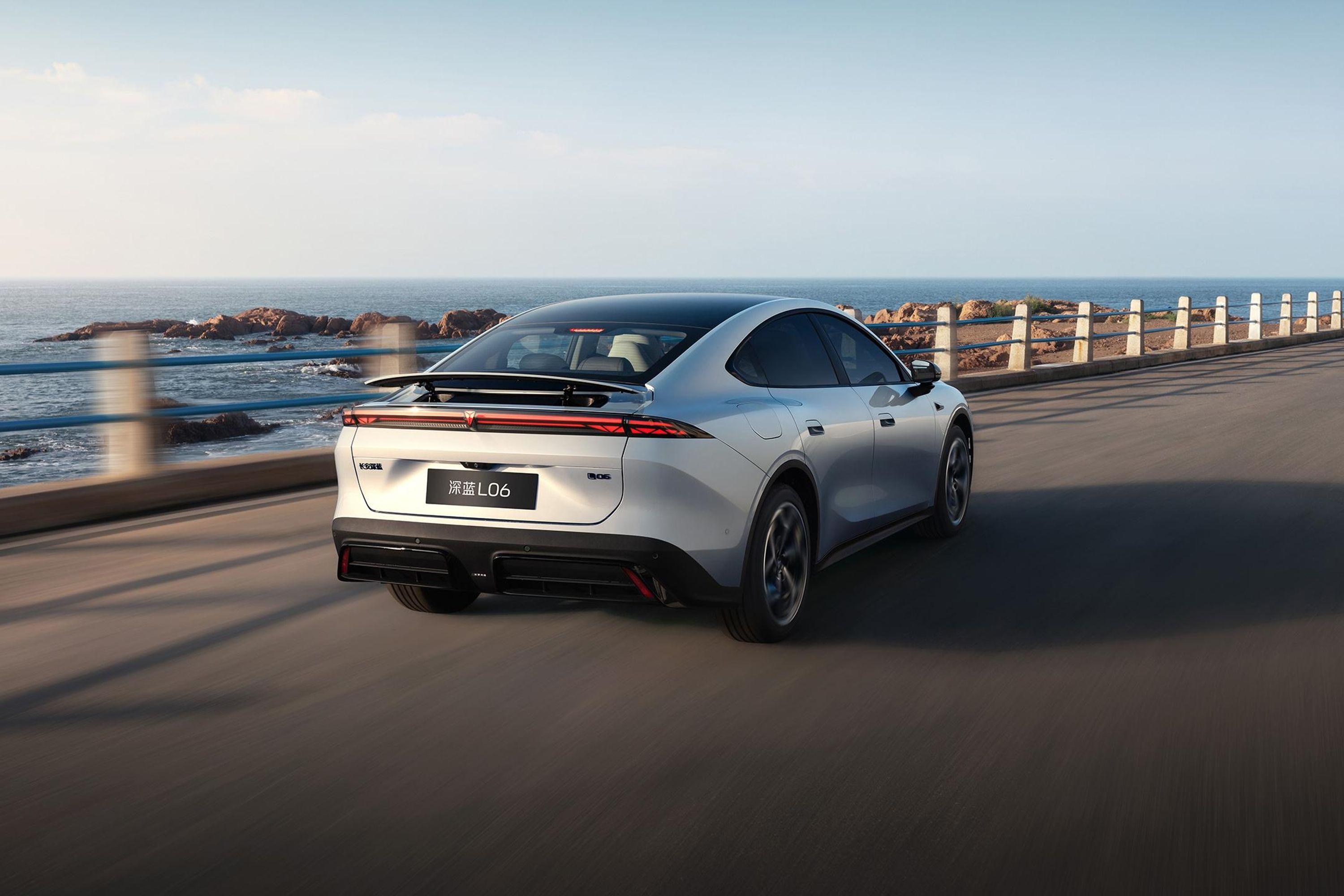
Deepal has revealed the L06, a new electric sedan that brings a surprisingly advanced mix of chassis technology, battery options and driver-assistance claims to the mass-market EV space. The big headline is its magnetorheological suspension, which Deepal says makes it the first model from a mainstream Chinese brand to use this type of system. This is the same broad category of adaptive damping technology seen in performance-focused vehicles from brands such as Ferrari and Chevrolet.
In simple terms, this suspension setup can react quickly to road conditions and driving inputs by altering damping characteristics in real time. That matters because one of the most common weaknesses in newer EV brands is not the powertrain, but the final layer of polish. Ride quality, body control, steering confidence and composure over rough roads often separate a car that looks good on paper from one buyers actually want to live with.
The L06 is also not being pitched as some low-spec budget experiment. Deepal says the rear-wheel drive EV uses a 200kW electric motor and offers two LFP battery choices, with claimed CLTC range figures of 560km and 670km depending on variant. There is also an extended-range version using a 1.5-litre engine as a range extender, paired with a smaller battery and a claimed 240km of electric-only range.
On the technology side, Deepal is also making aggressive claims around driver assistance, including a sensor suite featuring cameras, radars, ultrasonic sensors and LiDAR, plus an urban autonomous roaming function. Whether all of that translates cleanly to real-world performance is another question, but the intent is obvious. Deepal wants this car seen as a technology statement, not just another Chinese sedan.
Key Details You Need to Know
The Deepal L06 is a mid-size electric sedan measuring 4830mm long on a 2900mm wheelbase, placing it in a familiar footprint for buyers considering practical family-sized EVs. It uses MacPherson strut front suspension and a five-link rear setup, which is then elevated by the adaptive damping system.
Power comes from a single rear-mounted electric motor producing 200kW and 290Nm. Claimed 0 to 100km/h times sit between 5.9 and 6.2 seconds, so this is not an outright performance monster, but it is quick enough for the segment and more than adequate for everyday use.
Two battery sizes are offered in the full EV version, both using LFP chemistry supplied by CATL. That matters because LFP batteries are increasingly important in the mainstream EV market due to cost, durability and thermal stability advantages. The extended-range version broadens the appeal further for buyers still hesitant about relying entirely on charging infrastructure.
Inside, the L06 features a 15.6-inch infotainment screen, an augmented reality head-up display and a cabin Deepal claims uses soft-touch materials across more than 90 per cent of interior surfaces. Again, the message is clear. This is not being marketed as a stripped-out value play. It is trying to look and feel like a step above what many buyers expect from an emerging brand.
Why This Matters Right Now
For Australian buyers, this story is bigger than one sedan.
Deepal is already operating locally, having launched the S07 in Australia in late 2024 and then followed it with the E07 in 2025. It has also confirmed the S05 for Australia, even if passenger-car expansion is still not locked in. That means the L06 should not be dismissed as irrelevant overseas news. It is exactly the kind of product that shapes future dealer conversations here, even before local confirmation happens.
When a brand keeps rolling out more advanced product globally, local distributors and dealers gain a stronger story to sell. That can reduce discounting on current models if supply is tight and interest lifts. But the opposite can also happen. If newer, more impressive vehicles are coming, stock already on the ground can become harder to move unless pricing sharpens.
That is where timing matters.
At the end of a month, dealers care about clearing targets, aged stock and volume bonuses. If buyers know a brand is improving quickly, they gain leverage on current inventory because dealers know some shoppers will simply wait for the next thing. A buyer who is ready to act immediately on available stock is always stronger than a buyer who is just browsing.
What Most Buyers Get Wrong
Most buyers see a story like this and jump to one of two lazy conclusions.
The first is that the car will definitely come to Australia soon, so they should wait. That is not always smart. Overseas reveals do not guarantee local timing, local specs or local pricing. Waiting only makes sense if you are prepared for uncertainty and happy to delay your purchase.
The second mistake is assuming new technology automatically means premium pricing that cannot be negotiated. That is also wrong. In reality, dealers price according to demand, stock age, bonus structures and how serious you are as a buyer. A car with good technology can still be discounted if the brand needs volume, if the model is new and needs visibility, or if competing brands are forcing sharper offers.
Another common mistake is focusing too heavily on claimed range or feature headlines while ignoring how the market behaves around them. A vehicle can have excellent specifications and still become a good buy or a bad buy depending on when you hit the market. Timing changes everything.
What This Means for You
If you are in the market for a new EV in Australia, the real takeaway is not that you should rush out and chase an L06 tomorrow. The takeaway is that Chinese EV brands are moving faster than many buyers realise, and that speed is already reshaping what counts as normal equipment, normal performance and acceptable pricing.
That creates opportunity.
If you are buying in the next 30 to 60 days, use this type of news as leverage when comparing current EV offers. Dealers know buyers are more educated now. They know shoppers can see how quickly the segment is evolving. If you are deciding between in-stock vehicles, ask for the sharpest drive-away number, ask what support exists on immediate delivery units, and make it clear you are ready to move if the deal is strong enough.
That last part matters most. Dealers respond best when they believe the buyer is real, not curious.
How Carseekers Gives You an Advantage
This is exactly where Carseekers helps.
Most buyers read EV news, get excited by the technology, then still walk into the market without a clear pricing strategy. That is where they lose leverage. The smarter move is to use market shifts like this to your advantage while dealers are balancing stock pressure, monthly targets and growing competition from newer brands.
A new model like the Deepal L06 puts pressure on the whole segment, even before it lands here. It lifts buyer expectations. It forces brands to justify their pricing. It makes dealers more conscious that shoppers have options.
That is useful information if you are buying now.
Carseekers helps you turn that information into a real negotiation advantage by putting you in a stronger position before you commit. In a market changing this quickly, that matters more than ever.
Considering finance for your next car? Loanseekers can help you explore car loan options.
The finer details
Your questions answered.
Is the Deepal L06 coming to Australia?
Deepal has not confirmed an Australian launch for the L06. The model was revealed as a demonstration of Chinese EV engineering capability rather than as a near-term export product. Australian buyers should watch for any formal market entry announcement, which has not occurred as of mid-2026.
What is the Deepal brand and who makes it?
Deepal is a sub-brand of Chinese manufacturer Changan Automobile, one of China's largest state-owned car companies. Changan is a joint venture partner with both Ford and Mazda in China. Deepal targets the technology-forward EV buyer with performance-oriented specifications.
How does Chinese EV technology compare to Japanese and Korean brands in 2026?
Chinese EV platforms have closed the gap significantly on Japanese and Korean rivals in battery technology, charging speed, and onboard computing capability. Models like the Deepal L06 demonstrate that Chinese brands are now competing in premium performance territory, not just on price.
Should I consider a Chinese EV over a Japanese or Korean alternative in Australia?
Chinese EVs offer more features per dollar than most Japanese and Korean alternatives at the same price point. The trade-offs are resale value, which is still being established in the Australian used market, and dealer service network maturity. If you hold cars for five or more years, Chinese EVs represent strong value.
Will Chinese EV prices drop further in Australia as competition increases?
Competitive pressure among Chinese brands in Australia has already driven prices lower across multiple segments. As more brands enter and scale, further pressure is likely. However, currency movements, compliance costs, and brand positioning will limit how low mainstream prices can go.
Is the Deepal brand reliable enough to consider for an Australian buyer?
Deepal does not yet have an established reliability record in Australia due to limited market presence. The Changan group has a long manufacturing history globally. Before considering any Deepal product in Australia, verify whether an official dealer and service network exists locally.