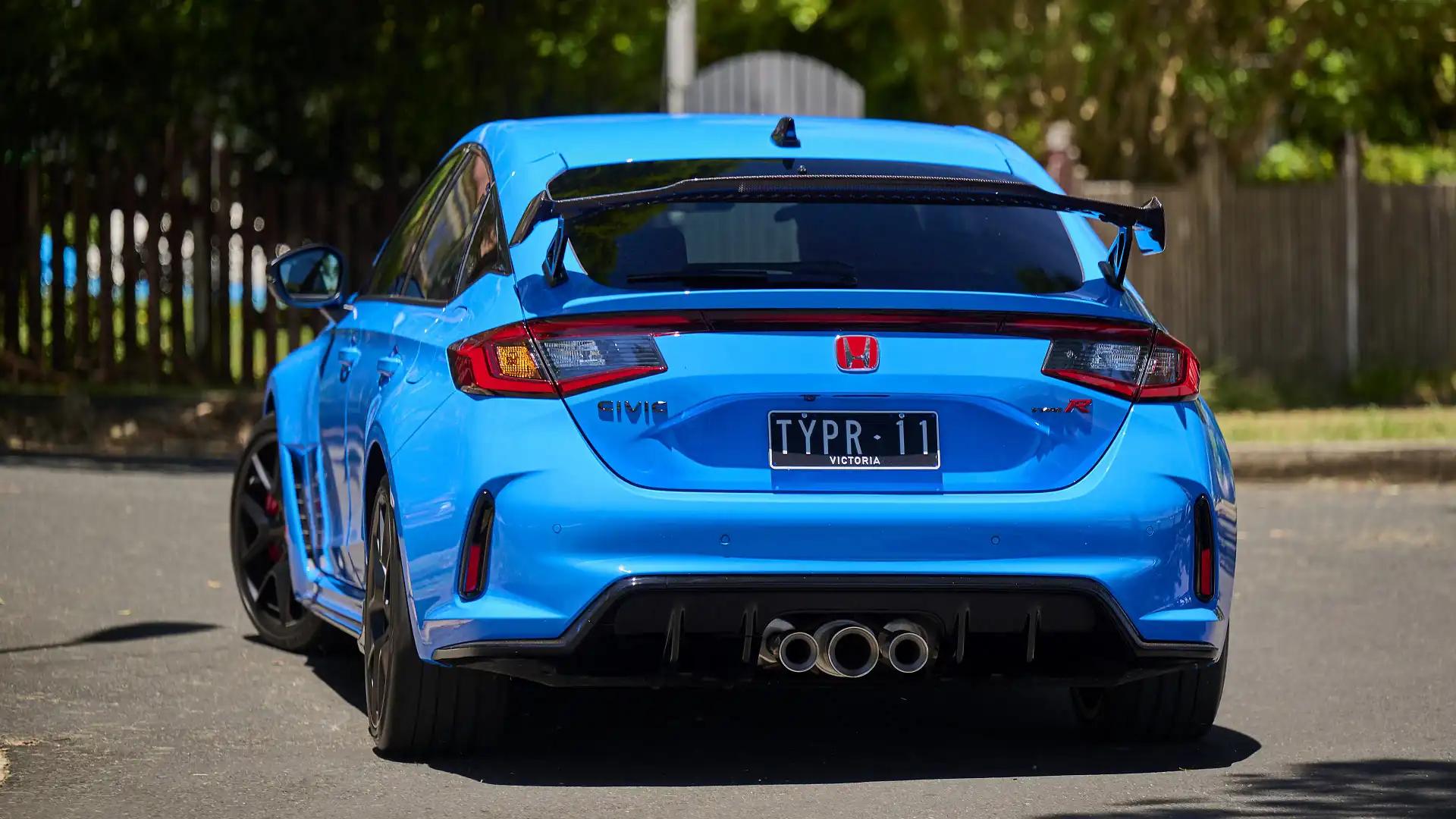
Honda Australia is deliberately keeping shipments of the Civic Type R tight, and the reason is not the price tag or limited Japanese production. It is the New Vehicle Efficiency Standard. Every Type R that lands in an Australian dealership has to be balanced against two Civic hybrids or three CR-V hybrids on the brand's CO2 ledger. Sell too many Type Rs, pay a fine. Sell fewer Type Rs, save the fine. The buyer pays either way.
The latest comments from Honda Australia director Robert Thorp confirm what the Carseekers team has been hearing from dealers for months. Type R demand is outstripping supply. Supply is being managed tightly. The hybrid Type R replacement is coming. Anyone who wants the current car at any price should be moving now.
Why NVES is the real reason for tight Type R supply
The Civic Type R produces enough CO2 that, on Honda's brand-wide compliance maths, it requires offsetting hybrid sales. The exact ratio Honda has shared is two regular Civic hybrids or three CR-V hybrids per Type R. That is the cost of putting a 235kW front-wheel-drive hot hatch into the Australian fleet under the current rules.
Thorp told Drive that supply is okay but is being managed pretty tightly, particularly from a regulation point of view, and that Honda is trying to match demand as best it can. Pressed on whether Honda was holding back stock to limit the Type R's impact on its CO2 average, the answer was diplomatic. The brand is trying to find the balance.
The practical effect is that Australian Type R buyers are competing for a smaller allocation than the demand can absorb. That gives Honda dealers stronger pricing power and creates the conditions for cars to leave the lot at full sticker, with little room for negotiation.
How the price has already moved
The current Civic Type R arrived in 2023 at $72,600 drive-away. The latest price is $85,500 drive-away. The car now includes the previously optional $5500 carbon-fibre rear wing as standard, but the gap to the launch price is real. The Type R has gained almost $13,000 in three years.
Thorp says Honda has the demand and supply equation balancing out pretty well. From the brand's perspective that is true. From the buyer's perspective the same line means scarcity is keeping prices firm. There is no incentive for Honda to discount a car that is already running short of stock and is taking on emissions cost the brand has to absorb elsewhere.
For reference, Hyundai has taken a different approach with its N hot-hatch range. The Korean brand copped a $4.2 million emissions fine and absorbed part of it through price rises of up to $2000 across its N cars. The cars stay in showrooms, the fine is the cost of doing business. Honda's solution is the opposite. Limit supply to limit the fine.
Type R sales tell the tightening story
Honda reported 231 Civic Type R sales in 2025, down from 430 in 2024 and 892 in 2023. That is a 75 per cent fall in two years. Some of that decline reflects the normal performance-car cycle, where the model lands big in year one and then tapers as enthusiasts who wanted one already have one. Some of it reflects the price rises. A meaningful share, on Honda's own framing, reflects the brand consciously throttling shipments to manage NVES exposure.
This matters when you walk into a Honda dealer in 2026. The Type R is not on the lot. Test drives are limited. Allocations are split between metro and regional dealers, and the regional dealer often has zero. The buyer who walks in expecting to negotiate is starting from a weaker position than the buyer who walks in with a deposit ready and the order signed.
The hybrid Type R is coming, and it changes the formula
The current car is widely thought to be the last petrol-only Civic Type R. The next-generation Civic Type R is expected to use hybrid assistance and, almost certainly, an automatic transmission. Honda USA has already flagged a facelift for the existing Type R in 2026, with at least 12 months of life left before the hybrid replacement arrives alongside the next Civic hatch donor car in 2027.
The facelift is expected to be modest. Minor front bumper tweaks. USB-C charging ports. Google features added to the infotainment screen. The 2.0-litre turbo four producing 235kW and 420Nm, paired with a six-speed manual gearbox, is expected to carry over. A higher-spec HRC performance edition is also expected with more aggressive aerodynamics, stickier Michelin tyres, revised suspension, an Akrapovic exhaust, and more power from the same engine.
For the buyer, the meaningful change is what comes after the facelift. The hybrid Civic Type R will not be lighter. It will not be a manual gearbox in the same form. It will absorb the cost of complexity that hybrid systems carry, including more components, more software, and more dealer-only servicing. Anyone who wants a pure petrol manual hot hatch with the Type R badge has the current car and a facelift refresh of the same car. After that, the formula changes.
What this means for buyer leverage today
Three practical effects are worth thinking about.
First, dealer leverage on the current Type R is high. Stock is rationed by Honda for compliance reasons, not market reasons. The car sells at full sticker. Negotiating room is limited to add-ons rather than the headline number.
Second, the second-hand market for low-kilometre Type Rs in 2026 is a real consideration. With 231 cars sold in 2025 and similar volumes likely in 2026, the supply is shallow. Buyers who paid 2023 prices are sitting on a car that has effectively appreciated in real terms. Sellers know it. Listings reflect it.
Third, the cross-shop landscape is narrowing. The Toyota GR Corolla covers a similar brief at higher cost and lower volume. The Hyundai i30 N is being phased out by the end of 2026 with farewell editions on the way. The Subaru WRX and Volkswagen Golf R remain available but at higher price points. Buyers cross-shopping a manual petrol hot hatch are running out of options at the Type R's price point.
What buyers should do now
If you want a Civic Type R, the order needs to go in. Three steps.
Talk to multiple dealers. Allocations are not equal between metropolitan and regional Honda dealers. The regional dealer who has not seen a Type R in six months may have a buying advantage when the next allocation lands. Ring around.
Ask about the facelift timing. A 2026 facelift will likely come with a small price bump and updated infotainment. Buyers ordering now may receive the pre-facelift car. Buyers willing to wait may secure a facelift example. Both have collector arguments.
Get the price in writing. Stockout cars trade at sticker plus dealer add-ons. Negotiate the add-ons. Floor mats, paint protection, ceramic coatings, and finance package items are where leverage exists. The headline price is not.
For the broader picture on how NVES is shaping the Australian performance-car market, Carseekers is tracking the trend across the affected models. The Civic Type R is the visible example. It is not the only one. Hot hatches and performance cars across the market are absorbing the emissions cost in different ways, and the buyer who understands the dynamic negotiates better than the buyer who does not.
Bottom line
The Honda Civic Type R is a fundamentally compliance-throttled product in Australia in 2026. Supply is short by design. The price reflects scarcity. The hybrid replacement is in development and will not arrive at the same price or in the same format. Buyers who want the current car at any price have a defined window. Buyers who think they will get a sharp deal in 12 months are misreading the market.
Considering finance for your next car? Loanseekers can help you explore car loan options.
The finer details
Your questions answered.
Why is Honda limiting Civic Type R supply to Australia?
The New Vehicle Efficiency Standard penalises Honda for every Civic Type R it sells because the car's CO2 output exceeds the brand's fleet target. Honda offsets each Type R with two Civic hybrids or three CR-V hybrids and limits Type R shipments to manage the fine.
How much does the Honda Civic Type R cost in Australia in 2026?
The Civic Type R is currently $85,500 drive-away, up from $72,600 drive-away when the current generation arrived in 2023. The latest price now includes the previously optional carbon-fibre rear wing as standard, but the car has gained almost $13,000 in three years.
How many Civic Type R cars are sold in Australia each year?
Honda reported 231 Civic Type R sales in 2025, down from 430 in 2024 and 892 in 2023. That is a 75 per cent fall in two years, driven partly by the normal performance-car cycle and partly by Honda deliberately throttling supply for emissions compliance.
Is the next Honda Civic Type R going to be a hybrid?
Yes. The next-generation Civic Type R is expected to use hybrid assistance and, almost certainly, an automatic transmission. The current model is widely thought to be the last petrol-only manual Type R, with the hybrid replacement arriving alongside the next Civic hatch in 2027.
Should I buy a Civic Type R now or wait for the facelift?
If you want a manual petrol Type R, ordering now makes sense because supply is tightening and the hybrid replacement will not match the format. The 2026 facelift adds USB-C, Google infotainment and minor styling tweaks, so waiting buys updates but risks missing allocations.
How does the NVES rule affect other hot hatches in Australia?
Hyundai paid a $4.2 million NVES fine and raised N range prices by up to $2000 to keep cars in showrooms. Honda chose instead to import fewer Type Rs. Either way, the buyer pays through higher prices, smaller allocations or both. NVES is reshaping the entire performance-car market.