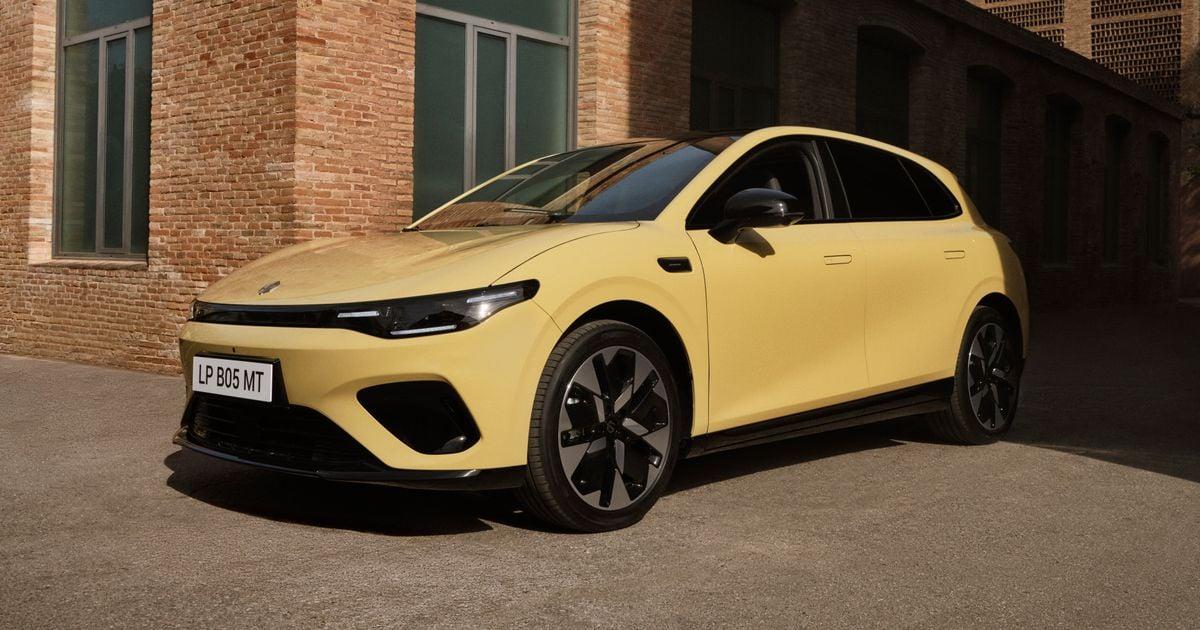

Leapmotor is launching a small electric hatchback called the B05 in Australia in the second half of 2026, slotting it below the B10 SUV in the brand's local lineup. International specifications are now confirmed, and the brand has opened the door (cautiously) to a petrol range-extender version eventually joining the lineup. Whether that ever happens depends on packaging, demand, and the business case in markets like Australia where small-car buyers are notoriously price-sensitive.
Here's what we know about the B05, where the hybrid version stands, and how the car fits into the increasingly crowded small EV segment in Australia.
The international B05 spec sheet
The B05 launches internationally with two battery options. The smaller pack is 56.2kWh, claiming up to 401km of WLTP electric range. The larger pack is 67.1kWh, claiming up to 482km of WLTP range. Both figures are competitive for a small hatchback in the price bracket Leapmotor is targeting.
The higher-spec B05 Design variant uses a rear-mounted motor producing 160kW and 240Nm. Leapmotor claims a 0-100km/h time of 6.7 seconds. DC fast charging tops out at 168kW, with a claimed 30 to 80 per cent charge time of 17 minutes. That's quick by current Chinese EV standards and ahead of the Hyundai Inster, which is the B05's closest analogue in the Australian market.
Leapmotor says the B05 has been co-developed with Stellantis' global chassis team and tuned specifically for European driving expectations. Australian-spec cars should benefit from that work, though local suspension calibration may be different again.
Why the range-extender question matters
Leapmotor's head of European commercial operations Danilo Annese was asked directly at the international launch in Germany whether a hybrid B05 was on the cards. His answer was telling: "To be honest, we are discussing it. I don't know if there is [demand]."
The brand has already launched range-extender versions of the C10 and B10 SUVs, which it markets as "Hybrid EV" models in Australia. The B10 Hybrid EV launched recently from $37,888 before on-road costs in Style trim and $40,888 in Design trim, matching the pricing of the equivalent battery-electric variants. The hybrid uses a 1.5-litre four-cylinder petrol engine as a generator (not a direct drive), feeding an 18.8kWh lithium iron phosphate battery, with 84km of WLTP electric range and a claimed combined range of 900km.
That's the template a B05 range-extender would follow. The problem is the B05 is a smaller car than the B10 SUV, and Annese confirmed engineering originally told Leapmotor that the front of the B05 wasn't long enough to fit a combustion engine. "Originally China told us that this front space of this car was not enough to welcome an engine," he said. "The chassis is B10. The front, you see, the dimension of the front car is shorter, but as far as I understand, lately we also have discussions on that."
Translation: the engineering team has changed its position, but the business case still has to clear. For now, the B05 in Australia will be EV only.
How the B05 fits the Australian small EV segment
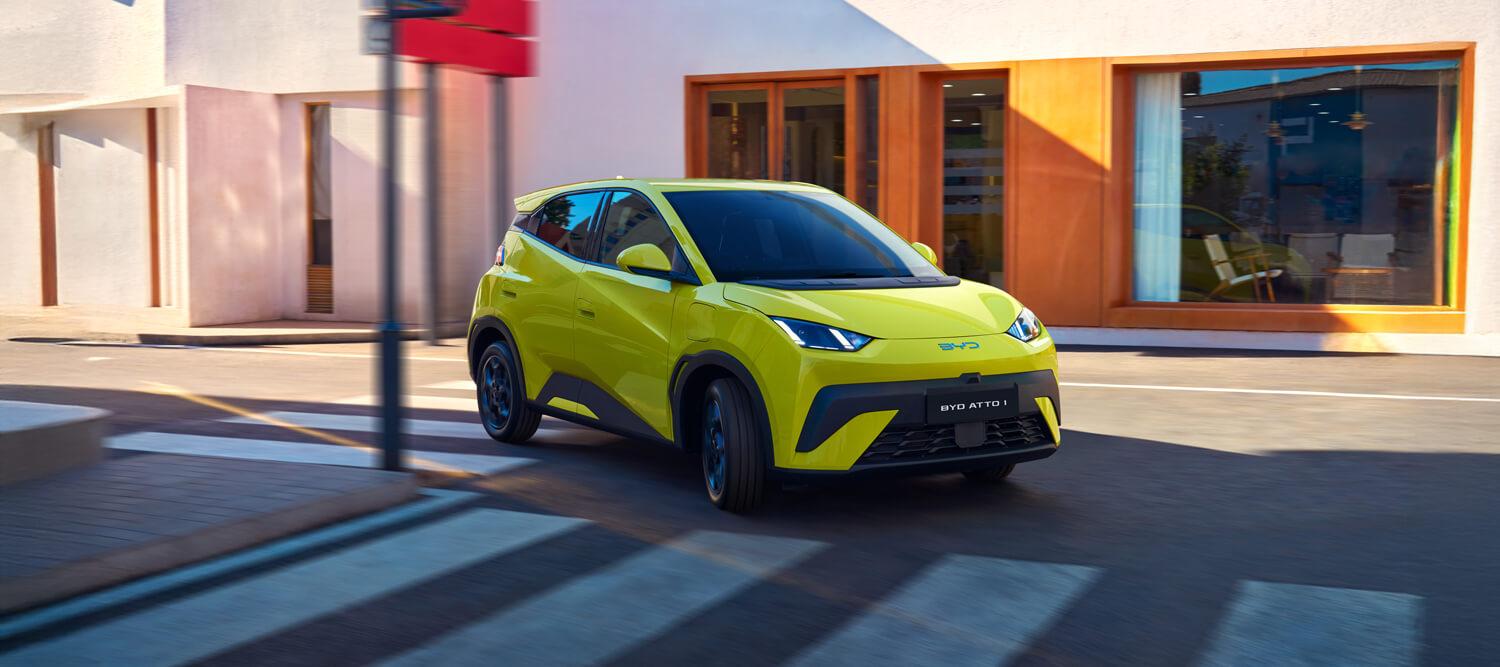
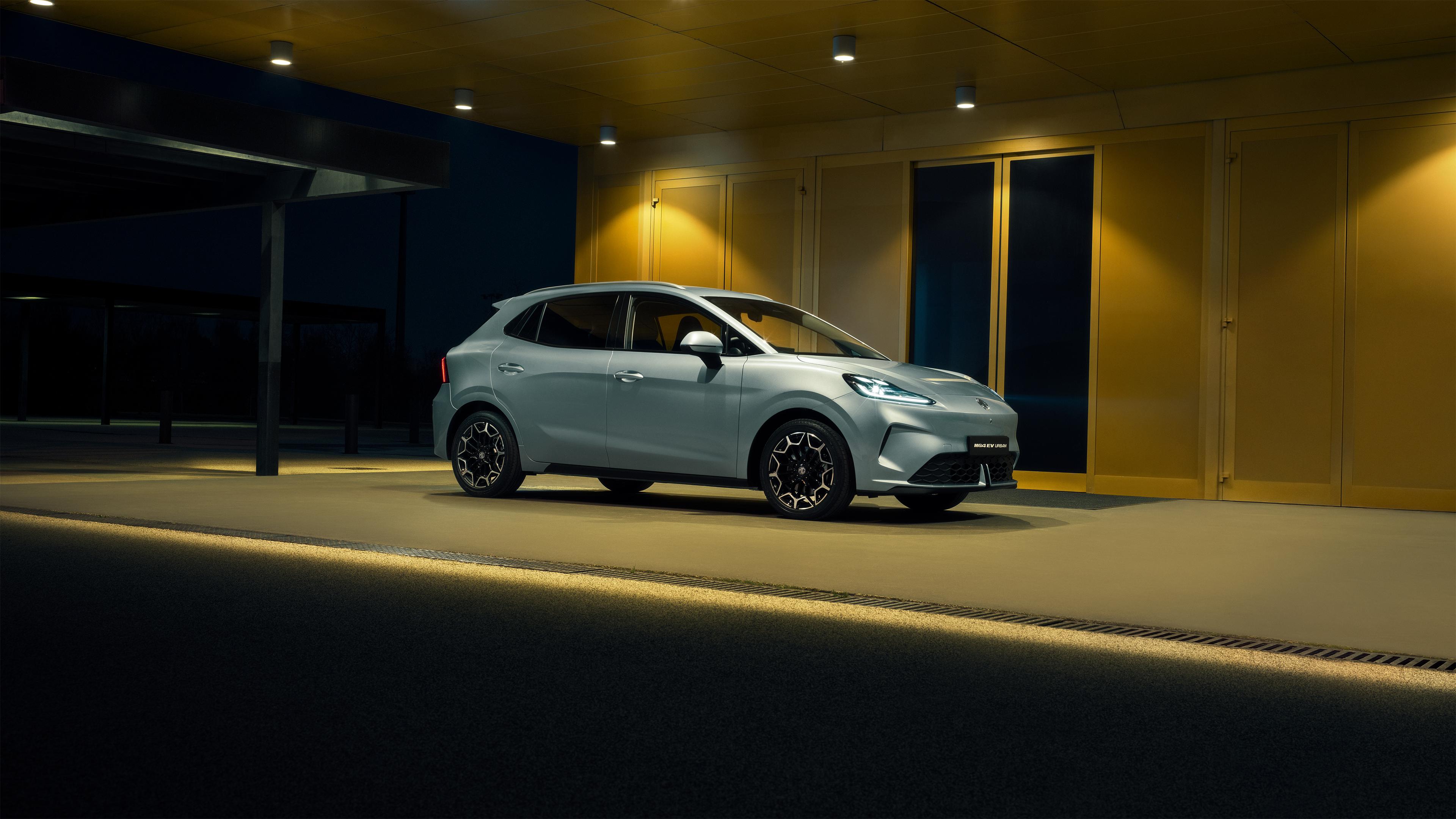
The small EV segment in Australia is heating up. The Hyundai Inster sits at $39,000 with 360km of range. The BYD Dolphin is in the same price bracket. The MG4 EV, particularly with the new FWD variant due in Australia in the second quarter of 2026, will compete directly with the B05 on price. The Mini Cooper E is the premium option at $53,990.
The B05 should slot in between the Inster and the BMW X1 iX1 on pricing, likely arriving with an Australian entry sticker somewhere in the high $30,000s to mid $40,000s. The two battery options give Leapmotor room to position the B05 against both the cheaper Hyundai Inster (with the smaller pack) and against the BYD Atto 3 and MG4 (with the larger pack).
The B05's biggest advantage on paper is its charging speed. 168kW DC support means real-world charge sessions on highway trips that are much closer to a Tesla Model 3 than a Hyundai Inster. For buyers who'd actually use a small EV for the occasional intercity trip, that's the difference between viable and frustrating.
The other advantage is the Stellantis chassis work. Leapmotor's European partnership with Stellantis is a credibility play for buyers who'd otherwise be wary of an unknown Chinese brand. The B05 is one of the first Leapmotor products genuinely co-developed with European engineering input.
Dealer behaviour to watch
Leapmotor is still building its Australian dealer footprint. That has two implications for buyers:
First, expect a small dealer network in the early launch period. Leapmotor sells through Stellantis-aligned dealers in Australia, which means existing Jeep, Alfa Romeo, Peugeot or Citroen showrooms in some metro areas. Coverage outside capital cities is light. Buyers in regional Australia should check service capability locally before committing.
Second, expect aggressive launch pricing. Leapmotor is fighting for share against established Chinese brands like BYD and MG that have more dealer presence and more brand recognition in Australia. The B05 will need to undercut those rivals on price or beat them on charging speed and dynamics to gain attention.
Should you wait for the range-extender?
The practical question for buyers attracted to the B05 hybrid concept: is it worth waiting?
Probably not. Annese's comments don't commit Leapmotor to a hybrid B05 timeline. Even if the business case clears later in 2026, the car would unlikely be in Australian showrooms before late 2027 or 2028. The C10 and B10 hybrids took 12 to 18 months to come to Australia after their Chinese launches. For most buyers, the EV B05 in the second half of 2026 is the more practical choice.
If you genuinely need range-extender flexibility for road trips, the existing Leapmotor B10 Hybrid EV at $37,888 is already on sale and offers 900km of combined range. The B05 hybrid, if it ever arrives, would be a smaller variant with the same value proposition.
You can compare current Hyundai Inster, MG4 and Mini Cooper E pricing on Carseekers ahead of the B05's Australian launch, which is the cleanest way to benchmark Leapmotor's first quote when it lands.
Where the B05 fits the bigger Leapmotor strategy
Leapmotor is one of the most ambitious of the Chinese newcomers in Australia. The Stellantis partnership gives it credibility and a path to dealer presence that pure import brands struggle to match. The B05 is the brand's pitch at the small-hatch segment, which is where most Australian EV buyers are starting their EV journey.
If the B05 lands at the right price and the right launch pricing holds, it will become a meaningful competitor in a segment that's about to get crowded. If Leapmotor mis-prices it or under-delivers on the launch network, it'll struggle against the Inster and MG4 on the cheap end and the Mini Cooper E on the premium end.
Australian launch pricing and final specifications have not yet been confirmed. We'll update once Leapmotor announces formal Australian pricing closer to the second-half 2026 launch.
Considering finance for your next car? Loanseekers can help you explore car loan options.
The finer details
Your questions answered.
When does the Leapmotor B05 launch in Australia?
The Leapmotor B05 electric hatch is confirmed for Australia in the second half of 2026. It will sit below the B10 SUV in the local Leapmotor lineup. Australian pricing and final specifications have not yet been confirmed.
What is the Leapmotor B05's electric range?
The international B05 launches with two battery options. The 56.2kWh pack claims up to 401km of WLTP range, and the 67.1kWh pack claims up to 482km. The higher-spec B05 Design uses a 160kW rear-mounted motor and quotes 0-100km/h in 6.7 seconds.
Will the Leapmotor B05 be available as a hybrid in Australia?
Leapmotor has confirmed that a range-extender hybrid B05 is under discussion but not committed. Engineering originally said the B05 was too short to fit a petrol generator engine, but Leapmotor says that's now being reconsidered. The EV-only B05 is the only version planned for the Australian launch in H2 2026.
How does the Leapmotor B05 compare to the Hyundai Inster?
The B05 sits a step above the Inster on size and range. The Inster's Extended Range claims 360km against the B05's 401 to 482km, the B05 charges faster at 168kW DC versus the Inster's typical 75kW peak, and the B05 will likely sit a few thousand dollars above the Inster's $39,000 entry price.
How fast does the Leapmotor B05 charge?
The B05 supports DC fast charging at up to 168kW, with Leapmotor claiming a 30 to 80 per cent charge time of 17 minutes. That's significantly quicker than most rivals in the small EV segment and similar to the charging envelope of mid-size EVs like the Hyundai Ioniq 5.
Where can I buy a Leapmotor in Australia?
Leapmotor sells through Stellantis-aligned dealers in Australia, which means existing Jeep, Alfa Romeo, Peugeot or Citroen showrooms in some metro areas. The dealer footprint is still expanding, particularly outside capital cities. Service network density is worth checking before buying outside major metros.