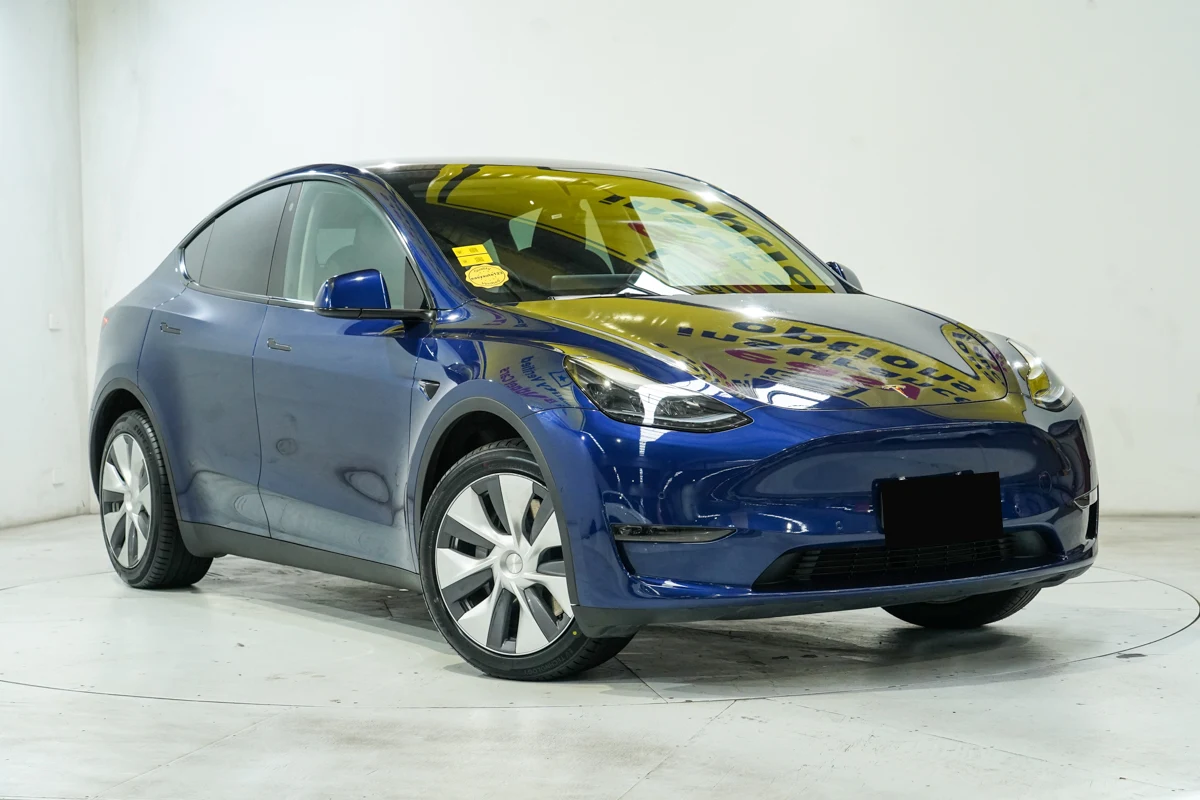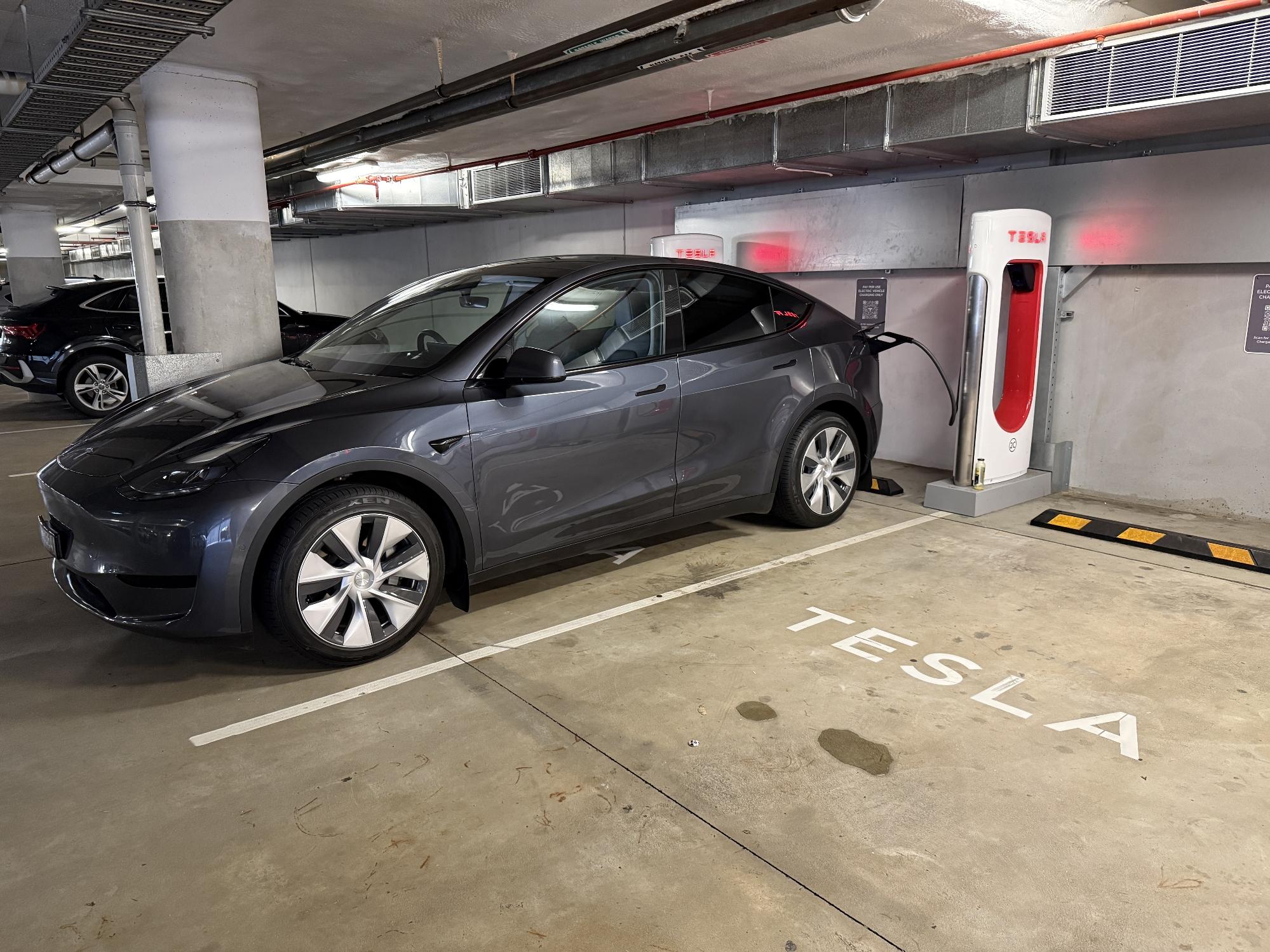
A Tesla Model Y charging at a Tesla Supercharger in North Coogee, WA. Tesla made the road user charge submission discussed in this article.
Photo: Leesieoh · CC BY-SA 4.0
Tesla wants any national road user charge to apply to every new car, not just electric vehicles. In its submission to the Senate Select Committee on Productivity in Australia, dated 16 October 2026, Tesla also argues fuel excise should stay in place alongside a per-kilometre charge.
This is one company's recommendation to a Senate inquiry, not a government decision. Tesla's own submission frames it as advice for if the Government develops a national road user charge.
For anyone choosing between petrol, hybrid and electric, the useful question is simple. What does each option already pay in fuel tax, and what could a per-kilometre charge add? We ran the numbers below.
What Tesla's road user charge plan actually says
Every powertrain pays. Tesla wants the charge to cover all light vehicles on public roads, including petrol, diesel, hybrid, plug-in hybrid and electric cars.
Fuel excise stays. Tesla says excise should be kept as a levy on the pollution and other costs of burning fuel, rather than folded into the new charge.
New cars first. Tesla's suggested transition applies the charge to all new light-vehicle registrations from a set future date. Existing petrol and diesel cars would be grandfathered, while all electric vehicles, new and existing, would be included.
A slow start. Tesla says the rate should be based on real road funding costs and phased in over several years, starting at a fraction of a cent per kilometre.
Regional protection. It suggests an annual price or kilometre ceiling for outer-metropolitan and rural drivers, plus graduated regional multipliers.
Why the states cannot simply charge EV drivers
Victoria tried an EV-only charge. For 2021-22 it was 2.5 cents per kilometre for electric cars and 2 cents for plug-in hybrids.
On 18 October 2023, the High Court held in Vanderstock v Victoria that the charge was invalid because it was a duty of excise. Under the Constitution, only the Commonwealth can impose excise.
Tesla's submission argues that ruling means any lasting national scheme has to come from Canberra. We looked at the earlier policy debate in Fuel Excise Returns in Full as Road User Charge Looms.
What petrol and hybrid drivers already pay
Fuel excise on petrol and diesel is 53.7 cents a litre from 3 August 2026, according to the ATO's excise rate table. The ATO indexes it twice a year, in February and August.
To make that concrete, we used the 11,025 km average annual distance from Tesla's submission and each car's official combined fuel figure. These are worked examples covering excise only, not GST, and real-world use will differ.
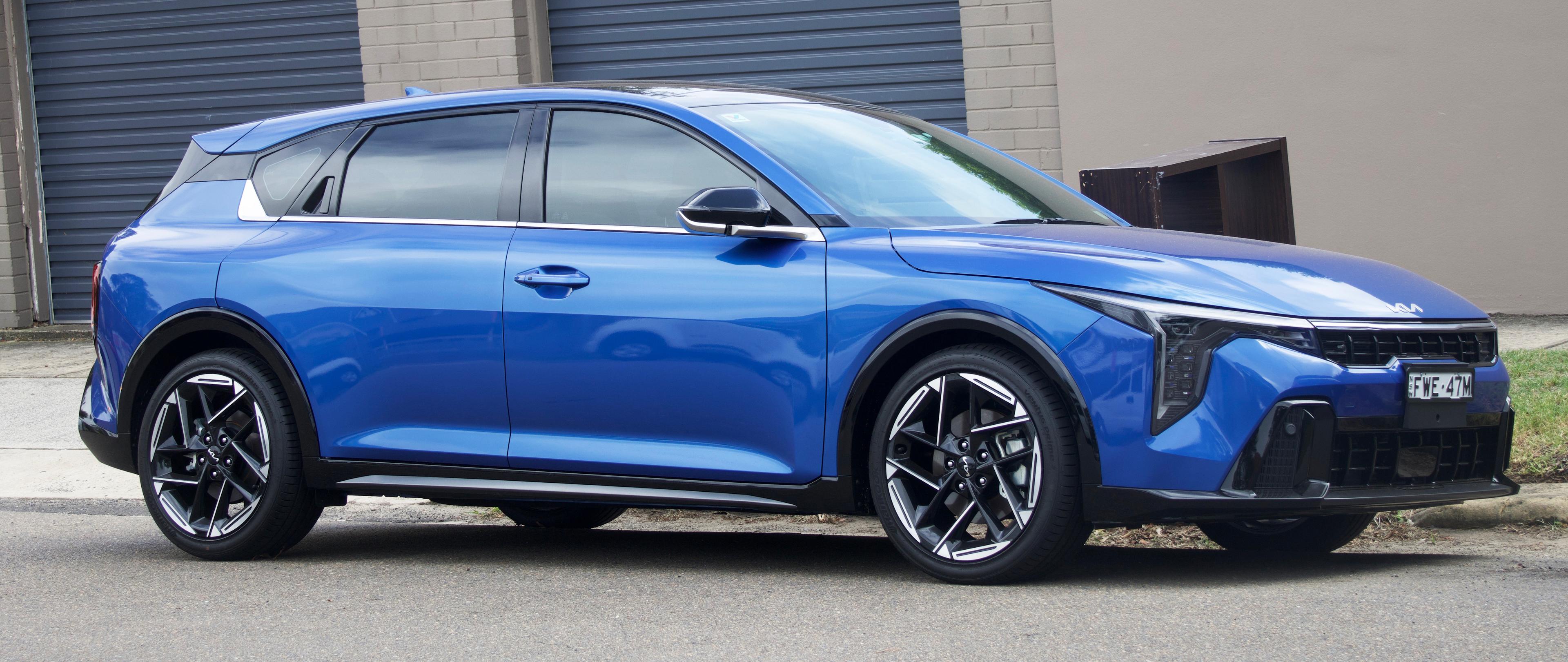
Kia K4 Sedan 2.0 petrol: 6.0 L/100km combined on the Kia K4 specification sheet. That is about 662 litres a year, or roughly $355 in fuel excise.
Hyundai i30 Sedan Hybrid: 3.9 L/100km combined, according to Hyundai Australia. That is about 430 litres a year, or roughly $231 in fuel excise.
An electric car such as the Tesla Model Y: no fuel, so no fuel excise.
What a per-kilometre charge could add
There is no national rate to plug in. Tesla's submission gives two reference points. It says any EV-only charge should be no more than 1.5 cents per kilometre to keep parity with an efficient hybrid, and it cites a 2.97 cents per kilometre rate as NSW's proposal.
At 11,025 km a year, 1.5 cents works out to about $165. At 2.97 cents, it is about $327.
Now apply Tesla's universal model at the illustrative 1.5 cent rate to a newly registered car. The K4 petrol would pay about $521 a year in excise plus charge, the i30 Sedan Hybrid about $396, and an EV about $165.
That gap is Tesla's argument. Keeping excise means an EV would still pay less tax than a petrol car, even if every new car paid by the kilometre.
What this means if you are buying a car now
Do not choose a car around a tax that does not exist yet. Today, the running-cost gap between petrol, hybrid and electric comes from fuel, electricity and excise, and those are things you can measure.
Under Tesla's model, a petrol car registered before a start date would escape the charge, while an EV would not. That is only a proposal, and the Government could choose a different design.
Before you buy, work out your annual kilometres, how much driving is regional, and whether you can charge at home. Our guide to home EV charger installation covers the last point.
If a hybrid suits your driving, compare current used hybrid cars in Victoria alongside new options. We also compared small hybrids in our Kia K4 Hybrid alternatives guide.
How Carseekers and Loanseekers can help
If the Kia K4 or Hyundai i30 Sedan is on your list, Carseekers can help you get a sharper price on the car itself.
If you are financing your next car, budget for fuel or charging and any future road charge alongside the repayments. Loanseekers can help you compare car-finance options, subject to lender criteria.
The finer details
Your questions answered.
Is there a road user charge on electric cars in Australia?
Not a national one. Victoria's 2.5 cent per kilometre EV charge was struck down by the High Court in October 2023 because it was an excise, which only the Commonwealth can impose. Tesla's October 2026 submission is advice for if the Government develops a national charge.
How much fuel excise does a petrol car pay each year?
Excise is 53.7 cents a litre from 3 August 2026. A Kia K4 Sedan 2.0 at its official 6.0 L/100km, driven 11,025 km a year, uses about 662 litres and pays roughly $355 in excise, before GST. Your own figure depends on distance and real-world fuel use.
Would Tesla's plan charge existing petrol cars?
No. Tesla suggests applying the charge to all new light-vehicle registrations from a set future date and grandfathering existing petrol and diesel cars. All electric vehicles, new and existing, would pay. It is a proposal only.
What rate did Tesla suggest for a road user charge?
Tesla did not name a universal rate. It says the charge should start at a fraction of a cent per kilometre, rise in phases based on real road funding costs, and that any EV-only charge should be no more than 1.5 cents per kilometre.