Lexus Respects the Competition Now
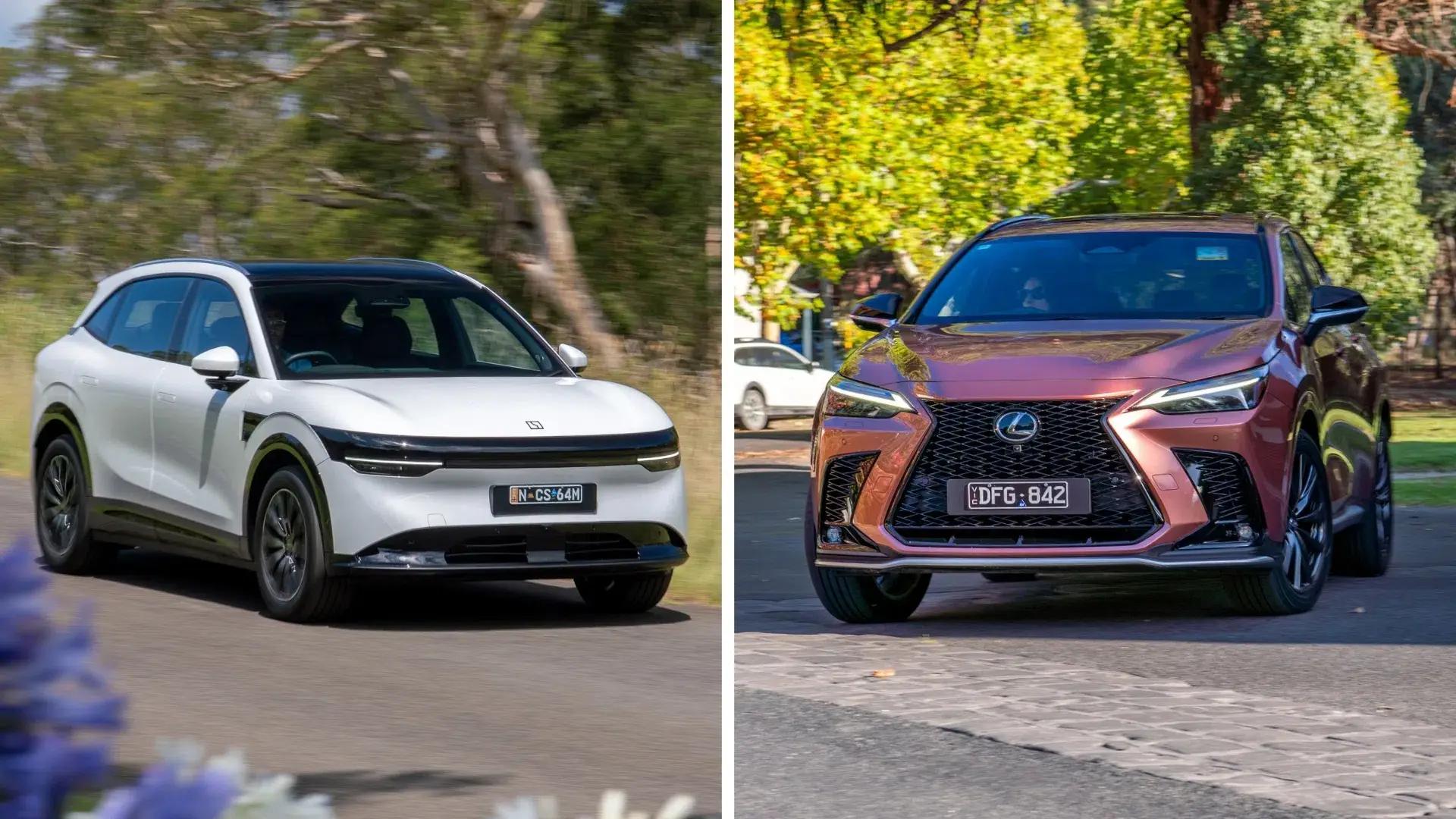
Six months ago, established Japanese car brands were still treating Chinese rivals as a curiosity not worth engaging seriously. The tone has shifted. Lexus Australia chief executive Jack Hobbs, speaking at the media launch of the 2026 RZ electric SUV, said the brand "respects competition" from Denza and Zeekr, and acknowledged that competition is "ultimately good for consumers."
That is a notable shift in language. Lexus has built its reputation since launching in Australia 36 years ago on the idea that reliability and ownership experience are worth paying a premium for. For most of that period, it faced competition from BMW, Mercedes-Benz, and Audi, all charging similar prices and offering comparable service infrastructure.
Denza and Zeekr are different. They offer more technology, often more space, and significantly lower prices than comparable Lexus models. Acknowledging them publicly as genuine competition rather than a passing trend is a meaningful statement.
The Numbers Tell the Story
Australian new-car sales data shows Lexus has sold 3914 vehicles year-to-date in 2026. Zeekr has sold 2838, with 2698 of those being the Zeekr 7X alone. Denza has moved 1131 vehicles, despite only arriving in Australia late last year.
The most direct comparison: the Zeekr 7X has outsold the Lexus NX 2698 to 1874 units so far this year. The NX is Lexus's volume model in Australia. Losing the segment race in your highest-selling model to a brand most Australians had not heard of 18 months ago is a signal that demands a strategic response.
Denza's B5 and B8 plug-in hybrid large SUVs have also outsold the Lexus GX and LX year-to-date. These are vehicles operating in the $140,000 to $220,000 price range. The idea that Chinese brands only compete at the affordable end of the market no longer reflects reality.
What Lexus Is Betting On
Hobbs acknowledged that Lexus cannot match Chinese brands on specification per dollar. His counter-offer is the "peace of mind promise," which includes a five-year, unlimited-kilometre warranty, three years of complimentary roadside assistance, and a national parts distribution network shared with Toyota across Melbourne, Sydney, Brisbane, Perth, and Darwin.
"We really want to make sure that it's not just a brand you buy, it's a brand you belong to," Hobbs said. It is positioning that worked for decades against European competition. Whether it holds against brands offering equivalent or better warranties at lower prices is a different question.
Denza offers a six-year, 150,000-kilometre warranty, better than Lexus on the time dimension. Zeekr matches Lexus at five years. The ownership experience argument is no longer the simple differentiator it once was.
Carseekers has noted the RZ's up to $42,000 price cut as the clearest sign that Lexus is responding to the competitive pressure in concrete terms, not just in positioning language.
What Buyers Should Actually Focus On
For buyers comparing Lexus, Denza, and Zeekr in 2026, the decision comes down to three practical questions.
First, how important is the dealer and service network? Lexus has coverage in every major Australian city and regional centre, backed by Toyota's parts infrastructure. Denza and Zeekr are expanding rapidly but remain thinner on the ground outside capital cities. If you are based in a regional area or travel frequently outside metropolitan centres, the service network question is not trivial.
Second, does technology or long-term reliability matter more? Chinese brands consistently lead on software integration, screen quality, over-the-air update frequency, and feature breadth per dollar. Lexus leads on a track record of vehicles that perform reliably at high mileages without major intervention. Both claims are legitimate and neither is dishonest.
Third, what does resale look like in five years? Lexus has established resale values built over 36 years in Australia. Denza and Zeekr are too new to have meaningful local resale data. Buying a newer brand carries real resale uncertainty that should factor into total cost of ownership calculations.
The 87 Per Cent Electrification Figure Tells Buyers Something
Approximately 87 per cent of Lexus vehicles sold in Australia in 2026 are hybrid, plug-in hybrid, or battery-electric. That is a high electrification rate for any premium brand in this market, and it reflects Australian buyers choosing Lexus specifically for hybrid reliability rather than for a performance or style statement.
That buyer profile is exactly who Denza and Zeekr are targeting. A buyer who chose a Lexus RX hybrid because they trusted the powertrain's long-term reliability is now looking at a Denza B5 PHEV with more technology and a lower price tag. The "trust the brand" argument is harder to make when the competing brand offers a comparable warranty and a compelling feature set.
The RZ 450e price cuts were the clearest signal that Lexus has moved from observation to active response. The more aggressive pricing brings the RZ under the FBT exemption threshold for novated leases, opening it to a business buyer market that the Zeekr 7X has already started capturing.
What Comes Next for Lexus
Lexus is not standing still. The brand has expanded its model lineup and has additional models confirmed for Australia, including the 2027 TZ electric SUV which remains under consideration for local launch.
But the pace of Chinese brand activity in Australia means the competitive pressure will intensify. Zeekr has confirmed the 8X and 9X full-size SUVs with plug-in hybrid power for Australia in the next 12 to 18 months. If those models land at competitive prices and with the same reliability story that the 7X has been building, the pressure on Lexus's large SUV lineup will grow.
The buyers who benefit most from all of this are Australians shopping for a premium SUV or people mover. Lexus has to offer better pricing, more compelling ownership terms, or more distinctive products than it did two years ago. That is already happening, and it should continue to drive better value for buyers regardless of which brand they ultimately choose.
Considering finance for your next car? Loanseekers can help you explore car loan options.
The finer details
Your questions answered.
Is Zeekr outselling Lexus in Australia in 2026?
In specific segments, yes. The Zeekr 7X has outsold the Lexus NX 2698 units to 1874 year-to-date in 2026. The NX is Lexus's highest-volume model in Australia. Overall, Lexus still leads Zeekr in total sales at 3914 versus 2838, but Zeekr only launched in Australia in 2024.
How does Denza's warranty compare to Lexus in Australia?
Denza offers a six-year, 150,000-kilometre warranty, which is better on the time dimension than Lexus's five-year, unlimited-kilometre cover. Zeekr matches Lexus at five years. The warranty advantage Lexus once held over Chinese brands is no longer a clear differentiator.
Why is Lexus cutting prices on the RZ electric SUV?
The up-to-$42,000 price cut on the Lexus RZ was driven by pressure from the Zeekr 7X and similar Chinese EVs offering more range and technology at lower price points. The cuts also brought the RZ under the FBT exemption threshold for novated leases, opening it to the business buyer market.
Should I buy a Denza or Zeekr instead of a Lexus in 2026?
It depends on what you value. Lexus has a 36-year track record in Australia, an extensive Toyota-backed parts network, and well-established resale values. Denza and Zeekr offer more technology and better specification per dollar, but are newer brands with less service infrastructure and no meaningful Australian resale history yet.
What is Lexus's strategy against Chinese brand competition?
Lexus is doubling down on its ownership experience, including its five-year warranty, roadside assistance, Lexus Encore program, and a parts distribution network shared with Toyota across five Australian cities. The brand's pitch is that premium ownership is worth paying for beyond the initial purchase price.
Are 87 per cent of Lexus Australia sales electrified?
Yes. Approximately 87 per cent of Lexus vehicles sold in Australia year-to-date in 2026 are hybrid, plug-in hybrid, or battery-electric. This is a high electrification rate for a premium brand and reflects Australian buyers who choose Lexus specifically for the reliability of its hybrid powertrains rather than for petrol performance.