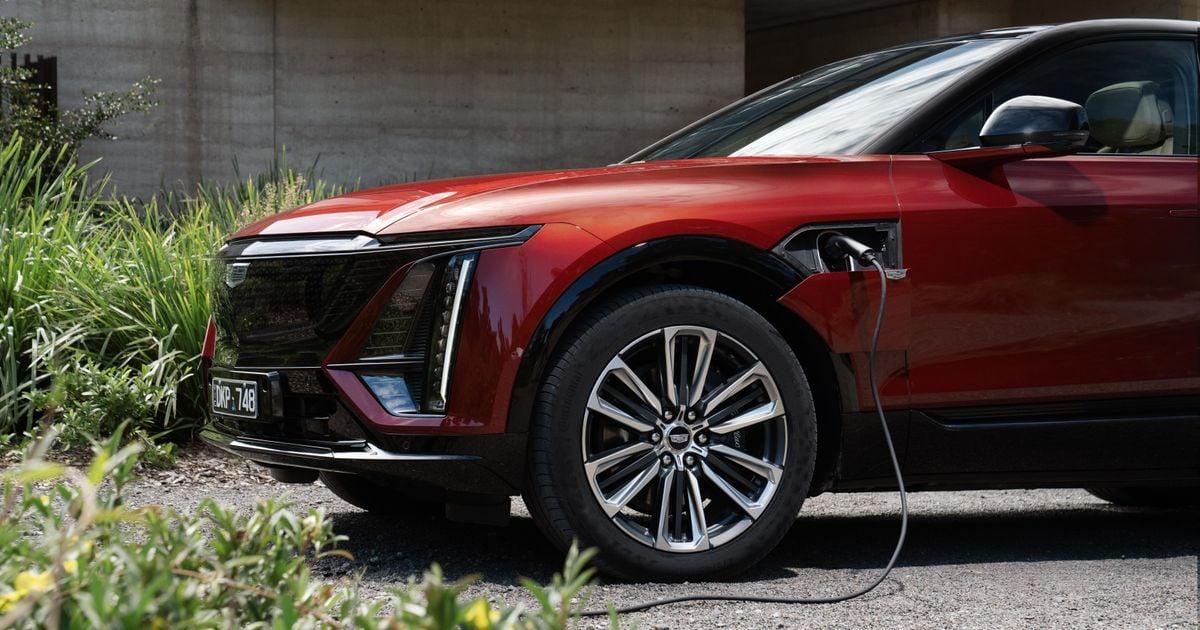

The Cadillac Lyriq has just had $32,000 cut from its Australian price. That's not a sale, it's a full list-price revision, and it reflects something significant happening across the premium end of the local electric vehicle market.
In the past 12 months, Cadillac, BMW, Lexus, Volvo, and Zeekr have all reduced their EV prices in Australia. Each brand has its own stated reason. The underlying pressure is the same: Chinese premium brands are undercutting everyone, and Australian buyers have noticed.
What Happened to the Cadillac Lyriq Price
Cadillac launched the Lyriq in Australia at $117,000 before on-road costs. The price was then raised to $122,000 in 2025. Now it sits at $90,000 before on-roads, with a nationwide drive-away offer of $95,000 available until June 30, 2026.
That's a $32,000 reduction in just over a year. General Motors Australia and New Zealand managing director Jess Bala acknowledged the shift directly: the market moved. New brands arrived with competitive pricing, and Cadillac had to respond.
The brand she didn't name specifically, but the timing makes clear: Zeekr. The Chinese premium brand launched in Australia in late 2024 and grew quickly, largely on the strength of the 7X electric SUV, which undercuts the Tesla Model Y and came in cheaper than the Cadillac Optiq. Buyers looking at luxury EVs were suddenly being handed a more compelling price-to-technology equation from a brand they'd never considered a year earlier.
Why This Isn't Just a Cadillac Problem
Lexus slashed prices on its RZ 450e by up to $42,059 earlier this year, for a model that also received a specification update. That drop brought the base price under the Luxury Car Tax threshold for fuel-efficient vehicles, which opens up the FBT exemption route for salary packagers.
BMW introduced an entry-level '40' version of the new-generation BMW iX3 at $89,900 before on-roads, also under the LCT threshold, and $20,000 less than the iX3 xDrive50. At the same time, BMW cut BMW iX1 pricing by up to $8,900 and iX2 pricing by up to $7,700.
Volvo reduced prices on its EX30 and Volvo XC40 electric SUVs by up to $11,300, framing the cuts as creating pricing room for the incoming EX60 rather than as a response to competition. Either way, the prices came down.
Even Zeekr, fresh off its rapid Australian growth, cut prices on its entry-level X small SUV as that model lagged behind the more popular 7X.
The FBT Threshold: What It Actually Means for Buyers
A critical number in all of this is $91,387, the current Luxury Car Tax threshold for fuel-efficient vehicles (rising to $91,667 in the new financial year). EVs priced below this threshold qualify for the federal government's Electric Car Discount, which means no Fringe Benefits Tax on novated leases or employer-provided vehicles.
This exemption is currently in full effect until March 31, 2027. After that date, the full FBT exemption applies only to vehicles under $75,000. Vehicles between $75,000 and the LCT threshold get a 25 per cent FBT discount only.
For corporate and salary-package buyers, the LCT threshold is everything right now. Brands are actively engineering their pricing to sit below it, knowing that a significant portion of luxury EV buyers access the category through novated leases. The Lyriq's new $90,000 list price landing precisely under that threshold is not a coincidence.
If you're considering a luxury EV for salary packaging purposes, the window to access the full FBT exemption closes in March 2027. Deliveries need to happen before that date to lock in the benefit.
What This Means for Negotiations
In a market where list prices are falling, dealers have less room but more motivation. A brand like Cadillac that has publicly reduced its price by $32,000 in a year is signalling to informed buyers that there's flexibility. The question is how much further it can go.
A few tactical points for luxury EV buyers right now:
First, the end of June presents an opportunity. The $95,000 Lyriq drive-away offer expires June 30. That's a date worth noting if you're interested in this specific car, but don't let a deadline pressure you into a commitment you're not ready for. Carseekers exists specifically to help buyers understand what a real deal looks like before walking into a showroom.
Second, the current price cuts apply to existing stock. If a brand is clearing inventory before a new model year or updated spec, ask specifically what you're getting. The Cadillac Lyriq is still a 2025-spec product, confirm whether 2026 updates are coming and whether waiting is worthwhile.
Third, when a brand's headline cut is framed as a national drive-away price, ask what driveaway means in your state. On-road costs vary significantly by state, and a 'national' drive-away price may embed assumptions about stamp duty that don't apply where you are.
Why Chinese Premium Brands Changed the Equation
The arrival of Zeekr has genuinely recalibrated what premium means in the Australian EV market. A brand like Zeekr has no dealer network overheads in the traditional sense, no legacy dealership agreements across a 50-year distribution model, and no obligation to support ICE products alongside its EV lineup. That structural cost advantage gets passed on as price.
Denza is expanding its lineup. Avatr has been spotted in local testing. These aren't fringe brands, they're backed by BYD and CATL respectively, with genuine development budgets. If they launch in Australia at the price points they're at globally, the pressure on Cadillac, BMW, and Lexus will intensify further.
The response from established luxury brands has so far been price cuts and threshold engineering. A deeper response would require rethinking the cost of selling and servicing a luxury vehicle in Australia, which no brand has meaningfully tackled yet.
The Buyer Opportunity Right Now
For buyers who've been watching this market and waiting, the value proposition of a luxury EV in Australia looks better today than it did 18 months ago. The Cadillac Lyriq at $90,000 before on-roads is a fundamentally different proposition from the $122,000 version that launched. The car hasn't changed; the competitive context has.
The same applies to the BMW iX3 at $89,900. That's a real-world luxury mid-size SUV for a price that would have been considered entry-level in this segment two years ago.
If you're in the market for a luxury EV and considering salary packaging, act before March 2027 on the FBT benefit. If you're a private buyer, the current price trajectory suggests waiting will continue to reward patience, but only to a point. Once these brands stabilise their pricing, the cuts will stop.
Considering finance for your next car? Loanseekers can help you explore car loan options.
The finer details
Your questions answered.
Why has the Cadillac Lyriq price dropped so much in Australia?
Cadillac reduced the Lyriq's list price from $122,000 to $90,000 because the local EV market shifted significantly after launch. Chinese premium brands like Zeekr arrived with competitive pricing, and established luxury EVs needed to reposition. Cadillac also engineered the new price to sit below the LCT threshold, which unlocks FBT benefits for salary packagers.
What is the FBT exemption for EVs in Australia and when does it end?
Electric vehicles under the Luxury Car Tax threshold for fuel-efficient vehicles ($91,387 in FY26) are currently exempt from Fringe Benefits Tax when provided through a novated lease or by an employer. This full exemption applies until March 31, 2027. After that date, the full exemption only covers EVs under $75,000; vehicles above that get a 25 per cent FBT discount only.
Which luxury EVs have had the biggest price cuts in Australia recently?
The Lexus RZ received the largest single cut at up to $42,059. The Cadillac Lyriq dropped $32,000. BMW cut iX3 entry pricing by $20,000 with a new base model, and also reduced iX1 and iX2 prices by up to $8,900 and $7,700 respectively. Volvo cut EX30 and EX40 prices by up to $11,300.
Is now a good time to buy a luxury EV in Australia?
If you're salary packaging, yes, act before the FBT window closes in March 2027. For private buyers, prices are falling but stabilising; waiting rewards patience up to a point. The current generation of luxury EVs from BMW, Lexus, and Cadillac are better value than they've ever been in Australia, but check what stock you're actually getting and whether updated specs are imminent.
How does the Zeekr 7X compare to the Cadillac Lyriq in Australia?
The Zeekr 7X undercuts both the Tesla Model Y and the Cadillac Lyriq on price and offers strong technology for the money. It's a genuine reason Cadillac had to drop its prices. The Lyriq offers a larger footprint, a more established luxury interior, and Cadillac's dealership service network. The 7X wins on value; the Lyriq wins on brand heritage and cabin space.
Can I still get the Cadillac Lyriq for $95,000 drive-away in Australia?
The $95,000 national drive-away offer was available until June 30, 2026. After that date, the list price of $90,000 before on-road costs applies. On-roads vary by state, so your actual drive-away price will depend on stamp duty and registration costs in your location. Contact Cadillac dealers directly for post-June pricing.