Beauty is subjective, but sometimes a design lands badly enough that it actually changes a model's commercial fate. Ford's AU Falcon is the famous Australian example. It is a cult icon now, but at launch it was widely treated as a case study in getting design wrong. The decline of the Falcon, and arguably the locally made large sedan, can be traced to that car's looks.
Another example is the divergent fates of the 2011 Mazda BT-50 and Ford Ranger. Same underpinnings, very different design briefs. Ford chose boxy, tough, truck. Mazda tried to bring CX-7 and CX-9 styling cues into the segment. Within a few years Ford had more than doubled Ranger sales while Mazda's BT-50 had grown only marginally. Ute buyers wanted boxy.
So what are the most visually challenging vehicles on sale today? Below is our list. We expect plenty of disagreement, which is the whole point.
The Tesla Cybertruck
Thankfully Australia has largely been spared the sight of the so-called dumpster on wheels on our roads. The American electric pickup was clearly designed to stand out from the rest of the ute market. Unfortunately, it stands out in the same way you might stand out in a crowd if you wrapped yourself head-to-toe in tinfoil.
The Cybertruck has become a symbol of Tesla the brand. Unorthodox, but not necessarily in a good way. The stainless-steel panels show every fingerprint and bird strike. The straight-line shape compromises aerodynamics at highway speed. And the proportions are deliberately, almost aggressively, hostile to traditional truck aesthetics.
Some buyers love it for exactly those reasons. Tesla has never marketed it as a conventional product. But if you put one alongside a Ford F-150 or Toyota Tundra, the Cybertruck looks like a different category entirely, and not in a flattering way.
Kia EV4
The Kia Tasman is the easy whipping boy for the brand, but that has been beaten up enough. The more interesting design miss in Kia's otherwise attractive lineup is the EV4, an electric mid-size sedan that prioritises wind-tunnel aerodynamics over visual coherence.
The shape works. Long-range EV4 variants are claimed to do more than 600km on a single charge thanks to its aero efficiency. But the resulting silhouette looks pinched at the back, with proportions that make it hard to place. It is neither a conventional sedan nor a convincing sleek liftback, and the design choices feel like compromises stacked on top of each other.
The rest of the Kia range, from the Sportage to the EV9, is in great visual form. The EV4 stands out as the odd one. It is a reminder that designing for efficiency and designing for desirability are not always the same goal.
The latest Mercedes-Benz EQS-class
It is not just mainstream brands that occasionally strike design trouble. Mercedes-Benz's latest large EV is unlikely to be remembered as one of the brand's most iconic creations. Memorable, yes, but not for the right reasons.
The front grille is as subtle as a Las Vegas casino, with a diamante-style finish that looks like the designer crashed into a costume-jewellery store. The rear treatment has so many three-pointed Mercedes stars stuffed into the design that there is no question what brand you are looking at.
The optional 39.1-inch Hyperscreen also overwhelms the cabin's classic Mercedes restraint. Yes, it can be deleted, but most demonstrator cars in showrooms will have it, and that is the visual story most buyers will encounter. It is technology overpowering classy sophistication, which is the exact balance Mercedes used to nail.
The new-generation Subaru Outback
Subaru has taken a big gamble with the latest-generation Outback. It has abandoned the wagon roots that defined the model for two decades in favour of an SUV-leaning shape, sort of. The result is neither a good-looking wagon nor a convincingly stylish SUV.
Instead it looks awkwardly proportioned. The grille would not look out of place on a US pickup. The new Wilderness variant adds even more visual bulk, with overfenders and additional plastic cladding that double down on a shape already struggling to make sense.
The sales numbers are starting to confirm the design risk. Subaru president Atsushi Osaki recently acknowledged the new Outback has missed targets, with US buyers in particular asking for the previous generation's wagon silhouette. That is rare honesty from a CEO, and a sign the brand may yet rework the look mid-cycle.
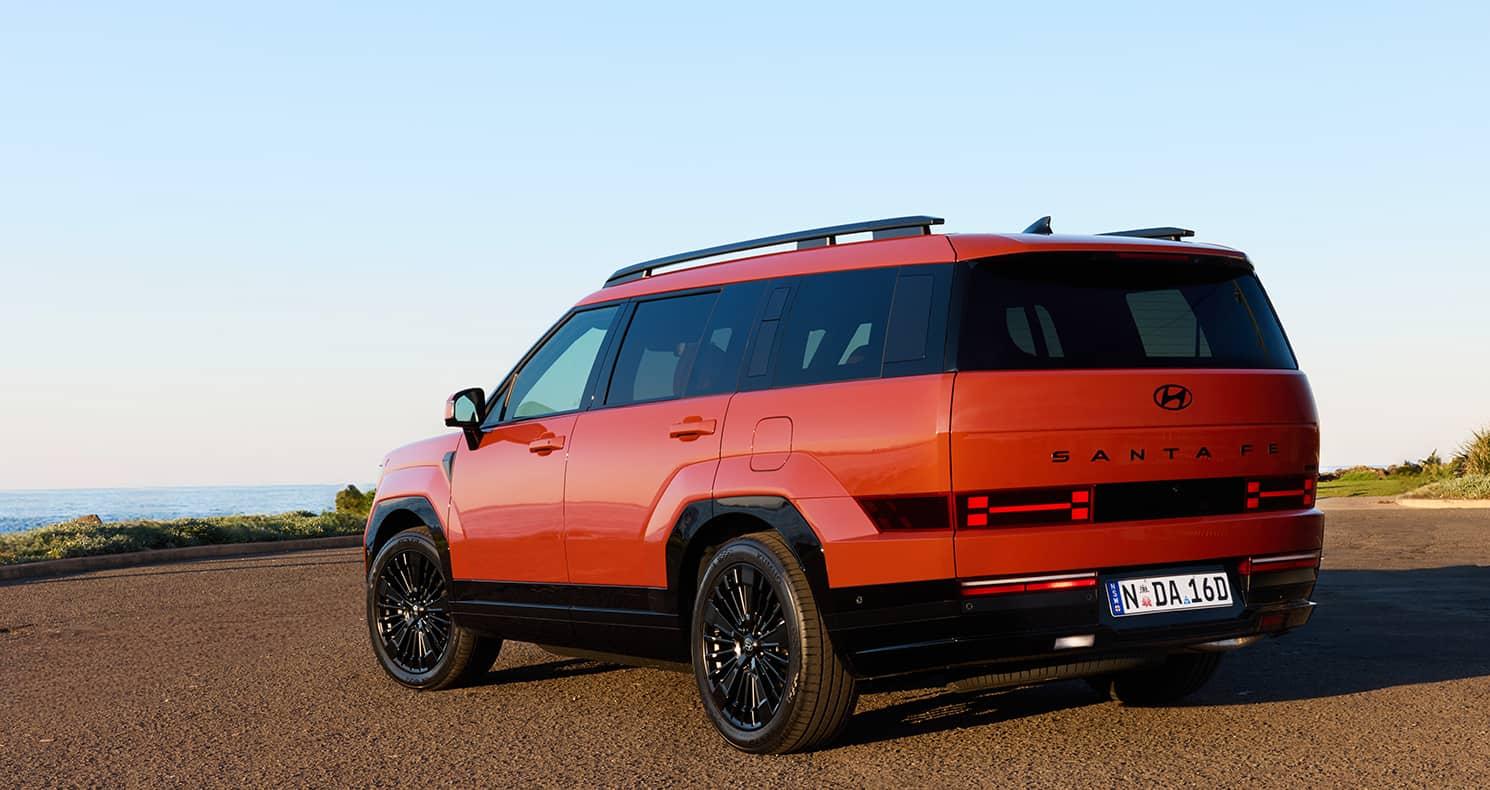
The Hyundai Santa Fe (controversial)
And now the entry where we expect the most reader disagreement. The latest Hyundai Santa Fe. For the record, your writer actually likes this car visually. The boxy, almost Land Rover Defender-style silhouette is a refreshing departure from the indistinguishable seven-seat blob that defines the segment.
But since the Santa Fe launched, plenty of readers have told us they think it is hideous. The rear-end styling, with the tail-lights mounted low on the body, is the most common complaint. Some say the proportions read more like a panel van than a premium SUV.
Whether you like or hate the Santa Fe is a useful test of where you stand on automotive design generally. If you value distinctive lines and a clear visual identity over conventional prettiness, the Santa Fe is a hit. If you want a clean, harmonious silhouette that does not pick fights with the eye, it is a miss.
Why design still matters for buyers
Design affects resale value. The cars on this list will, on average, depreciate faster than their better-looking rivals, all else being equal. The Cybertruck has not arrived in Australia officially. The Outback's design risk is already showing up in slowing sales. The Mercedes EQS has been a slow seller globally.
The practical implication for Carseekers buyers is straightforward. If you are buying a car you intend to keep forever, design opinion matters less. If you are buying with a view to resale in three to five years, factor in how polarising the design is and whether it has aged well or badly in similar previous models.
For used buyers, the opposite logic applies. A polarising design that ages well in the used market can be a genuine value win. Some controversial designs become collector classics. Others stay disliked. Most fall somewhere in between, and the price discount on resale can outweigh the styling pain.
What is not on this list
We deliberately left a few popular candidates off. The new Toyota Prius is divisive, but most of the noise has come from existing Prius fans who liked the older shape. The Mitsubishi Triton's pre-facelift face was widely criticised, but the current model has been softened.
The Citroen C5 X has its detractors, but it is not on sale here anymore. The Toyota C-HR's wedgy second generation has been criticised, but the styling intent is clearer than the cars on this list. And the new Mazda CX-80 has been called proportionally awkward, but a CX-80 still looks recognisably like a Mazda, which is the visual coherence the Kia EV4 lacks.
Reasonable readers will disagree with every selection here, and that is exactly the point. Design is the most subjective area of car evaluation. Anyone who tells you otherwise has either never run a focus group or is selling you something.
What to watch on a test drive
If you genuinely care about a car's looks, take three steps. First, see it in person, not just in photos. Photo angles flatter or punish certain shapes, and the real car often looks different. Second, see it in real lighting, not just showroom spots. Many cars look better in showrooms and worse on a grey street. Third, sit next to it for a while. First impressions of polarising designs often soften, or sometimes harden.
Also consider the colour. The Tesla Cybertruck looks markedly different in raw stainless versus wrapped finishes. The Outback Wilderness looks different on body-colour panels than on murdered-out trims. The Santa Fe in a clean white looks different to a black-on-grey example. Spec choices can rescue or damn a design.
Finally, take your harshest design critic for the test drive. Family members and partners are often more honest than dealers about whether they will be embarrassed to be seen in the car. Their reaction is worth taking seriously.
The Carseekers take
This list is, by design, opinionated. We are happy to defend the picks, and equally happy to be wrong on any individual one. Tastes change, the cars on this list may yet be reconsidered as classics, and reasonable buyers will line up either side of every car listed here.
For Carseekers shoppers, the bigger takeaway is that design risk is real and worth factoring in. If you love any car on this list, buy it and enjoy it. If you are buying for resale, weigh the polarising styling against the depreciation curve before you sign.
Considering finance for your next car? Loanseekers can help you explore car loan options.
The finer details
Your questions answered.
Which is the ugliest new car on sale in Australia in 2026?
Reasonable people disagree, but our top picks are the Tesla Cybertruck, Kia EV4, the latest Mercedes-Benz EQS, the new-generation Subaru Outback and (controversially) the latest Hyundai Santa Fe. Each is on the list for different reasons. The Outback is showing real sales pain from its polarising design.
Does car design actually affect resale value?
Yes, materially. Polarising designs typically depreciate faster than mainstream-attractive rivals, all else being equal. The 2011 Mazda BT-50 against the Ford Ranger is the classic example. Same underpinnings, different design briefs, very different sales and resale outcomes.
Will the Subaru Outback look different in future model years?
Quite possibly. Subaru CEO Atsushi Osaki has publicly acknowledged the new Outback has missed sales targets, with US buyers asking for the previous wagon silhouette. A mid-cycle visual refresh is plausible, and the next-generation Outback will likely lean further back toward its wagon heritage.
Is the Hyundai Santa Fe really ugly?
It depends on your taste. The author actually likes its boxy, almost Defender-style design. But many readers find the rear-end treatment, with low-mounted tail-lights, awkward or van-like. The Santa Fe is the clearest test case on this list of whether you value distinctive design over conventional prettiness.
Should I avoid buying a polarising car design?
Not if you genuinely love it. If you are buying to keep the car forever, design opinion matters less. If you are buying for three-to-five-year resale, factor in how polarising designs typically depreciate. Used buyers can win the other way, picking up unloved cars at a meaningful discount.
What car design has aged best in Australia recently?
The Ford Ranger is the benchmark. Its boxy, tough-truck design language has held up across two model generations, defined the entire dual-cab segment and remains visually competitive against newer rivals. The Mazda CX-5 and Toyota LandCruiser Prado are other examples of designs that have aged well.