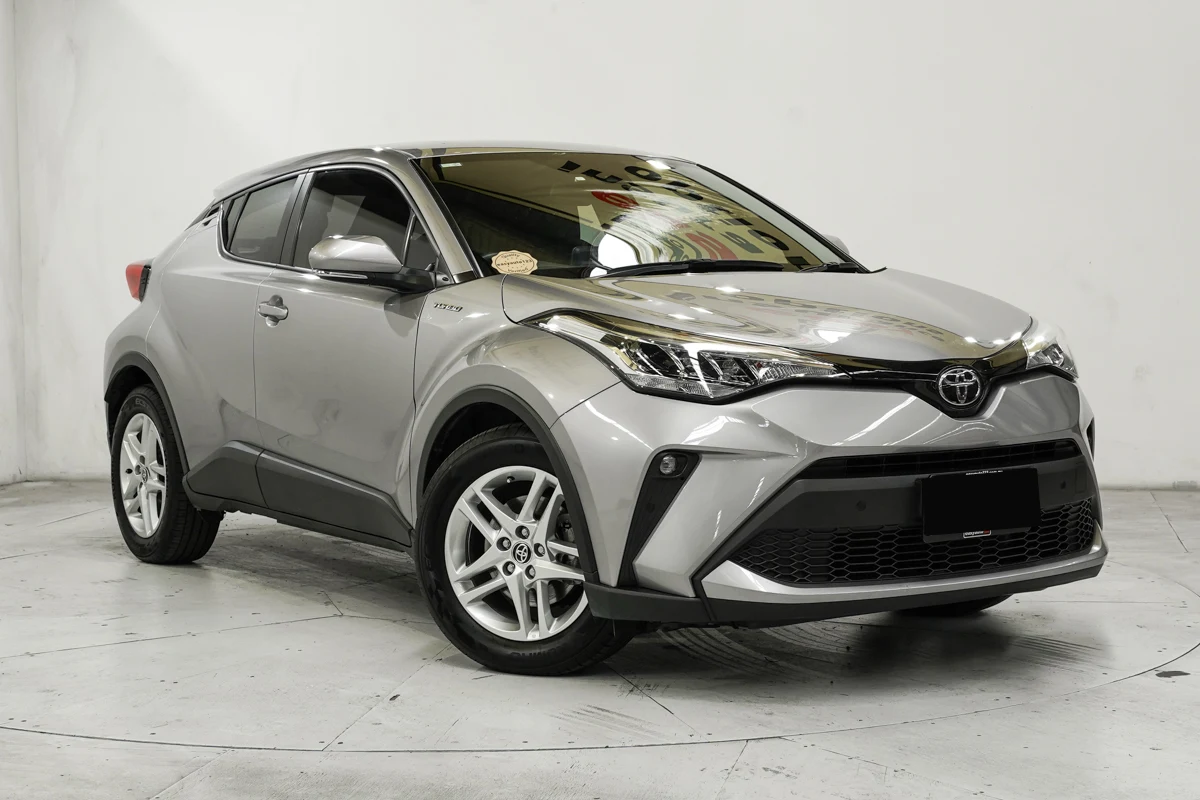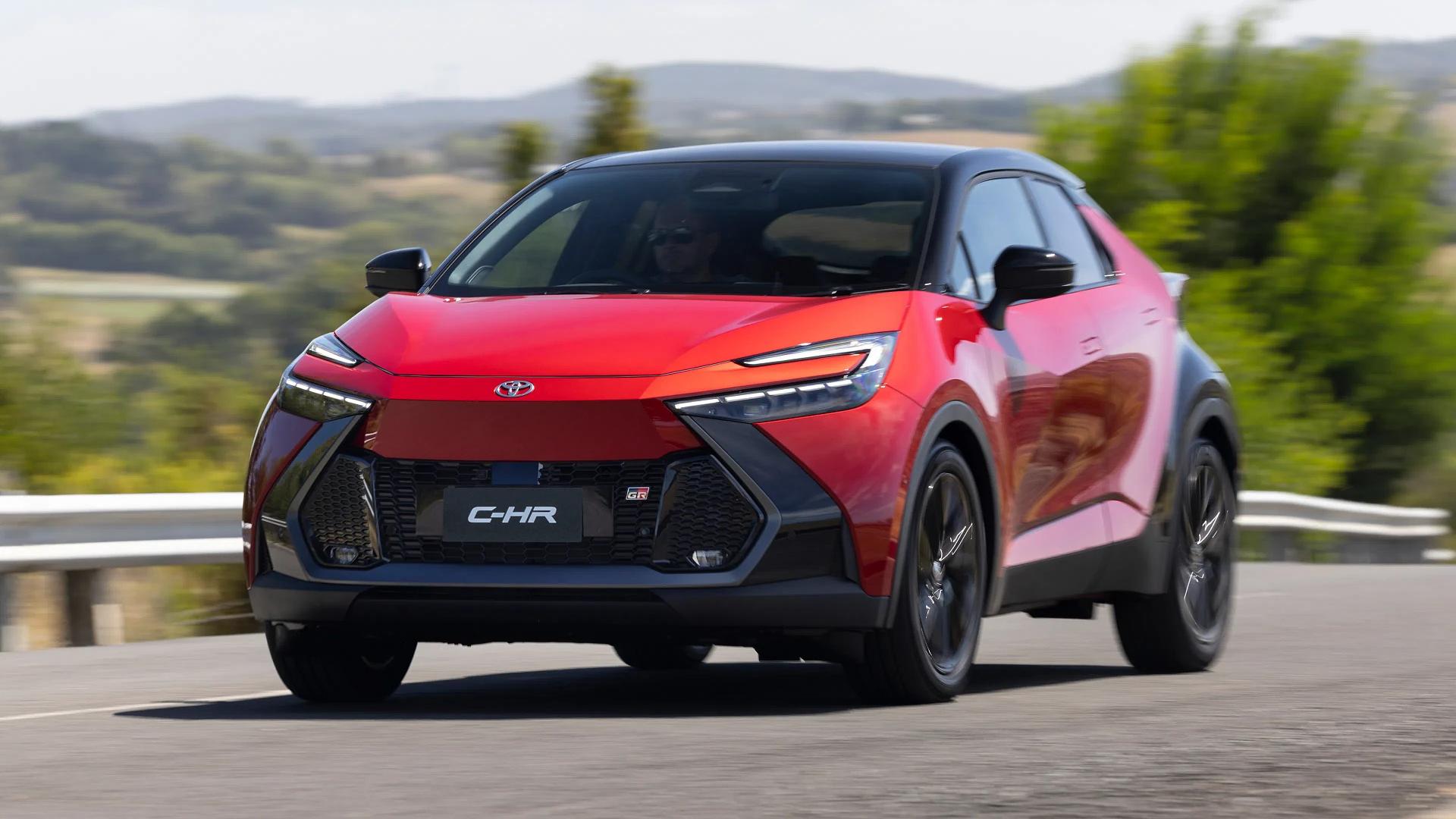

When a brand publicly declares it is perfectly happy with a sales figure that puts it near the bottom of its own lineup, something else is being managed. Toyota is keeping the C-HR hybrid on Australian roads despite a 46.9 per cent year-on-year sales fall, and the electric version will not arrive for more than another year. That combination tells buyers more than any press release will.
Toyota C-HR Hybrid Pricing, Variants, and Where It Stands in April 2026
The current Toyota C-HR hybrid runs across three variants: GX, GXL, and GR Sport. Pricing starts at $46,940 and climbs to $58,890 before on-road costs. The flagship GR Sport is around $65,000 drive-away, roughly $4,000 more expensive than it was at launch two years ago.
Toyota Australia VP of sales John Pappas confirmed the C-HR hybrid remains part of the brand's multi-pathway strategy and will continue in Australian showrooms. The company is not cutting the model, but it is also not pretending the numbers are strong.
Only 406 examples of the C-HR were sold between January and March 2026, a fall of 46.9 per cent from the same period last year. Against a Toyota-set target of roughly 2,500 sales per year, the car is on track for fewer than 1,700 this calendar year.
The Turkish Import Tariff That Makes the C-HR Structurally More Expensive Than Its Rivals
The C-HR is built in Turkey, which means it carries a 5 per cent import tariff into Australia. Cars from Japan, China, Thailand, the US, and the European Union all enter under free-trade agreements, meaning zero tariff.
The Australia-EU free trade agreement was signed on 24 March 2026. Once its pricing benefits flow through, C-HR rivals built in Germany and Spain, including the VW T-Roc, BMW X1, Audi Q3, and Cupra Formentor, could receive price adjustments. The C-HR will still carry its 5 per cent tariff.
This is a structural disadvantage Toyota cannot quickly resolve. The factory is in Turkey and relocating production is not a 12-month fix. Any buyer comparing the C-HR to European-built alternatives should factor in that the competitive gap on price may widen over the next 12 to 18 months.
Sales 40 Per Cent Below Target Creates a Buyer's Market at the Dealership
The C-HR is currently Toyota's slowest-selling passenger vehicle in Australia, outpaced by niche products like the GR86 sports car and the Tundra full-size ute. In the same three-month period, the Corolla Cross sold 3,610 units and the RAV4 sold 3,842.
In the premium small SUV segment, the C-HR has been outsold by the BMW X1 and iX1 combined at 1,229, the Kia EV3 at 861, the VW T-Roc at 784, and even the Volvo XC40 at 766. Those are competitors with significantly smaller dealer networks.
For buyers, that means dealers carrying C-HR stock have cars sitting. A vehicle that has not moved is a cost the dealer is absorbing. That creates room to negotiate on accessories, delivery fees, and service packages that would not exist if demand were running hot.
How Dealers Behave When Their Stock Is Running Behind National Sales Targets
Toyota dealers operate against monthly and quarterly sales targets tied to their franchise agreement. A model that is running 40 per cent below the brand's own annual forecast puts pressure on individual sales teams.
Dealers in this position are more likely to absorb accessories costs, apply dealer-level discounts on demonstrators, and include complimentary service plans without being pushed. They will not advertise that flexibility. You need to ask specifically.
Do not accept the first printed quote. Reference the sales data if you want to. Saying you are aware the C-HR has had a slow quarter is not rude. It is the kind of market awareness that dealers already know you have access to.
Three Specific Steps to Take Before You Sit Down at a Toyota Dealership
First, get a written drive-away quote that includes all on-road costs for your state before any negotiation begins. Stamp duty and registration vary by state, and the difference can add $1,500 to $3,000 to the real cost. Work from drive-away, not before-on-road.
Second, ask specifically about demonstrator stock. The GR Sport variant in particular may have demonstrators sitting at below-sticker pricing. Dealers holding late-model stock will price those to move, which can bring the effective cost below the published drive-away figure.
Third, if you are salary packaging through a novated lease, confirm the C-HR hybrid's status under the FBT exemption rules before your visit. The C-HR sits above the luxury car tax threshold for fuel-efficient vehicles, which may affect your calculation differently to a fully electric alternative.
June is the Next Pressure Point for Toyota Dealers and Why It Works in Your Favour
End of financial year in June is the most predictable pressure window in the Australian new-car market. Dealers who are running below target on a slow-selling model will be motivated to clear stock before 30 June.
Toyota's national sales reporting means that a model sitting 40 per cent below forecast going into Q4 will intensify that pressure further. If you are planning to buy a C-HR in 2026, the window between now and 30 June represents the best alignment of available stock and dealer motivation.
After that window, European competitors may begin to see pricing adjustments flow from the AU-EU free trade agreement. The C-HR's competitive position on value could soften further in the second half of the year.
Buying the Hybrid Now Versus Waiting for the C-HR Electric in 2027
The C-HR BEV was confirmed for Australia in November 2025. It is built on the larger bZ4X platform, not a derivative of the current hybrid. Toyota's Pappas confirmed the mid-2027 arrival is locked in and there is no plan to accelerate it, even as EV demand climbs.
The Subaru Uncharted, which shares the same underlying platform as the C-HR BEV, arrives in Australia mid-2026. That will give buyers a pricing reference point and a sense of how the Toyota variant will sit in the market.
If you are genuinely undecided between hybrid and electric, you will have roughly 12 to 14 months of information to gather before the BEV is available. If the hybrid suits your driving today, the current negotiating environment makes a strong case for acting before EOFY. Visit Carseekers to compare the C-HR hybrid against every current alternative before you step inside a dealership.
Considering finance for your next car? Loanseekers can help you explore car loan options.
The finer details
Your questions answered.
Why are Toyota C-HR sales down in Australia?
The Toyota C-HR Hybrid experienced a 46.9 percent year-on-year sales decline in Australia. The main reasons are increased competition from Chinese-brand small SUVs offering more features per dollar, the absence of the electric C-HR that buyers in other markets can access, and buyer uncertainty about whether to wait for the EV version arriving in late 2027.
Can I negotiate a good deal on a Toyota C-HR Hybrid in Australia right now?
Yes. Low sales volumes mean dealer stock turns over slowly, and slow-turning Toyota stock is unusual enough to create real negotiation room. Ask your dealer specifically about in-stock C-HR Hybrids that have been on the lot for more than 60 days. Discounts of $2,000 to $4,000 off drive-away are achievable in this environment.
Should I buy a Toyota C-HR Hybrid now or wait for the electric version?
The electric C-HR is not expected in Australia until late 2027 or 2028. If you need a small hybrid SUV now, the current C-HR Hybrid is available with real deals available. If you can wait and specifically want the EV version, factor in more than 12 months of running costs on your current car against the electric version's likely pricing.
How does the Toyota C-HR Hybrid compare to the MG ZS EV on value?
The C-HR Hybrid offers Toyota's reliability reputation, resale value strength, and a no-charging-required ownership experience. The MG ZS EV costs less, offers more features, and provides lower running costs if you can charge at home. For buyers without home charging, the C-HR Hybrid is more practical; for those with charging, the MG ZS EV offers stronger value.
What is the fuel economy of the Toyota C-HR Hybrid in Australia?
The Toyota C-HR Hybrid achieves approximately 4.7 to 5.0L/100km on the combined cycle, making it one of the most fuel-efficient non-plug-in hybrids in the small SUV segment. Real-world Australian figures are typically 5.5 to 6.5L/100km in mixed driving, which is genuinely competitive against both petrol alternatives and mild hybrids.
Is the Toyota C-HR Hybrid good value at its current price in Australia?
At current negotiated prices, yes. List pricing sits the C-HR Hybrid above its sales performance suggests buyers think it should be, but with discount room available, the effective price becomes competitive. Toyota's warranty, resale strength, and reliability record add value that is not visible on the spec sheet.