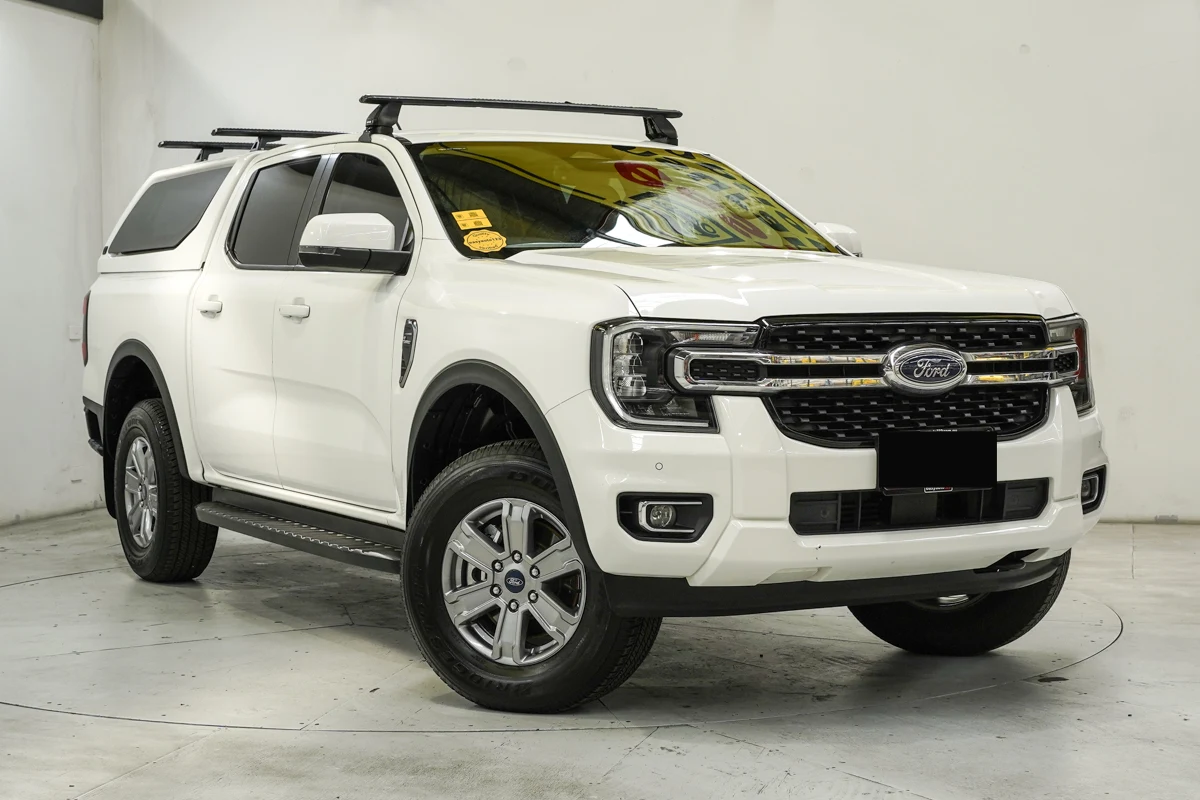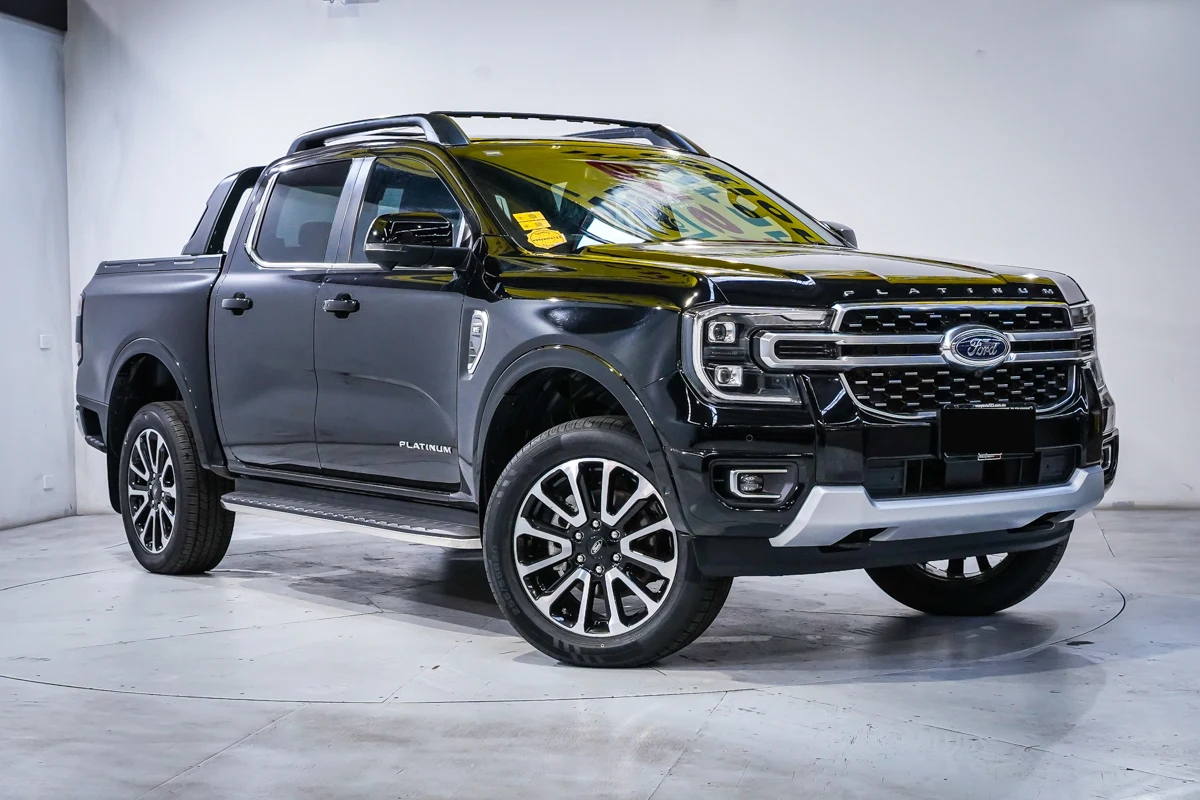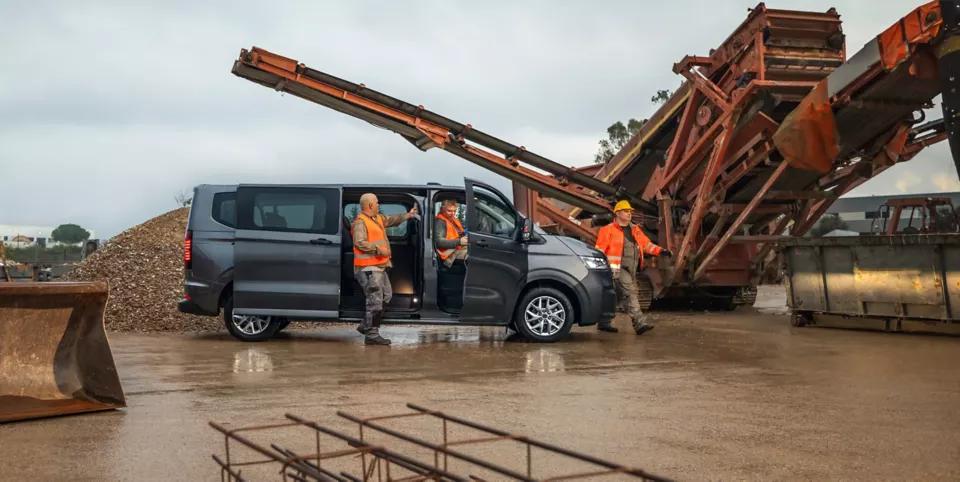
Utes own the adventure marketing in Australia. Walk into any Ford Ranger showroom or BYD Shark 6 display and the imagery is the same: a couple, a tent, a creek crossing, and a dog. But spend any time on Australian roads and you will see just as many vans being used the same way. So which is actually better for the average weekend warrior?
For most buyers who say they want a 4x4 ute for adventure, the honest answer is that a van does the job better, cheaper to run, and with less wasted capability. The Ranger and similar dual-cab utes are excellent if you are doing hard off-road work or towing heavy. For the rest, a Volkswagen Transporter or Ford Transit Custom Trail is the more useful tool.
Where utes still win clearly
A 4WD ute is the better off-roader, full stop. Ground clearance, approach and departure angles, wheel travel and dedicated off-road driver-assist systems all favour the ute platform. A Ranger with a rear locker and decent tyres can go places a Transporter never will.
Utes also handle awkward loads that exceed roof height, kayaks, ladders, trail bikes on a ramp, simply because the tray is open. And a single-cab tradie ute can carry over a tonne of payload, which is where they earn their keep on a job site.
Where vans quietly win
For recreational use, the van's enclosed load space is a much bigger advantage than the marketing suggests:
- The cargo area is fully lockable and weatherproof from the factory, not as an aftermarket add-on - A Ford Transit Custom Trail offers 6.8 cubic metres of load volume, easily a king-size mattress plus storage - A long-wheelbase Volkswagen Transporter or Mercedes-Benz Vito gives over 3 metres of internal length - Tie-down points, interior lighting, power outlets, and floor matting are factory-fit, not bolted on later - Side sliding doors give better access for camping setups than a ute's drop-tail - Payloads are competitive, typically over 1000kg
A ute owner adding a canopy, sliding drawers, a fridge slide, lighting, dust seals and a roof rack to match the same capability often spends $8000 to $15,000 in aftermarket fit-out. That money is not recoverable at resale, where most buyers want a clean tray.
The fuel maths
Vans tend to win around town, with diesel returns commonly in the 6.5 to 9.5L/100km range. Utes are more aerodynamic and pull ahead on the highway and over rougher terrain, with combined economy more like 8.5 to 11L/100km on diesel. Once you add a bullbar, roof rack, and a touring fit-out to either vehicle, those numbers blow out by 15 to 25 per cent, and the gap narrows further.
For a buyer doing mostly suburban running and occasional long touring trips, the van is the better fuel-economy bet. For a buyer regularly towing a caravan or boat, the ute pulls ahead because of the platform's higher tow ratings and stability.
Where the ute fantasy breaks down
A lot of Australian ute purchases are driven by lifestyle imagery rather than how the vehicle gets used. Carseekers regularly speaks to buyers who:
- Tow once a year, if at all - Do most of their off-roading on graded dirt or beach access tracks - Spend more on a canopy and drawer system than the ute's first three services - Trade the ute back in within three years because the tub never gets used
For that buyer, a van is the more honest tool. It does 95 per cent of what they actually do, with better security, weather protection, and lower running costs. The 5 per cent where a ute wins, serious off-road tracks and heavy towing, is the part most buyers never reach.
Where Trakka and the Australian campervan scene comes in
If you want a recreational platform built right, the Australian campervan industry is decades ahead of where DIY ute touring is. Sydney-based Trakka has been building purpose-built motorhomes and campervans here since 1973, and its latest Akuna range is based on the Volkswagen Crafter mid-wheelbase van with VW's 4Motion all-wheel drive system.
Features include 5120Wh of energy storage (with 10,000Wh and 15,000Wh options), 800W of solar on the roof, a 170L fridge-freezer, integrated water tanks, and a 4000W AC inverter. The Crafter base uses a 2.0-litre turbo-diesel making 130kW and 410Nm, mated to an eight-speed automatic.
That kind of factory-engineered fit-out is hard to replicate on a ute, and the result is a vehicle that holds resale value as a known commodity. A custom-built ute camper, by contrast, sells for whatever the next buyer thinks the fit-out is worth, often a fraction of what it cost to build.
What we recommend buyers ask themselves
Before signing on a dual-cab ute, ask the hard questions:
- How many times in a year will I genuinely need 4WD low range? - How often will I tow more than 2500kg? - What proportion of my driving is highway versus dirt? - Could a van plus a small trailer do the same job for less? - Will I keep the ute long enough to recoup the aftermarket fit-out?
If the answer to most of those is "not often" or "probably not", a van is the smarter purchase. Resale on used VW Transporters and Ford Transit Customs has firmed up significantly over the past two years, particularly the Trakka-built and similar pop-top conversions, which trade more like used boats than depreciating vehicles.
When to still pick the ute
The Ranger and its rivals remain the right call if you are:
- Towing a heavy caravan or boat regularly - Doing serious 4WD touring across the country - Working a trade where the tray earns its keep - Hauling long, awkward loads that won't fit through a sliding door
For everyone else, a Volkswagen Transporter, Ford Transit Custom Trail or Mercedes-Benz Vito is the more useful tool. It costs less to run, secures your gear properly, and does the recreational job the marketing promises a ute will do. Sometimes the better answer is the one nobody's advertising at.
The hidden cost of ute aftermarket fit-out
The numbers that ute marketing leaves out are the post-purchase ones. A typical adventure-touring fit-out on a Ford Ranger or Toyota HiLux includes a canopy ($3000-$6000), drawer system ($2500-$5000), 12V battery and DC-DC charger ($1500-$3000), fridge slide and fridge ($1500-$2500), awning ($800-$1500), rooftop tent or swag ($2000-$4000), and a long-range fuel tank ($1500-$2500). Add a bullbar ($2500-$4000) and roof rack ($1500-$3000) and the total comfortably exceeds $15,000 above the vehicle purchase price.
None of that is recoverable at trade-in. Most used-ute buyers want clean stock vehicles or pay a heavy discount on aftermarket fit-outs. A van starts with most of those features built in: lockable storage, lighting, power outlets, weatherproofing, and a roof you can stand under. The aftermarket spend on a van is typically a third to half of what the equivalent ute build costs.
Insurance, registration, and running costs
The other comparison most ute marketing skips is what these vehicles actually cost to keep on the road. A Volkswagen Transporter or Ford Transit Custom typically costs 10 to 20 per cent less to insure than a Ranger or HiLux, partly because vans are statistically less likely to be involved in serious crashes (lower centre of gravity, often used for fleet work with cautious drivers).
Registration is also typically lower for vans in most Australian states, because they sit in a different vehicle classification. Service costs are broadly similar, with both segments dominated by capped-price service programmes from the manufacturer. Fuel economy depends entirely on how the vehicle is being driven, but a van tends to win in the city and a ute wins on long highway tows.
When you stack the lifetime ownership cost (purchase price plus aftermarket plus 5-year running costs) of a $65,000 Ranger fitted out for touring against a $55,000 Transporter with light aftermarket, the van comes out roughly $20,000 ahead for the same recreational use case.
The resale picture
Resale on touring-fitted utes has weakened in the past two years. The market has been flooded with used Rangers, HiLuxes and BT-50s with extensive aftermarket fit-outs, and buyers have become more discerning. Cars with badly executed fit-outs (cheap canopies, mismatched drawer systems, dodgy auxiliary wiring) sell for less than the same vehicle in stock condition.
Used van resale, by contrast, has been firming up. Trakka-fitted Crafters, VW California pop-tops, and well-converted Mercedes-Benz Sprinters consistently sell for close to their original purchase price even after 3-5 years of use. Part of that is the factory-engineered nature of the conversion. Part of it is that the buyer base for these vehicles is more knowledgeable and prepared to pay for quality.
Considering finance for your next car? Loanseekers can help you explore car loan options.
The finer details
Your questions answered.
Is a Volkswagen Transporter better than a Ford Ranger for camping?
For most weekend campers, yes. The Transporter offers an enclosed, lockable, weatherproof load space straight from the factory, plus factory-fit power outlets, tie-downs and interior lighting. The Ranger only matches that capability after thousands of dollars in aftermarket fit-out.
How much load space does a Ford Transit Custom Trail have?
The Trail offers around 6.8 cubic metres of cargo volume when measured to the bulkhead. Internal dimensions are roughly 3002mm long, 1392mm wide between the wheel arches, and 1425mm high from floor to roof. That is enough for a king-size mattress, drawers, and a full touring fit-out.
Do vans or utes have better fuel economy?
Vans typically win around town, with diesel returns of 6.5 to 9.5L/100km, while utes pull ahead at highway and off-road speeds because of better aerodynamics, returning roughly 8.5 to 11L/100km. Roof racks, bullbars, and touring fit-outs push both vehicles up by 15 to 25 per cent.
Can a Volkswagen Transporter tow a caravan?
Yes, the VW Transporter and Crafter can tow up to 2500kg and 3500kg respectively in current diesel specifications, similar to many mid-size 4WDs. The Crafter's 4Motion all-wheel drive option also makes it a viable tow vehicle for larger off-road caravans, though serious off-road towing still favours a 4WD ute.
Why are Trakka campervans popular in Australia?
Trakka is a Sydney-based business that has been building purpose-built campervans and motorhomes since 1973. Its Akuna range is based on the VW Crafter mid-wheelbase van with factory-fit solar, lithium energy storage, a 170L fridge-freezer and integrated water tanks. Buyers value the factory-engineered fit-out and strong resale.
Should I buy a ute or a van for weekend adventures?
If you tow heavy regularly, do serious off-roading, or carry long awkward loads, a ute is still the right tool. For most other buyers, a van offers better security, weather protection, factory-fit features, and a more honest match to how the vehicle actually gets used. Be realistic about your usage before deciding.