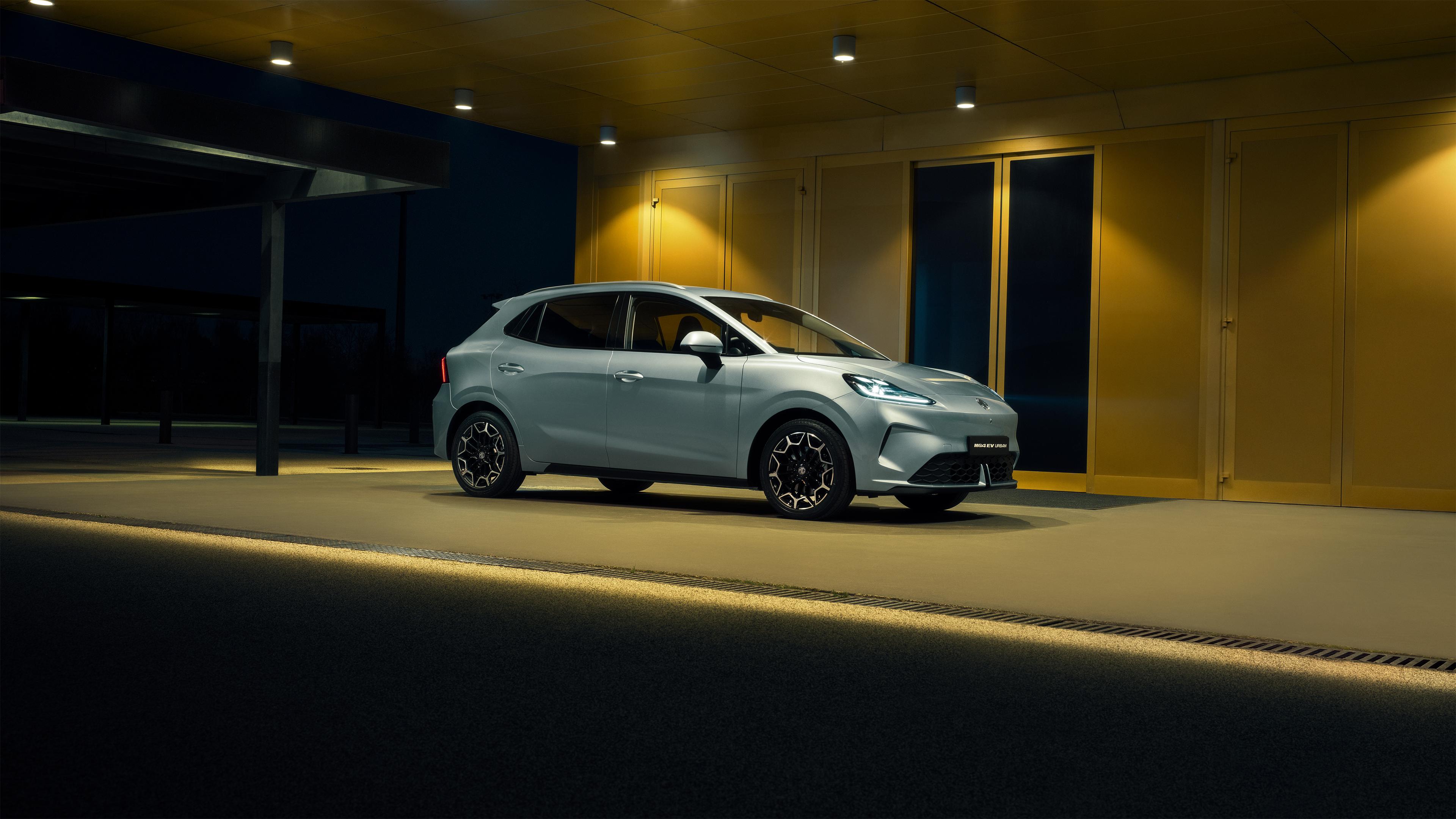

BYD has just revealed its smallest-ever plug-in hybrid, the Dolphin G, aimed at the European city car market and pitched against rivals like the Toyota Yaris and the MG 3. For now, BYD Australia has confirmed the Dolphin G is not part of the local strategy. But the model is being made available in right-hand-drive form for the UK, which historically has meant the path to Australia stays open.
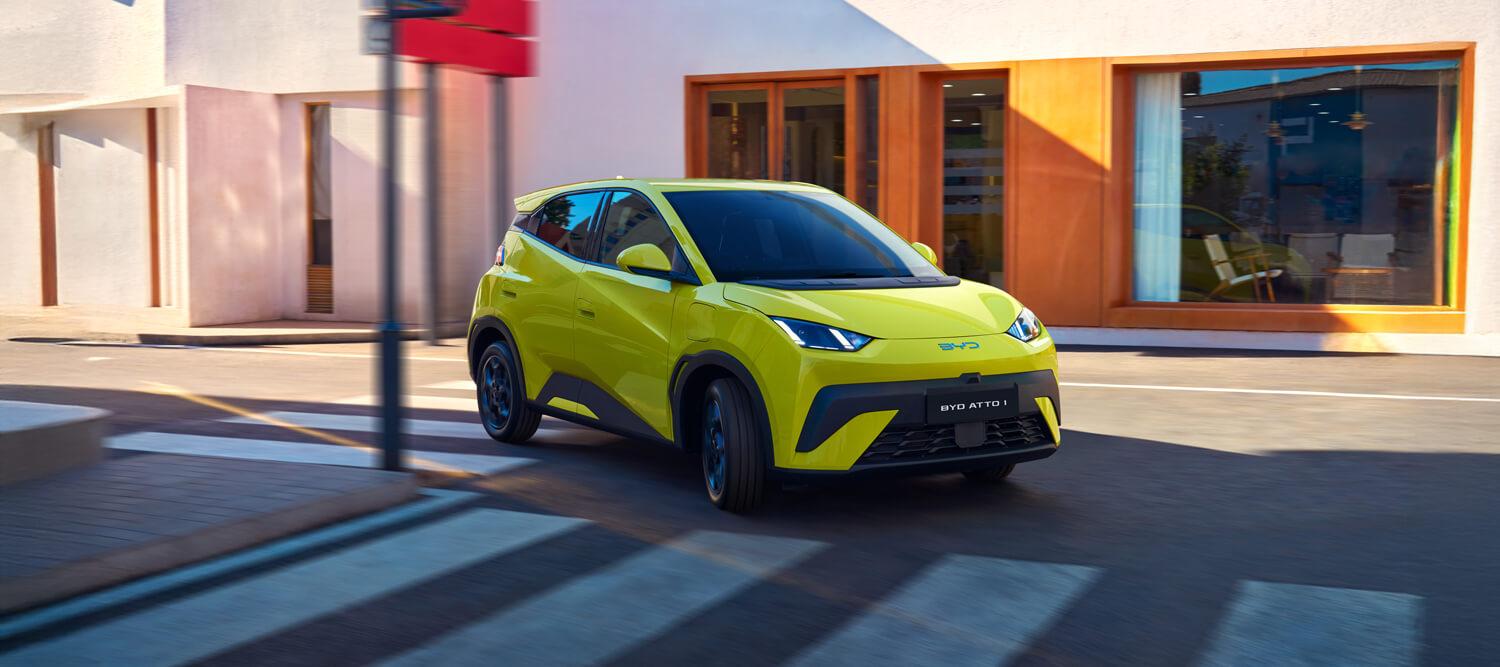
The Dolphin G is not a plug-in hybrid version of the existing electric Dolphin. It is a brand-new vehicle with bespoke bodywork, shorter overall than the regular Dolphin but longer than the entry-level Atto 1 EV. The car is sold globally as a plug-in hybrid only, although BYD has not ruled out an electric version eventually replacing the current Dolphin, which is approaching the second half of its life cycle.
Carseekers thinks the Dolphin G is one of the more interesting BYD reveals of 2026, both for what it signals about the brand's strategy and for what its potential Australian arrival would mean for the cheap end of the new car market.
What BYD Australia has said
A BYD Australia spokesperson responded to inquiries with a precisely worded statement. "The Dolphin PHEV announced for Europe is not part of the Australian BYD strategy at this stage."
That is corporate diplomatic language for "not yet," rather than "never." Every contemporary right-hand-drive BYD sold in the UK so far has eventually come to Australia. The list includes the Atto 3, Seal, Dolphin, Sealion 6, Sealion 7, and Shark 6. If the Dolphin G arrives in UK showrooms as planned, it is reasonable to expect Australian availability to follow within twelve to eighteen months.
The specific phrase "at this stage" is worth noting. BYD's Australian product cadence over the past three years has consistently outpaced the brand's own initial public guidance. Models that were not for Australia have become for Australia inside a year, repeatedly.
What the Dolphin G actually is
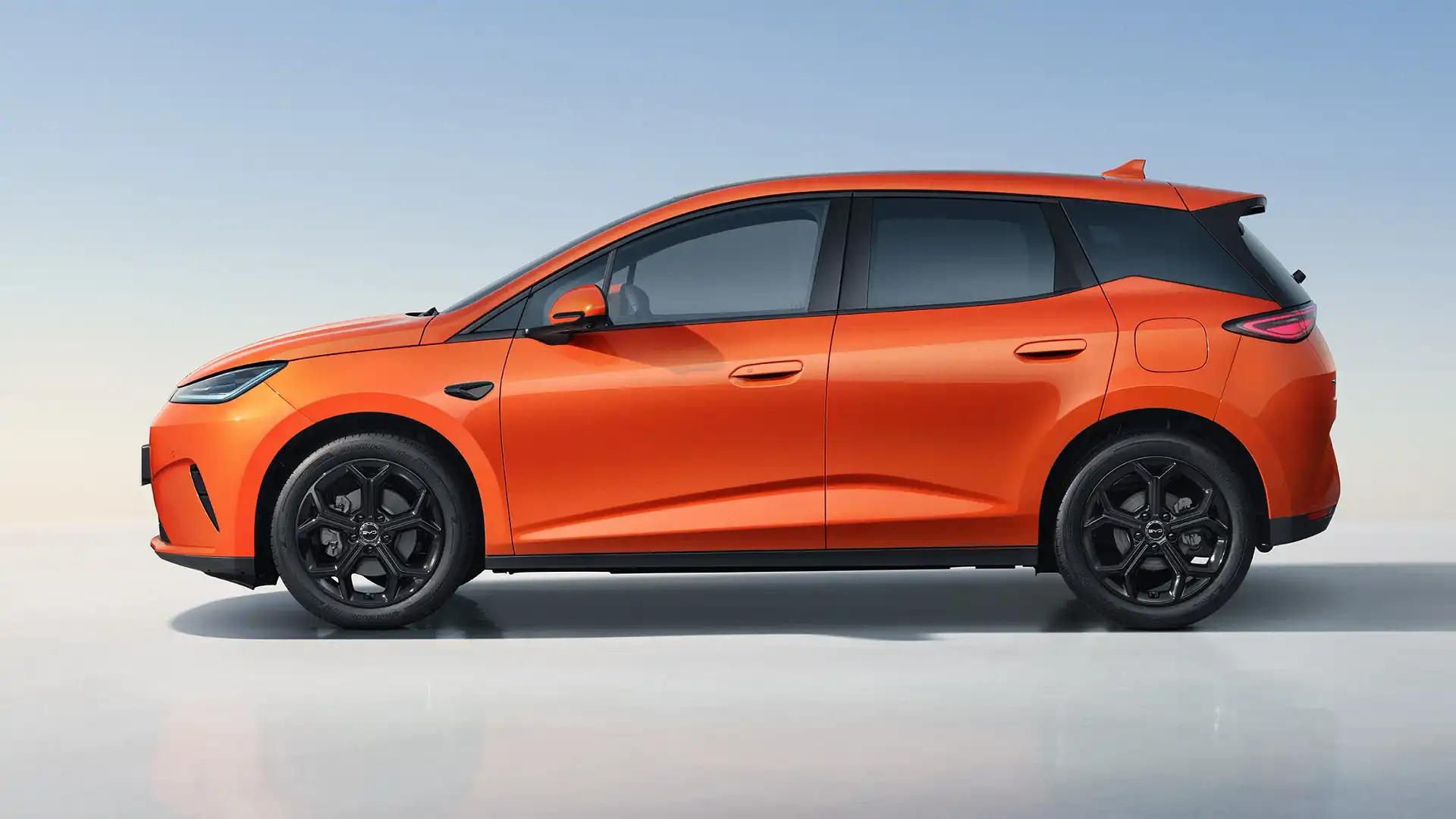
The Dolphin G measures 4160mm long and 1825mm wide. That puts it close to a Volkswagen Polo or Toyota Yaris on width but slightly longer in overall length, sitting in the awkward gap between those city cars and slightly larger hatchbacks like the Toyota Corolla or VW Golf.
It is powered by BYD's plug-in hybrid technology with a small petrol engine working alongside a single front-mounted electric motor. BYD claims more than 1000km of hybrid driving range on the European WLTP cycle, which is roughly equivalent to what the larger Sealion 6 claims with the same fundamental drivetrain architecture.
No specific details have been released on engine displacement, power output, battery capacity, or electric-only driving range. BYD has indicated more information will follow when orders open in Europe in the "coming weeks."
The first BYD developed for export
BYD describes the Dolphin G as the first vehicle developed "specifically for overseas markets including Europe." That is an interesting claim, given the Shark 6 was developed primarily for export and is not sold in China. The statement appears to be telling us that the Dolphin G's design and engineering priorities were set with European requirements front and centre, rather than adapting a Chinese-market car for export.
What that translates to in practice is likely a sharper focus on European safety standards (Euro NCAP testing rather than C-NCAP), European thermal management requirements (better cold-weather range), and European charging standards (Type 2 / CCS2 sockets as standard).
For Australia, those engineering choices are largely positive. Our market shares testing standards (ANCAP and Euro NCAP) and charging standards (CCS2) with Europe, so a Europe-engineered BYD lands here more directly than a China-engineered one.
Styling and packaging
The handful of exterior images released so far show smoother, more contemporary styling than the current Dolphin, without losing the upright Honda Jazz-style profile that has been part of the Dolphin's appeal in Europe. Interior details have not been shown, but the platform sharing with the regular Dolphin suggests a similar two-tone, plastic-heavy cabin focused on packaging efficiency over premium feel.
In the existing electric Dolphin, that approach has worked well for the price point. The car is genuinely roomier inside than its external dimensions suggest, the seating position is comfortable, and the rear seats fold to deliver useful cargo flexibility. The Dolphin G should inherit most of that.
Where the Dolphin G fits in BYD's lineup
If the Dolphin G eventually arrives in Australia, it would slot below the current Dolphin EV and above the smaller Atto 1 EV in the lineup. It would also become BYD's first plug-in hybrid below the larger Sealion 6.
That is a meaningful gap to fill. The most affordable plug-in hybrids on the Australian market currently sit in the $40,000 to $50,000 range. A BYD city PHEV pitched against the Toyota Yaris Hybrid (around $32,000) and the MG 3 Hybrid+ (around $30,000) could open a new price floor for plug-in hybrid ownership in Australia.
The trade-off would be the size. The Dolphin G is a city car, not a family car. Buyers looking for a primary family vehicle would be better served by the existing Sealion 6 or the larger PHEV utes like the Shark 6 ($57,900) and the GWM Cannon Alpha ($60,000+).
What this signals about BYD's broader strategy
The Dolphin G is interesting beyond its immediate product story. It signals BYD is willing to develop bespoke models for non-Chinese markets, which is a meaningful evolution from the brand's earlier approach of exporting lightly-adapted Chinese-market cars.
For European and Australian buyers, that means BYD models are likely to become better-tuned to local expectations over time. Better ergonomics for taller drivers, more conventional control layouts, improved infotainment localisation, and warranty terms that align with local consumer law expectations.
For the legacy brands competing with BYD, the Dolphin G is another data point in the company's relentless pace of product expansion. BYD has gone from one model in Australia at the end of 2022 to a full lineup spanning city cars to family SUVs to plug-in hybrid utes in three years. Few competitors can match that cadence.
Dealer and ownership questions
The BYD Australia dealer network has expanded rapidly alongside the model lineup. Coverage is now solid across capital cities and is improving in regional centres, although it remains thinner than what mainstream Japanese and Korean brands offer.
Warranty terms on current BYD models in Australia are six years/150,000km on the vehicle and eight years/160,000km on the battery, which is competitive but not class-leading. If the Dolphin G arrives, expect similar terms.
The other ownership consideration is residual value. Chinese brand resale values in Australia have been more volatile than established Japanese and Korean equivalents, although BYD specifically has held up better than most. Three-year forward residual estimates from established sources suggest BYD models typically retain 50 to 55 per cent of new price, against 60 to 65 per cent for Toyota and Honda equivalents.
The Carseekers view
The Dolphin G is not coming to Australia next month, and the official line is that it is not part of the local strategy. The unofficial reading is that BYD has now consistently brought every right-hand-drive UK model to Australia, and the Dolphin G is set to be a UK model.
For buyers eyeing a sub-$40,000 plug-in hybrid in 2027, the Dolphin G is worth keeping on the radar. The combination of a 1000km-plus claimed hybrid range, BYD's mature PHEV drivetrain technology, and the brand's aggressive Australian pricing strategy could deliver a genuinely competitive entry point into a segment that currently has very few players.
In the meantime, the existing electric Dolphin remains on sale in Australia and is the closest substitute if you want a small city BYD today rather than waiting twelve to eighteen months for the Dolphin G's likely local arrival.
Considering finance for your next car? Loanseekers can help you explore car loan options.
The finer details
Your questions answered.
Is the BYD Dolphin G coming to Australia?
Not yet. BYD Australia has officially stated the Dolphin G is not part of its current Australian strategy. However, every contemporary right-hand-drive BYD sold in the UK has eventually come to Australia, and the Dolphin G is confirmed for UK availability, so a local launch within 12 to 18 months remains likely.
What is the driving range of the BYD Dolphin G?
BYD claims more than 1000km of hybrid driving range on the European WLTP cycle. Specific electric-only range, battery capacity, and engine output have not yet been disclosed. The car is sold only as a plug-in hybrid with a small petrol engine and a single front-mounted electric motor.
Is the Dolphin G a hybrid version of the electric BYD Dolphin?
No. The Dolphin G is a brand-new vehicle with bespoke bodywork, shorter than the regular Dolphin but longer than the Atto 1 EV. It uses BYD's plug-in hybrid technology rather than a battery-electric drivetrain, and BYD has not yet confirmed whether an electric version of the Dolphin G will follow.
How big is the BYD Dolphin G?
It measures 4160mm long and 1825mm wide, which makes it similar in width to a [Volkswagen](https://www.carseekers.com.au/model/volkswagen/multivan) Polo or Toyota Yaris but slightly longer overall. It sits in the gap between true city cars and small hatchbacks like the [Toyota Corolla](https://www.carseekers.com.au/model/toyota/corolla).
What would the Dolphin G cost if it came to Australia?
BYD has not released pricing for any market. Based on the segment it targets and BYD's existing Australian pricing approach, expect a likely range of $30,000 to $40,000 drive-away if it does eventually launch locally. That would put it well below current entry-level plug-in hybrid offerings in Australia.
What rivals would the Dolphin G face in Australia?
The closest natural rivals are the Toyota Yaris Hybrid and the MG 3 Hybrid+, both of which are conventional hybrids rather than plug-in hybrids. As a plug-in city car, the Dolphin G would essentially create its own niche in the Australian market, with no direct PHEV competitor at the same size and likely price point.