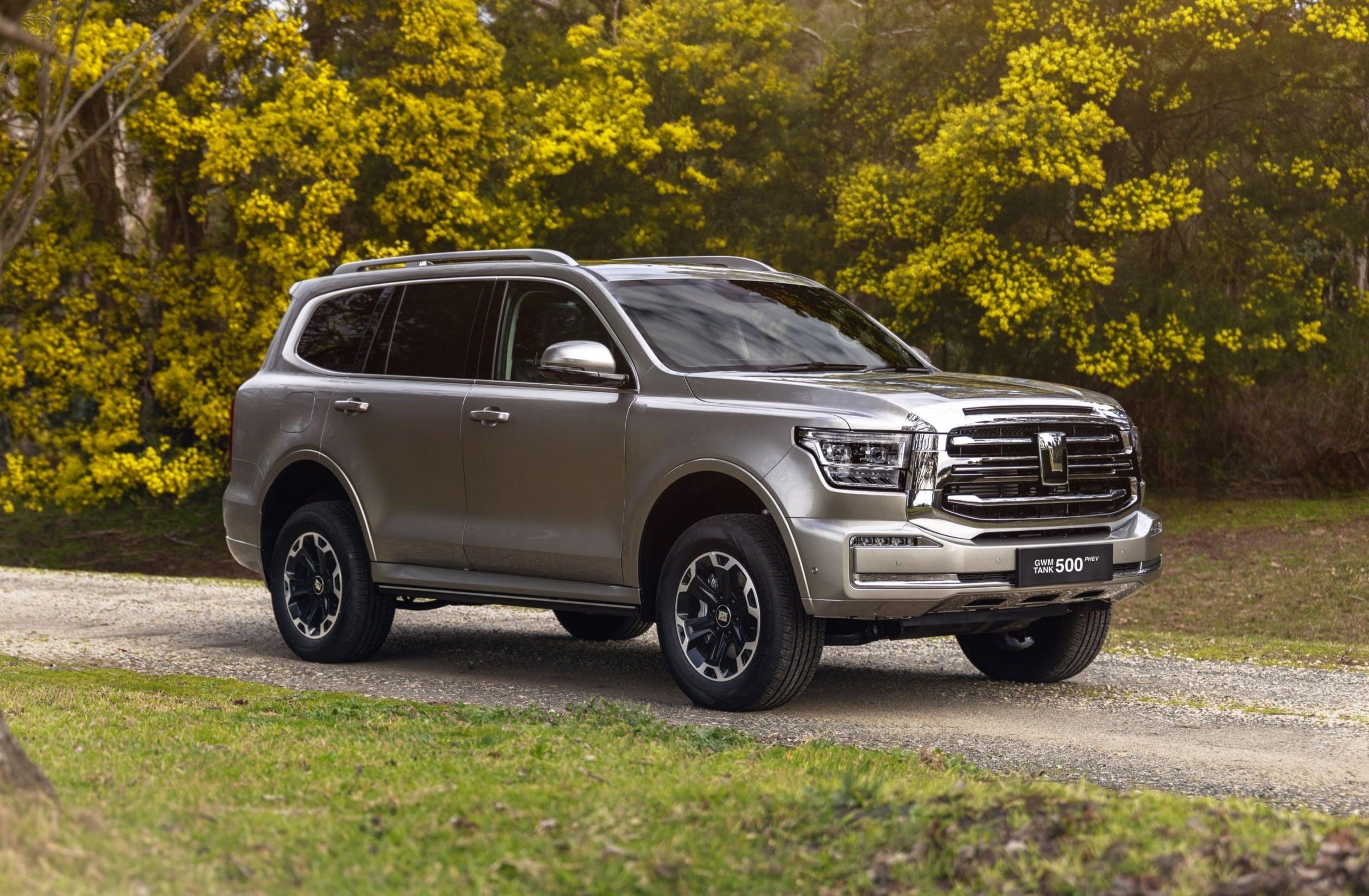
GWM has introduced a series of Australia and New Zealand-specific updates for the 2026 Tank 500 Hi4-T plug-in hybrid SUV, aimed at improving ride comfort, steering feel and everyday usability. The changes form part of what GWM calls its AT-1 localisation program, with revised suspension damper tuning and updated steering calibration developed specifically for Australian and New Zealand road conditions.
The Tank 500 Hi4-T is the second GWM model to receive factory-integrated ride and handling tuning tailored for the local market, after the brand's earlier locally tuned Cannon Alpha PHEV. According to GWM, the updates are designed to improve handling response and driver confidence across urban roads, highways and off-road terrain.
Why the local tuning matters
For years, Australian buyers have been hostage to suspension tunes calibrated for European or Chinese roads, which routinely deliver too-firm rides on local coarse-chip surfaces. The result is jittery secondary ride and steering that wanders on country highways, both common complaints about imported Chinese SUVs in their first launch wave.
The AT-1 program is GWM trying to close that gap. The revised dampers and steering calibration are factory-integrated, meaning they ship as standard on Australian and New Zealand-bound MY26 cars built from March 2026 onwards. That is different to dealer-fit suspension kits, which can introduce warranty headaches.
It is the same playbook Ford, Toyota and Nissan have used in Australia for years, with local engineering teams retuning suspension and steering to suit our roads. GWM has hired engineers including Rob Trubiani, who cut his teeth at Holden, to run the local development program. Trubiani is now one of the engineering masterminds giving imported cars the Australian tune mainstream buyers expect.
What else is new for 2026
Alongside the suspension and steering revisions, the updated Tank 500 Hi4-T gains a new 220-volt power outlet mounted in the rear cargo area. The addition expands the SUV's vehicle-to-load (V2L) capability, allowing owners to power external equipment such as camping gear, tools and small appliances directly from the battery system.
The Hi4-T uses a plug-in hybrid drivetrain that combines a turbocharged petrol engine with electric motor assistance, positioning it as an alternative to large diesel four-wheel drives and family SUVs. PHEV power lets buyers chase electric-only commuting during the week and petrol-electric range on longer trips, which is the same value proposition currently working for the BYD Shark 6 and the new wave of plug-in utes.
Pricing for the updated 2026 Tank 500 Hi4-T PHEV is currently $77,990 drive-away under a May promotional offer, against a standard drive-away price of $79,990. The revised specification applies to MY26 vehicles built from March 2026 onwards, with local dealerships expected to begin receiving updated stock in coming months.
Where it sits against rivals
At $77,990 to $79,990 drive-away, the Tank 500 Hi4-T pitches itself against a wide field. The Toyota LandCruiser Prado sits well above that figure once on-road costs are included for higher trims, the Ford Everest Platinum is also into six-figure territory, and the Mitsubishi Outlander PHEV is smaller and less off-road focused.
The closest functional rival is the BYD Sealion 8 PHEV at the larger family SUV end, and the Tank 300 PHEV at the more compact end of the GWM range. Tank 500 buyers tend to be cross-shopping with the LandCruiser Prado, Ford Everest, Toyota Kluger and Isuzu MU-X, with the GWM offering both more equipment per dollar and the PHEV powertrain those rivals lack.
The upcoming bigger turbo-diesel version of the Tank 500, also recently confirmed for Australia, will broaden the lineup further. That gives diesel-purist 4WD buyers an option without forcing them into the PHEV powertrain.
Why this tuning push matters for GWM
The AT-1 program is partly engineering and partly brand-credibility work. Chinese brands have spent the past three years closing the equipment and price gap on Japanese and Korean rivals. The remaining gap is dynamics, which is exactly where local tuning helps.
If GWM gets the Tank 500 Hi4-T ride right, it removes one of the few legitimate criticisms reviewers have made against the Chinese newcomers. That clears a path for the brand to push deeper into the family-SUV territory currently dominated by the Toyota and Ford 4WDs.
It also signals to other Chinese brands what works. Expect Chery, BYD and Geely to invest more in local chassis development as a competitive necessity rather than a marketing extra. That ultimately benefits Australian buyers regardless of which brand they choose.
The dealer angle
GWM Australia dealers are likely to push the $77,990 drive-away promotional price hard through May and early June. Buyers should ask explicitly whether the car on the lot is a March 2026 build or earlier, because only the newer builds get the revised suspension and steering calibration.
The difference is meaningful. If a dealer offers you a pre-March 2026 build at the promotional drive-away price, you are getting the old tune, not the locally developed AT-1 program. That is a worse car at the same money, and a fair reason to push for either a newer build or further discount.
It is also worth comparing the Carseekers drive-away pricing on Tank 500 against Sealion 8 and Cannon Alpha PHEV. The GWM and BYD ranges overlap more than buyers realise, and a side-by-side cost comparison often reveals which platform is currently moving stock faster.
What to test on the road
The AT-1 changes are aimed at secondary ride, steering feel and off-road composure. On a test drive, focus on three road types. First, coarse-chip country bitumen, which is where the old tune was at its worst. Second, urban speed-bump streets, which tests low-speed primary ride. Third, light-corrugation gravel, which is where the steering recalibration should show up.
Also bring real load. A Tank 500 with two passengers and no luggage will ride differently from one carrying a family and a boot full of camping gear. The whole point of the AT-1 tune is to handle real Australian use, so test it under real conditions.
Finally, exercise the V2L outlet during the test drive. A 220V cargo outlet is the kind of feature that sounds good on paper, and most buyers never test before signing. Plug in a tool or appliance you actually own and confirm it powers cleanly before deciding.
The Carseekers take
Local suspension tuning is a real, measurable improvement, not a marketing exercise. If you have driven a previous Tank 500 PHEV and dismissed it on ride alone, the MY26 build is worth a fresh test drive.
At $77,990 drive-away, the Tank 500 Hi4-T is genuinely competitive against the Prado and Everest, particularly for buyers who want PHEV efficiency on the daily commute. Carseekers shoppers comparing large 4WD-style SUVs should put it on the shortlist alongside Sealion 8, MU-X and LandCruiser Prado.
Considering finance for your next car? Loanseekers can help you explore car loan options.
The finer details
Your questions answered.
What changed on the 2026 GWM Tank 500 PHEV?
MY26 Tank 500 Hi4-T builds from March 2026 onwards get Australia-specific suspension damper tuning and revised steering calibration as part of GWM's AT-1 localisation program. The cabin also gains a new 220-volt power outlet in the rear cargo area, expanding the vehicle's V2L capability.
How much is the 2026 Tank 500 Hi4-T PHEV in Australia?
GWM is running a May promotional drive-away price of $77,990, against a standard drive-away price of $79,990. Always confirm whether the dealer stock is a March 2026 build or later, because only newer builds carry the AT-1 suspension and steering updates.
Is the Tank 500 PHEV better to drive after the AT-1 update?
GWM says yes, with revised dampers and steering aimed at handling Australian coarse-chip surfaces, secondary ride and off-road composure better than the previous tune. The program follows the same local engineering playbook Ford, Toyota and Nissan have used for years. Test drive a MY26 build to confirm.
What does the Tank 500 Hi4-T PHEV compete with?
Cross-shopping is mostly Toyota LandCruiser Prado, Ford Everest Platinum, Toyota Kluger Hybrid and Isuzu MU-X. The BYD Sealion 8 PHEV is the closest plug-in rival. The Tank 500 typically undercuts the Prado and Everest at top trims while offering the PHEV powertrain those rivals do not have.
Will a diesel Tank 500 still be available?
Yes. GWM has confirmed a more powerful, bigger turbo-diesel for Australia that will underpin new Tank 500 and Cannon Alpha models. That gives diesel-purist 4WD buyers a non-PHEV option in the same body, alongside the Hi4-T plug-in hybrid for buyers wanting electric-only commuting.
What is the 220V power outlet useful for?
The rear cargo 220V outlet supports vehicle-to-load (V2L), letting you run camping gear, tools, fridges and small appliances directly from the Tank 500's battery. It is the same idea Hyundai, Kia and BYD have already used to win over off-grid and camping buyers, and GWM is now matching it.