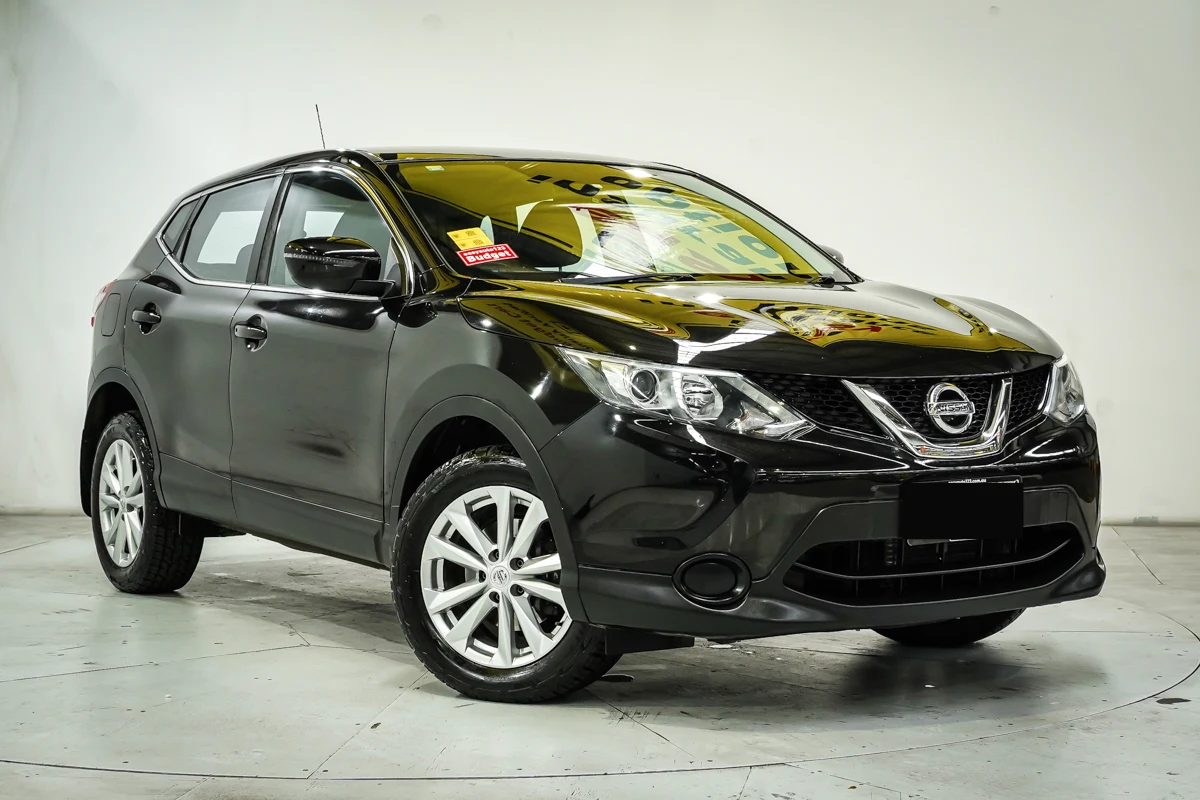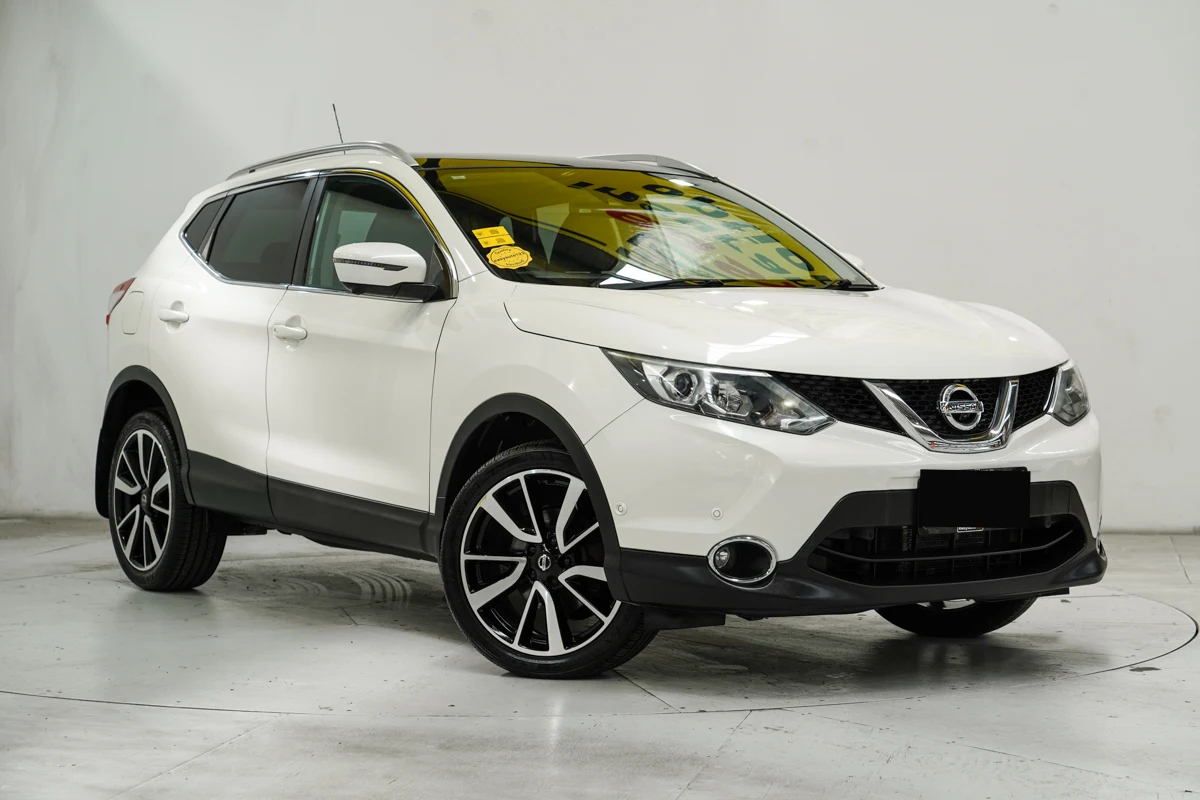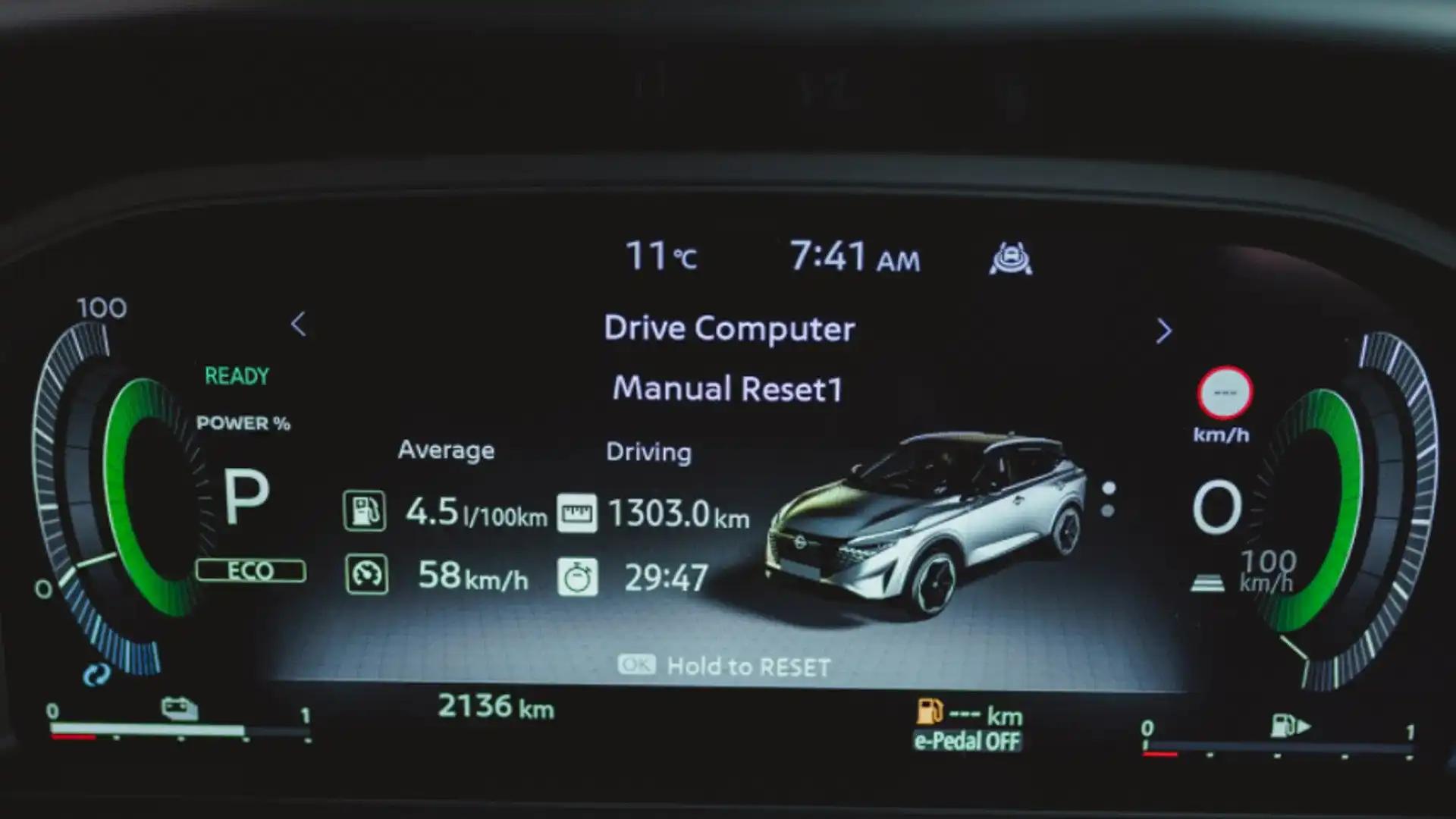
Nissan has used a 1303-kilometre lap of Tasmania to demonstrate the real-world fuel economy of the updated 2026 Qashqai e-Power hybrid. One tank, 50 litres of fuel, an average of 4.5 litres per 100 kilometres, and no plug. For the small SUV segment that has been quietly taken over by hybrid powertrains, this is a real headline number.
The more useful question for buyers is whether the new Qashqai actually beats a Toyota RAV4 or Corolla Cross hybrid in your driveway, and whether the e-Power drivetrain is the better technical solution against more familiar parallel hybrids from Toyota and Hyundai. Here is the practical breakdown.
The Tasmania run, in detail
Nissan filled up the Qashqai e-Power in Geelong, drove it onto the Spirit of Tasmania ferry to Devonport, and then completed a lap of the island state. The route included Launceston, the Bay of Fires, Freycinet, Hobart, and the famous 99 hairpins on the climb into Queenstown on Tasmania's west coast. The Qashqai then returned to the ferry and disembarked back in Geelong before being refuelled.
The total distance was 1303 kilometres at an average of 4.5 litres per 100 kilometres. Nissan's official lab-tested combined-cycle figure for the 2026 Qashqai e-Power is 4.1L/100km, so the real-world average came in nine per cent above the lab number. That is unusually close. The Australian Automobile Association's real-world testing program regularly finds gaps of 10 to 30 per cent on similarly sized SUVs.
The non-hybrid Qashqai, now discontinued, was tested by the AAA in 2025 and recorded 11 per cent higher fuel use than its lab figure. The Tasmanian e-Power lap suggests the new hybrid drivetrain may close that gap further once the AAA puts it through formal testing.
What is different about Nissan's e-Power
Nissan's e-Power technology is not a conventional hybrid. In a Toyota or Hyundai hybrid, both the petrol engine and the electric motor can drive the wheels directly, either separately or together. The system manages which one is doing the work at any given moment to maximise efficiency.
In an e-Power Qashqai, only the electric motor ever drives the wheels. The 1.5-litre petrol engine is used solely as a generator to charge the small onboard battery, which then feeds the electric motor. The car effectively drives like an EV at all times, including in city stop-start traffic and at highway speeds, with the engine spinning up to maintain battery state of charge.
The practical upside is the driving feel. The Qashqai responds to throttle inputs the way an electric car does, with instant torque and no transmission shifts. Cabin noise stays low because the engine is running on its own efficiency curve rather than reacting to driver demand. The downside is the system needs the engine to run whenever sustained high power output is required, which is why e-Power tends to be more efficient in stop-start and middle-speed driving than at outright highway cruising.
The new 5-in-1 powertrain
The 2026 Qashqai e-Power introduces what Nissan calls a '5-in-1' powertrain. The electric motor, generator, inverter, increaser and reducer are now packaged into a single unit. That shaves cost, weight and packaging space, and lets the rest of the underfloor area carry a slightly bigger battery.
The result is fuel economy that finally matches or beats Toyota and Hyundai for the first generation of e-Power. The earlier e-Power technology found in the previous Qashqai and the larger X-Trail e-Power was efficient but trailed Toyota's well-known hybrid system on the standard test cycle. The 4.1L/100km lab number puts the new Qashqai inside touching distance of a Toyota Corolla Cross hybrid and slightly ahead of a Hyundai Tucson hybrid.
Pricing and where it fits
The 2026 Nissan Qashqai e-Power ST-L starts at $45,640 before on-road costs. Drive-away pricing varies state to state but expect a number in the high $40,000s for the entry hybrid. The top Ti grade will sit higher, with pricing yet to be confirmed for the full update.
At that level, the Qashqai e-Power sits alongside the Toyota RAV4 hybrid entry grades and the Hyundai Tucson hybrid mid-grade. The Toyota is bigger and arguably more practical. The Hyundai is competitive on warranty and resale. The Qashqai's pitch is technology and refinement.
It is worth noting the Qashqai is built on the same platform as the Mitsubishi Outlander, although the two cars have completely different powertrains and tunings. Buyers cross-shopping at the smaller end of the medium SUV class should drive both and a Mazda CX-30 or CX-5 before committing.
What real-world fuel economy actually looks like
Marketing fuel figures are useful only as a relative benchmark between cars tested under the same conditions. The actual fuel your Qashqai uses in your driveway will be driven by your route, your driving style, the temperature, and traffic.
For a Nissan Qashqai e-Power, expect roughly 4.5 to 5.5L/100km if your driving is a mix of urban and suburban, with occasional highway running. Pure highway driving at 110km/h will push it toward 5.5 to 6L/100km. Heavy city stop-start traffic will land closer to 4L/100km, which is where the e-Power system shines.
For reference, the Toyota RAV4 hybrid generally sees 5 to 6L/100km in real-world testing. The Hyundai Tucson hybrid sits closer to 5.5 to 6.5L/100km depending on grade and tyres. A petrol-only Mazda CX-5 is roughly 7 to 8L/100km. The fuel saving on the Qashqai over a petrol-only equivalent is in the order of $700 to $900 a year for an average 15,000km driver, more if fuel prices keep rising.
The dealer angle
Nissan has been pricing the Qashqai e-Power hard to compete with Toyota and Hyundai. The brand has also been more willing than usual to negotiate on drive-away pricing for new financial year stock. If you are walking into a Nissan dealer in May or June, expect the published price to be the starting point, not the finishing point.
Nissan's marketing of the Tasmania run is also a tell. Brands run these single-tank publicity laps when they need to convince private buyers their hybrid is genuinely competitive. The number is real, but it is also a marketing tool. Use it as confirmation the car is efficient, not as a baseline number for your own driving.
Carseekers keeps live drive-away comparisons across the Qashqai e-Power, the RAV4 hybrid, and the Tucson hybrid, so you can quickly see whose dealer is most active in any given week.
The bottom line
Nissan's Tasmania lap demonstrates the 2026 Qashqai e-Power is genuinely efficient, real-world close to its lab figure, and back in serious contention against Toyota and Hyundai for the first time. The pricing is competitive at $45,640 plus on-roads for the ST-L. The driving feel of the e-Power system is its differentiator and is the main reason to choose a Qashqai over a more traditional hybrid rival.
For anyone shopping a small or medium SUV who values fuel efficiency, refinement, and not having to plug in, the new Qashqai is now a credible primary recommendation rather than a sideline option.
Considering finance for your next car? Loanseekers can help you explore car loan options.
The finer details
Your questions answered.
What fuel economy did the Nissan Qashqai achieve on the Tasmania trip?
Nissan averaged 4.5 litres per 100 kilometres over 1303km, using a single 50-litre tank. The official combined-cycle lab figure for the 2026 Qashqai e-Power is 4.1L/100km, so the Tasmania result was about nine per cent above the lab figure, which is unusually close for real-world driving.
How does Nissan e-Power differ from a Toyota or Hyundai hybrid?
In e-Power, only the electric motor drives the wheels at any time. The petrol engine never connects to the wheels, it acts purely as a generator to keep the battery topped up. A Toyota or Hyundai hybrid lets either the engine, the motor, or both drive the wheels, depending on the load.
How much does the 2026 Nissan Qashqai e-Power cost in Australia?
The 2026 Qashqai e-Power ST-L starts at $45,640 before on-road costs. Drive-away pricing varies by state and dealer, but expect to land in the high $40,000s. The top Ti grade pricing will be confirmed closer to launch.
Is the Nissan Qashqai e-Power a plug-in hybrid?
No. It is a self-charging hybrid, not a plug-in. The car refuels at the petrol bowser like a conventional car, and the onboard battery is charged entirely by the petrol engine. You do not need a home charger or any kind of charging cable to run it.
How does the Qashqai's fuel use compare with the Toyota RAV4 hybrid?
In real-world driving, the Qashqai e-Power typically returns 4.5 to 5.5L/100km against the RAV4 hybrid's 5 to 6L/100km. The Qashqai is a smaller car so the result is consistent with its body size rather than dramatic technical superiority.
Is the Nissan Qashqai e-Power FBT exempt on a novated lease?
No. The Qashqai e-Power is a self-charging hybrid, not a plug-in hybrid or full battery-electric vehicle, so it does not qualify for the EV FBT exemption. Plug-in hybrids lost eligibility in April 2025, and standard hybrids have never qualified.