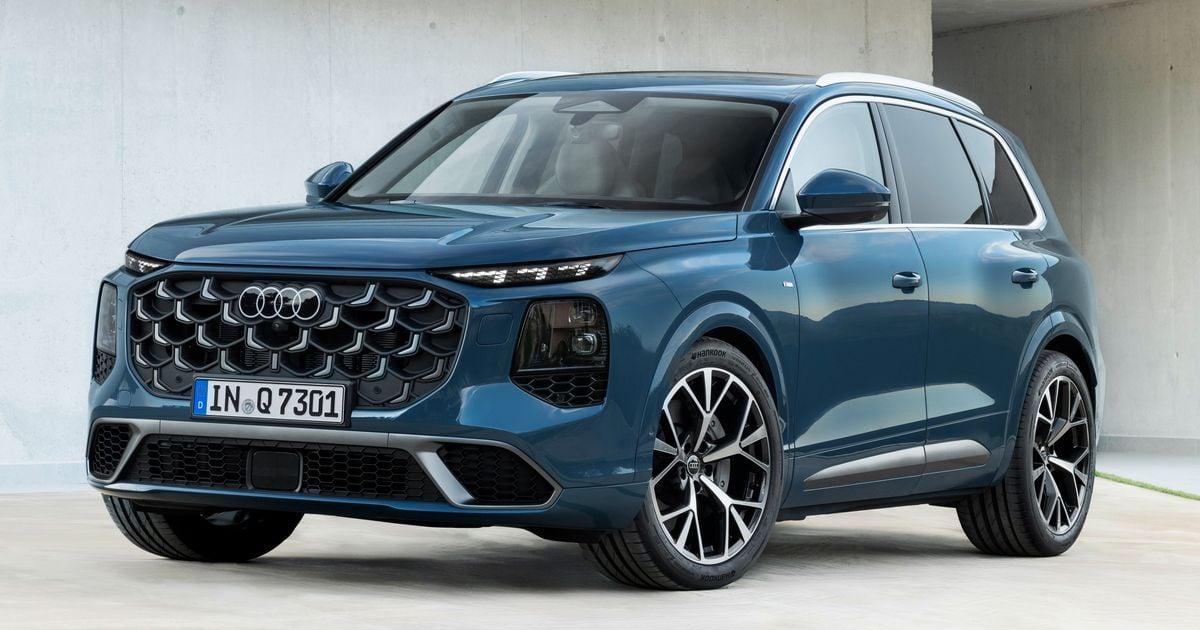
Audi has pulled the covers off the third-generation Q7, and the message is clear: the German brand heard the complaints about its interiors and has done something about it. Slated to reach Australian dealerships before the end of 2026, the new Q7 brings a fundamentally improved cabin, three seating configurations, and a pair of mild-hybrid diesel engines.
For buyers weighing up a large luxury SUV, this reveal matters. The Q7 competes in one of the most aggressively contested segments in Australia, squaring up against the BMW X5, Mercedes-Benz GLE, and Volvo XC90, all of which have recently refreshed or are about to. The timing is pointed.
The Exterior: Evolution, Not Revolution
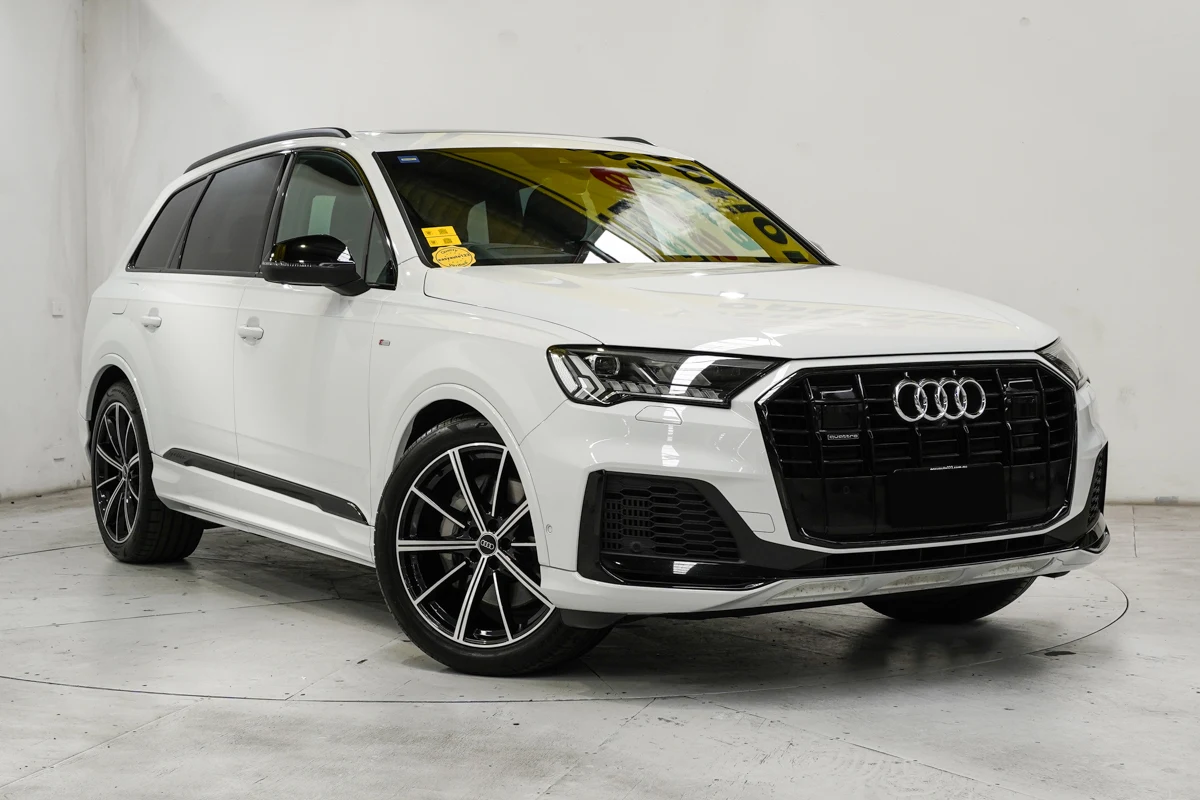
The new Q7 carries forward the design language introduced with the smaller Audi Q6 e-tron, which means a cleaner, more upright face and that signature large Singleframe grille, now bigger again, with LED downlighting woven through its honeycomb mesh. It's not exactly restrained, but compared to some German SUV design directions right now, it's almost tasteful.
Thin LED daytime running lights are programmable, buyers can select different light signatures. Optional digital Matrix LED headlights use 25,600 micro-LEDs, each smaller than half the width of a human hair, and include a pedestrian-highlighting function that marks people out at night. It's genuinely useful technology, not a features-list checkbox.
Rear OLED lights can cycle through different patterns, but they also serve a safety function, as a vehicle approaches from behind, they automatically switch to static warning symbols. Combined with an optional projector that throws amber turn-signal symbols onto the ground when changing lanes, the Q7 is making a genuine effort at being seen.
Dimensions sit at 5056mm long, 2010mm wide, and 1800mm tall. Wheel sizes begin at 20 inches and scale up through three 21-inch options, four 22-inch designs, and, for the first time, a 23-inch factory option. Brake hardware is appropriately large: 400mm discs up front with six-piston callipers, 350mm items at the rear.
The Interior: This Is the Real Story
The current Q7's cabin copped consistent criticism for its reliance on glossy black plastic and surfaces that attracted fingerprints and scratched easily. Audi has listened. The new interior replaces most of that with open-pore wood, soft fabric that wraps through the door cards, and more traditional materials throughout.
The digital architecture remains: a 12.3-inch driver's instrument cluster and 14.5-inch infotainment touchscreen are merged into a single curved unit. The menu structure is reportedly logical. Smartphone mirroring is standard. An optional passenger-side display is available, though Audi's own reveal implied it's more of a showroom feature than a genuinely useful addition.
The centre console gets two large cupholders and two wireless phone charging pads with magnetic connectors, a practical touch that stops phones bouncing off the pad in corners. Front seats offer full electric adjustment across every conceivable axis, with head restraint speakers for private navigation and phone calls. Optional seat actuators deliver what Audi calls a 4D sound experience, you feel the bass.
For Australian buyers, the most significant interior news is the seating configuration choice. The Q7 launches as a five-seater, with an optional six-seat layout using captain's chairs in the second row, or a full seven-seater. In five-seat form, boot space is 805 litres. Fold the seats in the seven-seat version and you're at 1980 litres. All rear positions get ISOFIX anchor points. A rear load function allows the air suspension to lower the tail for easier loading.
What Engines Are Confirmed
At launch, Audi will offer a turbocharged 3.0-litre six-cylinder diesel in two states of tune. The standard version produces 180kW and 500Nm. The performance version pushes that to 220kW and 630Nm. Both use mild-hybrid (MHEV) technology, pairing an electrically powered compressor with a belt alternator starter, a powertrain generator, and a compact lithium-iron phosphate battery.
The MHEV system provides up to 18kW and 370Nm for brief intervals, enough to pull away from rest electrically, handle short parking manoeuvres, and allow limited engine-off coasting. Audi quotes a provisional fuel consumption of 7.1 to 7.8 litres per 100km for the lower-output engine. Don't expect much more than single-digit petrol equivalency from the mild-hybrid assist, but it does make a real difference in urban driving.
A plug-in hybrid variant using a 3.0-litre V6 is confirmed and in the pipeline, electric-only range hasn't been disclosed. A smaller four-cylinder engine has been earmarked for introduction during the Q7's lifecycle. Neither has confirmed Australian pricing yet.
Three Suspension Options
Buyers can specify one of three suspension setups. The base passive steel-spring setup has been developed specifically to ride more comfortably than the outgoing model, a meaningful upgrade for a car that many owners found firm in its entry configuration.
Adaptive air suspension adds electronically controlled damping and a broader ride-to-handling spectrum. The system uses GPS data to anticipate conditions, if you approach a railway crossing with the lift function engaged, it automatically raises the body to smooth the impact. It also lowers by 62mm for easier entry and exit, and drops the rear for boot loading.
Audi offers a third, sportier air suspension variant that sits 30mm lower and sharpens handling response for drivers who want a more engaging experience. Towing capacity is rated at 3500kg with a braked trailer across all configurations.
What Australian Buyers Need to Know Before Ordering
The Q7 enters production at Audi's Bratislava plant this European winter, with Australian arrivals expected before December 2026. Pricing hasn't been confirmed for our market, but the current Q7 starts at around $130,000 before on-road costs for the 45 TDI. Expect a modest increase for the new generation.
The key dealer questions to ask are: which seating layout is included in base pricing, whether the air suspension is standard or optional, and what the delivery lead time looks like given the end-of-year production ramp. Dealers who quote firm delivery dates this early are guessing, push for a realistic timeframe.
For buyers considering the Q7 against rivals, the Audi Q7 has consistently held a practical edge over the BMW X5 in terms of rear seat space and luggage capacity. The new generation extends that with the six-seat option. The Q5 has been the better driver's choice, but the Q7 was never really positioned as a driver's car.
If the Audi interior philosophy genuinely follows through into the production Q7, fewer glossy plastics, better materials, this could close the gap on the Mercedes GLE's perceived quality edge. That's been the Q7's biggest weakness in showroom comparisons.
How It Lines Up Against the Competition
The Audi Q8 e-tron is the full-electric alternative within the brand's own lineup, but at a significantly higher price and with the trade-off of charging infrastructure dependence. For buyers who want a large Audi without committing fully to electric, the 2027 Q7 diesel mild-hybrid is the pragmatic choice.
The BMW X5 has a proven V8 petrol option that the Q7 cannot match for performance theatrics, but the Q7 counters with seven seats in an equivalent footprint. The Mercedes GLE remains the strongest rival for perceived interior quality, though the new Q7's materials upgrade is intended to challenge that directly.
If you're in the market for a large luxury SUV and are prepared to wait until late 2026, hold off on signing a deal on a current Q7. The new generation is a meaningful step forward, particularly for families who need the third row.
Carseekers will update pricing and delivery details as they're confirmed for the Australian market.
What the Arrival Timing Means for Current Deals
With the new Q7 confirmed for 2026 delivery, dealers are likely to push harder on current-generation stock. If you're flexible on generation and comfortable with the existing interior, now is a reasonable time to negotiate. Demonstrator stock and outgoing models typically attract the best discounts as a successor approaches.
For buyers set on the new generation, patience pays. The first local deliveries will command full list price. Once the model has been in market for six months and dealers have stock on hand, the normal negotiating dynamics return. The Audi Q7 has historically been a slower mover than the Q5, which means dealers are more motivated to move units.
Considering finance for your next car? Loanseekers can help you explore car loan options.
The finer details
Your questions answered.
When will the 2027 Audi Q7 arrive in Australia?
Audi has confirmed the new Q7 will begin production this European winter (mid-2026), with the first Australian deliveries expected before the end of 2026. Exact timing will depend on production ramp-up and shipping lead times. Expect dealer stock from late 2026 onwards.
How much will the 2027 Audi Q7 cost in Australia?
Audi hasn't confirmed Australian pricing yet. The current Q7 starts at around $130,000 before on-road costs. Expect a modest increase for the new generation given the upgraded interior and materials. Plug-in hybrid and performance diesel variants will sit above the base price.
Does the 2027 Audi Q7 have seven seats?
Yes. The 2027 Q7 will be offered in five-seat, six-seat (captain's chairs in row two), and seven-seat configurations. The five-seat version has 805 litres of boot space; the seven-seater has 722 litres in five-seat mode and 1980 litres with all rear seats folded.
What engine does the 2027 Audi Q7 use in Australia?
The launch engine is a 3.0-litre six-cylinder turbodiesel in two outputs: 180kW/500Nm and 220kW/630Nm. Both use mild-hybrid technology for improved efficiency and short electric-only crawling. A plug-in hybrid V6 and a smaller four-cylinder engine are planned for later in the model's lifecycle.
How does the 2027 Audi Q7 compare to the BMW X5?
The Q7 has a key practical advantage over the X5: it offers a genuine seven-seat option in a similar footprint. The X5 has a stronger performance engine range (including V8) and is generally considered a sharper driver's car, but the Q7's new interior is designed to close the perceived quality gap. Space and practicality favour the Q7.
Should I buy a current Audi Q7 or wait for the new one?
If you need a car now, current Q7 stock will be easier to negotiate as dealers clear the way for the new model. If you can wait until late 2026, the new generation brings a materially better interior and three seating configurations. The first deliveries will sell at full price; discounts return after six months in market.