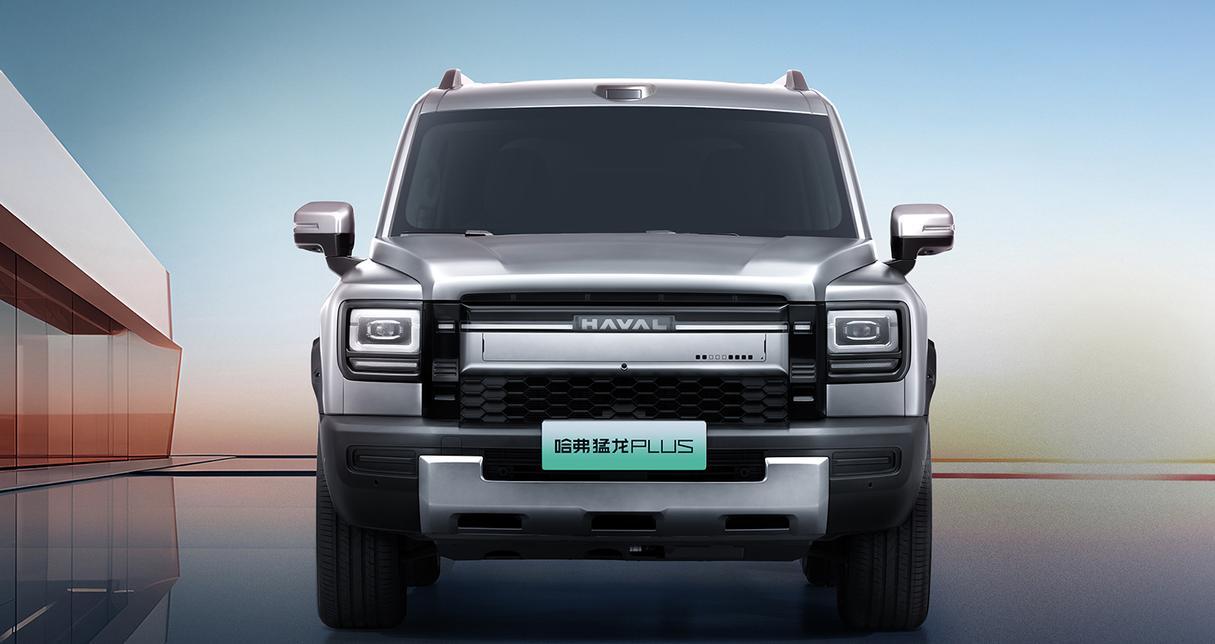
GWM is fast-tracking a complete replacement for the slow-selling Haval H7, with a fresh seven-seat plug-in hybrid SUV due in Australian showrooms later this year as the 2027 H7. The new model arrives sooner than expected, based on a Chinese-market vehicle called the Menglong, and brings completely different styling, an all-wheel-drive Hi4 PHEV powertrain, and a long-wheelbase version known as the Plus with three rows of seats.
GWM officially confirmed the move at the Beijing China Auto Show, with a spokesperson telling Australian journalists, "We will probably see the long-wheelbase model as well as the short-wheelbase version of the Menglong." In other markets the same vehicle is sold as the V7. In Chinese, Menglong translates as Raptor.
Why GWM is killing the current H7 so quickly
The current H7 on Australian sale is based on the second-generation Big Dog, a five-seat, front-wheel-drive 1.5-litre turbo hybrid that launched here at $46,990 drive-away. Despite the chunky off-road styling, it cannot drive the rear wheels and offers no plug-in option. Australian buyers responded with their wallets: just 369 H7s sold in the first four months of 2026.
For context, the related Haval H6 shifted more than 5,000 units in the same period. The H7 is trailing its smaller sibling by roughly 14 to 1. GWM cannot let that gap persist when seven-seat PHEV demand is growing across the segment.
What the new H7 brings
The 2027 H7 is mechanically and visually a clean break from the current model. Power comes from GWM's latest Hi4 PHEV system, which pairs a four-cylinder turbo petrol engine with two electric motors. The setup drives all four wheels through an electric coupling rather than a mechanical transfer case. A large battery underfloor delivers a claimed EV-only range of at least 140km on the Chinese cycle.
That 140km figure is significant. In Australian conditions, expect a real-world EV range of 110 to 125km depending on driving style and air conditioning use. That is enough for the typical Australian daily commute and weekend errands without ever burning petrol. The petrol engine is there for highway trips and weekend country drives.
The long-wheelbase Plus version adds a third row of seats, opening the H7 up to a much wider audience. Cargo with the third row up will be modest, in the 200 to 350 litre range based on similar three-row PHEVs. With the third row folded, cargo opens to roughly 1,200 to 1,500 litres.
Direct rivals for the new H7
The Hi4 PHEV powertrain and seven-seat option puts the H7 Plus head-to-head with a specific group of mid-size three-row plug-in SUVs. The most direct competitors are the BYD Sealion 8 PHEV due in 2027, the Mitsubishi Outlander PHEV, the Kia Sorento PHEV, and the Chery Tiggo 8 Super Hybrid.
On price, expect the H7 Plus to open north of $60,000 drive-away. The Mitsubishi Outlander PHEV is around $59,990 to $73,490 before on-roads. The Kia Sorento PHEV starts near $84,000 before on-roads. The Chery Tiggo 8 Super Hybrid undercuts both at around $54,000 drive-away. GWM will need to come in aggressively to compete with Chery while matching Mitsubishi on quality.
Against the larger five-seat-only Haval H6 hybrid, the new H7 Plus is a different vehicle. The H6 is the more conventional, smaller, road-focused choice. The H7 Plus is the rugged-look, AWD, seven-seat plug-in option for families.
Where the H7 sits inside the GWM line-up
GWM's Australian range is now broad enough to support distinct positioning across body styles. The Cannon Alpha ute and Tank 500 cover the ladder-frame 4WD segment. The Tank 300, when it arrives in production volume, will sit alongside. The Haval H6 and H6GT cover the mid-size monocoque SUV space. The new H7 Plus will sit above the H6, below the Tank 500, as a more urban-focused seven-seat PHEV.
This matters because GWM has been criticised for blurring its SUV line-up. The 2027 H7 Plus provides a clear separation: it is a tall, boxy-styled, on-road family PHEV with light off-road capability, not a serious 4WD. Buyers wanting genuine off-road capability are pushed to the Tank line.
What about the existing H7 owners?
If you bought the current H7 in the past 12 months, the new generation lands above your car at a higher price point. The current H7 will continue in some markets, possibly as a more aggressively discounted run-out option in Australia through late 2026. Resale on the current H7 is unproven but tracking weak based on the low sales volume. A 2025-build H7 with 10,000km will likely sit around $35,000 to $39,000 retail trade by mid-2027.
GWM has not announced retroactive pricing relief or trade-in incentives for current H7 owners. Watch for dealer-level offers in the second half of 2026 that may encourage current owners to trade up early.
Dealer behaviour through the transition
GWM dealers will run two strategies in parallel through the back half of 2026. First, push remaining current H7 stock at aggressive drive-away pricing. Expect $42,000 to $44,000 drive-away on stock units, plus accessories, registration paid and free first servicing. Second, open the order book for the new H7 Plus with launch pricing and limited initial allocation.
For buyers, the smart move depends on what you actually need. If you want a five-seat hybrid SUV under $45,000 drive-away, the current H7 will be cheaper than ever once the new car is announced. If you want seven seats, AWD, and 100km-plus of EV range, wait for the H7 Plus.
Use Carseekers to compare drive-away quotes across multiple GWM dealers. Variance between dealers on accessory bundles, finance margin and trade-in valuations can be $4,000 to $6,000 on the same physical car.
Why this matters for the broader Australian SUV market
The 2027 H7 Plus joins a wave of seven-seat PHEVs hitting Australian showrooms across 2026 and 2027. The BYD Sealion 8 PHEV, the new Chery Tiggo 8 Super Hybrid, the next-generation Outlander, and the H7 Plus are all targeting the same buyer: families who want one car that handles the school run on electricity Monday to Friday and a road trip on petrol every long weekend.
If the H7 Plus lands at $60,000 to $65,000 drive-away with a strong seven-year warranty and 140km of EV range, it will pressure both Chinese and Japanese rivals on value. The Mitsubishi Outlander PHEV will need to respond. The Kia Sorento PHEV looks expensive against it. The BYD Sealion 8 will become the benchmark to beat on tech.
For Carseekers readers cross-shopping this segment, the strongest move is to wait for the H7 Plus and the Sealion 8 PHEV to both land before committing. The price competition will be intense, and the buyer who waits will likely save $4,000 to $8,000 against early adopters.
Considering finance for your next car? Loanseekers can help you explore car loan options.
The finer details
Your questions answered.
What is the 2027 GWM Haval H7 Plus?
The 2027 H7 Plus is a long-wheelbase, seven-seat plug-in hybrid SUV based on the Chinese-market Menglong, which translates to Raptor. It replaces the current Big Dog-based H7 on Australian sale. GWM has confirmed both the short-wheelbase five-seat and the long-wheelbase Plus seven-seat will reach Australia.
What powertrain does the new Haval H7 Plus use?
The H7 Plus uses GWM's latest Hi4 PHEV system. A four-cylinder turbo petrol engine pairs with two electric motors for all-wheel drive, plus a large battery pack underneath that delivers at least 140km of EV-only range on the Chinese cycle. Real-world EV range in Australia is expected to be 110 to 125km depending on driving style.
How much will the 2027 Haval H7 Plus cost in Australia?
GWM has not announced Australian pricing, but the seven-seat PHEV positioning suggests a starting price north of $60,000 drive-away. That puts it just below the [Kia Sorento](https://www.carseekers.com.au/model/kia/sorento) PHEV and [Mitsubishi Outlander](https://www.carseekers.com.au/model/mitsubishi/outlander) PHEV. Expect aggressive launch pricing to recover from the current H7's weak sales.
When does the new Haval H7 launch in Australia?
GWM has indicated the new H7 will launch in Australia later in 2026 as a 2027 model. The short-wheelbase five-seat version is expected first, with the long-wheelbase Plus seven-seat following shortly after. Confirmation of exact Australian timing and specification is expected mid to late 2026.
How does the new H7 compare to the existing H7 on sale now?
The current H7 is a five-seat front-wheel-drive hybrid with a 1.5-litre turbo and a $46,990 drive-away starting price. The 2027 H7 Plus is larger, dual-motor AWD, seven-seat, with 140km of EV range and a plug-in hybrid system. Different car, different segment, and likely $15,000 to $20,000 more expensive at the top of the range.
Should I buy the current H7 or wait for the 2027 model?
If you want a five-seat affordable hybrid SUV at under $50,000, the current H7 is still a strong buy on price. If you need seven seats, plug-in efficiency, or AWD, wait for the H7 Plus. Current H7 sales have been weak at 369 units in the first four months of 2026, which means dealers should be open to drive-away offers on remaining stock. Use [Carseekers](https://www.carseekers.com.au) to compare run-out deals.