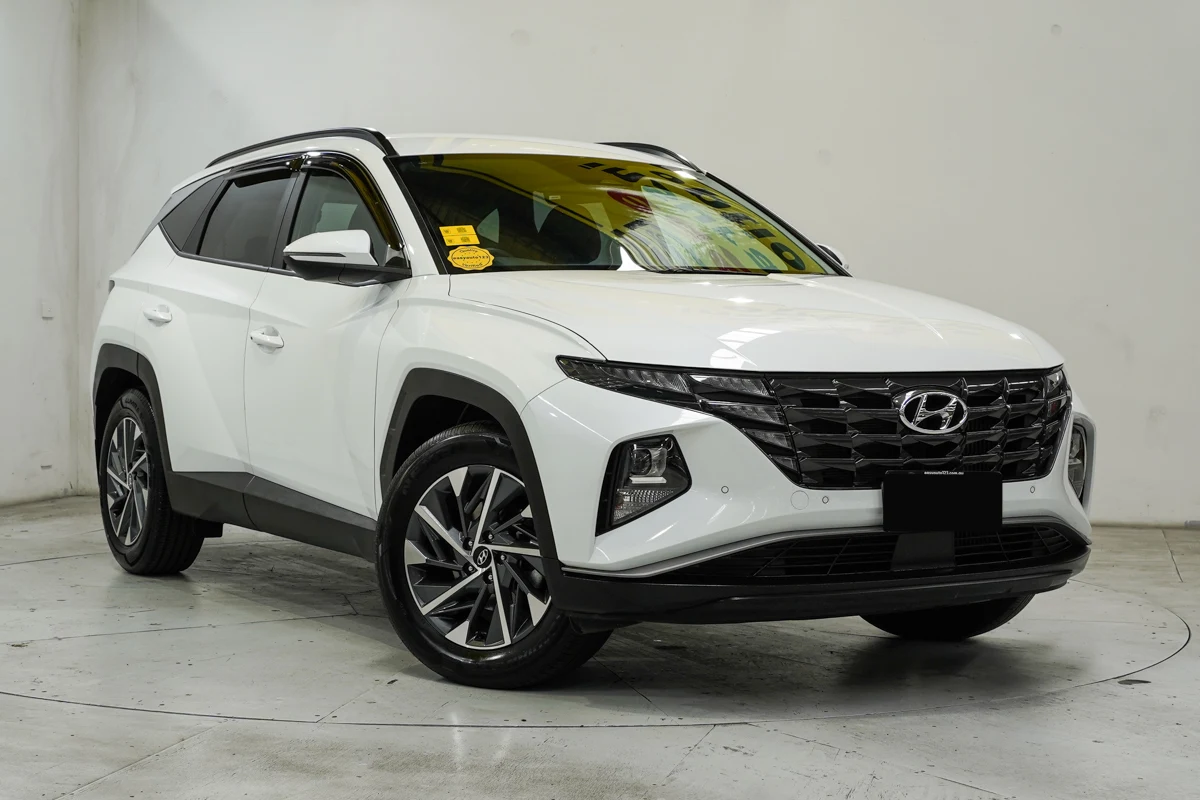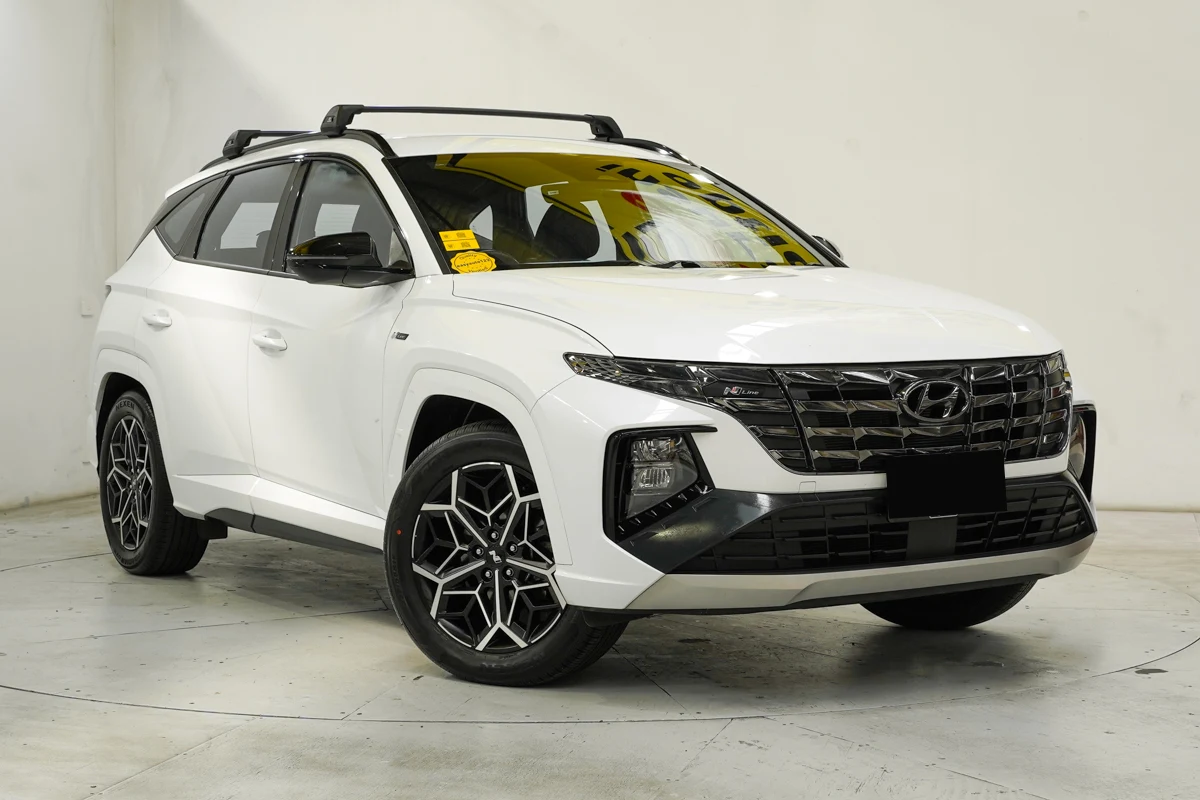

Australia's favourite mid-size SUV is about to change
The 2027 Hyundai Tucson is locked in, and it matters more than most launches. The Tucson is one of the best selling mid-size SUVs in Australia, so the fifth-generation model will land on thousands of shopping lists in 2027.
The new SUV goes on sale in Hyundai's home market of South Korea in October 2026, with an Australian launch due in the first half of 2027.
If you are weighing up a mid-size SUV right now, the smart move is to understand what is coming before you sign anything.
A stronger petrol engine joins the hybrid
The headline change sits under the bonnet. Alongside the confirmed 1.6-litre turbo-hybrid four-cylinder, which produces a total system output of 180kW and 380Nm, Hyundai will offer a non-hybrid 1.6-litre turbo four.
That petrol engine makes 142kW and 265Nm, which is 10kW more than the outgoing 1.6-litre turbo that was dropped from the Australian range for 2026.
For context, 180kW puts the Tucson hybrid comfortably ahead of several key mid-size rivals on paper. That is exactly the kind of number Hyundai wants buyers comparing on the showroom floor.
The gearbox change most buyers will actually feel
Hyundai has swapped the old seven-speed dual-clutch automatic for an eight-speed torque-converter unit. On paper that reads like a footnote.
In daily driving it is not. Torque-converter automatics are usually smoother in stop-start traffic and low-speed manoeuvres, where dual-clutch gearboxes can feel hesitant or jerky.
That single change targets one of the most common ownership gripes about recent Hyundai and Kia models, so it is worth driving the new car back to back with the old one.
What Hyundai Australia has actually promised
Here is where buyers need to read between the lines. Hyundai Australia has confirmed it is being offered the Tucson with multiple powertrains, but has signalled it will launch locally with hybrid power first.
The cheaper petrol could follow later, the same staggered rollout Hyundai used with the larger Santa Fe and Palisade.
The practical takeaway is simple. If you want the more affordable non-hybrid, you may have to wait, and early demand will pool around the hybrid. Tight early supply is exactly where dealers get bold on price.
The rugged XRT is the version to watch, and to question
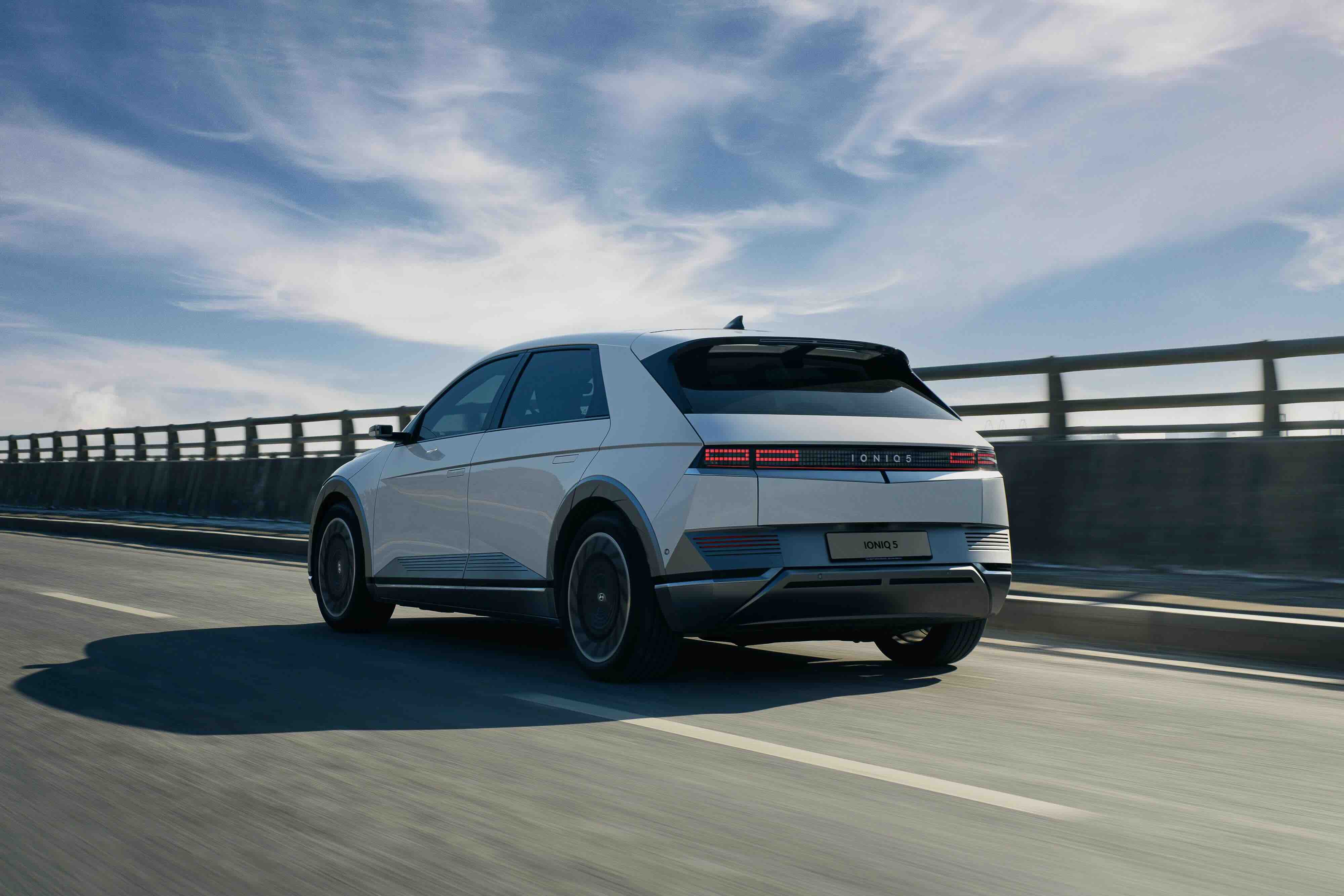
Hyundai will offer an XRT variant, a more off-road-styled Tucson with a unique grille, a skid plate and chunky wheel-arch cladding similar to the look of the US-market Ioniq 5 XRT.
Hyundai says it is aimed at customers who prefer an outdoor lifestyle and is meant to give a rugged impression. What Hyundai has not confirmed is how much genuine off-road ability it adds over a standard Tucson.
That distinction matters for your wallet. If the XRT is mostly a styling and positioning exercise, pay the premium because you like the look, not because you expect Prado-style capability.
This is also the first time an XRT version of the Korean-built Tucson has been offered, and Hyundai Australia has said it plans to expand its XRT and XRT Pro range locally.
Bigger, roomier and quieter inside
The new Tucson measures 4700mm long, 1905mm wide and 1685mm tall on a 2785mm wheelbase. That makes it 60mm longer and 40mm wider, with a 30mm longer wheelbase than the current car.
Despite the larger body, Hyundai says the drag coefficient improves from 0.33 to 0.30, which helps both fuel use and cabin noise at highway speed.
Second-row headroom grows by 29mm and the rear doors now open to 83 degrees, up from 73 degrees. For anyone loading child seats or helping older passengers, that wider door opening is a real everyday win.
Hyundai has also added sound-absorbing padding to the dashboard and thicker front door glass to keep engine and wind noise out of the cabin.
A cabin built around big screens and AI
Inside, buyers can choose between a 12.9-inch or a large 17-inch infotainment touchscreen. The Tucson becomes the first Hyundai SUV to use the brand's new Pleos Connect system, complete with an app store and a generative AI assistant called Gleo.
Ahead of the driver sits a slim, high-mounted digital instrument cluster. Options include 100W USB-C charging, a wireless phone charger and a Bang & Olufsen sound system.
A word of caution for buyers. Screen-heavy interiors look impressive in the showroom, so on your test drive check that everyday functions like climate control are still quick to use on the move.
Safety tech worth having
The new Tucson adds several safety features worth knowing about. Pedal Misoperation Safety Assist limits acceleration if the system decides you have pressed the accelerator by mistake.
Forward Parking Collision Avoidance Assist helps brake for a pedestrian or obstacle at low speed, while Door Unlock Power Redundancy uses backup power to keep the doors unlockable after a crash.
Hybrid versions also gain a Stay Mode that keeps climate and infotainment running while parked, plus a Memory Reverse Assist that can steer the car back along the path it just drove.
The mid-size SUV fight is about to get brutal
The Tucson is not launching into a quiet market. Hyundai's sister brand Kia is readying a new-generation Sportage, and Nissan has a new Rogue and X-Trail duo on the way.
Chinese brands are crowding in too, with a new GWM Haval H7 due later this year, a fresh Haval H6 in 2027, and Chery lining up the Lepas L6, Omoda 7 and iCaur V25.
For buyers, that pressure is good news. More choice and aggressive newcomers hand you leverage, so use rival quotes to keep any Tucson deal honest.
Should you buy now or wait?
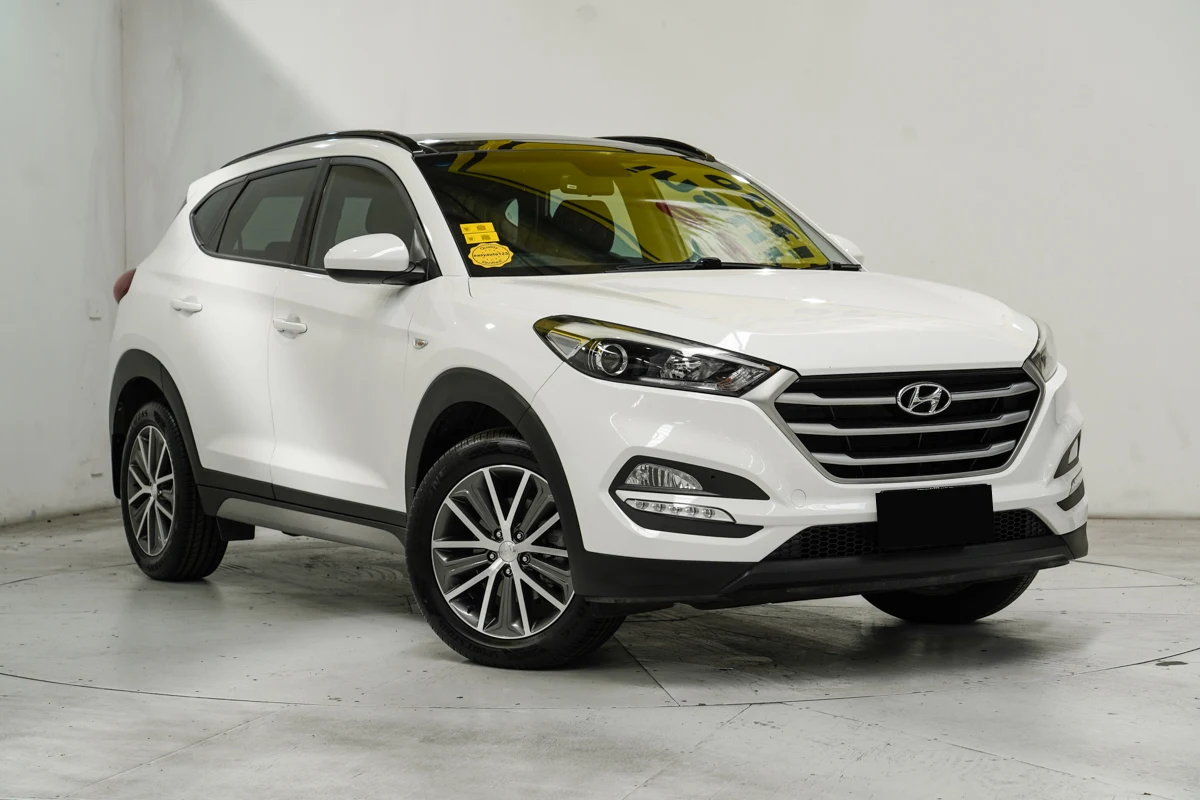
This is the real question. Until the new model arrives, Hyundai still sells the current Tucson with a 2.0-litre non-turbo petrol and the 1.6-litre turbo hybrid, and the 2.0-litre looks set to be retired when the new car lands.
If you need a car now, run-out stock of the current Tucson is where the discounts live as dealers clear the old model. Our Hyundai Tucson price negotiation guide walks through how to push for a better number.
If you want the latest technology and the stronger hybrid, budget for a first-half-2027 arrival and expect hybrid-first pricing that leaves little room to haggle early on.
How Carseekers and Loanseekers can help
New model launches are when dealers hold the most pricing power, so this is exactly when independent help pays for itself. Carseekers takes the running around off your plate, comparing live Hyundai Tucson stock and negotiating on your behalf so you are not fighting the dealer alone.
The other half of the equation is how you pay for it. Dealer finance on a fresh launch is rarely the cheapest money, so it pays to compare before you commit.
Loanseekers compares more than 70 lenders to help you avoid overpaying on finance, the same way Carseekers helps you avoid overpaying on the car itself.
The finer details
Your questions answered.
When is the new Hyundai Tucson coming to Australia?
The fifth-generation Hyundai Tucson goes on sale in South Korea in October 2026, with an Australian launch due in the first half of 2027. Hyundai is expected to lead the local range with hybrid power before adding other variants.
Should I buy a Hyundai Tucson now or wait for the 2027 model?
If you need a car now, run-out stock of the current Tucson is where the sharpest discounts sit as dealers clear the old model. If you want the stronger hybrid and the latest tech, budget for a first-half-2027 arrival, but expect hybrid-first pricing with little early room to haggle.
How much power does the 2027 Hyundai Tucson hybrid have?
The new Tucson's 1.6-litre turbo-hybrid produces a total system output of 180kW and 380Nm. A non-hybrid 1.6-litre turbo petrol is also offered, making 142kW and 265Nm.
Is the 2027 Hyundai Tucson bigger than the current model?
Yes. The new Tucson measures 4700mm long, 1905mm wide and 1685mm tall on a 2785mm wheelbase, making it 60mm longer and 40mm wider with a 30mm longer wheelbase. Second-row headroom grows by 29mm and the rear doors open wider for easier access.
What is the Hyundai Tucson XRT?
The XRT is a more off-road-styled Tucson with a unique grille, a skid plate and chunky wheel-arch cladding. Hyundai pitches it at buyers who want a rugged look, but it has not confirmed how much extra off-road ability it adds over a standard Tucson.
Will the new Hyundai Tucson still offer a petrol engine?
Yes. Alongside the hybrid, Hyundai will offer a non-hybrid 1.6-litre turbo petrol making 142kW and 265Nm. In Australia the petrol may arrive after the hybrid, following the same staggered rollout Hyundai used for the Santa Fe and Palisade.