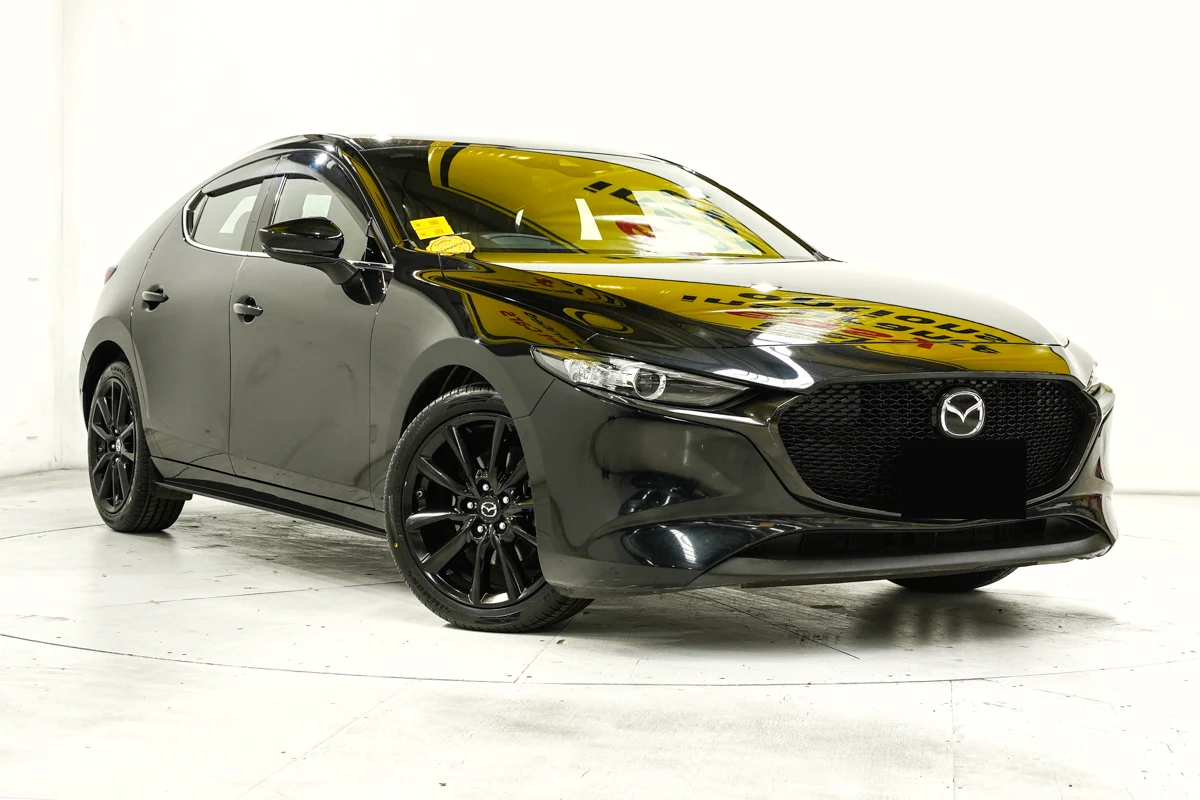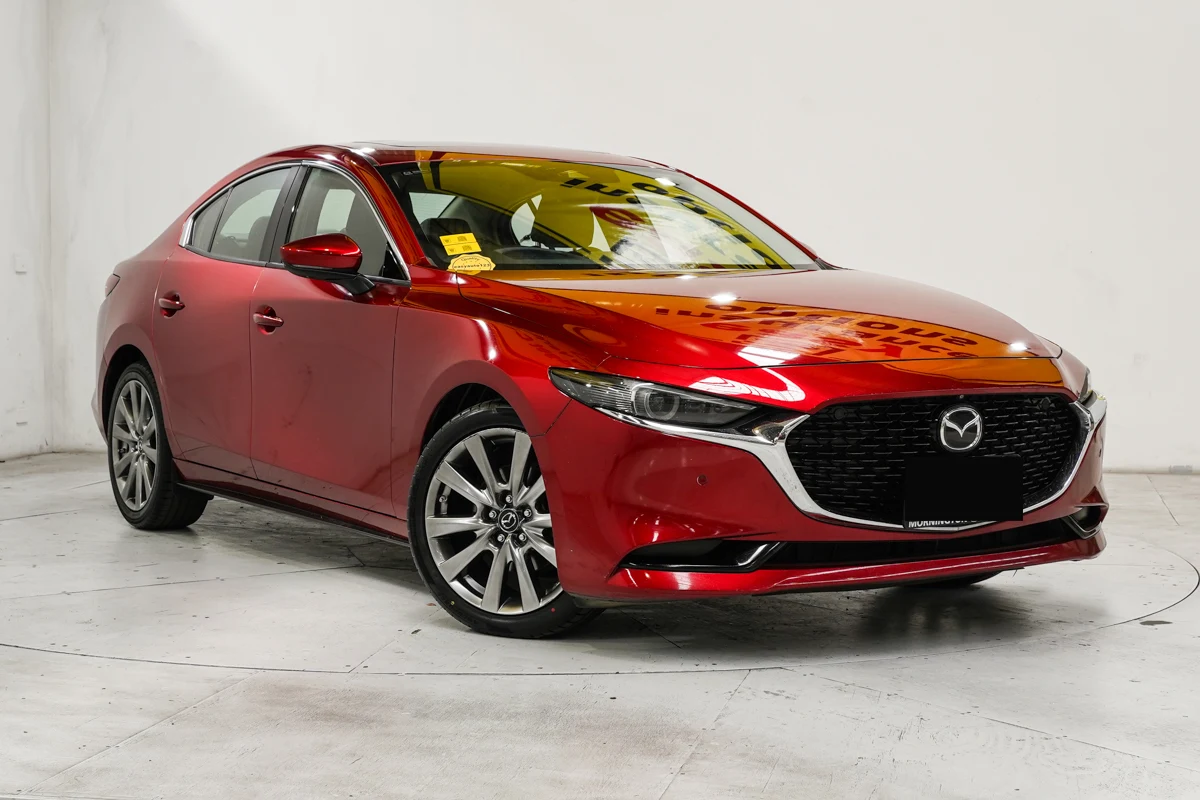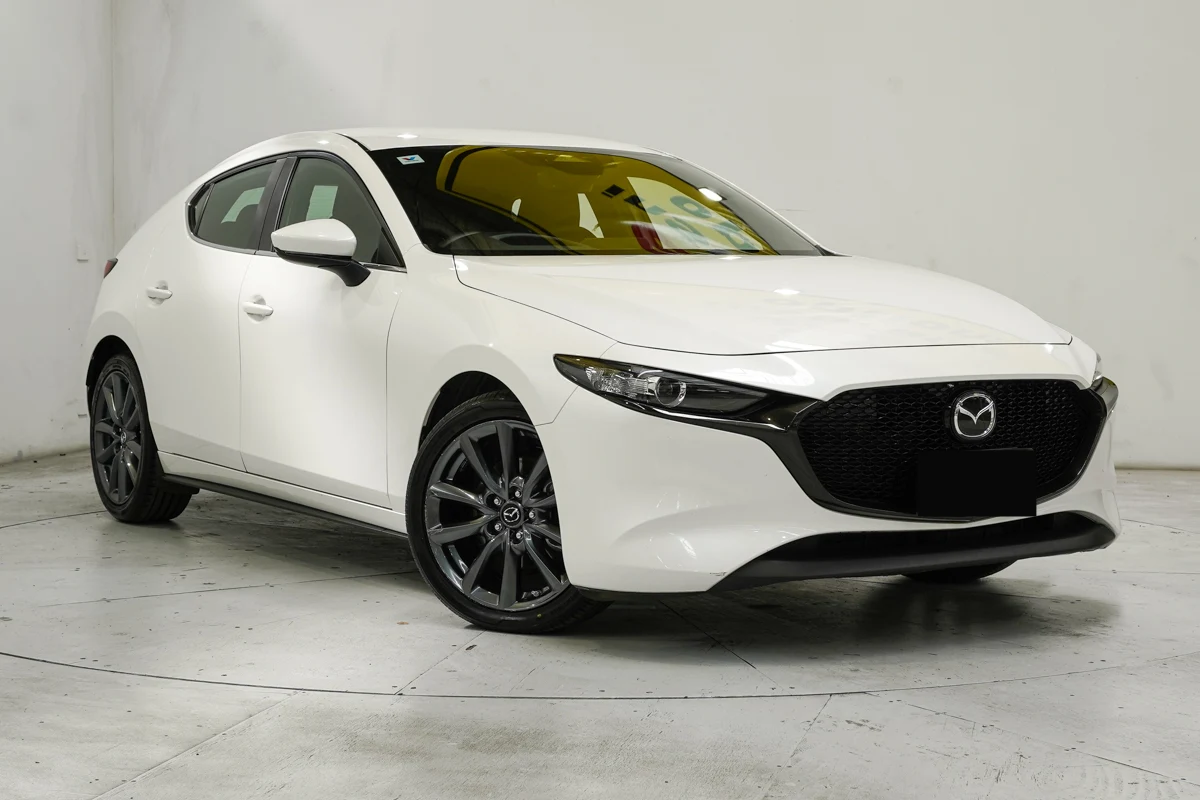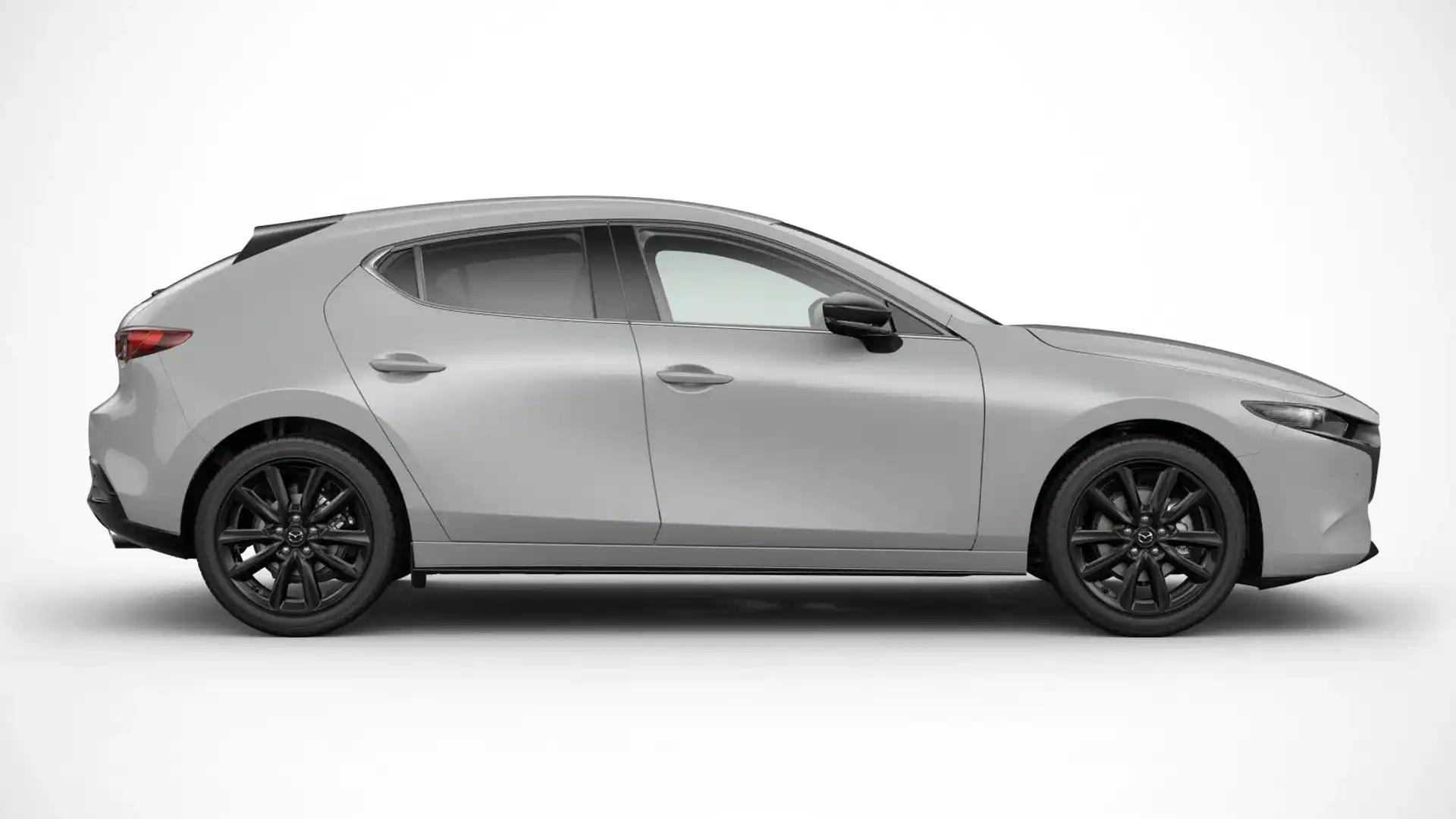
Mazda has revealed the 2027 Mazda 3 hatch and sedan for Europe, and Australian buyers are about to inherit one of the most familiar faces in the small car segment. The car remains visually almost identical to the 2018 original, despite heading into its eighth year on sale with the same body, lights and interior architecture.
The European 2027 update is on sale now. Australian dealers expect stock to arrive in the second half of 2026, almost certainly with the same revisions applied locally. There is no facelift. No new bumpers. No new dashboard. Just safety tech, smarter headlights, and a paint swap.
What is actually new on the 2027 Mazda 3
The headline upgrades sit in the safety stack. All 2027 Mazda 3s in Europe gain intersection and motorcycle autonomous emergency braking detection, joining the existing vehicle, pedestrian and bicycle modes. The blind-spot monitor now better recognises motorcyclists when changing lanes. In Germany, a driver attention camera becomes standard across the range, along with secondary braking following a collision, which keeps the car decelerating after an initial impact.
A new generation of adaptive LED headlights, previously limited to the flagship G25 Astina grade, now includes pedestrian marker lighting and automatic brightness reduction at traffic lights to prevent dazzling oncoming drivers. That is a thoughtful tweak few rivals offer.
Selected European grades also get gunmetal-coloured interior trim replacing the silver finish, plus intelligent speed limit assist that links adaptive cruise to traffic sign recognition. The cruise can now adjust itself when the camera reads a new sign. This was previously a feature of higher-end European Mazdas only.
A new Aero Grey metallic paint replaces Ceramic and Zircon Sand on the order sheet. This same colour has rolled out across the MX-5, Mazda 2, Mazda 6e, CX-3, CX-6e, and the new-generation CX-5 due in Australian showrooms next month.
Why there is no facelift
Mazda Australia has been clear that small-car investment sits behind larger priorities. Managing director Vinesh Bhindi told Drive earlier this year that Mazda's R&D resources are stretched, and the Large Platform models (CX-60, CX-70, CX-80 and CX-90) and the new-generation CX-5 came first.
This is the same reason the Mazda 2 has soldiered on without a major redesign and why the Mazda 3 keeps getting equipment trims rather than visual refreshes. The brand cannot afford to redesign every model at the same time. By choosing the SUVs and the CX-3 replacement first, the 3 has been pushed to the back of the queue.
In Australia, late 2025 brought a small specification cut. Standard equipment was deleted from the G20 Evolve and G25 Evolve SP mid-spec grades to keep pricing stable. "Minor specification changes to the Mazda 3 were made in order to keep pricing as competitive as possible," a Mazda Australia spokesperson said in November 2025. Translation: feature deletion was used to absorb cost increases without lifting RRP.
How the Mazda 3 stacks up against rivals in 2026
The Toyota Corolla hatch launched a few months earlier than the Mazda 3, but it has been refreshed once and a concept previewing the next-generation model was shown at the 2025 Tokyo motor show. The current Corolla also has a self-charging hybrid powertrain that the Mazda cannot match. Hybrid Corollas dominate this segment for fuel economy.
The Hyundai i30 hatchback dates back to 2017 and is now sold in Australia only as the i30 N performance flagship. The standard model was axed in late 2025. Europe is expected to get a third i30 facelift later this year with a possible full-hybrid powertrain. Whether that revived hatch comes back to Australia is uncertain.
Against those two, the Mazda 3 wins on interior quality, steering feel and ride refinement. It loses on hybrid efficiency, infotainment software, and freshness of design. For buyers who care about how a car feels to drive, the Mazda still has a case. For buyers who care about fuel use and tech, the Corolla Hybrid wins.
What the Mazda 3 costs in 2026
Current Australian pricing runs from $31,610 before on-road costs for the G20 Pure to $43,610 for the G25 Astina. Drive-away figures land roughly $34,000 to $48,000 depending on state. Hatch and sedan share pricing, although the sedan slots into a slightly cheaper insurance class in some states.
The 2027 update is unlikely to move pricing. Mazda Australia has already shown its preference is to absorb cost into feature deletion rather than headline price rises. Expect the same approach when the new safety tech lands locally.
Should you buy a current Mazda 3 or wait?
If you need a small car now and plan to keep it under five years, the current Mazda 3 is still a solid buy. The four-cylinder petrol engines are reliable, servicing is well understood across the dealer network, and the cabin still feels premium for the money. The drive experience is consistently rated above the Toyota Corolla, even with the Toyota's hybrid efficiency advantage.
If you plan to hold the car for seven to ten years, wait. A new-generation Mazda 3 is coming, almost certainly with hybrid power and a fresh platform. Buying an eight-year-old design now means buying into a car that will look its age fast.
If you are cross-shopping with the Mazda CX-30, consider the SUV. It rides higher, has more cargo space, and uses the same mechanicals. Resale of the CX-30 has been stronger than the 3 across the past two years.
Dealer behaviour to expect
Mazda dealers will use the 2027 update as a selling tool. Expect language about "refreshed safety," "updated lighting" and "latest specification" once the Australian arrival is confirmed. None of this is a styling refresh, despite how it might be framed in the showroom.
The smart play is to wait until the 2027 model lands locally, ask for current 2026-build stock at a deeper drive-away discount, and let dealers offload pre-update inventory. Difference between an outgoing G25 Evolve SP and a new 2027 spec is small. The discount on outgoing stock should be $2,000 to $4,000 drive-away if you are patient.
For anyone running a quote process across multiple dealers, work with Carseekers to compare drive-away prices side by side. Mazda dealers vary widely in how aggressively they discount the 3, especially in the back half of any calendar year.
The wider context
The Mazda 3 was once one of Australia's top-selling cars. In 2026 it sits as Mazda's fifth-best seller behind the CX-5, CX-3, BT-50, and CX-30. Year-to-date 2026 sales sit at 2,697, well behind the 7,477 for the CX-5 and 4,439 for the CX-3.
This is the small car story across Australia. Buyers have moved to compact SUVs. Even Mazda's own product strategy reflects that, with the CX-30 sitting on the same platform and outselling the 3. A 2027 update with no design refresh will not reverse that trend, but it will keep the 3 viable for the buyers who still want a hatch or a sedan over an SUV.
Considering finance for your next car? Loanseekers can help you explore car loan options.
The finer details
Your questions answered.
When does the 2027 Mazda 3 arrive in Australia?
The 2027 Mazda 3 is on sale now in Europe and Australian arrival is expected in late 2026. Mazda Australia has not confirmed an exact month, but historical patterns put the local launch six to eight months after European introduction. Expect dealer stock from October to December 2026.
What is new on the 2027 Mazda 3?
Revised adaptive LED headlights with pedestrian marker lighting and lower brightness at traffic lights. Intersection and motorcycle AEB detection joins the existing vehicle, pedestrian and bicycle modes. Improved motorcyclist detection on the blind-spot monitor. A new Aero Grey metallic paint replaces Ceramic and Zircon Sand. Higher European grades also gain darker gunmetal interior trim.
How much does the Mazda 3 cost in Australia?
The current [Mazda 3](https://www.carseekers.com.au/model/mazda/mazda3) is priced between $31,610 and $43,610 before on-road costs in Australia. Drive-away figures sit roughly $34,000 to $48,000 depending on state. The 2027 update is unlikely to bring a price reduction, with safety upgrades typically absorbed into existing grade pricing.
Is the Mazda 3 still worth buying in 2026?
Yes, but expect ageing styling. The fourth-generation Mazda 3 has been on sale since 2018 with no major design changes. The interior, drive quality and refinement still hold up against rivals, but software, infotainment and packaging are showing their age. Buyers chasing modern tech and a fresh design should consider a [Toyota Corolla](https://www.carseekers.com.au/model/toyota/corolla) or wait for the next-generation Mazda 3 due later this decade.
How does the Mazda 3 compare to the Toyota Corolla and Hyundai i30?
The [Toyota Corolla](https://www.carseekers.com.au/model/toyota/corolla) hatch launched a few months before the Mazda 3 but received a mid-life refresh in 2022 and a hybrid powertrain. The standard [Hyundai i30](https://www.carseekers.com.au/model/hyundai/i30) hatch was axed in late 2025, leaving only the i30 N performance model on Australian sale. The Mazda 3 wins on interior quality and steering feel, but loses on hybrid efficiency to the Corolla.
Should I wait for the next-generation Mazda 3?
Mazda has not confirmed a launch date for the next-generation Mazda 3, but on current product cadence it is unlikely before late 2027 or 2028. If you need a small car now, the current model with this 2027 update is a solid buy at a sharp dealer price. If you can wait two years, the next generation will likely bring hybrid power and a clean-sheet design. Speak to [Carseekers](https://www.carseekers.com.au) about run-out timing once 2026 build stock clears.