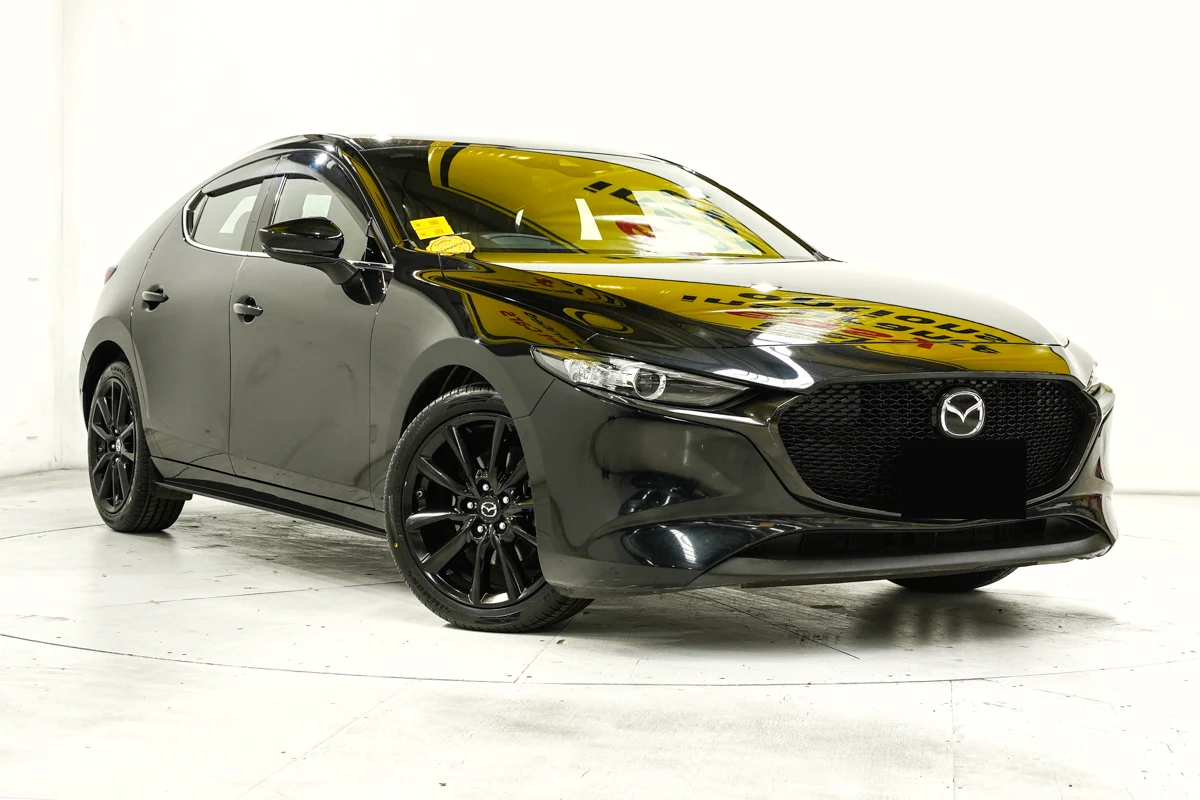

Mazda has officially confirmed that the Mazda CX-3 will get a clean-sheet replacement in 2027, ending a 12-year run for one of Australia's most popular light SUVs. The announcement landed in Mazda's March 2026 full-year financial report this week, and finally gives buyers the timeline they have been chasing for years.
The brand stated it will "introduce the next-generation CX-3 (compact SUV) next year to capture the volume segment." Production stays in Thailand. The new model joins an electrified version of the same platform, and will help anchor Mazda's Thai factory as an export base back to Japan and across South-East Asia.
Why this matters for Australian buyers
The current CX-3 has been on sale here since 2015. It is now Australia's best-selling light SUV in 2026, with 4,439 units shifted year-to-date, well ahead of the Toyota Yaris Cross at 2,731, Hyundai Venue at 1,938, and Kia Stonic at 1,897. But sales are down 17.6 per cent year-on-year, and the segment overall is down 17.1 per cent as Chinese rivals one size up steal buyers.
The Chery Tiggo 4 Pro is up 104 per cent year-on-year. The GWM Haval Jolion is up 31.8 per cent. Both are larger, cheaper, and offer hybrid drivetrains the current CX-3 cannot match. The new 2027 CX-3 is Mazda's response.
What we know about the 2027 CX-3
Mazda has been deliberately stingy with detail. We know the car is built in Thailand. We know it will be available as a hybrid. We know it is positioned as a 2027 launch globally. We do not yet know the engine, platform, exterior styling, dimensions, or Australian pricing.
Design sketches shown last February at the announcement of Mazda's five billion baht ($233 million Australian) Thai investment hinted at a more upright stance with a clean Kodo design language. The Vision X-Compact concept at the 2025 Tokyo motor show suggested the same. Whether either previewed the new CX-3 or the next Mazda 2 is still unclear.
Mazda has confirmed separately that hybrid small SUVs are arriving in 2027. The new CX-3 is almost certainly one of them. Expect a self-charging hybrid system, similar in concept to the Toyota Yaris Cross set-up, possibly with mild electrification at the lower grades.
Platform questions
The big technical question is the platform. Mazda has a few choices.
Option one is to update the existing CX-3 underpinnings, the same DJ-generation platform shared with the current Mazda 2. This would be cheaper to engineer and keep the new model affordable, but limits how much can be done with hybridisation and structural safety upgrades.
Option two is to shrink the larger Mazda 3 and CX-30 architecture down to fit the CX-3 footprint. This would give the new car a more modern crash structure, room for better hybrid packaging, and would lift cabin refinement closer to a CX-30. It would also push pricing up by several thousand dollars.
Option three is a fresh small-car platform, which Mazda has not announced. Given the brand just invested $233 million into Thailand and just launched the all-new CX-5 on a brand new large platform, a clean-sheet small platform is plausible.
Will the Mazda 2 survive?
Mazda Australia managing director Vinesh Bhindi told Drive earlier this year that the current Mazda CX-3 and Mazda 2 "will be on offer ongoing this year." He framed the priority list as Large Platform first (CX-60, CX-70, CX-80 and CX-90), then the CX-5 replacement, then electrification, and only then a refresh for the small cars.
The future of the Mazda 2 hatch and sedan remains genuinely uncertain. The Vision X-Compact concept hints at a future. But Mazda has not committed to a new 2 in the same way it has now committed to a new CX-3. If the 2 dies, the CX-3 becomes Mazda's only entry-point vehicle, and pricing leverage will weaken.
Pricing expectations
The current CX-3 ranges from $26,290 before on-roads for the base Sport to $39,290 for the top Akari LE. Drive-away that becomes roughly $29,000 to $43,000 depending on state.
A new-generation model with hybrid power across most grades will lift the floor. Expect the 2027 CX-3 to start near $29,000 before on-roads and stretch to over $44,000 in top trim. Mazda will need to keep the entry-grade competitive against the GWM Haval Jolion Hybrid, which currently starts under $34,000 drive-away with seven-year warranty cover.
Dealer behaviour during the transition
With the new generation now publicly confirmed, current CX-3 trade-in and resale values will weaken across the next 18 months. Buyers who own a 2024 or 2025 CX-3 should factor in 3 to 5 per cent additional depreciation across 2026 to 2027 as the new model approaches.
Mazda dealers will respond in two phases. Through the second half of 2026, expect aggressive drive-away offers on current-build CX-3s, particularly on the Pure, Pure SP and Maxx Sport grades that move the highest volume. By early 2027, expect run-out finance rates and deeper discounts as the pipeline clears.
Buyers chasing a late-model current CX-3 should target October to December 2026 for the best deals. By February 2027, Mazda will start protecting margin to clear the bridge to the new model.
Should you wait?
If you need a small SUV right now and plan to keep it under five years, the current CX-3 is still a strong buy at the right discount. It is mechanically simple, cheap to insure and easy to service. The DJ generation has 12 years of dealer experience behind it.
If you plan to keep the car seven years or more, wait for the 2027 generation. The new platform will offer better safety, hybrid efficiency, and significantly stronger resale into the 2030s. A current CX-3 bought in 2026 will look very old by 2031.
If you are cross-shopping with the CX-30 or Mazda 3, consider those instead. They are already on the newer architecture and will not feel dated against the 2027 CX-3 when it arrives.
The wider Mazda strategy
Mazda's March 2026 financial report painted a difficult year. Australian sales between April 2025 and March 2026 dropped 9 per cent, with the brand explicitly blaming declining performance of the Mazda 2 and CX-3. Sales of Large Platform models lifted, but not enough to cover the loss at the bottom of the range.
This is why the CX-3 replacement is now publicly confirmed. Mazda cannot afford to lose the volume segment to Chery, GWM and a hybridised Yaris Cross. The 2027 model has to deliver hybrid efficiency, sharper styling, and a price point that holds the line against $30,000 Chinese rivals offering eight-year warranties.
For Carseekers readers shopping in 2026, the message is simple. The current car is competent but ageing. The new car is coming, with hybrid power and a fresh platform. Buy current at deep discount, or wait 12 to 18 months and buy new. Avoid paying full price for outgoing 2026 stock between now and the year-end run-out window.
Considering finance for your next car? Loanseekers can help you explore car loan options.
The finer details
Your questions answered.
When does the new 2027 Mazda CX-3 launch?
Mazda has confirmed in its March 2026 full-year financial report that the next-generation CX-3 launches in 2027. Production at the brand's Thai factory ramps up first, with Japanese and South-East Asian markets prioritised. Australian arrivals are most likely in the second half of 2027 or early 2028 depending on production allocation.
Will the new Mazda CX-3 be a hybrid?
Almost certainly yes. Mazda has stated the new Thai-built small SUV will include an electrified version, and the brand has separately confirmed hybrid small SUVs are due in 2027. Whether the hybrid is a full self-charging system in the style of the Toyota Yaris Cross or a 48-volt mild-hybrid is not yet confirmed. A pure petrol grade will likely sit alongside the hybrid at launch.
How much will the 2027 Mazda CX-3 cost?
Mazda has not released pricing. Based on current CX-3 positioning at $26,290 to $39,290 before on-roads and the cost of adding a hybrid powertrain, expect the 2027 model to open around $29,000 and stretch past $44,000 in top trim. A hybrid premium of $3,000 to $5,000 over an equivalent petrol grade is standard across the Mazda range.
Is the current Mazda CX-3 still worth buying in 2026?
Yes, if you find the right deal. Mazda Australia's Vinesh Bhindi confirmed the current CX-3 will remain on offer through 2026. With the new generation now publicly confirmed, dealers are likely to discount remaining 2025 and early 2026 build stock more aggressively. Use [Carseekers](https://www.carseekers.com.au) to compare drive-away offers across multiple Mazda dealers before signing.
What rivals will the 2027 Mazda CX-3 face?
The light SUV segment in Australia is led right now by the [Toyota Yaris Cross](https://www.carseekers.com.au/model/toyota/yaris-cross), [Hyundai Venue](https://www.carseekers.com.au/model/hyundai/venue) and [Kia Stonic](https://www.carseekers.com.au/model/kia/stonic). By 2027 the new CX-3 will face an updated Chery Tiggo 4 Pro, the GWM Haval Jolion and a fully electrified version of the Yaris Cross. Hybrid range and warranty length will matter more than absolute price.
Will the next CX-3 use the same platform as the Mazda 3 and CX-30?
It is not yet confirmed. Mazda may shrink the [Mazda 3](https://www.carseekers.com.au/model/mazda/mazda3) and [CX-30](https://www.carseekers.com.au/model/mazda/cx-30) platform to fit the CX-3, or it may update the existing DJ-generation underpinnings shared with the [Mazda 2](https://www.carseekers.com.au/model/mazda/mazda2). The new-gen [CX-5](https://www.carseekers.com.au/model/mazda/cx-5) due next month is built on a fresh large platform, suggesting Mazda is investing in clean-sheet architecture across the range.