Buying a large luxury SUV in 2027 is about to get more complicated, and not in the way the press release suggests. The updated Mercedes-Benz GLS brings genuine changes to the powertrain, interior, and safety suite, but the timing of its Australian arrival puts buyers in a negotiation window that most dealers would prefer they not notice.
The Spec Sheet Buyers Actually Need
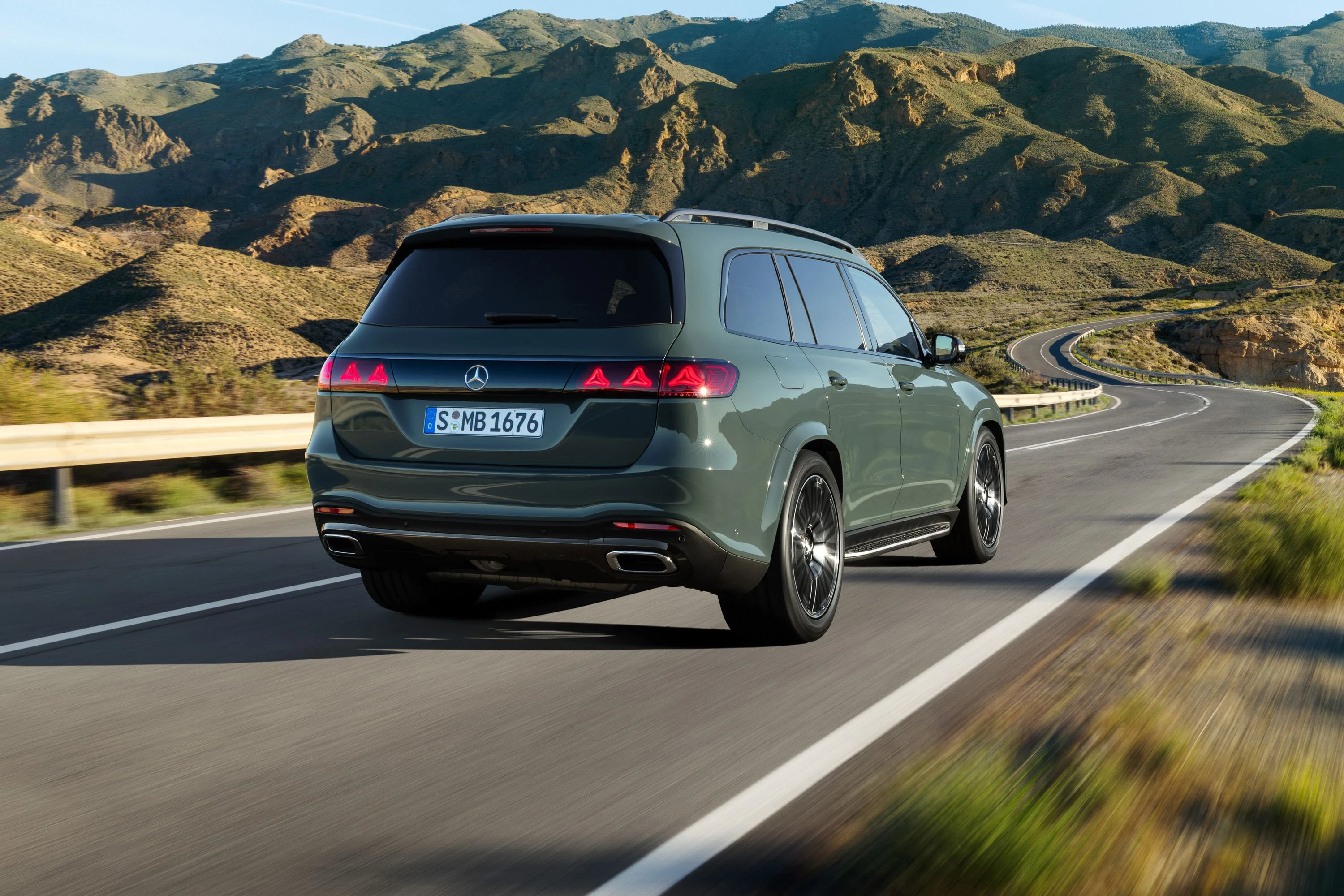
The GLS range carries forward two core engine options. The GLS450 runs a turbocharged 3.0-litre inline-six now producing 560Nm of torque, up from 500Nm, via changes to the intake camshaft and cylinder head. The GLS580 runs a twin-turbo 4.0-litre V8 with a flat-plane crankshaft revision, lifting outputs to 395kW and 750Nm. Both use a 48V mild-hybrid integrated starter-generator. The diesel GLS350d and GLS450d continue unchanged in specification for now. No Australian pricing has been confirmed. No AMG variant has been announced yet. Both of those blanks matter.
Why Mercedes Moved on the V8 Now
The flat-plane crankshaft swap on the GLS580's V8 is not a performance upgrade first, it is an emissions compliance move. European and increasingly global emissions cycles are tightening around large-displacement petrol engines, and a flat-plane crank produces a cleaner combustion cycle that responds better to cylinder deactivation and energy recuperation systems. Mercedes framing this as a power bump is accurate but incomplete. The real story is that without this change, a V8 GLS in this segment becomes harder to certify in key markets within two to three years. Buyers paying for the 580 are essentially funding its survival, not its reinvention.
The Interior Arms Race and What It Actually Costs You
The MBUX Superscreen wraps a 12.3-inch instrument cluster, a 12.3-inch infotainment display, and a 12.3-inch passenger screen under a single continuous glass panel. The passenger screen activates only when a passenger is detected, otherwise it displays a star pattern. Optional rear screens add two 11.6-inch HD displays. This is genuinely impressive hardware, but it also means the base GLS price carries a screen package that would have been a $5,000 to $8,000 option on the outgoing model. When dealers quote the new car, that content is baked into the drive-away figure. Know what you are actually getting for the premium before comparing it to the current-generation price.
What Happens to Current GLS Stock When the New One Lands
Mercedes-Benz Australia typically stages new-generation arrivals across a six to twelve month window. When a refreshed model is confirmed for 2027, dealers holding current-generation GLS stock in the second half of 2026 face a familiar problem: depreciation acceleration. Buyers who act in Q3 or Q4 2026 on an outgoing GLS are in a position to negotiate more aggressively than usual. Dealers will not advertise this. Stock that was sitting at full margin in January becomes a liability by September when the new model's arrival date is public. That leverage belongs to the buyer.
How to Position Yourself in This Negotiation
Call your preferred Mercedes dealer now and ask two questions directly: what is their current GLS allocation for the updated model, and when does their first delivery slot open. If allocation is tight, get on a waitlist with a small refundable deposit, not a non-refundable one. If they have no confirmed delivery timing, do not pay a deposit yet. Compare the GLS450 and GLS580 drive-away estimates from at least three dealers across different states. Freight and on-road costs vary. Use Carseekers to have dealers compete for your business instead of working each one manually. The difference between the first quote and the best quote on a vehicle at this price point is often material.
When Timing Actually Works in Your Favour
Two windows are worth targeting. The first is EOFY 2026, specifically May and June, when dealers are under pressure to hit volume targets before the financial year closes. An outgoing GLS in stock during this window can move with meaningful dealer contribution. The second window is pre-delivery on the new model. If Australian pricing is announced before physical stock arrives, some dealers will lock in a price and take a deposit. That price can sometimes be negotiated before the market fully understands the new car's positioning. Once review coverage drops and demand firms up, that window closes fast.
The Rivals Mercedes Would Prefer You Not Research First
The GLS competes directly with the BMW X7 and the Audi Q8, both of which have had recent updates of their own. The X7 xDrive40i and xDrive50i sit in a similar price bracket and offer comparable three-row seating with a different technology stack. The Audi Q8 is a two-row vehicle but draws buyers from the same pool. Land Rover's Range Rover with its long-wheelbase option is also a credible alternative for buyers prioritising cabin space and off-road flexibility over outright speed. If a dealer senses you have not priced any of these, they will lean on the GLS's prestige positioning to justify margin. Walking in with a Q8 quote changes the conversation immediately.
One Decision Before You Book a Test Drive
The 2027 GLS facelift is a meaningful update, not a generational leap. The powertrain changes are real, the interior is genuinely impressive, and the safety technology is a step forward. But buyers who move before Australian pricing is confirmed are negotiating blind. Wait for the official local spec sheet, get drive-away quotes from multiple dealers, and use Carseekers to run that competition for you without the back-and-forth. At $200,000-plus price points, the difference between a good deal and a great deal is worth the extra week.
Considering finance for your next car? Loanseekers can help you explore car loan options.
The finer details
Your questions answered.
When is the 2027 Mercedes-Benz GLS facelift coming to Australia?
Mercedes-Benz has not confirmed an exact Australian launch date for the facelifted GLS. Based on Mercedes's typical delivery timeline of 12 to 18 months after European launch, an Australian arrival in late 2026 or early 2027 is expected. Contact Mercedes-Benz Australia to register interest.
What changes in the 2027 Mercedes-Benz GLS facelift?
The 2027 GLS facelift updates the powertrain lineup, refreshes the interior with the latest MBUX infotainment generation, and adds new standard safety systems. Styling changes are evolutionary rather than transformational. The facelift is primarily about technology and powertrain currency rather than a design overhaul.
Should I buy a current Mercedes GLS or wait for the facelift?
If the facelift is 12 to 18 months away, use its pending arrival to negotiate aggressively on the current model. The current GLS is a strong car and dealers know its residual value will soften once the updated version launches. A meaningful discount on the current model can offset the facelift's improvements for many buyers.
How does the Mercedes GLS compare to the BMW X7 in Australia?
Both are full-size luxury seven-seat SUVs above $180,000 in Australia. The GLS leads on cabin opulence and brand prestige in the chauffeur and family luxury segment. The BMW X7 offers stronger driving dynamics and a more driver-focused character. Resale values are broadly comparable, both trailing the Range Rover in long-term residuals.
How much does the Mercedes-Benz GLS cost in Australia?
The Mercedes-Benz GLS starts from approximately $180,000 in GLS 450 guise and rises to above $250,000 for the AMG GLS 63. On-road costs add further to these figures. Confirm current pricing with your Mercedes-Benz dealer as prices adjust with model year changes and currency movements.
Is the Mercedes GLS a good tow vehicle for caravans in Australia?
The Mercedes GLS has a braked tow rating of 3,500kg, making it suitable for heavier Australian caravans. It combines this towing capability with genuine luxury and full seven-seat practicality. For buyers who need to tow heavy caravans in comfort, the GLS is one of the stronger premium options alongside the BMW X7 and Range Rover.