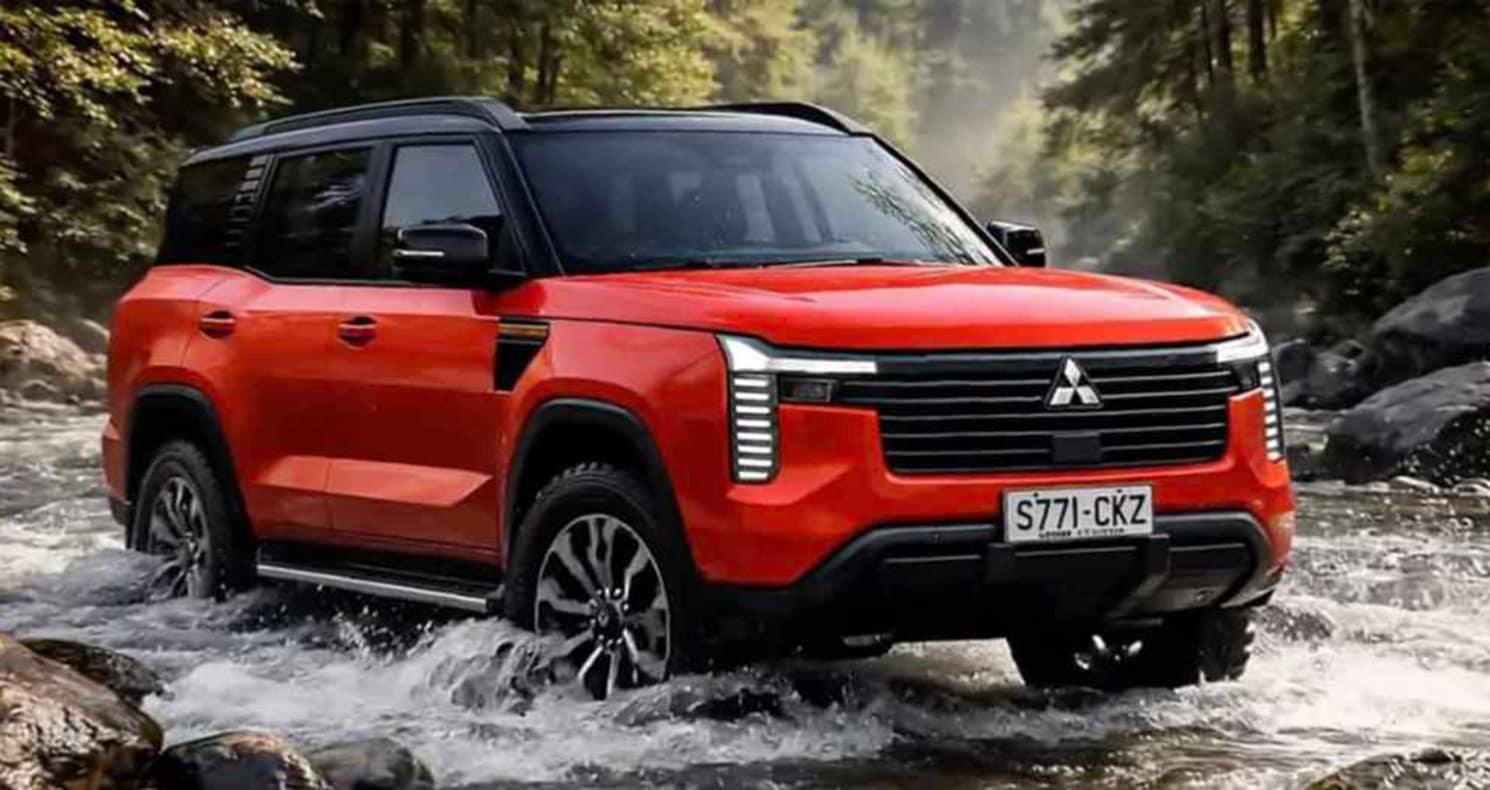

The Mitsubishi Pajero badge is coming back, and the latest details out of Japan confirm two things buyers will care about. First, the iconic short-wheelbase three-door body is dead. The new car is five-door, full-size, only. Second, Mitsubishi has been openly benchmarking it against the Toyota LandCruiser 300 Series, which tells you exactly where the brand is pitching this thing.
Carseekers sees the new Pajero as Mitsubishi's most important Australian launch since the Triton was overhauled. The brand still has strong ladder-frame heritage in this market, and a serious LandCruiser challenger built on the Triton platform fills a gap that has existed in the Mitsubishi lineup since the previous Pajero ended production in 2021.
Why the short-wheelbase is dead
Best Car in Japan has confirmed that the new Pajero generation will not include a short-wheelbase three-door. That is the first time in the Pajero's history that the brand has skipped the "shorty" entirely. The three-door Pajero left Australian showrooms in 2011 and is now something of a collector's item, particularly in late-2000s NS and NT spec.
In 2026, a three-door body-on-frame SUV would struggle to find a market. The only credible rival at that size is the Suzuki Jimny, and the Jimny succeeds because it is small, light, and cheap. A short Pajero would have been heavier, more expensive, and less hardcore than the Jimny on technical terrain. Mitsubishi's call to kill it makes commercial sense even if it disappoints enthusiasts.
Triton bones, LandCruiser ambitions
The new Pajero will be Triton-based and use the Mitsubishi ute's powertrain, bringing 150kW of power and 470Nm of torque to the off-road party. That is not blow-the-doors-off figures by 2026 standards. The LandCruiser 300 manages 227kW and 700Nm from its 3.3-litre V6 diesel. The Ford Everest V6 turbo-diesel pushes 184kW and 600Nm.
Where the Pajero will need to compete is on price and chassis tuning, not raw output. Expected to match the Triton's 3,500kg braked towing capacity, the Pajero should arrive at a meaningful price gap below the LandCruiser 300 and within striking distance of the Ford Everest and Isuzu MU-X. That positions it as a credible large family 4WD for buyers who do not need V6 firepower.
The length is the surprising bit. The Pajero is expected to exceed five metres, making it the biggest in the model's history. For context, the LandCruiser 300 is 4,985mm long. A five-metre-plus Pajero would dwarf the Ford Everest at 4,914mm and the Hyundai Palisade at 4,995mm. Whether that translates to genuine seven-seat space or just bigger overhangs will determine how buyers receive it.
Benchmarked against the LandCruiser 300
Japanese media has already spotted a camouflaged Pajero alongside a LandCruiser 300 in development testing. Manufacturers benchmark rivals during development as standard practice, but the choice of comparator matters. Mitsubishi pinning its target on the 300 Series rather than the new LandCruiser Prado signals ambition. It also signals what Mitsubishi expects buyers to compare against on the test drive.
Mitsubishi's president Keisuke Kishiura has been on record describing the Pajero as "an object of admiration", citing its off-road capability, reliability, and ride quality. Those words are a clear signal that the brand intends to build a genuine luxury-edged 4WD rather than a budget alternative. Pricing strategy will be the test of that ambition.
What this means for Australian 4WD buyers
The Australian large 4WD wagon segment has been a Toyota-dominated market for two decades. The new Pajero arriving on a fresh Triton platform, with proven Mitsubishi off-road heritage, gives buyers a real third option after the LandCruiser 300 and the Ford Everest. Nissan's Patrol sits in the conversation but has been let down by the lack of a diesel hybrid pathway in Australia.
For buyers currently shortlisting a LandCruiser Prado at $80,000 to $100,000 drive-away, the Pajero needs to land at a clearer price advantage to be a serious choice. Expect Mitsubishi to position it in the $75,000 to $95,000 range depending on grade, with the top variant pushing closer to LandCruiser 300 territory.
The one thing Mitsubishi has on its side here is dealer behaviour. Mitsubishi dealers tend to be more flexible on price than Toyota dealers, particularly on launch product where they need to build volume. The LandCruiser playbook of waiting lists, allocations, and zero negotiation will not work for Mitsubishi. Expect aggressive drive-away campaigns within the first 12 months, and use that to your advantage if you can wait until late 2027 to buy.
Dealer behaviour to watch
The key signal to watch is when Mitsubishi Australia confirms the Pajero for local sale. The Triton platform sharing makes it an obvious launch candidate, but the brand has been cautious about timing announcements after the production cycle of the previous Pajero ran longer than expected.
If Mitsubishi confirms the Pajero this year, expect EOI deposits to open within months. Do not pay a non-refundable deposit on a car you have not seen the spec sheet for. Use the EOI process to get into the dealer's order queue without locking in money. When the spec sheet drops, you can decide whether to convert the EOI to a firm order or walk away.
A full-size Pajero benchmarked against the LandCruiser 300 is exactly the kind of product Mitsubishi needs to maintain relevance in Australia as Chinese brands continue to flood the market with cut-price ladder-frame 4WDs. Whether it can pull buyers out of Toyota showrooms will come down to price and refinement. The platform and badge equity are already there.
Considering finance for your next car? Loanseekers can help you explore car loan options.
The finer details
Your questions answered.
When does the 2027 Mitsubishi Pajero launch?
Mitsubishi has not confirmed a launch date but the new Pajero is expected to enter production for the 2027 model year. Australian arrival has not been officially confirmed yet, though the Triton platform sharing makes it likely.
Will the new Pajero come in a short-wheelbase three-door?
No. Mitsubishi has confirmed the reborn Pajero will be five-door only and full-size. It is the first generation in the model's history to skip the short-wheelbase body.
How does the Pajero compare to the Toyota LandCruiser 300?
Mitsubishi has been benchmarking against the LandCruiser 300 during development. The Pajero produces 150kW and 470Nm versus the LandCruiser's 227kW and 700Nm V6 diesel, so it cannot match on output. It is expected to compete on price, chassis tuning, and dealer flexibility.
How much will the Mitsubishi Pajero cost in Australia?
No official pricing yet. Based on its Triton platform and positioning, expect Australian pricing in the $75,000 to $95,000 drive-away range, undercutting the LandCruiser 300 and sitting close to top-spec Ford Everest variants.
Will the Pajero tow 3,500kg?
Yes, that is the expected braked towing capacity, matching the Triton ute it shares a platform with. That puts the Pajero on par with most mid-size 4WD wagons in the Australian market including the Ford Everest and Isuzu MU-X.
Should I wait for the Pajero or buy a Ford Everest now?
If you need a 4WD now, the Everest is a strong buy with proven product and active dealer discounts. If you can wait until late 2027 and want to compare like-for-like, expect Mitsubishi to launch the Pajero with aggressive drive-away campaigns aimed directly at Everest buyers.