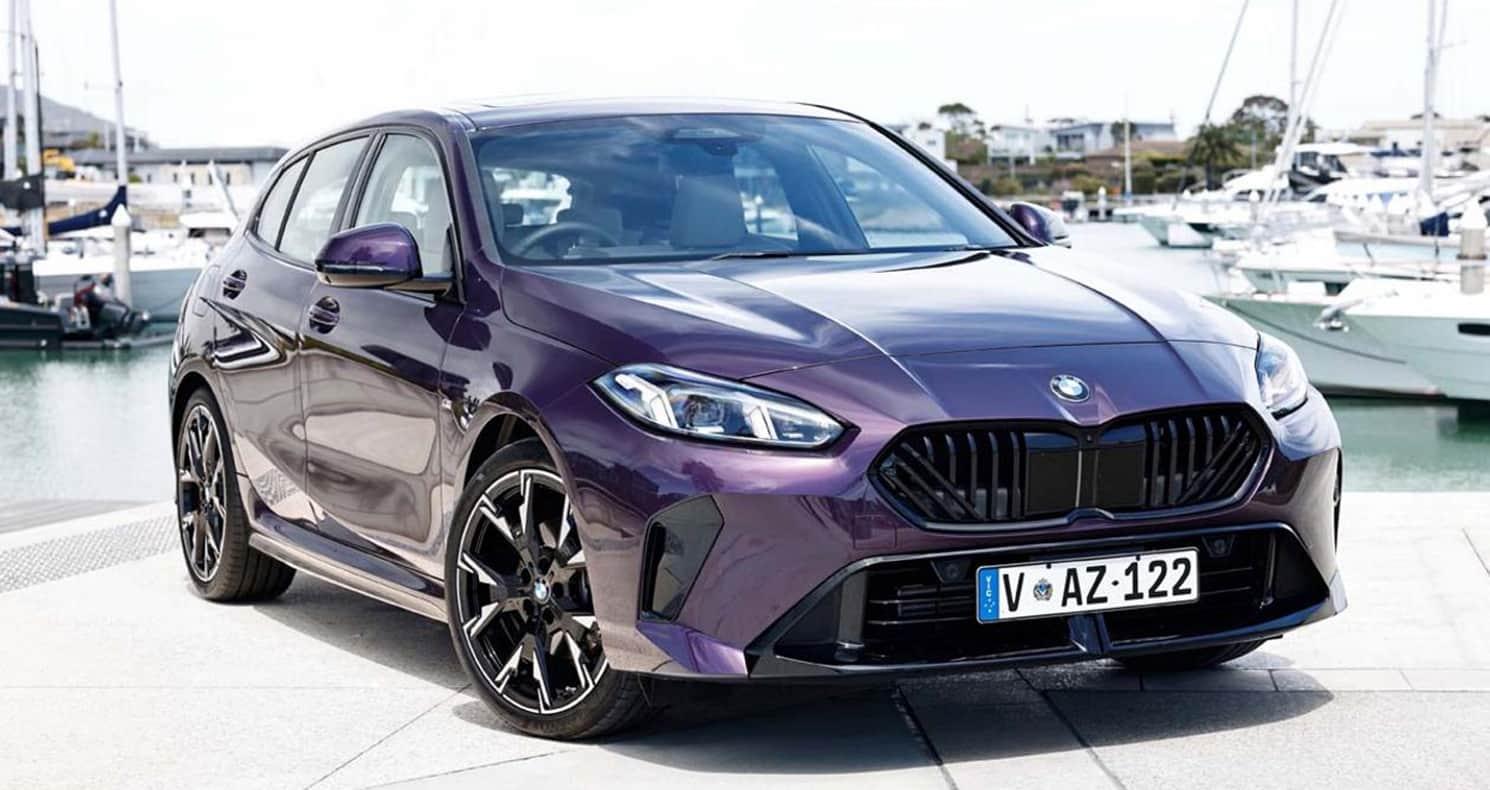
BMW is preparing to drop pure petrol power from its cheapest model. From 2028, the next-generation 1 Series hatch will be sold only with electric and plug-in hybrid powertrains, marking another step in the brand's increased Neue Klasse focus that already produced the iX3 SUV and the i3 sedan.
The shift signals two things for the Australian buyer. First, the entry price into BMW ownership is likely going up. Second, the brand has chosen not to walk away from the entry-level hatch segment, despite earlier speculation that the 1 Series and 2 Series were going to be wound down.
What BMW is actually doing with the 1 Series
Overseas reports suggest the new 1 Series will be available with plug-in hybrid and fully electric setups. The pure petrol versions that have defined the model since launch are off the table. Detail on outputs, battery sizes and pricing remains thin, but the architecture under the new car is shared with the broader Neue Klasse program.
BMW Head of Product Bernd Korber confirmed the brand's commitment to the segment in comments to AutoCar. "If you want to keep the brand young, if you want to develop customers within your portfolio, the 1 Series is very important."
In plain English, the 1 Series is BMW's gateway. The brand has decided that walking away from it would close off the supply of younger buyers who later step up to the 3 Series, X1 and beyond.
Mercedes is doing the same with the A-Class
BMW's decision mirrors a near-identical reversal from Mercedes-Benz, which had previously signalled it would drop the A-Class hatch and is now backtracking. The new A-Class will continue and will arrive around the same 2028 window as the next-generation 1 Series.
The rivalry between the two German entry-level hatches will continue, just on different powertrains. That is a good outcome for buyers who want a premium small car without paying premium-mid-size money for an X1 or a GLA.
What this means for the Australian buyer
BMW Australia has confirmed nothing about the new 1 Series for the local market. The brand says there is nothing to announce at this stage, which is standard procedure for cars two years out from launch.
The practical takeaway for an Australian buyer is that the entry into BMW ownership is going to look very different by 2028. The cheapest 1 Series of today is a 118 petrol with mild-hybrid assistance. The cheapest 1 Series of 2028 is going to be either a plug-in hybrid or an electric hatch, both of which will start from a higher base price.
That creates a window between now and 2027 where the current-shape 1 Series may be the last opportunity to buy a relatively affordable, conventionally powered BMW. Dealers will know this. Expect stock on the current 1 Series to firm up in late 2026 and into 2027 as supply tightens.
The Neue Klasse context
The move is consistent with BMW's broader Neue Klasse philosophy, which has already produced the new-generation iX3 and the i3 electric sedan. The architecture is more efficient, the electric range targets are aggressive, and the cabin and software approach is a clear generational step from the current iX1 and i4.
For the 1 Series, that platform shift means the new car is unlikely to feel like a downsized iX3. It will have its own design language, its own platform priorities, and a specific focus on younger buyers who care about software, screens and assisted driving as much as they care about ride and handling.
What buyers should do now
If you are in the market for a small premium hatch, the timing question matters. The current 1 Series is still on sale and the dealer network has stock. The new model is at least two years away in Europe and longer in Australia.
The smarter buy depends on whether you want the existing petrol or mild-hybrid drivetrain or whether you can wait for the electric or PHEV version. If you tow nothing, do mostly urban driving, and can charge at home, the new electric 1 Series will probably be the better long-term car. If you want a conventional drivetrain at a lower price, the current 1 Series is the last chance.
What this signals about BMW's strategy
BMW has had a more measured EV transition than many of its competitors. The brand still sells petrol, diesel, mild-hybrid, plug-in hybrid and electric versions across most of its models. Choosing to drop pure petrol from the 1 Series is the first time BMW has fully retired a combustion option from a major nameplate.
It is significant because the 1 Series is the volume entry point, not a halo car. Removing petrol there suggests BMW has read European emissions rules and decided that the 1 Series cannot survive a future without electrification. That logic will extend to other nameplates over time, with the 2 Series and 3 Series the next candidates for the same treatment, possibly in their next generations.
How dealers will handle the transition
BMW dealers in Australia will likely use the next twenty-four months to push current-shape 1 Series stock with stronger finance offers. The existing 118 and 120 grades still have a clear value proposition compared to a Mercedes A-Class or Audi A3, and the brand will want to convert as many petrol buyers as possible before the model becomes electric and PHEV only.
Carseekers is watching this segment closely. The 1 Series transition is a clean case study in how legacy premium brands handle the EV pivot, and the answer will affect every other German hatch that comes after it. For now, the news is simple. If you want a petrol BMW 1 Series, the clock has started.
Considering finance for your next car? Loanseekers can help you explore car loan options.
The finer details
Your questions answered.
When does the next-generation BMW 1 Series arrive?
The next-generation BMW 1 Series is expected to arrive in 2028. It will launch alongside the next Mercedes-Benz A-Class, with both German rivals continuing into the EV era rather than dropping the entry-level hatch segment as previously reported.
Will the new BMW 1 Series still have a petrol engine?
No. From 2028 the BMW 1 Series will be sold only with plug-in hybrid or fully electric powertrains. Pure petrol versions will be retired, making the 1 Series the first BMW nameplate to fully drop combustion.
Is the new BMW 1 Series coming to Australia?
BMW Australia has not confirmed the next-generation 1 Series for local sales yet. The brand says there is nothing to announce at this stage. Local availability and powertrain mix will likely be confirmed closer to the 2028 launch window.
Should I buy the current BMW 1 Series before it changes?
If you want a petrol or mild-hybrid BMW hatch at a relatively affordable entry price, the current 1 Series is the last opportunity. The new electric and plug-in hybrid versions will almost certainly start at a higher base price.
How does BMW's strategy compare to Mercedes-Benz on entry-level hatches?
Both brands have reversed earlier signals that the entry-level hatch would be axed. Mercedes will continue with the A-Class and BMW will continue with the 1 Series. The difference is that BMW is going PHEV and electric only, while Mercedes has not yet confirmed the powertrain mix for the new A-Class.
Is the BMW 1 Series a good first BMW to buy in Australia?
Yes. The 1 Series is BMW's deliberate gateway car. It offers brand prestige, a smaller footprint than the X1 and a more accessible price than the 3 Series. The next generation will hold that role even as the powertrain mix shifts to electric and plug-in hybrid.