
If you are considering buying an electric vehicle right now, one concern keeps coming up. Can you actually rely on public charging? It is not just about availability anymore. It is about whether chargers are working when you arrive. Theft and vandalism have quietly become one of the biggest issues affecting EV infrastructure across Australia. Now, a major charging provider is stepping in with a solution, and it has real implications for buyers.
What’s Happening
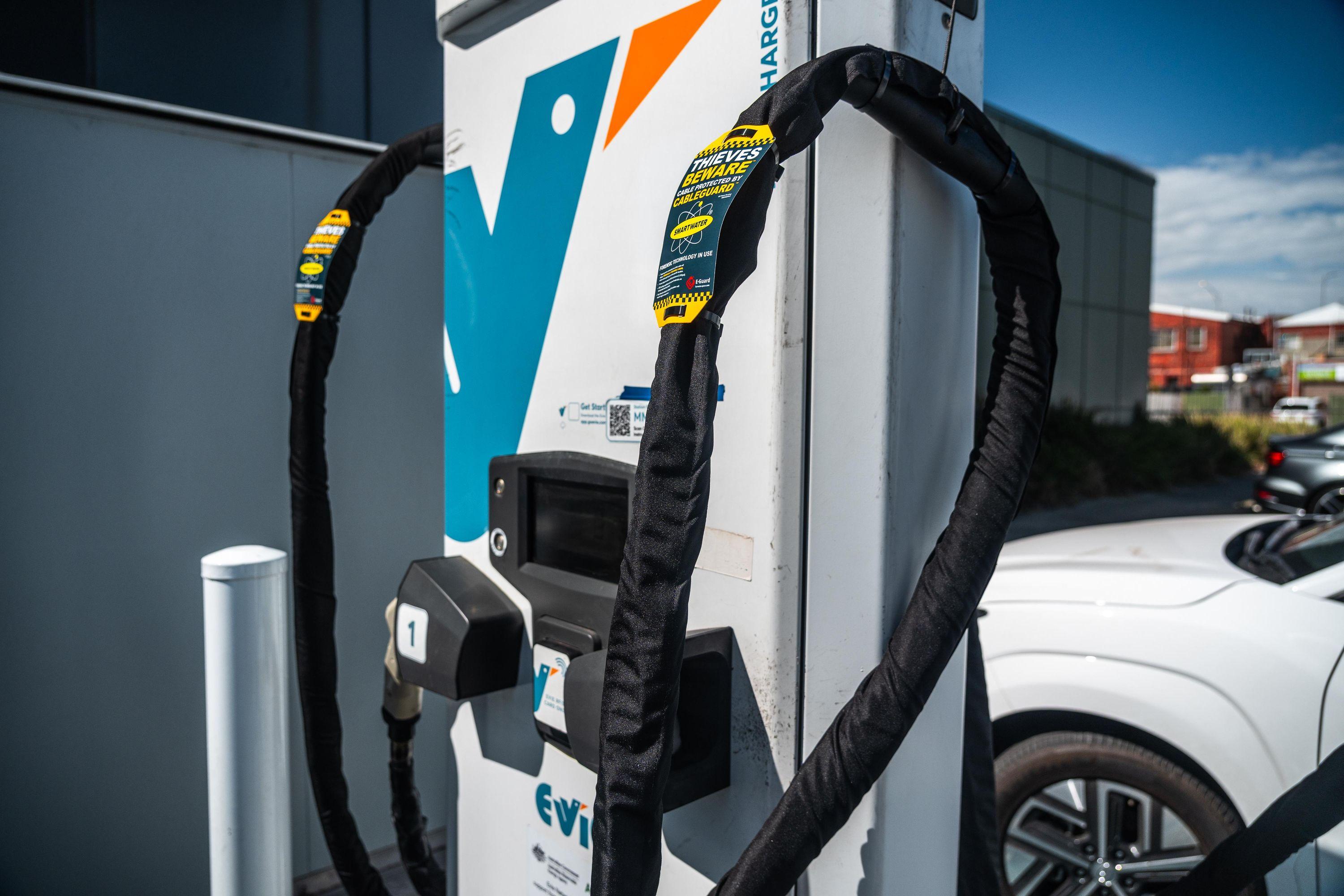
One of Australia’s largest EV charging networks has started rolling out new hardware and security measures specifically designed to stop cable theft and vandalism. The core issue is simple. Charging cables contain valuable copper, which makes them a target. When cables are cut or damaged, the charger becomes unusable until it is repaired. That downtime frustrates drivers and reduces trust in the network. The new solution focuses on removing that vulnerability entirely. Instead of fixed cables attached to chargers, some sites are transitioning to a bring your own cable system, while others are upgrading to more durable, theft resistant cable designs and adding monitoring systems that alert operators instantly if tampering occurs. This is not just a minor upgrade, it is a structural shift in how public charging stations are designed and managed.
Key Details You Need to Know
Cable theft is a real and growing problem, with charging stations across Australia being taken offline due to stolen or damaged cables. This directly impacts reliability for EV drivers. New charging setups are beginning to remove fixed cables entirely, requiring drivers to use their own cable similar to many AC charging setups. Where fixed cables remain, they are being redesigned with stronger materials to resist cutting and tampering. At the same time, real time monitoring is being introduced so operators can detect issues immediately and respond faster, reducing downtime. The rollout will be gradual, meaning buyers will encounter a mix of old and new systems depending on location.
Why This Matters Right Now
This is not just a technical update, it directly impacts buyer confidence. EV adoption in Australia is accelerating, with more buyers considering models like the Hyundai Kona Electric, Tesla Model Y, and Kia EV6. However, many buyers are still hesitant because of charging reliability rather than range. If chargers are frequently out of service, it creates friction and slows down purchase decisions. From a dealer perspective, this matters more than most people realise. Dealers selling EVs are already dealing with longer conversations, more objections, and more education compared to petrol or hybrid vehicles. When charging concerns come up, it becomes harder to close deals. Improving infrastructure reliability removes one of the biggest objections in the sales process. Timing is critical because as more EV stock arrives and pricing becomes more competitive, infrastructure needs to keep up or demand will stall.
What Most Buyers Get Wrong
Most buyers focus heavily on range, but that is not the real issue. The real issue is charger reliability and access. You can have a 500 kilometre range EV, but if you cannot confidently find a working charger when needed, that range becomes irrelevant. Another mistake is assuming all public chargers are the same. They are not. Some networks are significantly more reliable than others, and some locations experience more vandalism or downtime. Now, with changes like bring your own cable systems, buyers also need to understand how different charging setups work before committing. Many buyers also underestimate how quickly infrastructure is evolving, meaning information from even 12 months ago may no longer apply.
What This Means for You
If you are buying a new EV in Australia right now, you need to think beyond the car itself and understand how you will charge it day to day. Start by checking the charging network in your local area and focusing on the chargers you will realistically use. Make sure you understand whether certain locations require you to bring your own cable. Where possible, prioritise home charging to reduce reliance on public infrastructure. Choose a vehicle that suits your actual driving habits rather than chasing maximum range. Most importantly, factor reliability into your decision, not just price and specifications. If you get this right, owning an EV becomes straightforward. If you ignore it, it can quickly become frustrating.
How Carseekers Gives You an Advantage
This is where most buyers lose control of the process. They walk into a dealership focused only on the car and ignore the bigger picture. At Carseekers, the approach is different. You are not just choosing a vehicle, you are making a purchase decision based on real world usability, pricing, and timing. When you use Carseekers, you get dealers competing on price for your exact vehicle, you can compare options like EV versus hybrid with real cost context, and you avoid overpaying during high demand periods. Most importantly, you are positioned as a serious buyer, which is what dealers prioritise. As infrastructure improves and EV competition increases, the buyers who understand the full picture will secure the best deals, while others will face higher prices and more friction after delivery.
Considering finance for your next car? Loanseekers can help you explore car loan options.
The finer details
Your questions answered.
Is Australia's EV charging network reliable enough to own an EV?
Reliability has improved significantly in 2025 and 2026 as major providers upgrade hardware, add cameras, and introduce active monitoring to combat vandalism. Capital city corridors are now substantially more reliable than two years ago. Regional reliability remains patchy, and the advice for regional EV buyers is to always check charger status via provider apps before departure.
Who are the main EV charging providers in Australia?
The main public charging networks in Australia include Chargefox, NRMA Charging, BP Pulse, Ampol AmpCharge, and Tesla Supercharger. ChargePoint and Evie Networks also operate networks in major cities. Coverage varies significantly by region, and no single network is dominant across all locations.
How much does it cost to charge an EV using a public fast charger in Australia?
Public DC fast charging typically costs between 40 and 65 cents per kWh in Australia depending on the network and speed. A 60kWh battery charged from 20 to 80 percent at a public charger typically costs $15 to $25. This is still cheaper than petrol for most EVs but is 2 to 3 times the cost of overnight home charging.
What is happening with EV charger vandalism and theft in Australia?
Cable theft and charger vandalism have been identified as meaningful reliability issues for Australian EV charging networks. Providers are responding with tethered cables, CCTV, remote monitoring, and design changes that reduce the value of stolen components. These upgrades are being rolled out progressively across high-risk sites.
Can I rely on public charging for a road trip in Australia?
On well-travelled corridors like Sydney to Melbourne, Brisbane to Sydney, and Melbourne to Adelaide, public charging is now reliable enough for planning. For less-travelled routes and outback driving, public charging remains sparse and unpredictable. Always plan your route using apps like PlugShare or provider-specific apps before departure.
Do all EVs sold in Australia work with all public chargers?
Most new EVs sold in Australia now use the Combined Charging System (CCS) standard for DC fast charging. Tesla vehicles use their own connector but come with a CCS adapter. Older Nissan Leafs use CHAdeMO, which is being phased out. Before buying an EV, confirm it is CCS-compatible to ensure access to the broadest network of public chargers.