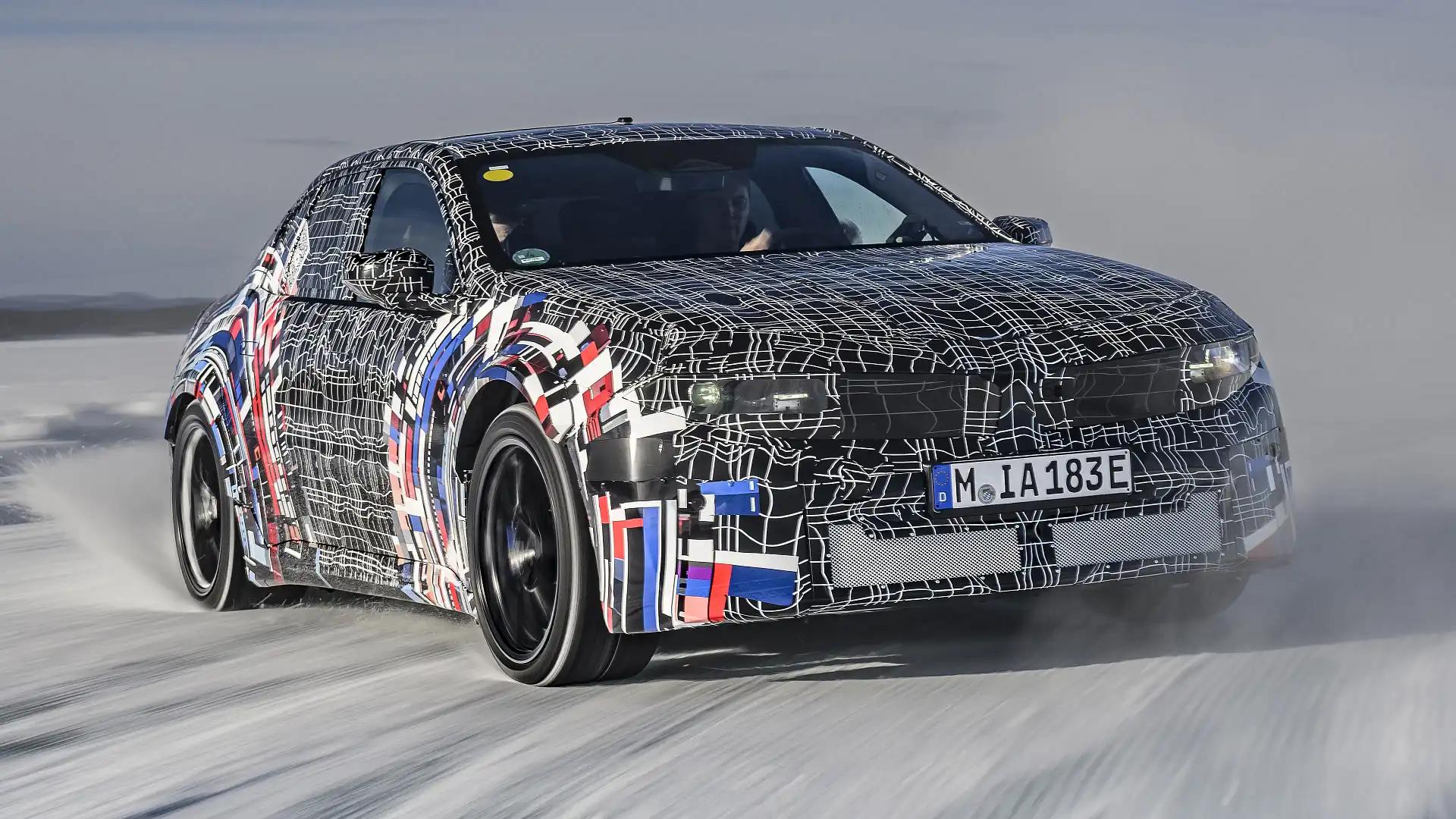
BMW's first-ever electric M3 will arrive in 2027 with a price tag in the same ballpark as the new twin-turbo six-cylinder petrol M3. That confirmation, from BMW M head of sales Sylvia Neubauer speaking to Autocar, finally clears up one of the biggest uncertainties around the next-generation sports sedan. The two cars will coexist, look broadly the same, and cost roughly the same money.
For Australian buyers, this is a significant strategic signal. BMW is letting the customer decide, rather than forcing the M brand toward EVs the way some rivals have tried and stumbled with.
What the pricing actually means
The current petrol BMW M3 is priced from $169,100 to $186,900 plus on-road costs as a sedan. The next-generation petrol model is likely to push closer to $200,000 in all-wheel-drive Competition form, given BMW's pricing pattern across the rest of its M lineup.
If the electric M3 lands in the same ballpark, it will sit around $190,000 to $210,000 before on-roads, depending on trim. That puts it directly against the upcoming electric Audi RS5 and the C-Class EV from Mercedes-AMG, both of which are heading to Australia in the same window.
"The good news is that from a pricing perspective, they are in the same ballpark," Neubauer told Autocar. Read between the lines and that means BMW is not using the electric M3 as a price-leader, nor as a premium-priced flagship. It is being positioned as a parallel option.
745kW theoretical peak, but expect detuning
The electric M3 will use four electric motors capable of generating up to 1000 horsepower, or 745kW. That figure is the theoretical maximum from the underlying powertrain hardware. BMW is widely tipped to detune the production car to around 500kW for everyday usability, battery longevity, and tyre management.
That is still a vast amount of power. A 500kW M3 would crush the current 390kW M3 Competition on outright acceleration and would put the car squarely against the Porsche Taycan and Tesla Model S Plaid for straight-line speed. With four motors providing genuine torque vectoring, cornering capability should also leap forward.
The petrol version is not being phased out
The petrol M3 stays in the lineup with the existing 3.0-litre twin-turbo inline-six, tuned above 400kW in line with current Competition Special editions. That engine has been the heart of the M3 for two generations now and BMW has no plans to drop it for the new car.
The manual gearbox, currently available in non-Competition versions of the current M3, may not survive. BMW is reportedly considering dropping it to reduce complexity and help with emissions compliance. For purists, that is the genuinely sad news in this announcement.
Production timing matters here. The electric M3 starts production in early 2027, with the petrol model following in 2028. That order is unusual. BMW is essentially launching the EV first and using its early sales to gauge demand before fully committing to volume production of the combustion car.
Different platforms, same look
Under the skin, the cars are completely different. The petrol M3 uses an updated version of BMW's current CLAR architecture. The electric model sits on a new battery-only platform developed specifically for the Neue Klasse range.
Both cars will wear BMW's latest Neue Klasse design language. That means a 17.9-inch central touchscreen and the full-width Panoramic Vision instrument projection that BMW debuted on the iX3 prototype. Expect even fewer physical buttons than the current model, which has already drawn complaints from M buyers who value direct control.
This cabin similarity is deliberate. BMW does not want the EV to feel like a different product line. It wants buyers walking into a dealer to see two M3s side by side and pick based on powertrain preference, not feature set.
What it means for Australian buyers
The practical message for Australian performance car buyers is straightforward. If you have been holding out for the next M3, you now know roughly when to expect it, you know it will not be much more expensive than the current car, and you know you will have a real choice between combustion and electric for the first time.
That choice matters for resale. EV M3s will land in a market where battery longevity and depreciation are still being tested. The petrol version has 35 years of M3 history behind it on the secondary market. For buyers worried about long-term value, the petrol car remains the safer bet, even if the EV offers more outright performance.
For Carseekers readers shopping the current M3 right now, BMW dealers are likely to start clearing stock more aggressively through 2026 as buyers become aware of the 2027 replacement. That creates discount opportunity, especially on cars sitting in inventory.
Where BMW M differs from AMG and Audi
BMW's approach contrasts sharply with what Mercedes-AMG is doing. AMG has loudly walked back its EV plans for the C63 successor, moving instead to a six-cylinder PHEV-style setup. Audi is moving the new RS5 toward a V6 plug-in hybrid.
BMW is going harder on both ends, keeping the petrol inline-six for buyers who want it and offering a four-motor electric M3 for buyers chasing the latest powertrain tech. That is a more confident position than its rivals, and it suggests BMW believes the M3 buyer base is split rather than overwhelmingly favouring one path.
The risk for BMW is that running both platforms in parallel is expensive. The opportunity is that it covers every buyer preference at the same price point, which neither AMG nor Audi can claim.
Neubauer was honest about the conversion rate from petrol-loyal buyers. "Obviously, we will not convince 100 per cent out of the petrolhead target group to buy an all-electric BMW M3," she said. "But out of 100 people that try it, we will be able to convince some." That is realistic, not aspirational, and it tells you BMW knows exactly what kind of car the petrol M3 is to its loyalists. The EV is not replacing it. It is sitting next to it.
Considering finance for your next car? Loanseekers can help you explore car loan options.
The finer details
Your questions answered.
When does the BMW M3 EV arrive in Australia?
The electric M3 starts global production in early 2027, with the new petrol model following in 2028. Australian arrivals typically lag Europe by six to nine months, so expect local showrooms to see the EV from mid to late 2027.
How much will the BMW M3 EV cost?
BMW M says the electric M3 will be priced in the same ballpark as the petrol version. With the next petrol M3 expected to push toward $200,000 plus on-road costs, the EV should land in the $190,000 to $210,000 range depending on trim.
How powerful is the new electric M3?
The four-motor powertrain is capable of up to 745kW (1000hp), though BMW is expected to detune the production car to around 500kW for battery and tyre management. That still comfortably exceeds the current M3 Competition's 390kW.
Will the petrol BMW M3 still be available?
Yes. BMW is keeping the 3.0-litre twin-turbo inline-six petrol M3 in the lineup alongside the EV. Petrol M3 output will sit above 400kW, in line with current Competition Special editions, but the manual gearbox option may be dropped.
Do the petrol and electric M3 look the same?
Mostly yes. Both will wear BMW's Neue Klasse design language and share interior tech including the 17.9-inch touchscreen and Panoramic Vision display. The platforms underneath are completely different, but BMW wants the cars to look like siblings.
Should I buy the current M3 or wait for the new model?
Wait if you have time. The 2027 EV and 2028 petrol bring genuine performance and tech upgrades. If you want to buy now, expect dealer discounts on current M3 stock to grow through 2026 as the replacement nears, giving short-term buyers good leverage.