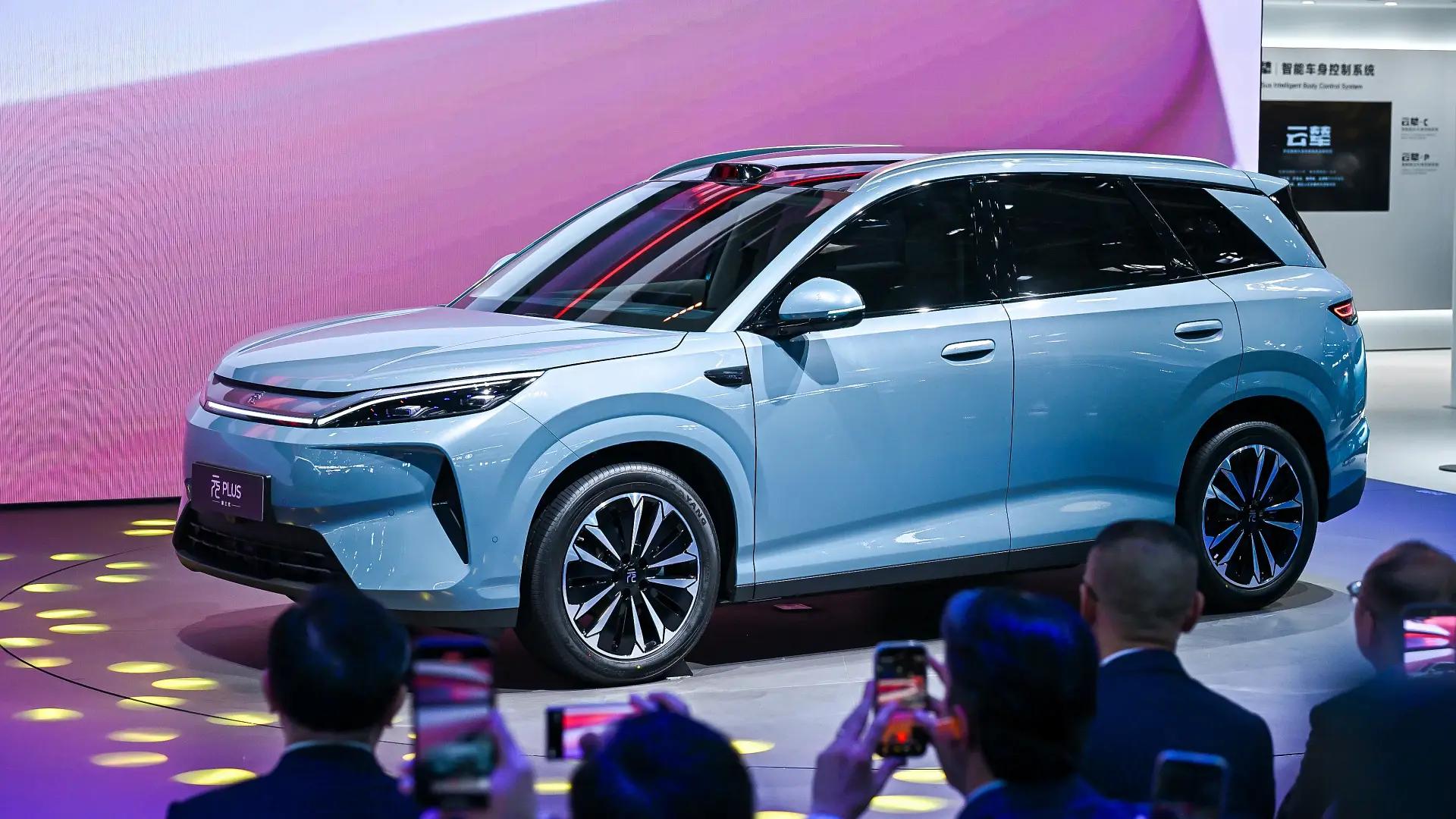
The latest BYD medium-SUV destined for New Zealand will likely not be offered in Australia, after the brand confirmed concerns it would overlap with existing models. The 2026 BYD Atto 5, a potential successor to the Atto 3, is on the New Zealand product plan for later this year but Australia is being held back.
Revealed earlier in 2026 at the Beijing motor show, the new generation of the electric vehicle known as the Yuan Plus in China has traditionally been rechristened to Atto 3 for overseas markets. Its increase in size now makes it only slightly smaller than the Sealion 7, putting it firmly into mid-size SUV territory rather than straddling the line between small and mid-size like the current car.
It is this specific issue putting a question mark over the new model for Australia, and BYD Australia is not hiding the reason.
What BYD Australia actually said
"It's pretty obvious I think that just putting more, more and more models in that sort of segment is going to cannibalise," said BYD Australia Chief Operating Officer Stephen Collins. "I just feel that we're at the stage now where we have 11 models in our line-up, and we're not just going to keep adding to it just for the sake of it."
"Where a model has got a role, and we can sell it in reasonable regard to the brand, and then we'll look at it."
That is unusually disciplined messaging from a brand that has spent the last two years rolling out new models almost monthly. It is also a sign that BYD Australia is starting to think like an incumbent rather than a challenger. Range rationalisation is a problem you only have once you have built a real range.
Where the Atto 5 would have landed
BYD Australia already fields the Sealion 5 and Sealion 6 in the mid-size SUV segment, though they are plug-in hybrids rather than all-electric. The 2026 Yuan Plus has grown 210mm in length and 50mm in width, and will be sold as the Atto 5 in New Zealand later in the year.
Chinese-market models will come with a choice between two battery sizes, 57.5kWh and 68.5kWh, with CLTC range ratings of 540km and 630km respectively. That compares to the current Australian Atto 3 line-up of either a 49.92kWh battery for a 345km driving range rating or a 60.48kWh version rated for 420km. Those two grades are known as the Essential and Premium, priced at $39,990 before on-road costs and $44,990 respectively.
Had the Atto 5 been considered for Australia, it could eat into the existing space occupied by the medium-SUV Sealion 7, which is offered with an 82.6kWh battery rated for 482km of range and priced from $54,990 plus on-road costs. The two cars would have sat 600 to 800 dollars apart on showroom floors with broadly similar dimensions, and Atto 5 buyers and Sealion 7 buyers would have ended up wandering between the two cars and walking out with whichever the dealer prioritised that month.
Why protecting the Sealion 7 matters
The Sealion 7 was only launched in Australia last year, and is one of BYD's biggest local launches to date. Killing its growth path with a near-identical sibling barely twelve months later would be a self-inflicted wound. Given the Sealion 7's relatively recent launch, it would be even more unlikely for the Atto 5 to replace the medium-SUV offering so soon.
It also tells you something about how BYD reads the Australian market. The brand believes there is still meaningful Sealion 7 demand to capture, and it is unwilling to disrupt that demand with a new car that does the same job for slightly less money.
Australia is getting the Atto 3 Evo instead
The Atto 3 Evo is due in the second half of 2026, and it represents the first full overhaul to BYD Australia's first mainstream model. Based on international information, the Atto 3 Evo will feature a switch from front-wheel drive to rear-wheel drive or all-wheel drive, an increased battery size, and a corresponding boost in driving range.
Power figures will also climb. The RWD variant is expected to deliver 230kW and 380Nm from a single electric motor. The AWD variant pushes that to 330kW and 560Nm with a motor on each axle. Both are big jumps over the current Atto 3.
A charging boost will lift the maximum rate from 70kW or 88kW, depending on Essential or Premium grade, all the way up to 220kW. That delivers a 10 to 80 per cent DC charge in around 20 minutes, which closes the gap to the Sealion 7 and approaches Tesla Model Y and Kia EV6 territory.
Why the Evo matters more than the Atto 5 would have
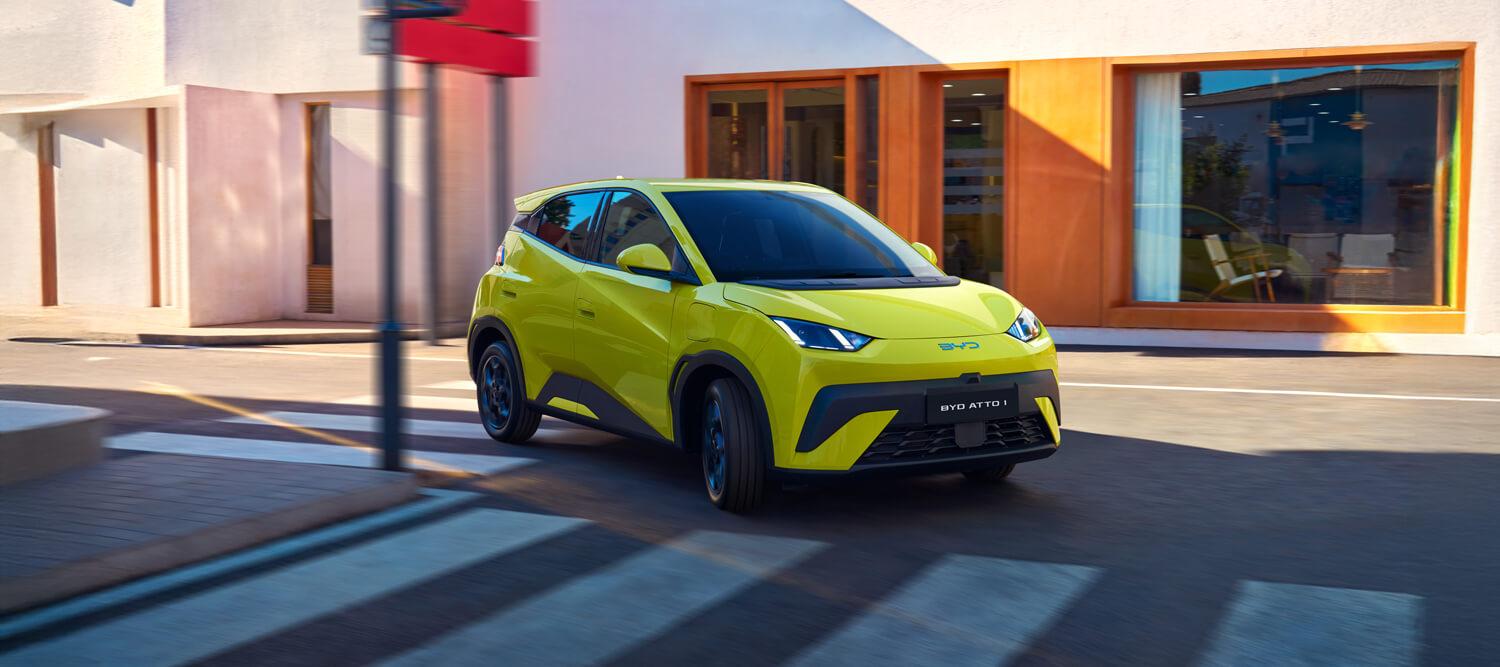
From a buyer's perspective, the Atto 3 Evo is arguably a more interesting car than the Atto 5 would have been. It keeps the Atto 3's compact, easy-to-park footprint while bringing modern battery tech, faster charging, and stronger drivetrains. The dimensional creep of the Atto 5 was always going to be a problem for the customers who chose the Atto 3 specifically because it fits in tight inner-city carparks.
The Atto 3 Evo is the Atto 3 buyer's natural upgrade. The Atto 5 would have been a half-Sealion 7 in disguise. BYD's call to skip it is good product strategy and arguably good for buyers.
Wider context on BYD's local line-up
The "11 models" line that Collins used is worth pausing on. Few brands in Australia field that many distinct nameplates, and even fewer are still introducing fresh models quarterly. BYD's local range now spans cheap city EVs, family SUVs, performance sedans, and plug-in hybrid utes. The Shark 6 has redefined the PHEV ute conversation. The Sealion family covers everything from small to large family SUVs in EV and PHEV forms.
With that breadth comes diminishing returns on each new launch. The brand has reached a stage where adding a new model risks taking sales from an existing model instead of growing the brand's overall share. The Atto 5 sat right in that diminishing-returns zone.
What this means for buyers in 2026
If you have been holding off Atto 3 ownership in the hope that something bigger or fancier was coming under the same name, your wait is over. The Atto 3 Evo is the upgrade. Lock in your buying timeline around that.
If you want a mid-size BYD EV today, the Sealion 7 is the answer and it will remain the answer for the foreseeable future. There is no Atto 5 coming to undercut it on price or out-spec it on equipment. BYD Australia has explicitly told you that.
If you are cross-shopping outside of BYD, the Atto 5 staying away means there is one less mid-size electric SUV landing in Australia in 2026. That benefits the existing Sealion 7 plus rivals like the Tesla Model Y, Kia EV6, and Hyundai Ioniq 5. The Aussie EV pie is not getting an extra slice this year. Choose accordingly.
Dealer dynamics to watch
BYD's dealer network in Australia is expanding fast, with the brand on track for 150 outlets by the end of 2026. That growth pace creates pressure to move stock. Sealion 7 and Atto 3 inventory has been arriving steadily, and that is normally the buyer's friend at negotiation time.
If you are looking at a Sealion 7 in mid-2026, lean into the BYD dealer's monthly target reality. Ask for free home charger installation, capped-price servicing pack inclusions, or a clean drive-away price below the standard plus on-roads number. Carseekers tracks how BYD's local pricing is moving across the network and the leverage is meaningful right now.
The Atto 5 decision tells you BYD Australia is being thoughtful about its product strategy. That is good news long term for buyers who want a brand that thinks past its next launch. In the short term, it just means New Zealand gets a new BYD that you do not. Move on to the Sealion 7 or wait for the Atto 3 Evo.
Considering finance for your next car? Loanseekers can help you explore car loan options.
The finer details
Your questions answered.
Is the BYD Atto 5 coming to Australia?
Almost certainly not. BYD Australia Chief Operating Officer Stephen Collins has said the Atto 5 is unlikely to be added to the local line-up because it would overlap too much with existing models like the Sealion 7. It will go on sale in New Zealand later this year.
What is the difference between the BYD Atto 3 and Atto 5?
The Atto 5 is essentially the next generation of the Atto 3, branded differently for export markets. It has grown 210mm in length and 50mm in width, putting it firmly into mid-size SUV territory. The current Atto 3 sits between small and mid-size.
What happens to the BYD Atto 3 in Australia then?
Australia is getting the Atto 3 Evo instead, due in the second half of 2026. It is a full overhaul rather than a new nameplate. Expect a switch to rear-wheel drive or all-wheel drive, a bigger battery, more power, and dramatically faster DC charging.
How much will the BYD Atto 3 Evo cost in Australia?
BYD has not confirmed Atto 3 Evo pricing yet. The current Atto 3 is priced at $39,990 plus on-road costs for the Essential and $44,990 for the Premium. The Evo will likely sit above the current Premium given its bigger battery and more powerful motors.
What is the BYD Sealion 7 price in Australia?
The Sealion 7 is offered with an 82.6kWh battery rated for 482km of range, priced from $54,990 plus on-road costs. Equipment and battery options sit above that, with all-wheel-drive variants pushing the price higher.
Should I wait for the BYD Atto 3 Evo or buy a Sealion 7 now?
If you want the cheapest BYD electric SUV with the freshest tech, wait for the Atto 3 Evo later in 2026. If you want maximum range and space available right now, the Sealion 7 is in showrooms. Cross-shop both against the Tesla Model Y, Kia EV6 and Hyundai Ioniq 5 before deciding.