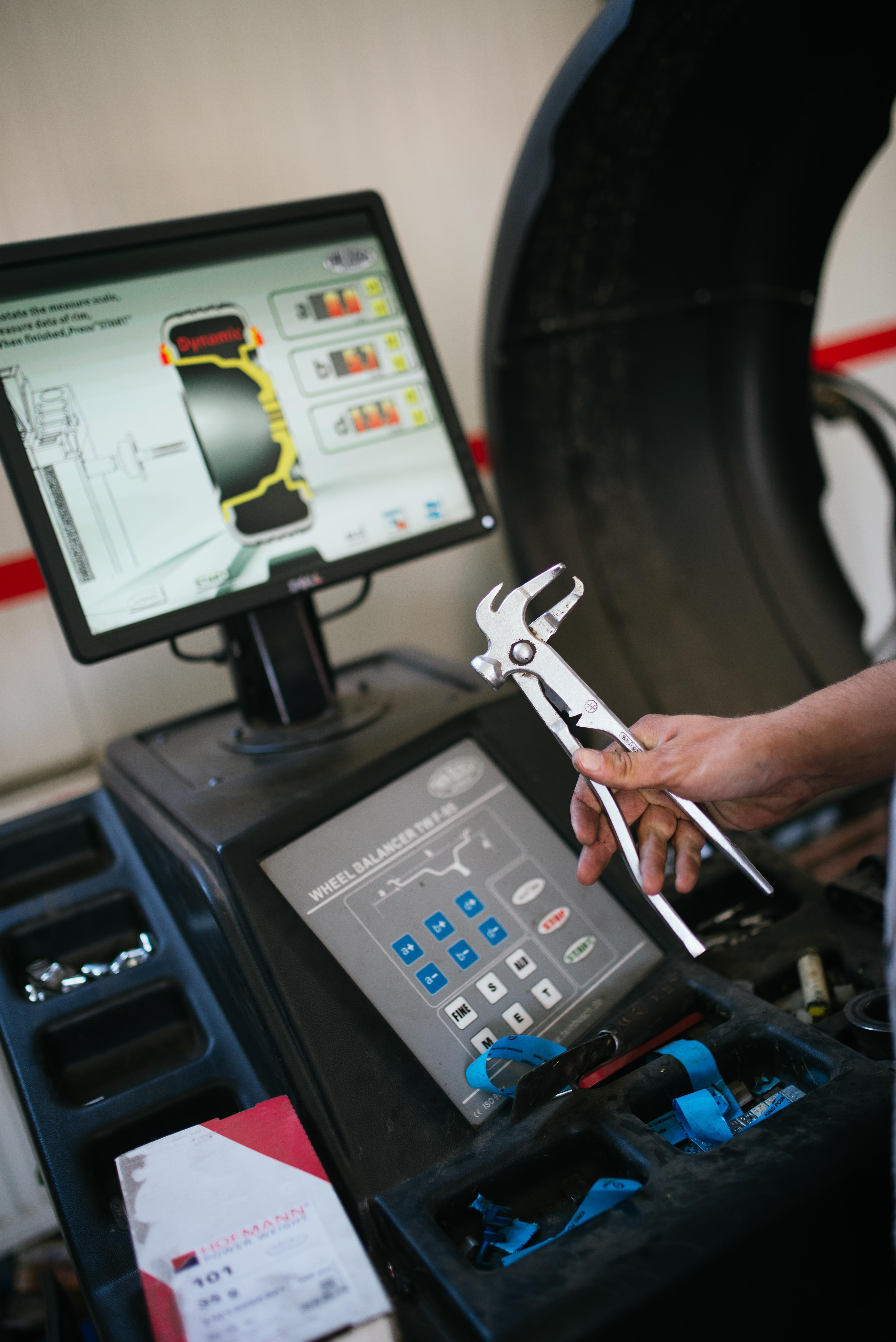
A workshop wheel-balancing station and tools. Illustrative servicing context, not a Toyota dealership or a description of work included in a service plan. Previews may crop the photograph.
Photo: Shixart1985 · CC BY 2.0
Capped-price servicing is useful only when you know which services are covered and when that coverage ends. Compare a schedule for the actual car with your expected kilometres and ownership period.
Toyota's Australian service-pricing terms show why the details matter: coverage can expire when the allocated standard services are completed, the nominated time expires or the nominated distance is reached. Do not assume the headline year count is the only limit.
Make a service-by-service worksheet
For each planned visit, record the time or distance interval, anticipated due point, included standard work, capped charge and any eligibility or claim window. Use the exact model's logbook and written plan terms.
Toyota's Service Advantage page directs owners to the logbook and vehicle-specific pricing tool for the relevant inclusions. A general list of inspections is not a personalised quote for every possible repair.
If buying used or ex-demo, obtain the plan start date and remaining eligibility. Ask which previous services were used and whether records satisfy the plan's conditions. Do not restart the clock in your spreadsheet merely because you are a new owner.
Separate inspection from replacement
Ask the provider to distinguish included scheduled maintenance, items checked but replaced only at extra cost, additional condition-related work and work outside the plan. Request confirmation for the items you care about rather than assuming every fluid, tyre or brake expense is included or excluded.
A capped scheduled-service charge is not automatically a cap on the whole workshop invoice. For any extra work proposed at a visit, ask for its reason and itemised price before authorising it.
NSW's vehicle repair guidance explains the value of estimates, quotes and clear repair instructions. Keep the agreed scope with the resulting invoice.
Stress-test the plan against your driving
Write one forecast using your usual annual kilometres and another for a higher-distance year. Identify which limit would end coverage first in each case, and leave later service prices as unquoted if you have no written figure.
Do not substitute a warranty duration for a servicing entitlement. Our new-car warranty guide covers the separate protection question; a warranty and a service-price plan have different purposes and terms.
Compare the included scheduled-service totals alongside realistic, separately labelled allowances for other ownership spending. For vehicle-finance information, see Loanseekers and keep servicing forecasts separate from the car purchase amount.