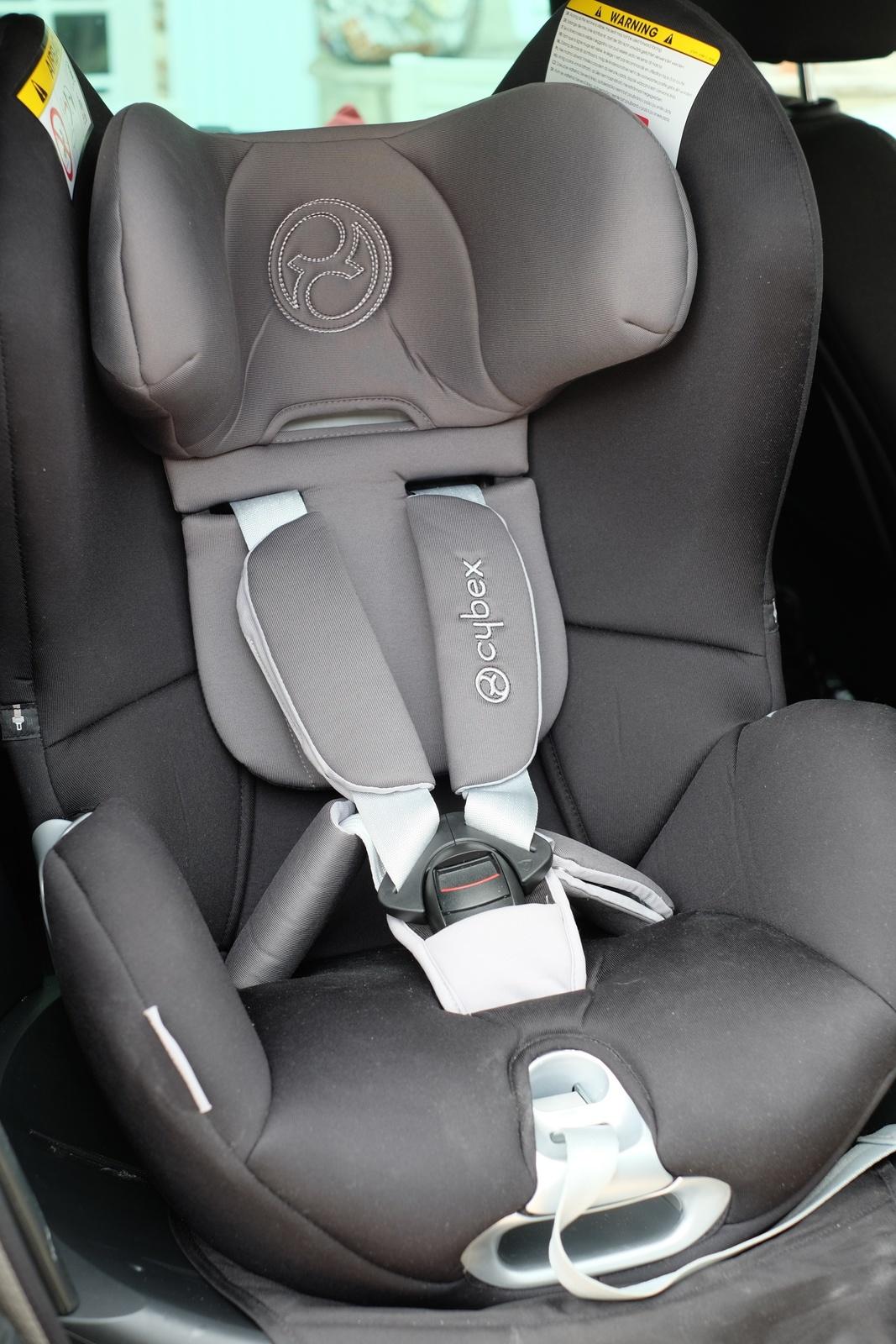
A Cybex child restraint photographed inside a vehicle. Illustrative equipment context; the photograph does not establish Australian approval or correct installation. Previews may crop the photograph.
Photo: securange · CC BY-SA 4.0
A child seat and pram test drive should use the equipment your family will actually carry. Treat it as a planned fitting appointment, with permission from the seller and enough time to reset the front seats properly.
The NSW child-seat guidance says restraints must be correctly fitted to the manufacturer's instructions and attached to an anchorage designed for a child restraint. It recommends an authorised restraint fitter. Check the rules where you live as well.
Fit the restraint before judging cabin space
Bring the restraint's instructions and identify the vehicle's permitted installation positions in its manual. Ask a qualified fitter to resolve compatibility questions; an ISOFIX label alone does not settle the complete installation.
Check access to the correct anchor, the intended belt or connector route and space to operate the buckle. Do not attach a tether to a luggage hook or assume a nearby fitting is an approved anchor.
With the restraint fitted as instructed, reset the driver's seat for the actual driver. Have the front passenger find a normal seating position too. Record whether the result is comfortable and consistent with both sets of instructions.
Do not put the vehicle into traffic with an unresolved restraint fitting. A stationary showroom check is a useful first stage, not a substitute for correct installation.
Load the pram with the family setup intact
Keep the required passenger seats raised. Fold the pram as you normally would, then load and unload it yourself. Include the bassinet or second seat if that is part of your routine.
Opening test: can the widest part pass through without forcing it against trim?
Lift test: can the person doing most school or childcare runs manage the height and reach comfortably?
Remainder test: with the pram inside, is there a sensible place for your ordinary bags and shopping? Check the manual's load-securing instructions.
Repeat with the other regular driver. Record any extra steps, such as removing wheels, rather than counting the pram as an uncomplicated fit.
Leave with a pass, a retest or a reason to move on
Mark each task as works now, needs a fitting review, or does not suit us. Keep photos of your own setup with the seller's permission. Repeat the test on the actual variant you intend to buy.
Our non-SUV family-car guide can broaden the body styles you consider. Use the same equipment test on every candidate so a shortlist does not replace a fit check.
For an SUV shortlist, compare the layouts in our used SUV collection, then repeat the same restraint-and-pram test on the actual car.
Include required family equipment in your purchase budget. For finance information about the car purchase, see Loanseekers once you have tested its practical fit.