Formula 1 is going back to V8 power. FIA president Mohammed Ben Sulayem has confirmed a planned shift away from today's 1.6-litre turbo V6 hybrid power units, with new V8 engines slated to land in 2030 or 2031 pending approval from F1's manufacturer base. It is the biggest regulatory reset since the introduction of the current hybrid formula in 2014, and it has real implications for the road cars built by the manufacturers involved.
This is not a nostalgic move. It is a response to consistent backlash from drivers, fans and broadcasters about how the current V6 hybrids actually race. The cars run a 50:50 split between petrol and electric power, which sounds clean but produces a phenomenon called superclipping, where drivers have to harvest energy at full throttle and lose tens of kilometres per hour mid-straight as a result.
"With all due respect, electrification is not the only solution," Ben Sulayem told The Drive and other media outlets. He confirmed the V8 plan "will happen" in 2030 or 2031.
Why F1 is walking back the hybrid era
The current 1.6-litre V6 hybrid was introduced in 2014. It is now in its 14th season, and Ben Sulayem himself flagged that as a problem. "It did what it had to do, but I think it is the 14th year and we still have it," he said.
His case for change covers four pillars. Cost, with the current power units described as "very expensive engines for R&D and also for the sale of an engine to a customer team." Efficiency. Lightweight design. And the sound for fans, which has been one of the loudest criticisms of the hybrid era from day one.
The MGU-H, the energy-recovery unit that generates electricity from exhaust gases, was a particular target. "The MGU-H was, at the time, the future, but now it is not," Ben Sulayem said. The new regs would drop it entirely.
How much electric power survives
The new V8s will still be hybrids. They just will not be hybrids the way today's cars are hybrids. Ben Sulayem confirmed about 10 per cent of total performance will come from batteries, with the V8 producing around 478kW and the hybrid system topping that up to a combined 647kW (around 880 horsepower).
Displacement is going up too. "You cannot get the power with less than a 2.5 or 2.6-litre, so you are talking about between 2.6 to 3.0 litres," Ben Sulayem said. Revs will be capped at 15,500 to 16,000rpm to manage cost and avoid what the FIA boss described as "annoying" frequencies for younger spectators.
This is significantly more combustion-led than the current setup. It is also significantly more expensive to develop above 16,000rpm, which is the practical reason the rev cap exists. Going higher would push manufacturer R&D budgets back up to where they are right now, defeating the cost argument that is driving the entire reset.
Manufacturer politics will decide if it happens early
The 2031 date is the formal target, but Ben Sulayem wants it earlier. "It will happen in 2031, but I want to bring it one year earlier," he said.
That requires a majority vote from F1's manufacturer base. Right now that base includes Mercedes-AMG, Ferrari, Honda, Audi, Red Bull-Ford, and Cadillac is joining at the end of the decade. Each of those companies has a different stake in the outcome.
Mercedes-AMG, fresh off confirming a new road-going V8 for late 2026, has clear interest in the V8 returning. Cadillac, joining F1 just as the regs reset, has historically been a V8 brand. Ferrari has stayed V8-friendly across its road car lineup. Audi, which has invested heavily in the current hybrid formula as part of its market entry, is the manufacturer most likely to slow the transition.
Honda's position is complicated by its broader hybrid strategy. Red Bull-Ford is brand new to the game. The voting math is genuinely uncertain.
What the road car link-up actually looks like
F1 engine regulations have always influenced what manufacturers say publicly about hybrid and EV technology in road cars. The 2014 V6 hybrid reset was justified, in part, as a relevant test bed for road-car hybrid development. The 2030 V8 reset moves in the opposite direction.
That aligns with what is already happening at retail. Mercedes-AMG is bringing back V8 power. Lamborghini just unveiled a naturally-aspirated V12 hybrid Fenomeno Roadster priced above $8 million. Audi is moving its RS5 to a V6 plug-in hybrid rather than full electric. BMW is keeping the petrol M3 in production alongside its EV.
The market signal is clear. Manufacturers spent five years preparing their customer messaging for a hybrid-and-electric future, then watched their actual buyers reject that timeline. Now F1, the sport explicitly designed to validate manufacturer technology choices, is following the road-car market back toward combustion.
Why "sound" matters more than it sounds
For a casual fan, the loudest argument against current F1 cars is that they sound wrong. The V6 hybrids are quieter and lower-frequency than the V8 cars that ran from 2006 to 2013. Ben Sulayem repeatedly raised this in his comments. He even discussed the upper rev limit in terms of sound quality rather than mechanical limits.
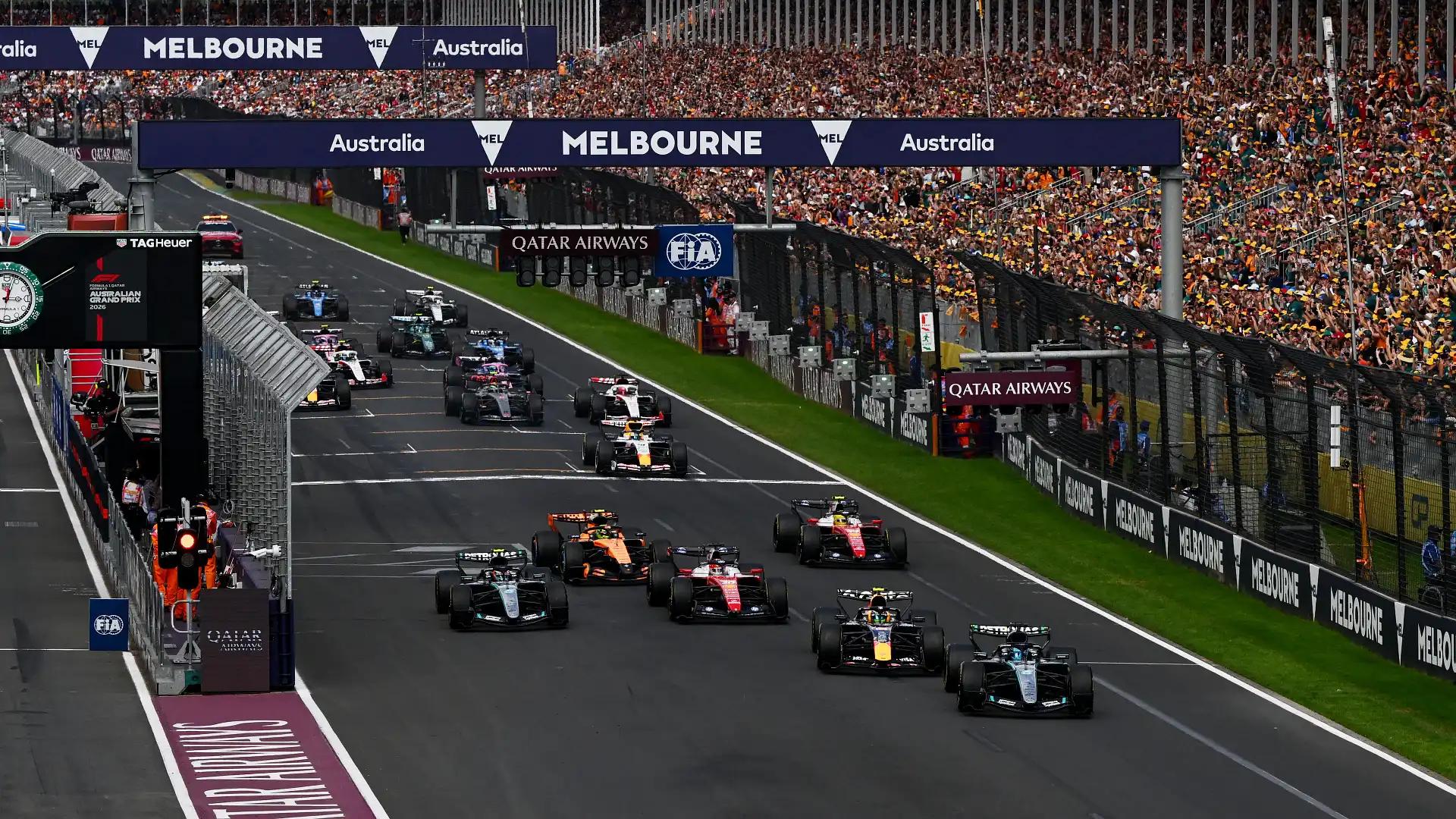
That is not a vanity decision. Race promoters, broadcasters and circuit operators all face declining ticket and TV revenue if F1 loses its sensory appeal. The Australian Grand Prix audience metrics are publicly tracked. If younger audiences associate F1 with quieter, more electronic cars, the long-term sport is in trouble.
This is why the 2030 V8 reset has been pitched as a sustainability move rather than a step backwards. It is about sustainability of fan engagement, not just emissions.
What it means for Australian motorsport fans
For Australian F1 fans, the immediate question is whether the V8 era will arrive in time for an Australian Grand Prix that recently lost its season-opening slot for 2027. The answer is probably not. The 2030 or 2031 timing means the current V6 hybrid era runs through at least four more Albert Park rounds.
For Carseekers readers who care more about the road cars than the racing, the relevance is in what manufacturers do over the next 12 to 24 months. Expect AMG, Cadillac, Ferrari and Lamborghini to lean harder into V8 marketing now that F1 has provided cover. Expect Audi to keep its messaging more cautious. Expect BMW and Honda to thread the middle.
The V8 is not coming back because anyone changed their minds about emissions. It is coming back because the market and the audience pushed harder than the regulators expected. That is a useful lesson about who really decides what cars get built.
Considering finance for your next car? Loanseekers can help you explore car loan options.
The finer details
Your questions answered.
When will F1 actually return to V8 engines?
FIA president Mohammed Ben Sulayem confirmed the V8 return is targeted for 2031, but he wants to bring it forward to 2030 if manufacturers agree. The current V6 hybrid era will run through at least 2029.
Will the new F1 V8s still be hybrid?
Yes, but only lightly hybridised. About 10 per cent of total power will come from batteries, with the V8 producing around 478kW and the hybrid topping it to 647kW. That is far less electric assistance than today's 50:50 split.
How big will the new F1 V8 engines be?
Displacement will sit between 2.6 and 3.0 litres, up from today's 1.6-litre V6 turbo. Rev limit will be capped at 15,500 to 16,000rpm to control development costs and manage what the FIA describes as acceptable sound frequencies.
Which manufacturers support the F1 V8 return?
Mercedes-AMG, Ferrari, Honda, Audi, Red Bull-Ford, and incoming Cadillac will vote on the change. AMG and Cadillac, both with strong V8 road car identities, are expected to back the move. Audi, heavily invested in current hybrid tech, is more likely to resist.
Why is F1 abandoning the V6 hybrid formula?
Cost, weight, complexity and sound. The current V6 hybrid is in its 14th season and has drawn consistent backlash from drivers, fans and broadcasters over its quiet sound and the superclipping phenomenon where cars lose speed on straights while harvesting energy.
Will the F1 V8 era affect road car decisions?
Yes, indirectly. F1 engine regs influence manufacturer messaging on hybrid and EV timelines. The shift back to combustion-led F1 power validates what AMG, Ferrari, Lamborghini and Cadillac are already doing in their road car lineups, where V8 and V12 engines are returning rather than disappearing.