
Honda has officially walked away from one of the most ambitious commitments in the car industry. The Japanese giant has confirmed it will no longer halt production of internal combustion engines by 2040, citing the practical reality of the market it serves.
In the same announcement, Honda revealed a A$3.6 billion operating loss for the year ending March 2026, a brutal reversal from the A$10.6 billion profit it posted the previous year. The majority of the red ink came from costs associated with cancelling its North American EV program earlier this year.
Honda used the same financial briefing to unveil two new hybrid prototypes that signal where the brand is heading instead. Both will reach production by 2028.
The two prototypes that matter
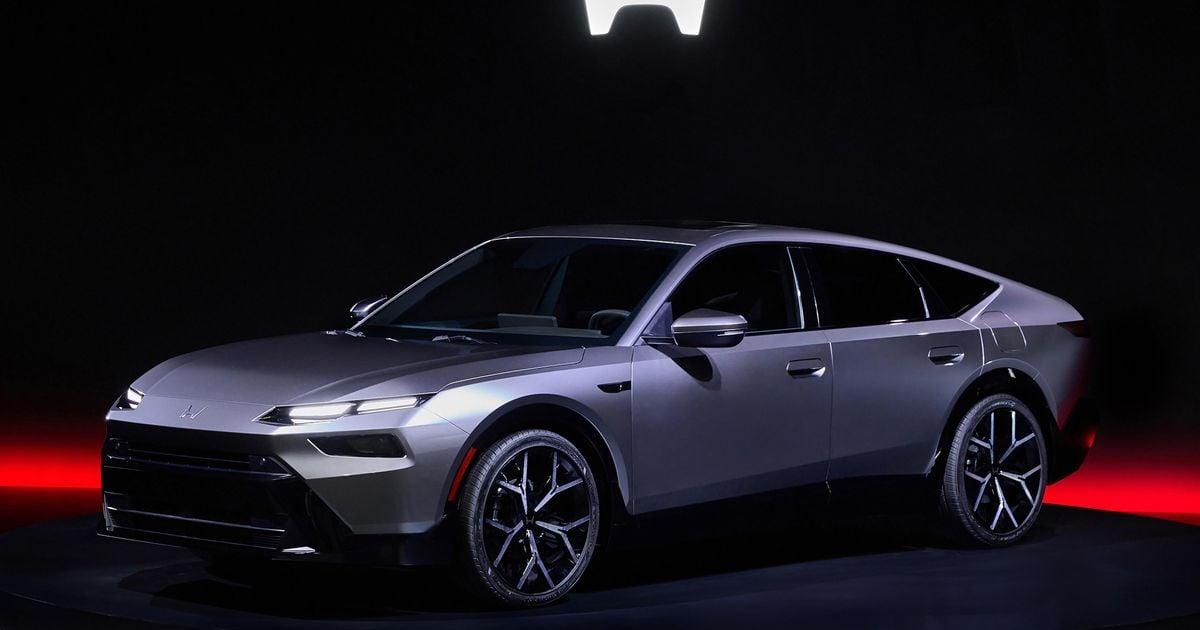
The Honda Hybrid Sedan Prototype is a fastback-shaped four-door that previews a future production sedan. At first glance it looks like a candidate to replace the current Accord, but Honda has separately confirmed the current Accord's lifespan will be extended until early 2030. That makes the prototype a more likely preview of the next-generation Civic, which is currently in greater need of replacement after the existing car was launched in 2021.
Earlier engineering prototypes suggested the next Civic will be longer and wider than today's car. The Hybrid Sedan Prototype matches that growth in size.
The second concept is the Acura Hybrid SUV Prototype. This one is more straightforward. It looks very much like a replacement for the Acura RDX, the current generation of which debuted in 2019. Historically the RDX and Civic have shared a platform, and both will continue to share underpinnings in their next iterations.
The new platform is designed to be flexible and is engineered specifically around Honda's next-generation petrol-electric hybrid technology. The architecture can also accommodate the new V6 hybrid setup Honda is developing for its larger vehicles.
What got cancelled
Honda has been cleaning house. Earlier this year the company axed the 0 Series Saloon and the 0 Series SUV, both of which were due to enter production in 2026. The Acura RSX, also a 0 Series derivative, was cut in the same wave. Shortly afterwards Honda walked away from the Afeela models it was developing jointly with Sony.
The new strategy is to launch 15 new hybrid models, primarily in North America, by 2030. Some of the larger vehicles will use a new V6 hybrid powertrain. Honda will repurpose its joint-venture battery factory with LG Energy Solution to produce battery packs for these hybrid cars rather than full EVs.
It is a remarkable U-turn. Honda has not abandoned electrification entirely. The 'mainly mini-vehicle' (kei car) category in Japan will still get EVs, and the brand says it will continue to supply plug-in hybrids and EVs in China using local partner platforms. India is also on the roadmap for affordable sub-4 metre Honda models, although the 0 Series Alpha SUV due to start production in India in 2027 was conspicuously not mentioned in the latest announcement.
What this means for Australian Honda buyers
Honda Australia has been running an aggressively hybrid-led lineup for several years already. The local strategy was effectively ahead of head office. The CR-V, ZR-V, HR-V and Accord all sell here in hybrid form, with the Honda Prelude coupe also using hybrid power.
That alignment means Honda Australia is, in some ways, the global beneficiary of the strategy reset. The brand has no battery-electric model on local sale and no committed timeline to introduce one. The decision to abandon the 2040 EV target removes the strategic mismatch between Honda Australia's hybrid focus and a parent company that had been publicly promising an all-electric future.
The practical consequence for Australian buyers is more hybrid product, not less. Expect new hybrid versions of existing models within 12 to 18 months, including replacements for the Civic and Accord, both due in the 2028 to 2030 window.
Will Honda still build any EVs for Australia?
Probably not in any volume. The cancelled 0 Series Saloon and SUV were the most likely candidates for an Australian launch. With those gone, the remaining EV models in Honda's pipeline are either Chinese-market joint ventures using partner platforms, Japanese kei cars that do not meet Australian Design Rules, or affordable India-built models that would be too low-spec for Australian regulatory and consumer expectations.
That absence is a sharp contrast to Toyota, which is preparing to launch a refreshed bZ4X EV in Australia in late 2026, and Mazda, which is also preparing for a delayed EV rollout. Honda Australia will be left waiting for the next-generation hybrid platform to filter through to local product, with no realistic path to a battery-electric Honda Civic or CR-V before 2030.
Dealer behaviour to watch
Hybrid Honda demand has been strong enough that wait times of three to six months are not unusual for the most popular models. The cancellation of Honda's EV program has not affected supply of existing hybrid stock in Australia, but expect dealers to lean on demand pressure to hold firm on pricing.
If you are considering a Honda Accord or Civic, the news that both nameplates will live longer in their current generations is good information to walk into a showroom with. Run-out pricing should improve into 2027 as Honda Australia prepares for the new platform.
For anyone looking at the CR-V, the timing question is more relevant. The next CR-V will use the new flexible hybrid architecture and the new V6 hybrid system, which suggests a more capable and likely more expensive replacement is coming. Buyers who want to lock in current-generation pricing should consider doing so within the next six months.
The bigger picture
Honda joins a growing list of legacy automakers walking back EV-only ambitions. Toyota has long resisted being pushed into a purely electric future and has been proven prescient. Stellantis is pivoting Maserati toward Chinese-built hybrids and EVs. Nissan has just announced a US$4.6 billion loss and is closing seven factories.
The message across the industry is consistent. Hybrids are paying the bills now, EVs are not, and the major Japanese players are no longer prepared to subsidise the EV transition out of profit centres that are themselves under pressure from Chinese competition.
For Carseekers readers, that means hybrid choice will keep expanding through 2028. Pure EV choice from legacy Japanese brands will grow more slowly than first expected, even as Chinese brands like BYD and Xpeng accelerate their Australian rollouts.
Bottom line
Honda's reset is not a panic move. It is a recognition that the cars Honda actually sells well in volume are hybrids, and that pretending otherwise was costing the company money it could not afford to lose. Australian buyers will see the benefit through 2028 in the form of new hybrid Civic, Accord and Acura products, but anyone hoping for a Honda electric SUV in the showroom should set their expectations on a much longer timeline.
Considering finance for your next car? Loanseekers can help you explore car loan options.
The finer details
Your questions answered.
Has Honda abandoned electric vehicles?
Not entirely, but it has dramatically scaled back. Honda has dropped its 2040 target to halt production of cars with internal combustion engines and cancelled its North American 0 Series EV program. The focus is now on hybrid models, with limited EV development restricted to Japanese mini-vehicles and Chinese partner platforms.
When will Honda's new hybrid sedan reach Australia?
The production version of the Honda Hybrid Sedan Prototype is due by 2028. It will likely replace the Civic before the next-generation Accord, which has been confirmed to extend its current lifespan until early 2030.
Why did Honda post a $3.6 billion loss?
The majority of the loss came from costs associated with cancelling Honda's North American EV program, including the 0 Series Saloon, 0 Series SUV and Acura RSX. The company also exited its Afeela joint venture with Sony.
Will Honda sell any EVs in Australia?
Not in the short to medium term. Honda Australia has no battery-electric model on sale, and the cancelled 0 Series program removed the most likely candidates. Buyers wanting a Honda EV in Australia will likely be waiting until after 2030.
Should I buy a Honda hybrid now or wait?
If you want the current CR-V, Civic, ZR-V, HR-V or Accord, buying now is sensible. The next-generation hybrid platform with the new V6 system will likely cost more when it arrives in 2028. Run-out deals on current-generation models should improve over the next 12 months.
What is Honda's V6 hybrid system?
Honda has confirmed a new V6 hybrid setup for its larger vehicles built on the next-generation hybrid platform. The system will be aimed at North American buyers in models like the Pilot and Passport, although Australian availability has not been confirmed.