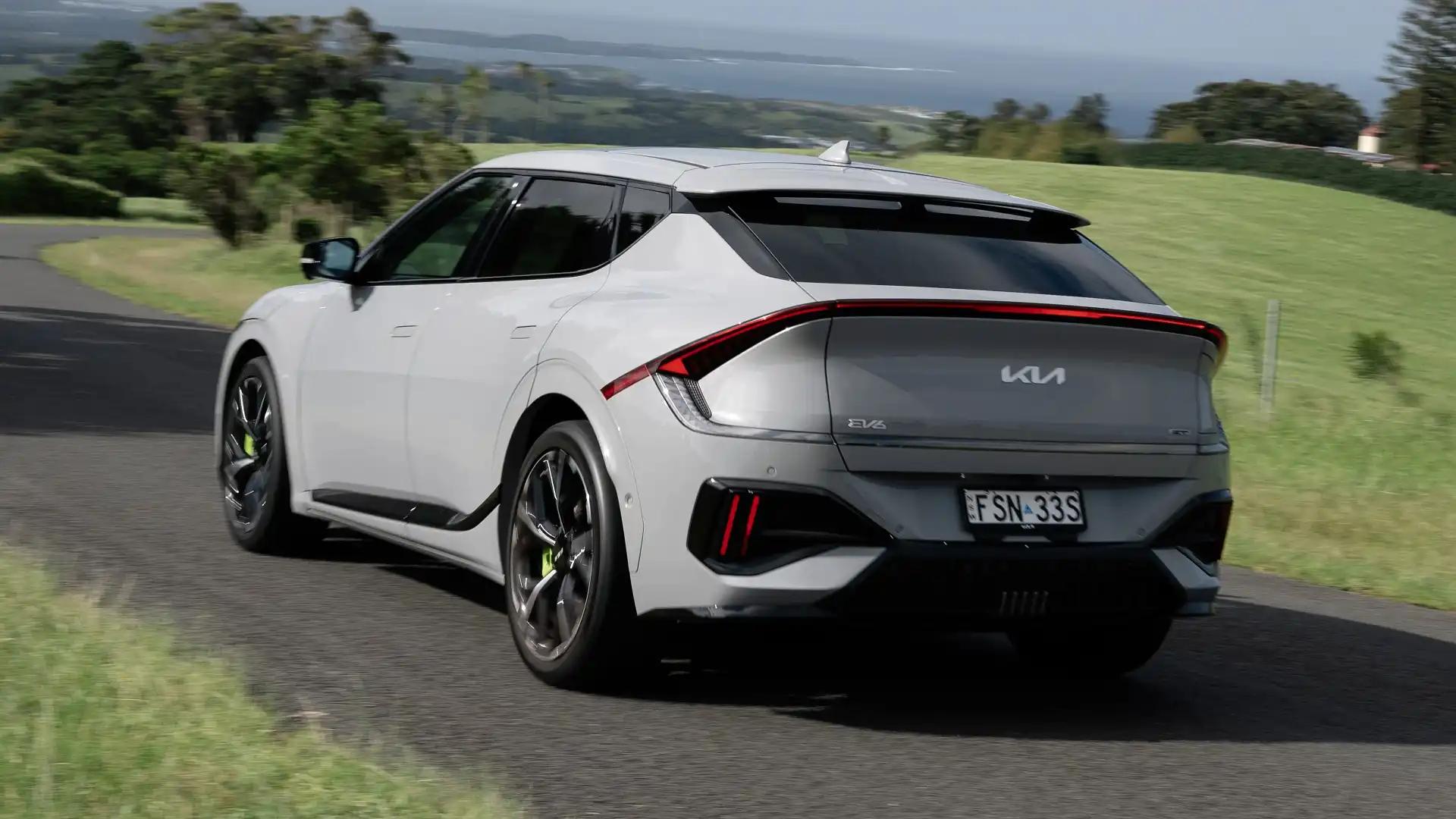
Kia is openly considering a return to petrol-powered GT performance cars in Australia. Global head of business planning Spencer Cho has confirmed the brand is reviewing its GT strategy, with the Kia K4 hot hatch and a Seltos sports SUV both viable candidates. For Australian buyers, that means the affordable performance car space, which Kia largely abandoned with the Cerato GT and Stinger, may not be dead after all.
What Cho actually said
"We [are] currently reviewing what kind of GT strategy we have to take as a next level," Cho told Australian media including Drive in South Korea.
"We're still working on that. We [haven't] finalised yet. So far, we were focusing on the EV models, trying to offer the old GT models, but we still see the opportunities for some ICE [petrol] models as well."
This is a meaningful shift. For the last 18 months Kia has only added GT badges to electric models, with the EV6 GT and EV9 GT serving as the local performance flagships. Cho's comments suggest that strategy is now being reconsidered.
Where the petrol GT models could land
Cho mentioned both sedan and SUV body styles as candidates. "Our sedan models might be a natural fit with the GT nomenclature, and the sportiness standpoint, but we also see some opportunities with the SUVs as well," he said.
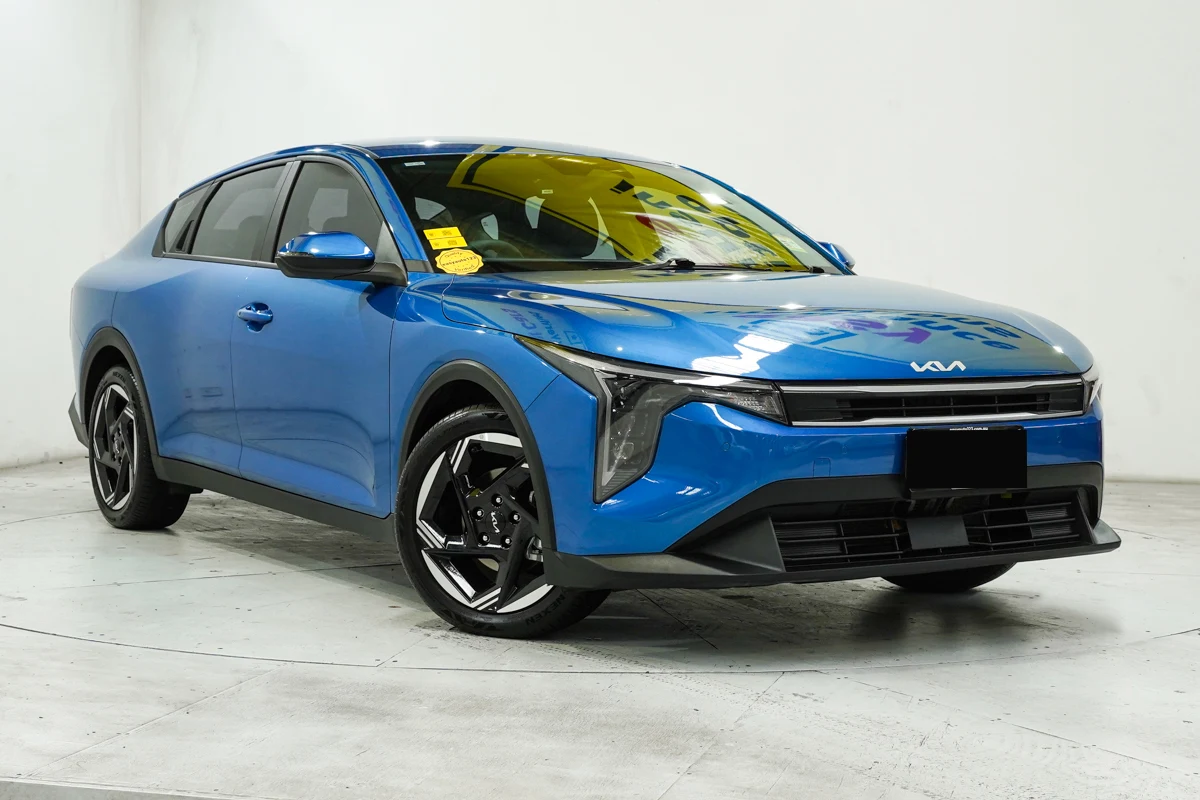
The most likely candidates are the K4 and a future Seltos. Both share their front-wheel-drive platform with the Hyundai i30 Sedan N, which means Kia could fit either with the same 2.0-litre turbo four-cylinder that currently powers the i30 N.
That engine produces 206kW and 392Nm today. The next-generation version, due in 2027 or 2028, is expected to step up to a 2.5-litre turbo with more power. A K4 GT or Seltos GT using either engine would be a meaningful step up from anything Kia currently sells with a GT badge that is not electric.
The Stinger problem
A new petrol Stinger remains less likely, given the modest sales of its predecessor outside Australia. Reports earlier in the year suggested Kia is considering taking last year's Vision Meta Concept into production, but as an EV, not as a twin-turbo V6 successor to the Stinger.
That is genuinely disappointing for Australian buyers, who supported the Stinger out of proportion to its global sales. Locally, the Stinger was a runaway success, particularly with buyers exiting the Holden Commodore and Ford Falcon segments. Globally, sales never justified the engineering investment.
Kia has been clear in past statements that the GT badge will continue on the lineup, but the underlying car will be more pragmatic about volume markets. The next 'rear-drive performance Kia' is more likely to be electric than petrol.
How Kia's current GT lineup works
Kia Australia currently fields two GT models: the EV6 GT hatch-styled SUV and the EV9 GT six-seat SUV. Both are electric.
Overseas, Kia offers the EV3 GT small SUV, the EV4 GT hatch and sedan, and the EV5 GT mid-size SUV. None are confirmed for Australia yet.
There is significant performance disparity within the electric GT range. The EV6 GT delivers 0 to 100km/h in a claimed 3.4 seconds from up to 478kW. The European EV5 GT needs more than six seconds with 215kW. That spread suggests the GT badge has become more about marketing positioning than a guaranteed performance threshold.
A petrol K4 GT or Seltos GT would help reset that. Both would deliver clear, repeatable performance from a 200kW-plus turbo four, without the battery-thermal-management limits that some electric GT models experience under repeated hard driving.
Why the next-gen i30 Sedan N matters
The big mechanical question is what engine the next K4 GT or Seltos GT would use. The next-generation Hyundai i30 Sedan N is due in 2027 or 2028, and is expected to skip hybrid power. That same engineering decision could be carried over to a Kia GT model.
The most powerful engine currently available in the K4 and new Seltos globally is a 1.6-litre turbo four with 142kW and 265Nm, paired with an eight-speed automatic. That is fine for the K4 GT-Line currently sold in Australia, but it is well short of what a true GT model needs.
For reference, the previous Cerato GT (sold until late 2024) used a 150kW version of the same 1.6-litre turbo with stiffer suspension and a dual-clutch transmission. A K4 GT with the 2.0-litre turbo would slot in well above that, into territory the Hyundai i30 N currently owns.
The hybrid problem
The new Seltos due in Australia later this year is hybrid-only. That makes a petrol-only Seltos GT structurally difficult. Kia would need to add a separate model variant with a different engine and a stiffened chassis, which is a significant engineering and homologation cost for a likely-low-volume product.
A K4 GT is more plausible, because the K4 retains the 1.6-litre turbo engine in the existing GT-Line. Adding a higher-output GT variant on top of that is a less significant production change.
Where the Picanto GT used to sit
It is worth remembering that Kia previously sold a Picanto GT in Australia, with a 1.0-litre turbo three-cylinder and a five-speed manual. That model was dropped in mid-2023. The same period saw the Stinger GT production wind down, with the last Stinger GT delivered in mid-2023.
With both gone, Kia has had a noticeable gap at the affordable petrol-performance end of the range. The brand has filled it partially with the EV6 GT and EV9 GT, but those start at over $80,000. The K4 GT or Seltos GT could land in the $45,000 to $55,000 corridor, which is exactly where the previous Cerato GT and Stinger lived.
What it means for Australian buyers
This is good news for Australian buyers who were burned by Kia's pivot to electric-only GT models. If a K4 GT or Seltos GT lands in 2027 or 2028, it would be the cheapest petrol-powered Kia performance car since the Cerato GT.
For existing Cerato GT or Stinger owners, this is the first signal in two years that Kia is open to building petrol-powered performance models again. That helps preserve the brand's performance heritage, which has been steadily eroding as the GT badge migrated to EVs.
For Hyundai i30 N owners and cross-shoppers, a K4 GT or Seltos GT could finally give Kia a credible hot product in the same showroom price bracket.
Timeline and what to do now
Nothing is locked in. Cho explicitly said the decision has not been finalised. That means even an optimistic timeline puts a petrol K4 GT or Seltos GT at no earlier than 2027 or 2028.
If you are shopping today for an affordable performance Kia, the K4 GT-Line with the 142kW 1.6-litre turbo is the only petrol option left. It is not a true GT in performance terms, but it is the closest thing Kia sells in Australia right now.
If you want the badge and you have $80,000-plus, the EV6 GT and EV9 GT remain the flagship picks. Both deliver legitimate, reproducible performance.
If you are willing to wait, watch for the next Hyundai i30 N reveal in 2027 or 2028. That will tell you exactly what powertrain a future K4 GT or Seltos GT would use. Track all of it on Carseekers.
Considering finance for your next car? Loanseekers can help you explore car loan options.
The finer details
Your questions answered.
Is Kia bringing back petrol performance cars?
Kia global business planning boss Spencer Cho has confirmed the brand is reviewing its GT strategy and openly considering petrol-powered performance models again. Final decisions have not been made, but candidates include a K4 GT hot hatch and a Seltos GT sports SUV. The earliest realistic timeline is 2027 or 2028.
Will there be a new petrol Kia Stinger?
A new petrol Stinger remains unlikely. Reports suggest Kia is considering taking last year's Vision Meta Concept into production, but as an electric car rather than a twin-turbo V6 successor. The previous Stinger sold well in Australia but struggled in other markets, which is why Kia is reluctant to revive the petrol formula.
What engine could a Kia K4 GT use?
The K4 shares its platform with the Hyundai i30 Sedan N, which uses a 2.0-litre turbocharged four-cylinder making 206kW and 392Nm. A K4 GT could inherit this engine directly, or the next-generation 2.5-litre turbo expected in the 2027 to 2028 i30 N replacement. Either would deliver well above the current Kia K4 GT-Line's 142kW.
When will a petrol Kia GT model launch in Australia?
Kia has not confirmed any new petrol GT model for launch. Spencer Cho's comments suggest the earliest realistic timeline is 2027 or 2028, dependent on the next-generation Hyundai i30 N's engine confirmation. Watch for announcements at major auto shows through 2026 and 2027.
How does the Kia EV6 GT compare to a petrol GT?
The Kia EV6 GT delivers 0 to 100km/h in a claimed 3.4 seconds from up to 478kW, which is significantly faster than most petrol Kia performance cars ever built. A petrol K4 GT would not match the EV6 GT's straight-line numbers, but would offer petrol fuel flexibility, lighter overall weight and more consistent performance under repeated hard driving without thermal limits.
What is the cheapest performance Kia I can buy in Australia right now?
The Kia K4 GT-Line with the 142kW 1.6-litre turbo is the cheapest petrol performance Kia currently on sale, priced from around $40,000 plus on-roads. If you have the budget, the EV6 GT or EV9 GT remain the flagship performance Kia models but both start over $80,000 plus on-roads.