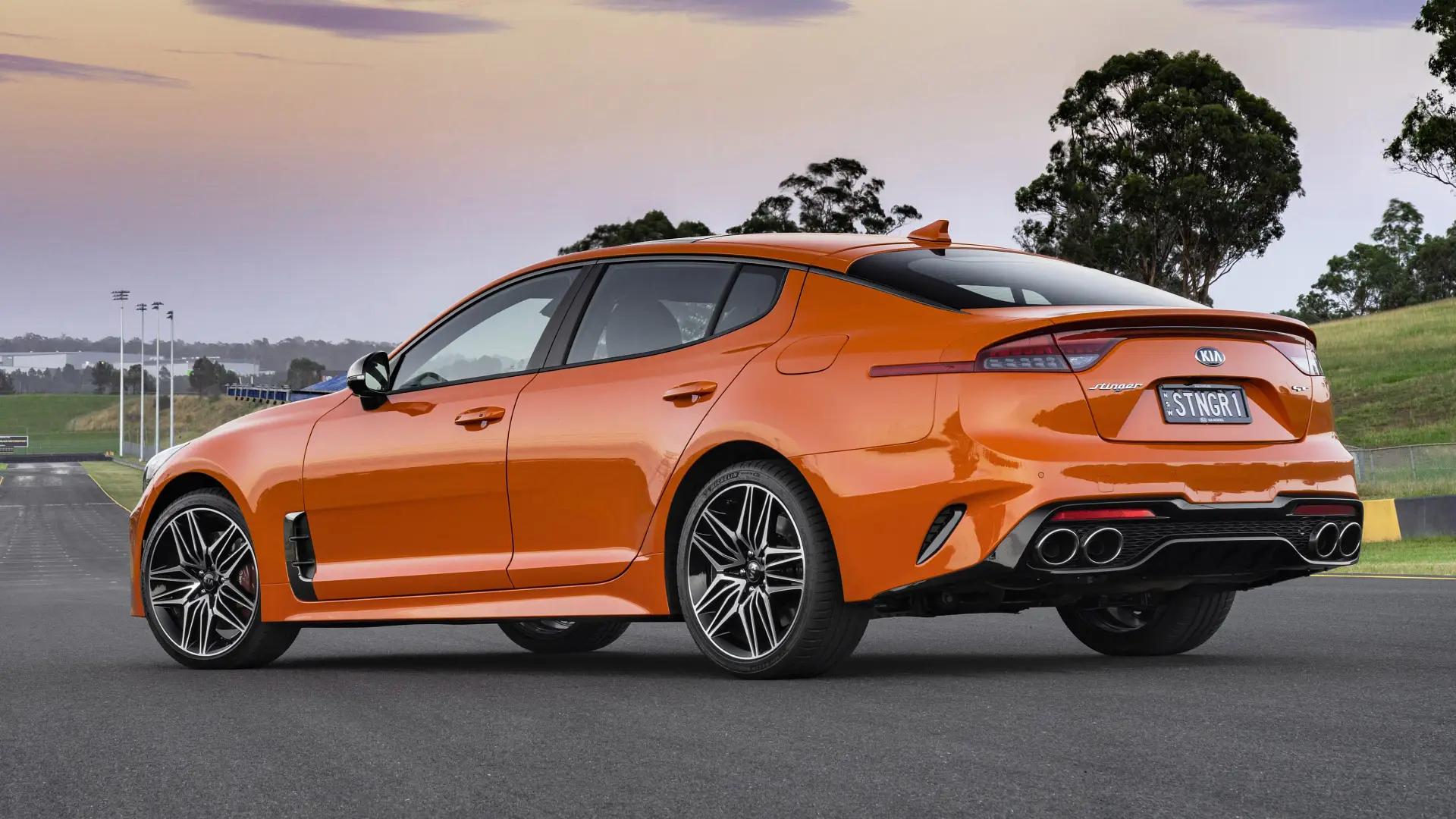

Kia is openly considering a return to performance cars that burn petrol. A K4 hot hatch or Seltos sport SUV are both possibilities. A reborn Stinger with V6 power is less likely. For Australian buyers who have spent the last few years watching Kia's GT badge migrate from petrol sedans to high-performance electric SUVs, this is the first real sign the brand might swing back the other way.
Kia has moved away from petrol hero models like the Stinger GT performance sedan and Cerato GT sports hatch in favour of fitting its GT badge only to electric cars. The current showcase is the EV6 GT, with the EV9 GT a six-seat range-topper. But the brand is now evaluating the future of its performance badge and has opened the door to petrol models across SUV and sedan body styles.
What Kia actually said
Kia head of global business planning Spencer Cho told Australian media, including Drive, that the brand is still working through GT strategy. "We are currently reviewing what kind of GT strategy we have to take as a next level," Cho said. "We're still working on that. We have not finalised yet. So far, we were focusing on the EV models, trying to offer the old GT models, but we still see the opportunities for some ICE models as well."
That is not a confirmation. It is a strong hint. When a head of global business planning publicly says ICE models are on the table, projects are already being whiteboarded and powertrain options are being costed.
Cho continued: "We are looking at all the options, including ICEs and EVs, and all those powertrain choices. Because of the wide range of the model lines, we cannot offer every model with the GTs, so we will try to carefully decide which model will be the right product for the GT."
The disparity inside the current GT range
Part of what is forcing a rethink is the inconsistency in performance across today's Kia GT range. The EV6 GT is genuinely fast, capable of 0 to 100km/h in a claimed 3.4 seconds from up to 478kW. The EV5 GT sold in Europe makes 215kW and needs more than six seconds.
That is a brand-credibility problem. A GT badge means different things in different showrooms, depending on which model wears it. Buyers walking into a Kia dealer reasonably expect any GT to be properly quick. Kia's solution is either to align the performance of the EV GTs or to broaden the badge into petrol territory where the harder-edged numbers are easier to achieve.
What models are most likely to wear a GT badge next
Cho was open about sedan and SUV body styles for future Kia GT models, across a mix of power sources. "Our sedan models might be a natural fit with the GT nomenclature, and the sportiness standpoint, but we also see some opportunities with the SUVs as well," the executive said.
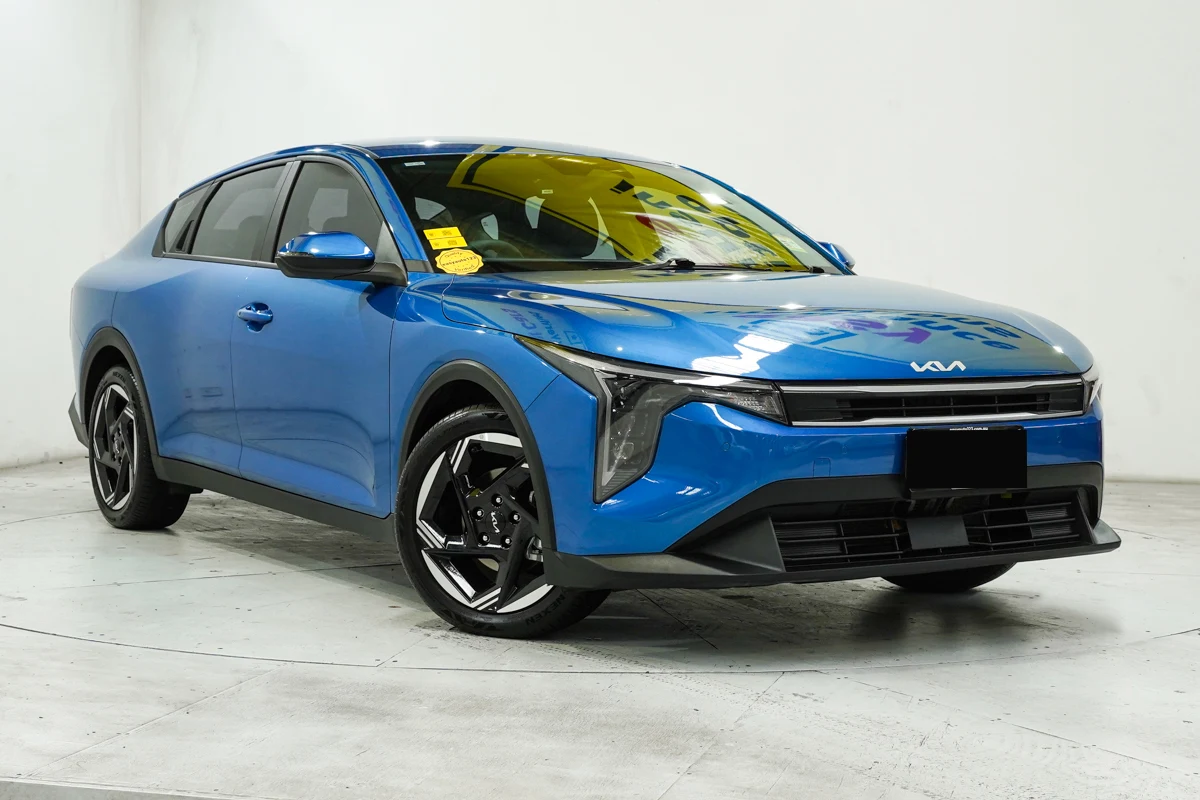
The most obvious petrol GT candidates are the K4 small car and the Seltos small SUV. Both use the same front-wheel-drive underpinnings as the current and likely next-generation Hyundai i30 Sedan N. That platform shares hot hatch hardware that Hyundai N has already engineered, so a Kia GT version would not need to start from scratch.
Asked directly if GT versions of the latest K4 small car and Seltos small SUV would be feasible, Cho replied: "Possibly, possibly." That is corporate-speak for yes, but we are not committing on the record.
What about a new Stinger?
This is where buyers might be disappointed. While sedans were named by Cho, the chances of a new petrol-powered Stinger are less likely, given the modest sales of its predecessor outside of Australia. The original Stinger was loved by Australian enthusiasts but it never moved enough metal globally to justify a successor on its own platform.
Reports in recent weeks have claimed Kia is open to taking last year's Vision Meta Concept into production, but it would be an electric car rather than a twin-turbo V6 offering. The Stinger nameplate could come back. The character of the original almost certainly will not.
The K4 GT specifics
The current Hyundai i30 Sedan N, with which a K4 GT would share platform hardware, produces 206kW and 392Nm from a 2.0-litre turbocharged four-cylinder petrol engine. The next-generation model is slated to adopt a 2.5-litre turbo engine with more power. That gives Kia a ready-made performance baseline to work from.
The next i30 Sedan N is due in 2027 or 2028 and is expected to skip hybrid power. That timing window would line up with a possible K4 GT debut. Kia would have a clean platform, a proven engine, and a sister brand performance benchmark to chase.
A Seltos GT is a less obvious sell. The small SUV segment in Australia leans practical rather than performance-led, and there is no direct Hyundai precedent on the i20 N or Kona N lines today. But the underpinnings exist, and the marketing case for a hot small SUV has been gradually validated by buyer interest in the EV6 GT and the Volkswagen T-Roc R types of car.
Why this matters for Australian buyers
Australia has historically been a strong market for the Kia GT badge. The original Stinger GT sold in real numbers here, well beyond what its global volume might predict. The Cerato GT had a devoted following, and the EV6 GT has been quietly successful with performance-minded EV adopters.
If petrol GTs come back, Australia will likely get them. The local market is one of the few places where right-hand-drive performance Kia sedans and hot small SUVs find buyers willing to pay full retail. Kia Australia has the dealer network, the marketing budget, and the customer base to support such launches.
The more interesting question is timing. If a K4 GT lands in 2028, it slots into a market that is by then dominated by electric performance SUVs from BYD, Polestar, and Tesla, plus Hyundai N petrol hot hatches and possibly a returning Honda Civic Type R. Kia would need to position the GT carefully. Not as a halo, not as a niche oddity, but as a credible petrol option for buyers who do not want to make an EV their performance daily driver.
What this means for current Kia GT shoppers
If you are eyeing a Kia GT right now, your choices are the EV6 GT and the EV9 GT. Both are excellent in their own ways but both are expensive electric cars. If you want a Kia GT and your budget is sub-$70,000 drive-away, you are essentially waiting on the next product cycle.
The news here is that the wait might not be in vain. Kia has not closed the petrol door, and the K4 GT is now plausible enough to be worth tracking. If you can hold off a new performance car purchase until 2028, you may have meaningfully more options on the table at Korean prices than you have right now.
For enthusiasts crossing fingers for a new Stinger, the realistic expectation is an electric successor, not a V6. That will not be the same car the original Stinger crowd wanted. It will be a different car wearing a familiar name. Whether that turns into a hit is one for the future. The current message from Kia is clear though. The GT badge is being rethought from the ground up, and ICE is officially back in the conversation.
Where the EV GT range goes from here
The EV6 GT remains the flagship and is unlikely to lose its top-tier numbers. Expect the EV9 GT to keep its place as the family hauler with serious performance credentials. Where the GT badge expands next, on EV3 or EV4 lines for example, will depend on how Kia balances the petrol versus electric narrative across markets.
Carseekers watches Kia's product strategy closely because the brand has been one of the more important arrivals in the Australian premium-adjacent market over the past decade. The GT badge is part of how Kia keeps brand cachet up while volume expands. The next chapter of that strategy is being written right now, and the news that petrol is back in the conversation is the most interesting Kia performance story in years.
Considering finance for your next car? Loanseekers can help you explore car loan options.
The finer details
Your questions answered.
Is Kia really bringing back a petrol GT performance car?
Kia is openly considering it. Head of global business planning Spencer Cho told media the brand is reviewing its GT strategy and has not ruled out internal combustion models. K4 and Seltos GT versions are described as possible. Nothing is locked in yet.
Will there be a new Kia Stinger?
Probably not as a twin-turbo V6 petrol sedan. Cho indicated a new Stinger is less likely given the modest global sales of the original. If a Stinger successor arrives, it is more likely to be electric, based on the Vision Meta Concept revealed last year.
What is the Kia K4?
The K4 is Kia's small car, slotting in below the Sportage. It shares front-wheel-drive underpinnings with the next-generation Hyundai i30 Sedan N. That mechanical link makes a K4 GT credible because the hardware already exists at Hyundai-Kia for a fast version.
How does the Kia EV6 GT compare with overseas EV GT models?
The EV6 GT is at the top of the current Kia GT range with up to 478kW and a 0 to 100km/h claim of 3.4 seconds. By contrast, the EV5 GT sold in Europe makes 215kW and needs more than six seconds. Kia knows the GT badge has to mean something close to the EV6 level to retain credibility.
When could a Kia K4 GT or Seltos GT arrive in Australia?
Kia has not given a timeline. The next Hyundai i30 Sedan N is due in 2027 or 2028, so any shared platform Kia GT models would likely follow that window. Expect 2028 or later for a K4 GT and Seltos GT, assuming the projects are formally approved.
Should I wait for a Kia K4 GT or buy a current Hyundai i30 N now?
If you want a petrol hot hatch now, the existing Hyundai i30 N or i30 Sedan N is available and well-developed. If you can wait until 2028, the next i30 Sedan N gets a new 2.5-litre turbo engine and a Kia K4 GT may join it. Both are gambles on a Korean petrol future that is still being decided.