Plug-in power finally hits LDV's ute lineup
LDV has confirmed plug-in hybrid versions of its T60 and Terron 9 utes at the Beijing motor show, and a new T70 model is also on the way. The Chinese automaker, owned by SAIC, is betting that PHEV utes will keep its dual-cab range competitive against a wave of electrified rivals heading to Australia.
The announcement covers three vehicles. LDV showed a PHEV variant of the existing Terron 9, plus a brand-new T70 dual-cab and a PHEV version of that T70. Production is scheduled to begin in 2027, which means Australian arrival is at least a year away if local approval is granted.
What it means for the current T60
If you are eyeing the existing LDV T60, this announcement matters. The T70 looks set to replace the current T60 globally, and Australian buyers should expect the same nameplate transition here. The current T60 dates back roughly a decade and uses a 2.0-litre four-cylinder turbo-diesel paired with an eight-speed automatic and dual-range four-wheel drive. It starts at $41,025 drive-away, which is sharper than nearly every Japanese rival.
The electric eT60 sits at the other end of the lineup at $92,990 plus on-road costs. It produces 130kW and 310Nm with a single rear-mounted motor and claims up to 330km on the WLTP cycle. That price was always going to be a hard sell against the Cannon Alpha EV and incoming Shark 6 EV, and the T70 PHEV could become the more relevant electrified option for working buyers.
The Terron 9 PHEV is the headline act
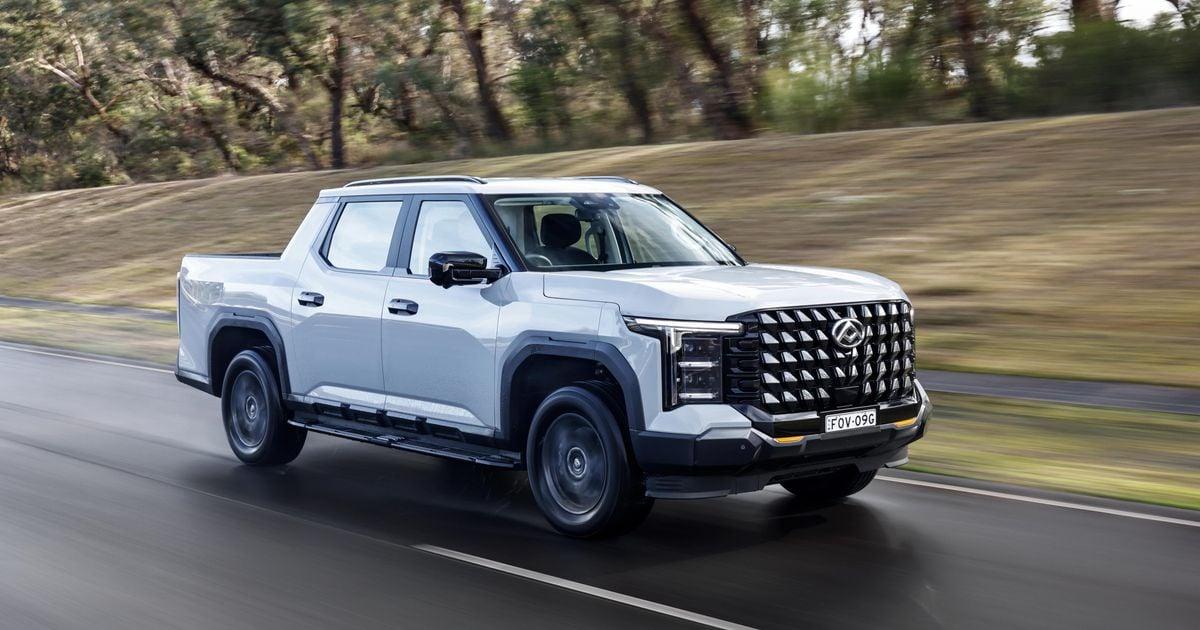
The Terron 9 has only just landed in Australian showrooms as a value-focused dual-cab priced from $53,674 drive-away. Adding a plug-in version expands its appeal at a time when the Shark 6 has shown that PHEV utes can move volume.
LDV has not released full PHEV powertrain details, but the Terron 9 already shares its 2.5-litre turbo-diesel and eight-speed automatic with the more expensive MG U9 dual-cab. Both brands sit under SAIC, and MG Australia has already confirmed a U9 PHEV for 2027. The two PHEV systems are likely to be near-identical, which makes the Terron 9 PHEV a sharper-priced version of the same hardware.
This matters for buyers because LDV traditionally undercuts MG by several thousand dollars on equivalent variants. If that pattern holds, the Terron 9 PHEV could land below $60,000 drive-away while the U9 PHEV sits closer to $70,000.
How it stacks against the BYD Shark 6 and GWM Cannon Alpha PHEV
The PHEV ute segment in Australia has gone from non-existent to fiercely contested in barely 12 months. The BYD Shark 6 leads the segment, originally with a 1.5-litre turbo petrol and dual electric motors producing 321kW and 650Nm.
BYD has just expanded the Shark 6 range. There is a new cab/chassis variant for tradies and fleets, plus a flagship Shark 6 Performance with a 2.0-litre engine producing 350kW and 700Nm. The Performance also lifts braked towing to 3500kg, where the rest of the Shark 6 lineup remains capped at 2500kg. That towing limit has been the standout knock against the Shark 6 for tradesman use, and BYD's response sets the benchmark a Terron 9 PHEV will need to match.
The GWM Cannon Alpha Hi4-T PHEV is the other major player. It is already on sale and tows 3500kg, which gives it a real edge for buyers who actually need their ute to work. The JAC Hunter PHEV and the announced Ford Ranger PHEV round out the segment, with the Ranger PHEV expected to be the priciest option of the lot.
Against that field, LDV has two advantages: established Australian dealer presence and aggressive pricing. The brand will need both to compete, because the Chinese-brand ute market is no longer easy money. Buyers have options, and dealer markups on PHEV utes have already started softening as supply grows.
What dealer behaviour looks like right now
If you are shopping for a PHEV ute today, the dealer dynamics are worth understanding. Shark 6 supply is now at a level where dealers are willing to negotiate, particularly on demonstrators and entry variants. Cannon Alpha PHEV sits in a similar position. The market has moved quickly from waiting lists and sticker prices to competitive drive-aways, and the trend should accelerate as the Hunter PHEV, Ranger PHEV and Terron 9 PHEV pile on.
For LDV specifically, the brand has historically used drive-away pricing aggressively at end-of-quarter and end-of-financial-year. Anyone considering the existing T60 or Terron 9 in 2026 should expect those same patterns, especially with the T70 generation lurking on the horizon. A T60 stockpile clearance could deliver some of the sharpest dual-cab prices Australia sees this year.
What we know about the new T70
The T70 was teased in Beijing rather than fully revealed. What was visible: more squared-off styling, slim headlights, an upright front-end and integrated roof rails. The look is closer to the larger Terron 9 than the current T60, which suggests LDV is consolidating the design language across the dual-cab range.
The T70 is expected to use a similar size footprint to the current T60, slotting into the Ford Ranger-sized segment. PHEV power will sit alongside diesel and possibly battery-electric variants, mirroring the broader LDV strategy of offering multiple powertrains per platform.
Will it actually come to Australia?
LDV Australia has not confirmed any of the new utes for local release. That is standard practice this early after a Beijing reveal, and it does not necessarily mean a no. The brand has historically picked up its Chinese-market models for Australia where the business case stacks up, and the dual-cab segment is too important to ignore.
The question is timing. Production starts in 2027 in China, which puts Australian arrival into late 2027 or 2028 at the earliest. By then the Shark 6, Cannon Alpha PHEV, Hunter PHEV, Ranger PHEV and U9 PHEV will all be deeply established. LDV will need to either undercut on price aggressively or bring something distinctive to stand out.
What buyers should do now
If you need a ute in 2026, do not wait for the Terron 9 PHEV or T70 PHEV. They are too far away, and Australian specs are not confirmed. The current T60 is value-strong if you want diesel, and the Cannon Alpha PHEV or Shark 6 Performance are the stronger picks if you want plug-in capability with proper towing.
If you can wait until 2028, the situation looks different. PHEV ute pricing should be sharper, dealer dynamics more buyer-friendly, and the LDV options give you more brands to play against each other. That is exactly the leverage Carseekers buyers use to extract real savings rather than rebadged showroom discounts.
The bigger picture
LDV's PHEV announcement is part of a broader shift. Chinese automakers have moved from following the Australian ute market to actively shaping it. Five years ago, the segment was a Toyota HiLux and Ford Ranger duopoly. Today there are credible Chinese alternatives at almost every price point, and the PHEV segment is genuinely Chinese-led.
That is not necessarily bad news for buyers. It is competition, and competition produces better products and sharper deals. The Terron 9 PHEV is one more reminder that the Australian ute market has changed permanently, and the dealers who pretend otherwise are the ones with stale stock and inflexible pricing.
Considering finance for your next car? Loanseekers can help you explore car loan options.
The finer details
Your questions answered.
Is the LDV Terron 9 PHEV coming to Australia?
LDV Australia hasn't confirmed it yet, but it's a strong chance. The Terron 9 already sells here in diesel form, and the PHEV version is built on the same platform that's coming to MG as the U9 PHEV in 2027. Expect Australian announcement late 2026 or early 2027.
When will the LDV T70 replace the T60 in Australia?
The T70 is expected to take over from the current T60 globally, with production starting in China in 2027. Australian arrival likely lands in late 2027 or 2028, and LDV is likely to keep the T60 badge here even though it's a new model.
How does the LDV Terron 9 PHEV compare to the BYD Shark 6?
Hard specifics aren't out yet, but the Terron 9 PHEV will use the same drivetrain as the upcoming MG U9 PHEV, which sits a class above the Shark 6 in size and pricing. Expect the Terron 9 to undercut the U9 by several thousand dollars while delivering similar capability.
How much does the LDV T60 cost in Australia in 2026?
The LDV T60 starts at $41,025 drive-away with the 2.0-litre turbo-diesel and eight-speed automatic. The eT60 EV variant is priced from $92,990 plus on-road costs and offers up to 330km of WLTP range from a single 130kW rear motor.
What's the towing capacity of the new PHEV utes coming to Australia?
The current BYD Shark 6 tows 2500kg braked, while the new Shark 6 Performance lifts that to 3500kg. The GWM Cannon Alpha PHEV manages 3500kg already. The Terron 9 PHEV's towing rating hasn't been confirmed but will need to hit 3500kg to remain competitive for tradies.
Should I buy a current LDV T60 or wait for the new T70?
If you need a ute now, the existing T60 offers strong drive-away value with proven hardware. The T70 is at least 18 months away from Australian dealers, and runout pricing on the current T60 over the next 12 months should make it the smarter buy if you can move quickly.