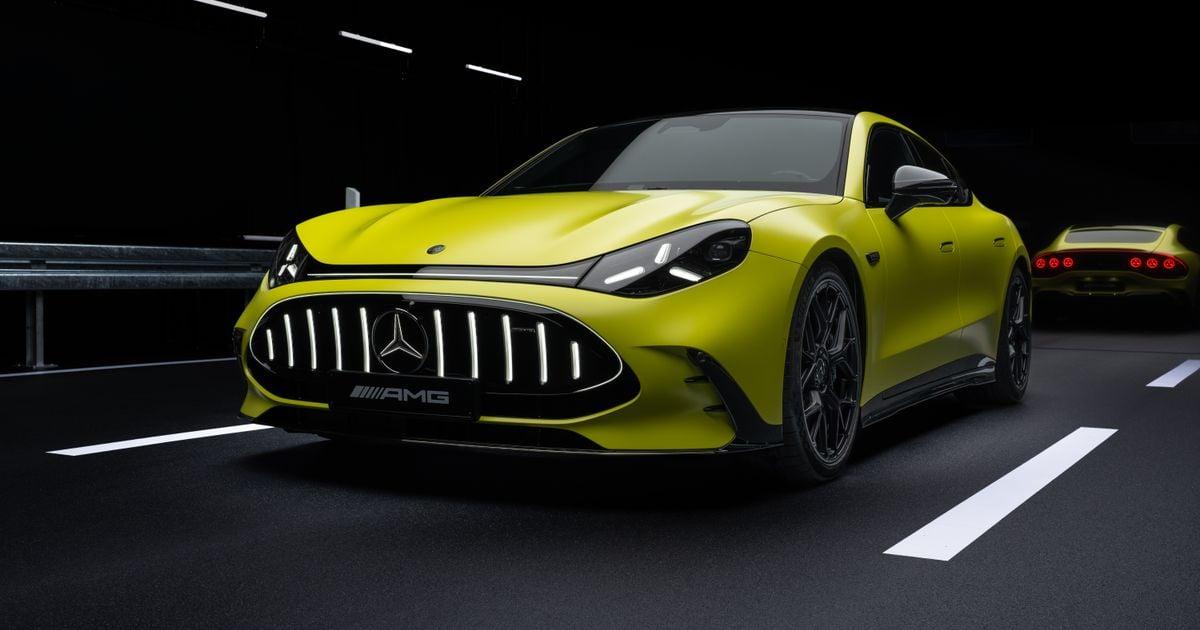

Mercedes-AMG has finally pulled the wraps off its first proper electric performance car, and it is built to silence the petrol purists. The new GT 4-Door Coupe arrives in two flavours, the GT63 and the GT55, riding on a brand-new 800-volt AMG.EA platform. The GT63 produces 860kW of power and 2000Nm of torque, smashes 0 to 100km/h in 2.1 seconds with a foot of rollout, and tops out at 300km/h with the optional Driver's Package. The GT55 is hardly a slouch either, with 600kW, 1800Nm, and a 2.5-second sprint.
Mercedes-Benz Australia has confirmed the new GT 4-Door Coupe is coming, though exact timing, pricing, and equipment levels remain under wraps. Production begins in mid-2026, so Australian deliveries are realistic for very late 2026 or into 2027. Here is everything Australian buyers need to know about a car that is going to redefine what an AMG looks like for the next decade.
What it replaces and what that costs
The outgoing GT 4-Door Coupe finished its Australian run as a V8 plug-in hybrid called the GT63 S E Performance. That car was priced from $409,600 before on-road costs in 2025 and used a 620kW twin-turbo 4.0-litre V8 with electric assistance. It was monstrous, but it was already starting to feel like the last gasp of a generation Mercedes-AMG is moving on from. The new electric GT undercuts that PHEV on outright power by 240kW in GT63 form, while delivering performance numbers the V8 simply could not match.
Expect Australian pricing on the new electric GT to start higher than the old PHEV. The all-new platform, the axial-flux electric motors built in Germany, and the larger battery all add cost. A starting figure north of $450,000 for the GT55 and well above $500,000 for the GT63 is realistic. Buyers signing today should budget accordingly and ask for a written indication once Mercedes-Benz Australia opens the configurator.
The technology under the skin
This is not a converted combustion platform. The AMG.EA architecture is bespoke to electric AMGs, with multi-link suspension front and rear, semi-active roll stabilisation, forged aluminium components, and selected steel parts for stiffness. There is rear-wheel steering, all-wheel drive, and three axial-flux electric motors. Two motors sit on the rear axle and one on the front, all packaged in a lighter, more compact 'sandwich' layout that Mercedes spent more than a decade co-developing with British specialist YASA.
A 106kWh battery uses individually cooled cylindrical cells with a new lithium-ion chemistry. The battery pack is also engineered to work with a pair of silicon-carbide inverters and an aggressive cooling system that keeps performance consistent over repeated hot laps. WLTP range is up to 696km for the GT63 and 700km for the GT55. DC fast charging at 600kW can take the battery from 10 to 80 per cent in around 11 minutes, adding 460km of range in roughly the time it takes to grab a long black.
600kW is currently faster than any DC infrastructure available in Australia. Local charging will be limited to whatever the strongest public network can sustain, which in 2026 still means around 350kW from a handful of select sites. Owners will need to be patient on long drives, although the WLTP range figures are large enough that most weekly use sits well within home charging territory.
Dimensions, design, and the V8 soundscape
The new GT is 5094mm long, 1959mm wide, and 1411mm tall. That makes it 46mm longer, 6mm wider, and 42mm lower than the outgoing model, with a longer 3040mm wheelbase. Kerb weight only rises by 115kg to 2460kg, which is impressive considering the battery weight.
Styling closely follows the GT XX concept Mercedes used to set a record at the Nardo high-speed circuit. There is an illuminated front grille, twin power domes on the bonnet, six circular rear tail-lights, and a giant rear diffuser with two-stage underbody Venturi aero. An active rear spoiler adjusts above 80km/h to dial downforce up or down. Drag coefficient sits at 0.22, which is exceptional for a car of this size.
The most polarising touch is the simulated V8 soundscape. Mercedes-AMG has gone all-in on artificial gearshift sounds, engine-style burble, and an audio profile designed to win over die-hard combustion fans. Whether that works depends entirely on how convincing the speakers are. Hyundai showed with the Ioniq 5 N that simulated noise can absolutely enhance an EV. AMG will be measured against that benchmark in every test drive.
Inside the cabin
The interior runs the latest MBUX operating system across a 10.2-inch digital cluster, a 14.0-inch central touchscreen, and a 14.0-inch passenger display. Pull both steering paddles and the GT63 unlocks a 110kW boost for short bursts, with the GT55 offering 50kW under the same trigger. Predictive Performance Manager has Endurance and Hotlap modes that automatically distribute power and energy for track running, while seven drive modes are controlled via haptic switches on the AMG Performance steering wheel.
The GT63 cabin can be optioned with leather and microfibre race seats, and rear seating can be configured as either two buckets with foot garages or a more practical three-seat bench. A panoramic sunroof and ambient lighting are standard. A Burmester High End 4D audio system with stainless steel speaker grilles is optional and will be tempting for buyers who care about music, although it adds to the bill.
Where this fits in the Australian luxury EV market
The GT 4-Door Coupe sits in rare air. Its most obvious rival is the Porsche Taycan, which already offers Turbo S and now Turbo GT variants. The Lucid Air is not officially sold here. The Tesla Model S Plaid has effectively withdrawn from the Australian market. That leaves Mercedes free to position the new GT as the halo electric performance sedan above the EQS, and it is a market with very few cross-shoppers.
For existing AMG GT 4-Door owners, the upgrade story is mixed. You lose the V8 noise and the visceral character that defined the badge for decades. You gain ferocious straight-line speed, far better real-world range than the old PHEV, and access to manufacturing techniques like the GT63's axial-flux motors that genuinely move the technology bar forward. Whether that trade lands depends on the buyer.
For everyone else, the most interesting takeaway is that Mercedes plans to spin several more cars off this AMG.EA platform. That means future electric AMG sports cars in different body styles, all riding on the same flexible battery architecture. The new GT is the first car off the line. It will not be the last.
Securing one
Mercedes-Benz Australia will run the new GT through its existing AMG dealer network, with allocations likely to go first to long-standing AMG customers. Anyone serious about a launch-build car should register interest now and ask for a written commitment on delivery slot once production timing firms. Dealer behaviour on a halo car like this is usually disciplined, but it never hurts to know exactly which dealer principal you are dealing with, and to compare allocation promises across two or three locations.
You can compare current AMG inventory and pricing on Carseekers, which lists live stock from dealers around Australia for both new and lightly used AMG performance models. That is a useful sanity check before you sign anything on a six-figure deposit.
Production, supply, and Australian timing
Production begins in mid-2026 at the Affalterbach plant in Germany, with Mercedes-AMG building the axial-flux motors at its Berlin facility. Both sites have been comprehensively retooled, and Mercedes has flagged more than 35 world-first manufacturing techniques required to make the motors at scale. That is a lot of engineering risk packed into one car. Expect early build slots to be reserved for European and North American markets, with Australian deliveries trailing by three to six months.
For buyers who want certainty, the smart move is to register interest now with a known Mercedes-Benz Australia AMG dealer. Allocations on a halo car like this almost always favour customers with prior AMG ownership history, so existing AMG GT 4-Door owners are at the top of the queue. New buyers should expect to wait through the first wave.
The bigger context for electric performance cars
The new AMG GT 4-Door Coupe matters beyond its own showroom. It is the first proper electric AMG, and it sets the template for everything Mercedes-AMG will build over the next decade. The simulated V8 sound, the axial-flux motor layout, the 800-volt architecture, and the cell-to-pack battery design are all going to filter down into smaller, cheaper AMGs over time. So even if you cannot afford a 2027 GT63, paying attention to how this car drives and how the market receives it tells you everything you need to know about Mercedes-AMG's electric strategy.
What ownership will actually look like
In day-to-day use, the GT 4-Door Coupe will be docile. The cabin is luxurious, the visibility is reasonable for a low-slung performance sedan, and the front passenger 14-inch screen will keep teenagers entertained on long drives. The clever rear seat configuration with foot garages addresses a real complaint about the outgoing car, where rear-seat passengers complained about cramped foot wells.
In anger, the GT63 will be terrifying. A 2.1-second 0-100km/h time puts it on par with cars like the Rimac Nevera and ahead of every Tesla Model S Plaid metric in real-world testing. The synthesised V8 audio will divide opinion. Some buyers will love the theatre. Others will switch it off and revel in the silence.
Either way, Mercedes-AMG has built a halo car that is far more interesting than the outgoing PHEV. The petrol-only purist crowd will still mourn. Everyone else gets a glimpse of what high-performance luxury looks like when the V8 era ends.
Considering finance for your next car? Loanseekers can help you explore car loan options.
The finer details
Your questions answered.
Is the new Mercedes-AMG GT 4-Door Coupe EV coming to Australia?
Yes. Mercedes-Benz Australia has confirmed it will sell the all-electric GT 4-Door Coupe locally, although arrival timing, pricing, and equipment levels are still to be locked in. Production begins in mid-2026, so Australian deliveries are likely from late 2026 or early 2027.
How much power does the Mercedes-AMG GT63 EV make?
The flagship GT63 produces up to 860kW of power and 2000Nm of torque. It can hit 100km/h from a standstill in 2.4 seconds, or 2.1 seconds with a foot of rollout, and tops out at 300km/h with the optional Driver's Package.
What is the driving range of the Mercedes-AMG GT EV?
The GT63 offers up to 696km of WLTP range, while the GT55 stretches that figure to 700km thanks to similar gearing and a slightly different drive strategy. Both share the same 106kWh battery.
How fast can the Mercedes-AMG GT EV charge?
DC fast charging at 600kW can replenish the battery from 10 to 80 per cent in around 11 minutes. Australian charging networks do not yet support 600kW, so real-world charging will be limited to roughly 350kW at the best public stations.
What is the AMG.EA platform?
AMG.EA is a bespoke 800-volt electric vehicle architecture developed by Mercedes-AMG. It uses axial-flux electric motors developed with British specialist YASA, with two motors on the rear axle and one up front. Mercedes plans to build multiple future AMG EVs on this platform.
Does the Mercedes-AMG GT EV simulate a V8 sound?
Yes. The new GT plays a simulated V8 soundscape complete with artificial gearshift sounds, designed to keep petrol enthusiasts engaged. The system runs through the audio system, similar in concept to the Hyundai Ioniq 5 N but without simulated gear changes.