Mercedes-AMG has confirmed it will roll out a new V8 engine before the end of 2026, with the brand's boss Michael Schiebe telling British outlet Car that AMG is doubling down on combustion power after backlash over its move to four-cylinder hybrids and full EVs. For Australian buyers who watched the AMG C63 collapse after dropping its V8, this is the most important AMG product news in years.
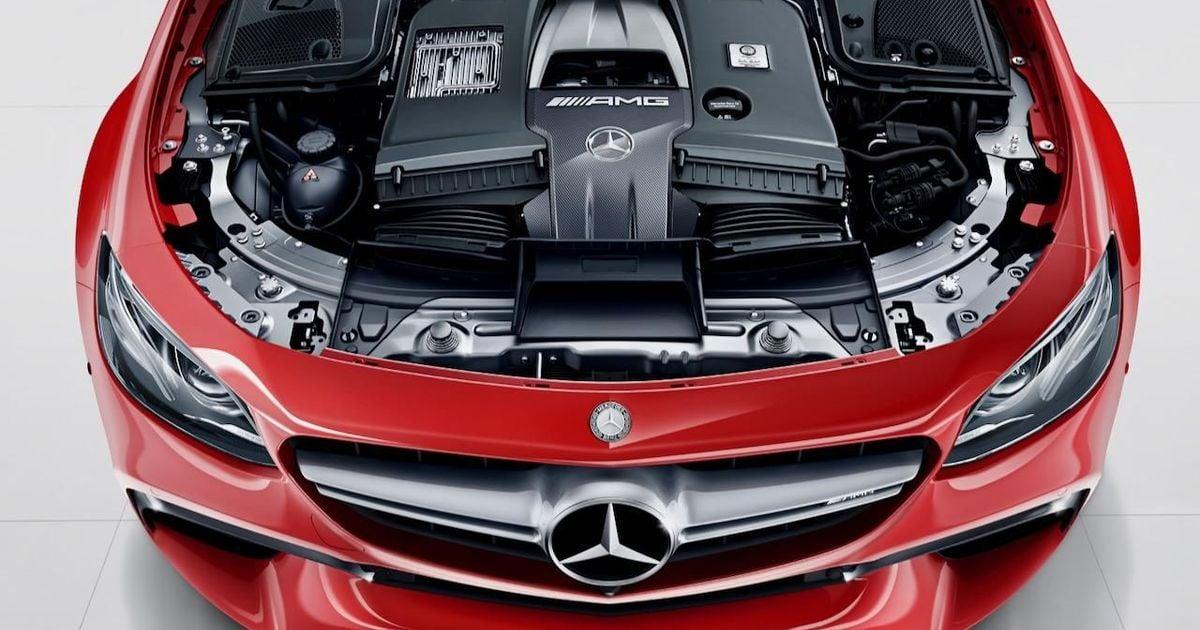
The refreshed V8 will land in AMG SUVs first, then spread across other models. It is expected to be a tuned version of the mild-hybrid M177 Evo 4.0-litre twin-turbo V8 that has just gone into the facelifted S-Class, which arrives in Australia in S580 trim during 2027.
In that S580, the engine uses a flat-plane crankshaft and 48-volt mild hybrid tech to clear Euro 7 rules, and produces 395kW and 750Nm.
Why AMG is U-turning on its four-cylinder hybrid strategy
The blunt answer is that buyers walked. AMG bet its mid-size sports sedan, the C63, on a 2.0-litre four-cylinder plug-in hybrid in 2024 and watched sales fall off a cliff. Schiebe himself admits some loyal customers "struggle a bit with the concept" and that AMG "lost some customers who are just into V8s."
That is not corporate fluff. It is a manufacturer publicly conceding it misread its own customer base. Anyone walking into a Mercedes-Benz dealership over the next two years should treat that admission as leverage. AMG knows the four-cylinder car is the problem, and that softens its negotiating position on current PHEV stock that needs clearing before the V8 cars arrive.
What the new V8 means for the C63 and E63
It does not mean the C63 gets its V8 back. AMG has another plan. The facelifted C-Class will use a new mild-hybrid 3.0-litre inline turbo-petrol six, the same engine arriving in the facelifted GLC53 later this year and expected in Australian showrooms in 2026.
That puts the new C63 squarely against the twin-turbo straight-six BMW M3, which itself will offer both petrol and a new EV variant, plus the twin-turbo V6 Audi RS5 PHEV. Six-cylinder power is also tipped for the next E63, ending three generations of V8 in that nameplate.
For Carseekers readers waiting for an entry into the AMG sports sedan world, that means the next C63 and E63 will be inline-six cars, while V8 nostalgia gets reserved for the SUVs and halo coupes.
The Mythos coupe and what else gets the V8
The new V8 is also expected in the limited-run CLE63-based Mythos coupe, a small-batch flagship aimed at the kind of buyer who already knows the order book is the real product. After that, the engine spreads to whichever AMG models can justify it on weight and packaging grounds.
Schiebe was openly cautious about keeping the current four-cylinder P3 hybrid powertrain in the GT coupe and SL roadster, calling out two specific problems: the battery in the boot compromises packaging, and the weight kills the lightweight sports car brief.
"If you want to have a lightweight car, sometimes it's best to have a V8-only car," he said. That is essentially an internal product memo printed in a magazine. Read between the lines and there is a good chance the next GT or SL drops the four-cylinder hybrid entirely.
EVs are not being abandoned, but the priority has shifted
AMG is not pretending EVs are dead. The brand's first dedicated electric model is still on the cards, a GT 4-Door Coupe previewed by the wild four-motor GT XX concept, with AMG variants of the electric GLC SUV due in Australia in the second half of 2026 and the electric C-Class sedan in 2027.
But the messaging has flipped. Where AMG was previously selling buyers a hybrid-or-electric future, it is now selling two distinct tracks. A V8 track for buyers who want noise, response and the traditional AMG character, and an EV track for buyers chasing acceleration numbers and silent running.
That split is significant for buyers because it kills off the awkward middle ground. The PHEV V8 GT 63 S E Performance and the four-cylinder C63 sit between the two pillars. Both face question marks over their long-term place in the lineup.
Dealer behaviour to watch over the next 18 months
The practical reality for Australian buyers is that AMG's current crop of four-cylinder PHEV and V8 plug-in hybrid cars now sits in an awkward transition zone. Dealers know V8 buyers will wait for the new engine. That stock pressure is leverage.
If you are looking at a current C63 PHEV, expect aggressive discounting through 2026 as the inline-six replacement nears. If you are looking at the GT 63 S E Performance or SL 63, the same logic applies, especially once Schiebe's hints about the P3 hybrid leaving those cars become clearer.
On the SUV side, the GLC63, GLE63 and GLS63 V8s are the immediate beneficiaries. Whichever variant gets the new V8 first is the one to watch, because it will set the tone for AMG pricing on the rest of the V8 rollout.
What this signals about the wider performance market
This is not a one-off. Porsche, Audi and Mercedes-Benz have all quietly walked back hard EV-only targets in the past 12 months. Cadillac's Blackwing program continues with V8. Even Formula 1 is reportedly heading back to V8 power by the end of the decade.
The combustion engine is not having a revival because the engineering case changed. It is having a revival because buyers refused to follow the manufacturers' timeline. That is a powerful lesson for anyone trying to read where the new car market is genuinely going, rather than where the marketing slides claim it is going.
For Australian performance buyers, the message is simple. The V8 AMG is back on the menu, the inline-six is the replacement for the four-cylinder C63 detour, and the next 18 months will reset AMG pricing across most of its range. Plan your purchase around that timeline, not the current showroom stock.
Pricing context for Australian buyers
AMG's V8 cars have historically commanded a substantial premium over six-cylinder Mercedes-Benz equivalents. The current GLE63 S sits around the $250,000 mark before on-roads. The GLS63 climbs into the $280,000 range. Expect those numbers to firm rather than fall under the new engine, because AMG is positioning the V8 as a premium choice rather than a default.
The inline-six C63 successor should land closer to the current C43 pricing, in the $150,000 to $170,000 bracket, with the V8 reserved for halo SUVs and limited-edition coupes.
For buyers genuinely chasing V8 noise and character, this is the most decisive AMG news in five years. For buyers chasing acceleration figures alone, the new electric models will do the job and the V8 premium will not be worth paying.
How the M177 Evo V8 compares to the engine it replaces
The M177 Evo, currently fitted to the facelifted S580, represents the cleanest evolution of AMG's twin-turbo 4.0-litre V8. Compared to the older M177 in the previous S63 and GT63, the Evo version uses a flat-plane crankshaft for sharper response and lighter rotational mass, plus the 48-volt mild-hybrid system that bridges the gap to full hybridisation without the packaging compromises of a PHEV setup.
For enthusiasts, the flat-plane crank is significant. It changes the firing order and the harmonic character of the engine, giving it a sharper, higher-revving feel than the traditional cross-plane V8 that defined Mercedes-Benz performance cars for two decades. The 395kW S580 output is just the baseline. AMG will tune this engine well above that figure for the GLE63 and GLS63 successors, with outputs comfortably above 450kW likely.
What this means for the GT 63 S E Performance and SL 63
AMG's current four-cylinder PHEV powertrain, internally codenamed P3 hybrid, powers the GT 4-Door, GT coupe and SL roadster. Schiebe was careful not to commit to its continued use beyond the C63. He said the brand is still undecided on whether the P3 hybrid stays in those cars, because new V8 outputs may simply be too compelling to ignore.
Decoded, that is essentially a confirmation that the next GT and SL will likely move to V8 power. The packaging issue Schiebe raised, with the battery in the boot, is uniquely problematic in two-seat sports cars and grand tourers where boot space is already at a premium.
The wider European luxury market context
AMG is not alone in walking back its EV plans. Porsche has pushed back parts of its electric strategy and continues to support the petrol Macan past originally announced cut-off dates. Audi has paused work on parts of its all-electric model lineup. Bentley has delayed its first EV. Even Rolls-Royce, which launched the Spectre EV with significant fanfare, has been quietly conservative about its broader EV roadmap.
The pattern is consistent. Premium European brands are taking longer EV timelines than initially promised, partly because their customers have not followed the manufacturers' lead, and partly because charging infrastructure outside major cities is not as developed as the optimistic 2021-era forecasts assumed.
For Australian buyers, this is healthy news. It means the choice between combustion and electric stays real for at least another product cycle, and it means residual values on V8 Mercedes-Benz and AMG cars are unlikely to collapse the way some pessimistic projections claimed they would.
The Mercedes-AMG V8 is not making a one-time appearance. It is being re-engineered, re-platformed and re-positioned as a deliberate choice in the lineup, alongside electric models rather than ahead of them. That is the most significant strategic shift AMG has made in five years, and it changes the answer to nearly every AMG buying decision an Australian customer will face in 2026 and 2027.
Considering finance for your next car? Loanseekers can help you explore car loan options.
The finer details
Your questions answered.
When does the new Mercedes-AMG V8 arrive in Australia?
AMG boss Michael Schiebe has confirmed the new V8 will launch in SUVs before the end of 2026. Australian arrival will follow the global rollout, with the facelifted S580 due locally in 2027 already using the same M177 Evo engine family.
Which AMG models will get the new V8 engine?
The V8 will go into AMG SUVs first, then expand to other models including the limited-edition CLE63-based Mythos coupe. The C63 and next E63 will not return to V8 power, both moving to inline-six engines instead.
Will the AMG C63 get its V8 back?
No. The facelifted C63 will run a mild-hybrid 3.0-litre inline turbo-petrol six, the same engine being introduced in the facelifted GLC53. Australian showrooms should see it in 2026.
How does the new AMG V8 compare to the BMW M3 and Audi RS5?
The new C63 will be a six-cylinder car, pitting it against the twin-turbo inline-six BMW M3 and the V6 Audi RS5 PHEV. The V8 stays reserved for AMG SUVs and halo coupes, not the C-Class sports sedan.
Is Mercedes-AMG abandoning electric cars?
No. AMG is still launching an electric GT 4-Door Coupe previewed by the GT XX concept, plus AMG variants of the electric GLC SUV in 2026 and the electric C-Class in 2027. The brand is now running two distinct lineups: V8 for traditional buyers, EV for performance buyers chasing acceleration numbers.
Should I buy a current AMG PHEV or wait for the new V8?
If you want a V8, wait. Current four-cylinder PHEV models will see steep dealer discounts through 2026 as buyers hold out for the new engine. If you are open to the inline-six C63 or electric models, current stock pricing should soften as the transition begins.