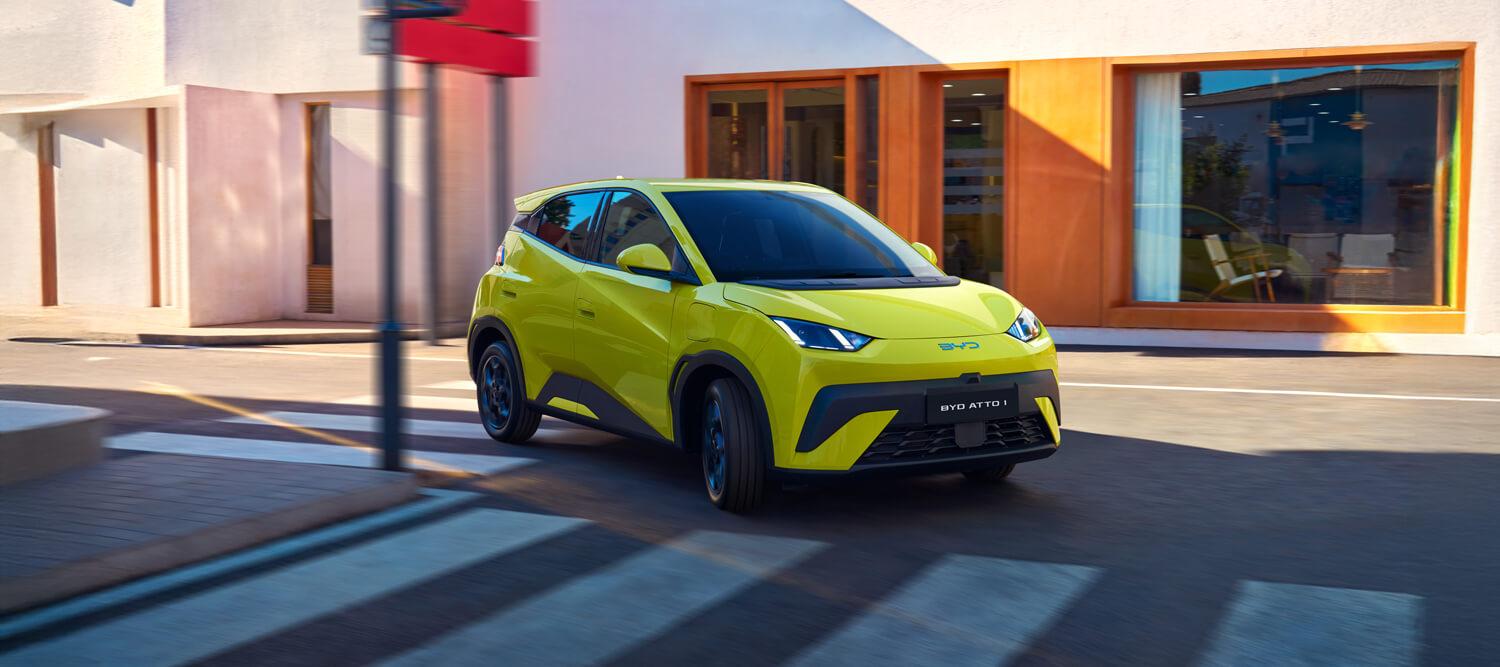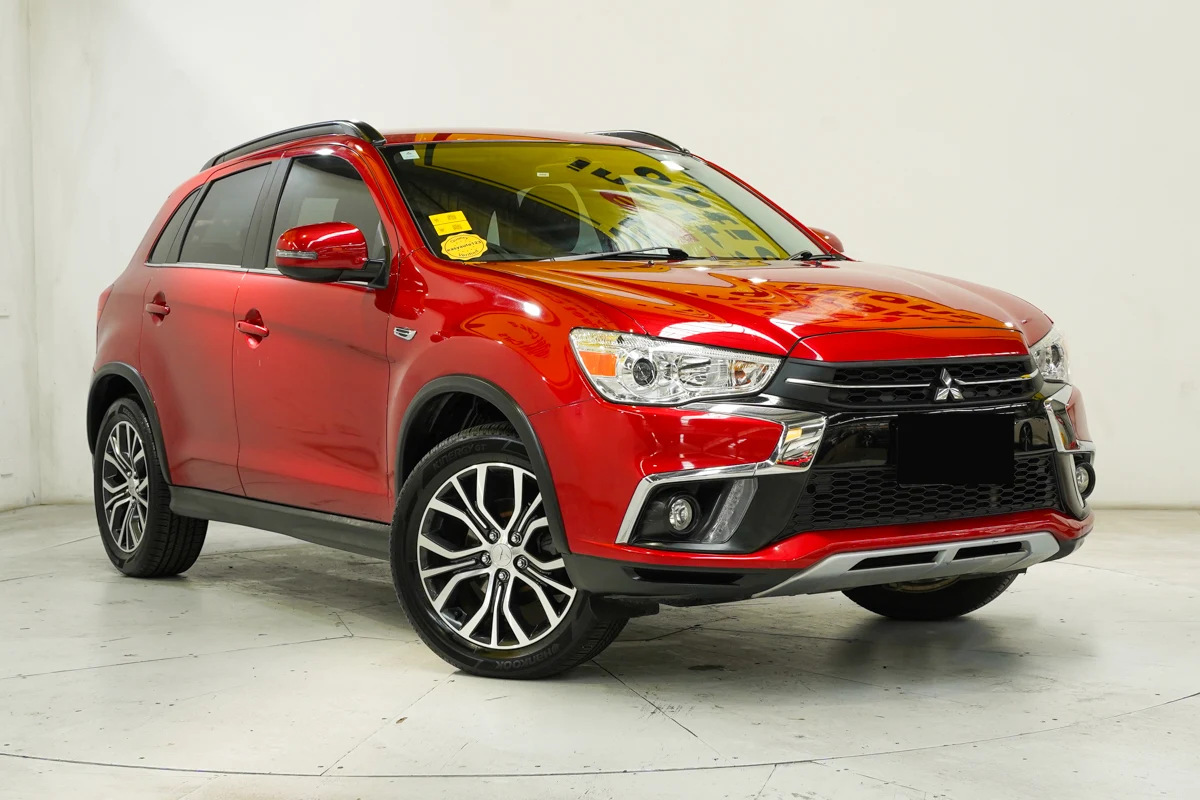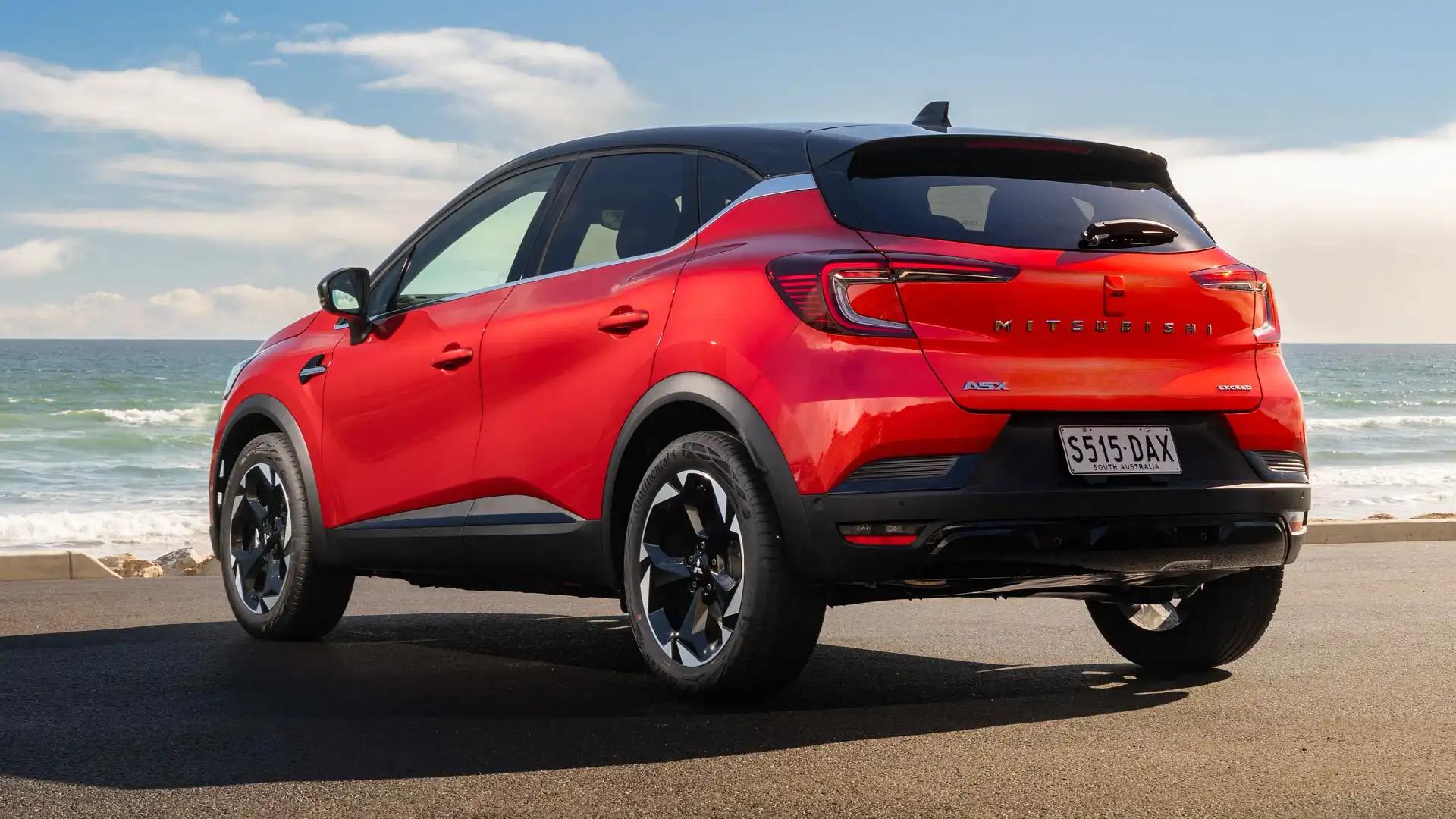

After the better part of two decades, an all-new Mitsubishi ASX developed in-house by the Japanese giant looks to be on the way for 2028, finally replacing the rebadged Renault Captur currently sold in Australia. According to Nikkei Asia, Mitsubishi 'plans to begin producing and selling hybrid vehicles in Japan' with two cars 'developed based on the Outlander SUV and the RVR [ASX] compact SUV'.
That report, if accurate, is one of the most consequential pieces of Mitsubishi product news in years. The current ASX has been a sales disaster in Australia, down 88.6 per cent year-to-date after a $13,000 price increase made the rebadged Captur uncompetitive. A genuinely new, in-house-developed ASX with hybrid power would reset Mitsubishi's small SUV proposition in Australia for the first time since 2010.
Here is what we know, what we can reasonably infer, and what it means for buyers thinking about an ASX, Outlander or alternative right now.
What Nikkei Asia is reporting
The Nikkei report claims Mitsubishi is preparing to begin Japanese production of two hybrid vehicles, both developed based on the current Outlander and the RVR (the Japanese name for the ASX). The two new vehicles would launch around 2028, complementing the current Outlander's choice of pure petrol and plug-in hybrid power.
While Australia switched to the Renault-based ASX last year, Japanese customers continued to receive the original Mitsubishi-built ASX until very recently, with that car having been on sale since 2009 on underpinnings that date back to 2006. That is more than twice the typical lifespan of a new car. The Japanese ASX is finally being retired, and the Nikkei report points to genuinely new-generation Mitsubishi-engineered replacements rather than another rebadge.
Why a hybrid Renault-based ASX is unlikely
A hybrid version of the Renault-based ASX is already sold in Europe alongside a plug-in hybrid, both using the French brand's technology. On the surface, the simplest path to an ASX hybrid in Australia would be to import the European hybrid Captur with Mitsubishi badging.
The cost and complexity of introducing the European ASX (itself based on the seven-year-old Captur) to a Mitsubishi factory in Japan makes this option highly unlikely. The Nikkei report specifically describes Japanese production at Mitsubishi facilities. Given the age of the original ASX and the time required to develop a brand-new platform, the most plausible interpretation is that there is an all-new, Mitsubishi-developed model in the works.
The Outlander angle
The Nikkei report claims the Outlander will also receive hybrid technology, following exclusive reporting by Drive last year. The current Outlander has been in showrooms for five years and is past the middle of its life, having been updated last year. The 2028 date for hybrid technology suggests the new tech is for a new-generation car, not a mid-life update.
A report from Automotive News last year claimed the next Outlander is due in 2027 on underpinnings developed by Mitsubishi rather than the Nissan-sourced platform of today's model. If accurate, the new platform may be shared between the next-generation Outlander and ASX to reduce development costs and simplify production.
That shared-platform strategy makes sense. Mitsubishi cannot afford to develop two separate new platforms simultaneously, particularly while the brand is also working on its joint EV programme with Foxtron. Sharing structural components between Outlander and ASX is the cost-effective path to a credible hybrid range.
What about the XForce?
In developing markets such as South-East Asia, Mitsubishi already sells the XForce, a small SUV sized similarly to the original ASX and available with traditional hybrid power developed from the plug-in hybrid system in the current Outlander. It would be a logical ASX successor for Australian showrooms, but Mitsubishi has been clear it cannot meet local safety regulations as currently engineered.
Mitsubishi global vice president of product development, Hiroshi Nagaoka, told media in 2023: 'Some of the equipment [in the XForce], electrical equipment, [electrical] architecture and so on, it's not enough to comply with Australian regulations. If we want to comply with Australian regulations or other countries like the United States or Europe, we need to significantly modify those components or even the architecture itself.'
That work is reportedly happening as part of the next-generation development cycle. 'We are considering this, at least for the next generation, how to merge all of the world configurations into the one package,' Nagaoka said. 'And then if we can utilise [that] kind of consolidation, we can deliver anywhere in the world.'
In other words, Mitsubishi is engineering its next-generation cars for global markets including Australia, rather than developing region-specific variants. That is the right strategic direction, but it explains why we have to wait until 2028.
What this means for the in-market ASX
The current Renault-based ASX is in serious trouble in Australia. Sales are down 88.6 per cent year-to-date and Mitsubishi has cut $5000 off the LS drive-away price for EOFY in an attempt to clear stock. The brand is using fuel cards, complimentary servicing and PHEV cash bonuses across its broader range to keep volumes up while the ASX itself struggles.
For buyers, the maths is straightforward. If you want a small SUV right now and the current ASX LS at $34,990 drive-away meets your needs, the EOFY deal is the right price. If you can wait, the all-new Mitsubishi-developed ASX with hybrid power is likely the more compelling vehicle, but you are looking at a 2028 arrival at the earliest.
For buyers cross-shopping Toyota Corolla Cross Hybrid, Hyundai Kona Hybrid, MG ZS Hybrid+ and Chery Tiggo 4 Hybrid right now, the Mitsubishi ASX is the wrong choice on hybrid efficiency. The current European-built ASX is petrol-only in Australian specification. None of the hybrid options are available locally.
How the next-generation ASX could be positioned
Mitsubishi has not confirmed plans for a next-generation, in-house ASX, but Australia is likely to be near the front of the queue given the popularity of the original here over its lifetime. Mitsubishi sold tens of thousands of the original ASX in Australia, and the brand's local arm has been vocal about wanting more competitive product to fight back against the Chinese small SUVs that have eroded its market share.
If Mitsubishi can deliver a hybrid ASX with shared underpinnings to the next Outlander, the brand has a credible path back to relevance in the small SUV segment. Pricing will need to land between the Toyota Corolla Cross Hybrid (around $35,000 to $45,000 plus on-roads) and the Hyundai Kona Hybrid (around $36,000 to $45,000 plus on-roads). Above that range, the new ASX will struggle to attract the buyers it lost.
The plug-in hybrid carryover
The ASX and Outlander hybrids are likely to draw on Mitsubishi's experience in plug-in hybrid technology, recently updated and rated to deliver a 100km electric-only driving range in the latest Outlander update. Mitsubishi's PHEV system is one of the most mature in the industry, with more than a decade of refinement and the longest electric range in the mainstream PHEV SUV segment.
That heritage means the new ASX hybrid (which is likely to be a non-plug-in 'self-charging' hybrid like the Toyota system, rather than a PHEV) will be developed on top of proven hybrid hardware. The Outlander is expected to retain its plug-in hybrid option alongside the new self-charging hybrid, giving buyers a choice based on charging infrastructure access.
Mitsubishi's broader strategy
Mitsubishi has previously sold 'plug-less' hybrid versions of its kei cars in Japan, but the new ASX and Outlander would represent its first full-sized hybrid cars manufactured in its Japanese factories. The Japanese giant aims for hybrid, plug-in hybrid and electric cars to account for 50 per cent of its global sales by 2030.
That is an ambitious target. Mitsubishi is currently a small player in the hybrid space compared to Toyota, Honda or Hyundai. To hit 50 per cent electrified by 2030, the brand needs the new ASX and Outlander hybrids to land well, and it needs the joint Foxtron-built electric small car programme to deliver volume in markets like Australia and Europe.
For Carseekers buyers tracking Mitsubishi product news, the 2028 ASX hybrid is the most consequential change since the brand exited Lancer and Pajero from Australia. Whether it can claw back the buyers Mitsubishi has lost to Toyota and the Chinese brands is a different question, but at least the brand will finally have a credible product to compete with.
What buyers should do right now
If you need a small SUV in 2026 and Mitsubishi is on your shortlist, the current EOFY ASX deal is the right play. There is no benefit to waiting if the current car suits your needs.
If you want a hybrid small SUV in 2026, look at the Toyota Corolla Cross Hybrid, Hyundai Kona Hybrid or MG ZS Hybrid+ instead. Mitsubishi will not have a hybrid ASX or Outlander before 2028, regardless of how the Nikkei report shakes out.
If you can wait until 2028 for a properly engineered Mitsubishi-developed ASX hybrid with shared underpinnings to the next Outlander, the new car will likely be a meaningfully better proposition than the current Renault-based model. But two and a half years is a long time to wait for a small SUV when good alternatives are available now.
Considering finance for your next car? Loanseekers can help you explore car loan options.
The finer details
Your questions answered.
When will the next-generation Mitsubishi ASX arrive in Australia?
According to a Nikkei Asia report, the all-new Mitsubishi ASX with hybrid power is due to begin Japanese production around 2028, with Australian launch likely soon after. The current Renault-based ASX will continue in market until then, but it has been struggling badly with sales down 88.6 per cent year-to-date.
Will the new Mitsubishi ASX use Renault platforms again?
Reports suggest the new ASX will be developed in-house by Mitsubishi rather than being another rebadged Renault Captur. The platform may be shared with the next-generation Outlander, also reportedly due in 2027 on Mitsubishi-designed underpinnings rather than the current Nissan-sourced platform.
Is Mitsubishi bringing the XForce small SUV to Australia?
Not in its current form. The XForce is sold in South-East Asia with hybrid power but Mitsubishi global product chief Hiroshi Nagaoka has confirmed its electrical architecture cannot meet Australian safety regulations. The next-generation Mitsubishi cars are being engineered for global markets including Australia from the start.
What hybrid small SUVs are available in Australia right now?
If you want a hybrid small SUV in 2026, the realistic options are the Toyota Corolla Cross Hybrid, Hyundai Kona Hybrid, MG ZS Hybrid+ and Chery Tiggo 4 Hybrid. The current Mitsubishi ASX in Australia is petrol-only, and the European hybrid version is not imported. Mitsubishi will not have a hybrid ASX before 2028.
Is the current Mitsubishi ASX worth buying right now?
Mitsubishi has cut $5000 off the ASX LS drive-away price for EOFY 2026, taking it to $34,990 drive-away. If the current car meets your needs, the EOFY deal is the right time to buy. If you want hybrid efficiency or a more modern small SUV, look at the Toyota, Hyundai, MG or Chery alternatives instead.
What about the Mitsubishi Outlander hybrid?
The next-generation Outlander is reportedly due in 2027 with new Mitsubishi-developed underpinnings, and a self-charging hybrid version is expected to follow alongside the existing plug-in hybrid option. The current Outlander remains in showrooms with petrol and PHEV powertrains, with EOFY incentives currently available on stock.