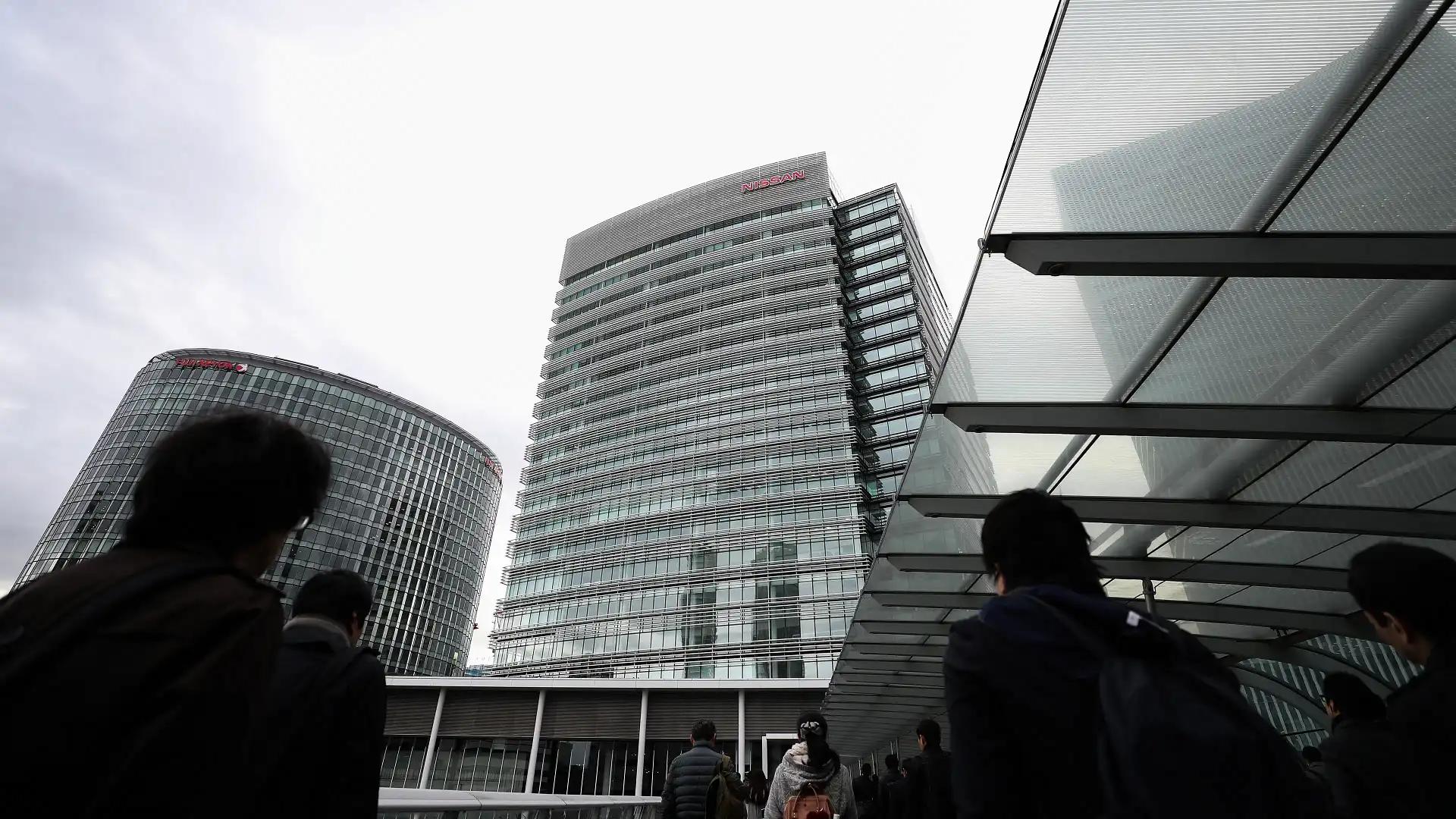
Nissan has just confirmed a 533 billion yen loss for the last financial year, equivalent to AUD$4.6 billion. The Japanese giant has shuttered seven manufacturing sites globally and is on track to cut roughly 20,000 jobs by 2027.
It is not a small story for Australia. Nissan Patrol, Nissan Navara, Nissan X-Trail and Nissan Leaf buyers are all in the same product family that is now being rebuilt under a recovery plan called Re:Nissan. The Y63 Patrol is due in Australia later this year and the new Navara, twinned with the Mitsubishi Triton, has just landed.
For anyone shopping a Carseekers deal on a Nissan right now, this is the moment to understand what is changing behind the scenes and how it affects pricing leverage, stock availability and long-term ownership confidence.
The numbers behind the loss
Nissan's 533 billion yen loss is technically an improvement on the previous year, when the brand bled 670.9 billion yen (about AUD$5.8 billion). That is the second consecutive year of red ink. CEO Ivan Espinosa is now predicting the books will return to the black with a projected 20 billion yen net income (about AUD$175 million) in the 2026 fiscal year.
The path back to profit is built on cost cutting rather than sales growth. Espinosa has confirmed Nissan delivered 200 billion yen in fixed-cost savings already, against a target of 500 billion yen across fixed and variable costs. That number is being driven by the seven factory closures and the 20,000-job reduction.
US tariffs alone cost Nissan 286 billion yen (about AUD$2.5 billion) in the last financial year. Unlike Toyota, Nissan has not flagged the Middle East conflict as a material risk in its 2027 forecasting, which suggests its exposure is smaller or its hedging is different.
Sales are still falling but predicted to recover
Nissan sold 3.15 million vehicles globally in 2025, down 5.8 per cent on the prior year. The brand is forecasting 3.3 million units in the 2027 Japanese financial year, which would be a meaningful turnaround.
In Australia the picture is uglier. Nissan was the 12th most-popular brand last year, with 35,511 sales. That is a 21.5 per cent drop on the prior year, considerably worse than the global decline. The Australian operation is leaning heavily on the upcoming Y63 Patrol and the new-generation Navara to reverse the trend.
The Australian manufacturing footprint
Nissan maintains a small but strategically important manufacturing operation in Australia: the Nissan Casting Australia Plant in Melbourne's south-east. The plant produces about 1.2 million components annually, which are exported globally and used in models including the X-Trail, Navara, Leaf and Qashqai.
The casting plant employs 193 workers running 24-hour operations up to six days a week. Its future was secured (temporarily) at this time last year, on the basis that it produces parts for the new Y63 Patrol and for next-generation electric-car components.
The word temporarily matters. With seven factories already closed globally and more cost-cutting still to come, the Melbourne plant's long-term position is not guaranteed beyond the current Y63 product cycle. That is not a reason to panic, but it is context for what kind of company Nissan will be by 2028.
What it means for new Nissan buyers in Australia
Three practical considerations for anyone shopping a Nissan right now.
First, the brand needs to move metal. With sales down 21.5 per cent year on year locally, Nissan dealers are under genuine commercial pressure. That translates into negotiation room, particularly on current-generation Nissan X-Trail stock and on the Nissan Qashqai, which has been one of the brand's quieter performers in 2026.
Second, the Y63 Patrol launch later this year is critical to the brand's Australian recovery. Pre-order interest is high, but Nissan will need to convert that into actual delivered sales to satisfy head office. Buyers placing a Y63 Patrol order should not expect dramatic discounts, but should expect bundled add-ons (towing packs, fuel cards, service packages) to be offered more aggressively than they were on the previous Y62.
Third, the new Nissan Navara, which is twinned with the Mitsubishi Triton and built on the same platform, gives Nissan dealers a more competitive ute product than they have had in years. It also means the Navara is sharing engineering economics with another brand, which protects its long-term viability inside Nissan's recovering portfolio.
Parts, warranty and service confidence
The single biggest question buyers ask when a manufacturer reports a multi-billion-dollar loss is whether parts supply and warranty coverage are at risk. The short answer for Nissan in Australia is no, not in any practical sense.
Nissan Australia continues to operate a full dealer network, parts distribution and warranty support. Re:Nissan is an internal restructuring program focused on factory rationalisation in Japan, Mexico, Thailand and the US, not a market exit anywhere. Australian service operations are unaffected.
The one consideration that matters longer-term is that with fewer factories and a smaller global production footprint, parts for older Nissan models could become harder to source from 2028 onward. Buyers of out-of-warranty Patrols, X-Trails and Navaras should expect parts costs to drift up, particularly for collision-repair items.
How this compares to Toyota
Nissan's loss stands in sharp contrast to Toyota's forecast 3.0 trillion yen operating profit (about AUD$26.2 billion) for the 2027 financial year, which itself represents Toyota's third consecutive year of declining profit. Two important differences.
Toyota is still making enormous money, just less of it. Toyota's pain is margin compression. Nissan's pain is structural.
Toyota called out the Middle East conflict as a material AUD$5.8 billion hit to its 2027 forecast. Nissan made no equivalent reference, which is unusual given both companies have similar exposure to global oil and shipping pricing. Either Nissan has better hedging in place or its smaller footprint reduces the absolute dollar impact.
For Australian buyers comparing a Toyota RAV4 Hybrid against a Nissan X-Trail e-Power, the financial health of each parent matters less than the product itself. But for confidence in long-term parts supply and dealer network stability, Toyota remains the safer bet.
The product roadmap that has to deliver
Nissan's recovery depends on three Australian models doing real work. The new Navara has just launched and shares its bones with the Mitsubishi Triton, giving it instant credibility against the Ford Ranger, Toyota HiLux and Kia Tasman. The Y63 Patrol arrives later this year as the long-overdue replacement for a model that had become heroic but ancient. And the X-Trail e-Power has just been confirmed to rival the Toyota RAV4 Hybrid head-on.
If those three land well, Nissan Australia recovers. If any one of them stumbles, the local operation's negotiating position with Yokohama gets weaker.
Bottom line
A $4.6 billion loss is sobering. Seven factory closures and 20,000 job cuts are real consequences. But Nissan is not Saab, and there is no realistic scenario where the brand exits Australia in the near term.
For buyers, the practical takeaway is straightforward. The brand is under commercial pressure, which means showroom negotiation is easier than usual. The upcoming product is genuinely competitive. Long-term ownership of an X-Trail, Patrol or Navara remains supported by a full dealer network. The Carseekers buyer tools let you compare current Nissan dealer offers across the range alongside the Toyota, Mazda and Mitsubishi equivalents that share the segment.
Considering finance for your next car? Loanseekers can help you explore car loan options.
The finer details
Your questions answered.
Is Nissan in financial trouble in Australia?
Nissan Australia is under sales pressure with a 21.5 per cent drop in 2025 sales, but the local operation has a full dealer and warranty network and is not at risk of exit. The $4.6 billion global loss has not affected day-to-day Australian operations. The Melbourne casting plant remains open through the current Y63 Patrol product cycle.
Will Nissan honour my warranty if I buy now?
Yes. Nissan Australia's warranty obligations are completely unaffected by the global restructuring. The Re:Nissan recovery plan is focused on closing factories in Japan, Mexico, Thailand and the US, not on changing customer-facing operations in markets like Australia.
When does the new Y63 Nissan Patrol arrive in Australia?
The new-generation Y63 Patrol is expected to arrive in Australian showrooms by late 2026. Pre-order interest is strong and the model is critical to Nissan's local sales recovery, so dealers are unlikely to discount heavily but should be receptive to bundled service and accessory deals.
Is now a good time to buy a Nissan X-Trail?
Yes. With Nissan dealers under sales pressure and the brand needing to clear stock ahead of the Y63 Patrol launch, current X-Trail and Qashqai negotiation room is better than usual. Push hard on drive-away pricing and bundled accessories.
How does the new Nissan Navara compare to the Mitsubishi Triton?
The new Navara is built on the same platform as the Mitsubishi Triton and shares much of its engineering. That partnership protects Nissan's ute investment by sharing development costs and gives the Navara genuine competitive credibility against the Ford Ranger and Toyota HiLux.
Will Nissan parts get more expensive after the restructuring?
Parts pricing for current-generation Nissan models is unaffected in the short term. Longer-term, with fewer factories and a smaller global production footprint from 2028 onward, parts costs for older Nissan models could drift up, particularly for collision-repair items. New car buyers within warranty are not affected.