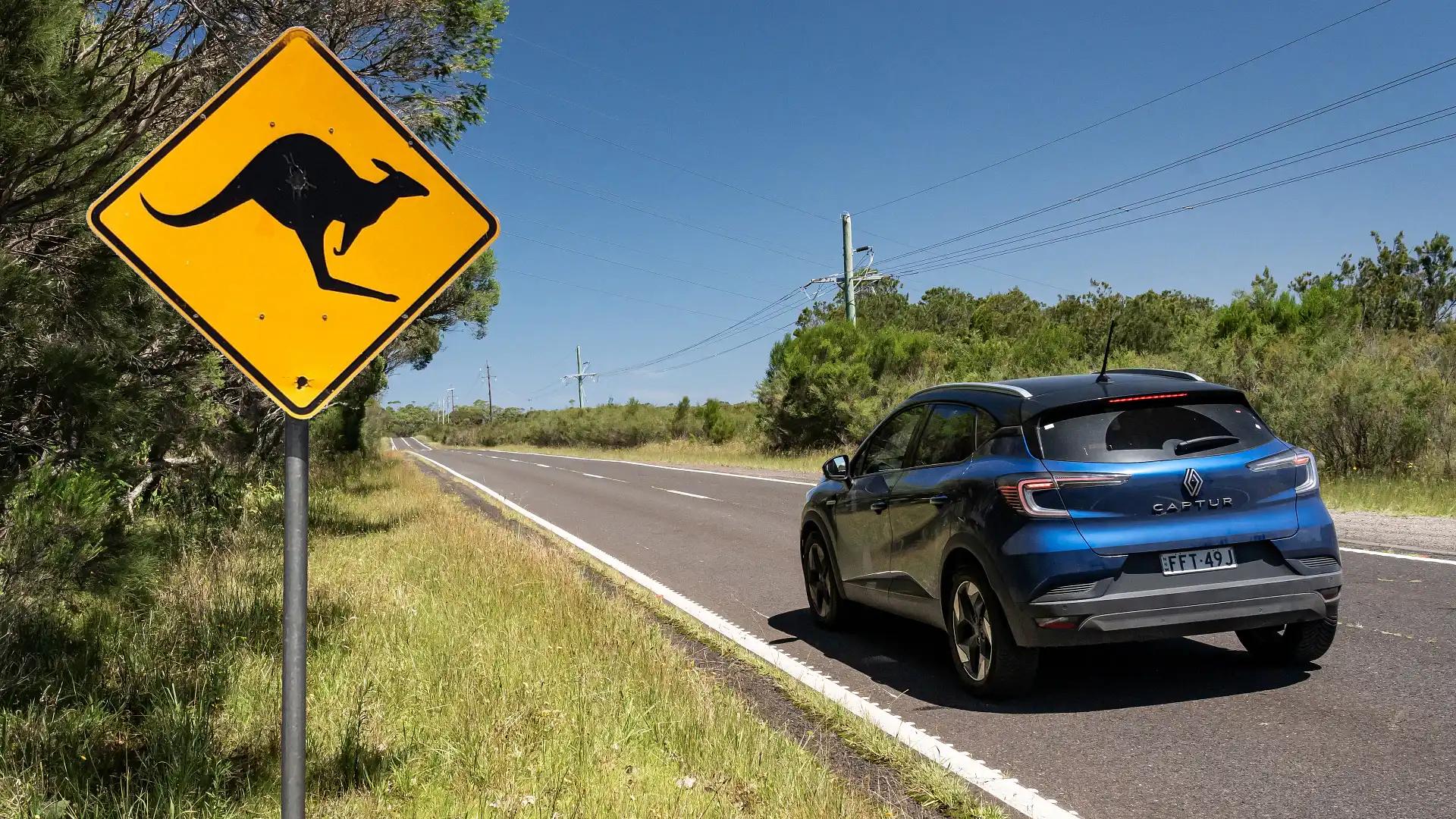

Renault Australia has officially ruled out a local return for the Captur small SUV, ending months of speculation after the model went on hiatus in late 2024. The decision was confirmed by Renault Australia general manager Glen Sealey, who said the brand simply does not have room for it between the budget Duster and the incoming Symbioz hybrid.
That will frustrate buyers who had been waiting for the updated Captur after Renault publicly shipped a test car to Australia in early 2025. The trail went cold as the launch date approached, and the brand has now confirmed why.
The Captur is gone, but not because of Mitsubishi
The obvious assumption is that Mitsubishi launching a rebadged Captur as the new ASX killed any business case for Renault to sell the original. The ASX is built in the same Spanish factory, backed by a bigger dealer network and a longer warranty, and slots into a price band the Captur would have wanted.
Sealey was blunt that the Mitsubishi was not the deciding factor. He told Drive the decision came down to Renault's own range strategy, not a fear of competing with the ASX.
The French brand's pitch is that its range now spans 32,000 to 66,000 dollars across different sizes and drivetrains, with Duster anchoring the bottom and the Megane E-Tech sitting at the top. Sealey said adding another small hatch in between would have been condensed and confusing.
What replaces the Captur in showrooms
The practical answer for buyers is the Symbioz, which is essentially a stretched Captur with hybrid power, more boot space and an updated cabin. It will arrive in Australia in the second half of 2026 with pricing yet to be confirmed.
At about 200mm longer bumper to bumper than the Captur, the Symbioz uses the same wheelbase, which means cabin space stays similar but the boot grows thanks to extra metal behind the rear passengers. That is a sensible compromise for buyers who liked the Captur footprint but wanted family-friendly luggage room.
Under the bonnet there are two options. The first is a 104kW 1.3-litre turbocharged four-cylinder with a seven-speed dual-clutch and 48-volt mild-hybrid assistance. The second is a full hybrid pairing a 1.8-litre petrol engine with an electric motor, similar in concept to a Toyota or Hyundai hybrid.
Only the full hybrid can run on electric power alone. The mild-hybrid uses its electric motor to assist the petrol engine and can shut it off in some conditions to save fuel.
Symbioz pricing expectations
Renault has not locked in pricing yet, but Sealey acknowledged the brand has to be aggressive. The Duster starts at $31,990 plus on-road costs and the larger Koleos opens at $39,990 plus on-road costs, which sandwiches the Symbioz into a high-30s to low-40s window.
A starting price in the high-$30,000 zone is realistic. That would be dearer than the outgoing Captur, which ran from $33,000 to $41,300 plus on-roads, but Renault will argue the Symbioz brings European design, hybrid efficiency and a fully integrated Google Built-In infotainment system to justify the bump.
Dealers will want to see how aggressively Renault prices the full hybrid against the Hyundai Kona Hybrid and Toyota Corolla Cross hybrid. Both of those have strong incumbent positions in this segment, and the Symbioz will need to undercut them on either price or specification to win share.
Why the ASX twist matters anyway
Sealey can say the ASX did not influence Renault's decision, but the showroom maths still tell a story. A buyer walking into a Mitsubishi dealership today can buy what is structurally a current Captur, backed by Mitsubishi's 10-year conditional warranty and a much larger national service network.
That would have been a hard sell against a Captur badge with a five-year warranty and a smaller dealer footprint. By pivoting to the longer Symbioz with hybrid power, Renault sidesteps a direct same-car comparison and pushes its small SUV up a price tier where Mitsubishi cannot follow without launching a new model.
It is also worth noting that the Captur remains in right-hand-drive production for other export markets. Renault has explicitly kept the door open to import it later if its strategy changes, but no timeline has been set.
Renault's wider Australian repositioning
This sits inside a broader Renault rebuild after years of sales decline. The brand has openly said it can survive on modest sales volumes here, but its new range strategy is designed to lift average transaction prices and move away from competing on bargain hatches.
That shift is visible in product. The light passenger range has been thinned out, the Trafic, Master and Kangoo commercial vans now anchor business sales, and the SUV lineup leans into Duster, Symbioz, Arkana and Megane E-Tech across a tighter pricing ladder.
More hybrid power is on the way. Sealey confirmed the 1.8-litre full hybrid debuting in the Symbioz will be considered for other models in the range as time goes on, which means buyers can expect hybrid versions of other Renaults rather than full-EV jumps.
The dealer behaviour to watch
With only a handful of Symbioz units arriving initially, expect Renault dealers to push deposits hard once pricing is announced. Buyers should hold pre-orders to driveaway figures including on-road costs, not list price, given how Renault has historically used drive-away campaigns to move slow stock.
It is also worth asking dealers about hybrid versus mild-hybrid availability. Early shipments tend to favour the higher-margin full hybrid first, with the cheaper 48-volt variant trickling in later, which can leave buyers stuck choosing between an immediate sale of the dearer car or a wait for the variant they actually want.
Finally, watch what happens to Renault's marketing line about European handling. The brand is leaning on it hard to justify Symbioz pricing, so test-drive the car back-to-back with a Kona Hybrid or Toyota Yaris Cross before agreeing the premium is worth it.
What this means for small SUV shoppers
If you wanted a city-sized small SUV with European character at around $35,000, your options have just shrunk. The Captur is out. The Mazda CX-3 remains the most refined Japanese pick. The ASX gives you Captur underneath with a Mitsubishi badge and warranty.
For buyers prepared to step up to the Symbioz, you get a larger car with hybrid efficiency at a higher price. For buyers who want true small-SUV pricing, the Duster, Hyundai Venue, Kia Stonic and Mazda CX-3 are now the realistic shortlist.
The French brand's hope is that the Symbioz wins enough new customers to justify its higher price. The risk is that buyers who would have bought a Captur in 2025 quietly walk into Mitsubishi showrooms and buy the same car with a longer warranty.
The Carseekers take
This is a clean strategic call from Renault, and we understand the logic. Trying to sell the Captur against a same-shell Mitsubishi ASX with a longer warranty would have been a brutal fight, and the Symbioz pushes the brand to a more defensible price point.
But Australian small SUV buyers lose a strong option in the process. We will be watching the Symbioz launch pricing closely. For Carseekers shoppers who liked the Captur formula, the smartest play right now is either an ASX with the long warranty or a wait for Symbioz first-deliveries pricing rather than locking in early.
Considering finance for your next car? Loanseekers can help you explore car loan options.
The finer details
Your questions answered.
Why isn't the Renault Captur coming back to Australia?
Renault Australia has confirmed there is no room in its range for the Captur between the budget Duster and the incoming Symbioz hybrid. General manager Glen Sealey said adding another small hatch would make the lineup too condensed, not that the Mitsubishi ASX rebadge killed it.
What is replacing the Renault Captur in Australia?
The Renault Symbioz arrives in the second half of 2026. It is essentially a stretched Captur with more boot space, mild-hybrid or full-hybrid power, and a Google Built-In infotainment system. Expect pricing in the high-$30,000s before on-road costs.
Is the Mitsubishi ASX really the same car as the Renault Captur?
Mechanically, largely yes. The ASX is built in the same Spanish factory as the Captur and shares much of its hardware. The differences are badging, warranty (Mitsubishi offers up to 10 years conditional), dealer network, and some local trim and pricing choices.
How much will the Renault Symbioz cost in Australia?
Renault has not confirmed pricing yet but acknowledges it has to be aggressive. Given the Duster starts at $31,990 plus on-road costs and the Koleos opens at $39,990 plus on-road costs, expect Symbioz pricing in the high-$30,000s to low-$40,000s before driveaway.
Will the Renault Symbioz be a full hybrid or mild hybrid?
Both. The entry version uses a 104kW 1.3-litre turbo with 48-volt mild-hybrid assistance and a seven-speed dual-clutch. The flagship is a full hybrid pairing a 1.8-litre petrol engine with an electric motor, capable of running on electric power alone in light driving.
Could the Captur ever come back to Australia later?
Renault has kept the door open. The Captur is still produced in right-hand drive for other markets, so a future return is possible if the range strategy changes. There is no timeline today, but if Symbioz pricing pushes too far up, a budget Captur slot could reopen.