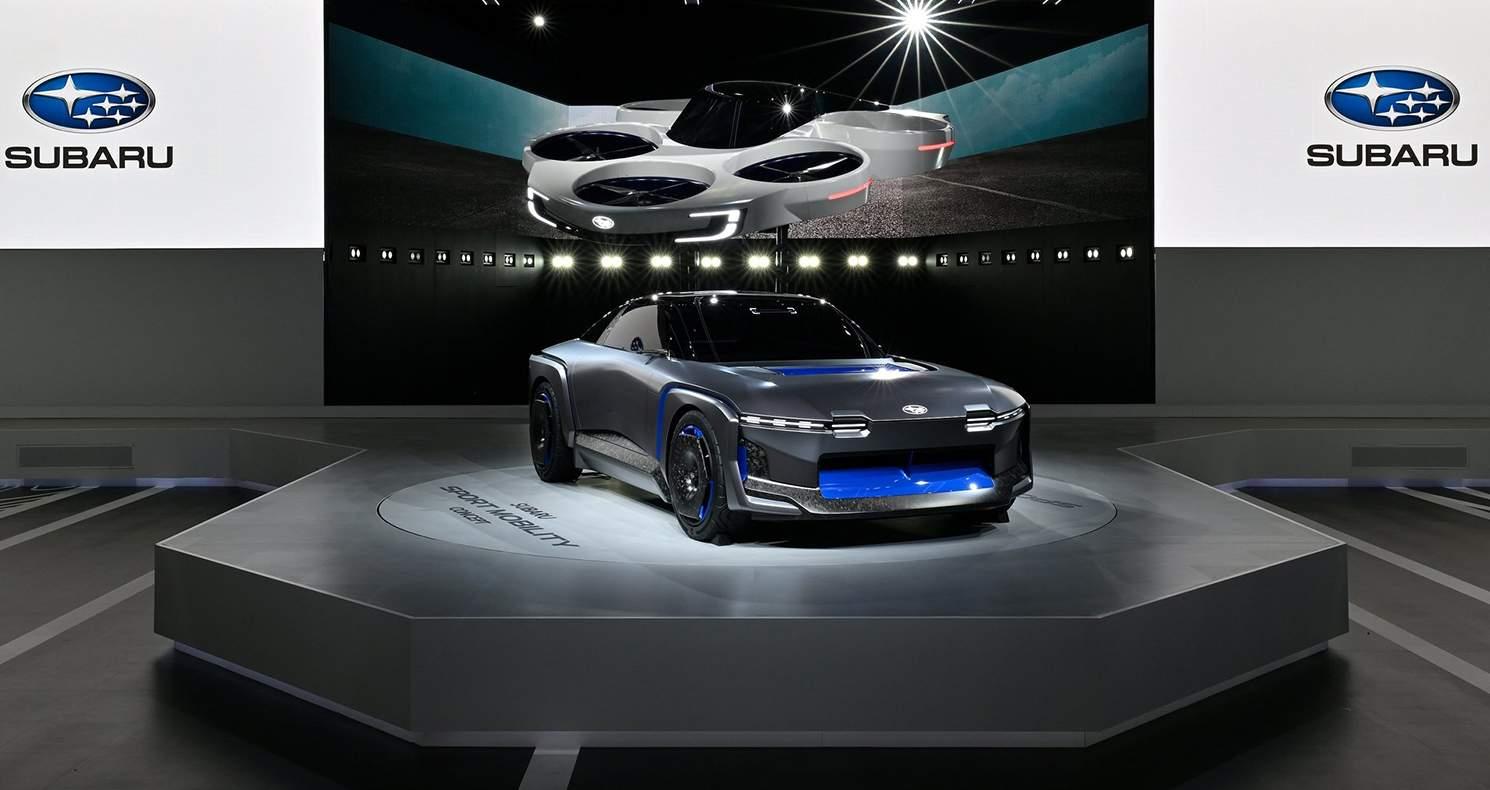

Subaru has joined Honda, Ford, GM, Mercedes-Benz, Stellantis, Volvo and Volkswagen in delaying new-generation EV programs, after a 90 per cent collapse in operating profit forced a rethink of its solo electric strategy. The all-new in-house EV, scheduled to be built at the brand's new Oizumi plant in Gunma Prefecture from 2028, is now off the near-term calendar.
Subaru president and CEO Atsushi Osaki confirmed the delay at a recent board meeting in Tokyo. He told directors that operating profit had plummeted from 405.3 billion yen ($3.58 billion) in 2025 to just 40.1 billion yen ($350 million) in the financial year ended March 31, 2026.
Tariffs and EV write-downs gutted the financials
The profit hit was not one big number. US import tariffs alone wiped out 226.9 billion yen, around $2 billion, from earnings, with more than 70 per cent of Subaru's global sales coming from the United States and roughly half of those imported from Japan and subject to a 15 per cent tariff.
EV-related write-downs and impairments accounted for another 57.8 billion yen, or about $510 million, of damage. Osaki said the pace of BEV adoption in the US has slowed after recent easing of environmental policies, and that the timing of Subaru's BEV market introduction will now be pushed back.
His exact wording was telling. Subaru will continue developing the core components of BEVs, but will significantly reduce the resources allocated to that effort. That is corporate language for a strategic retreat, not a pause.
Why Subaru's solo EV plan was risky
The Oizumi plant was meant to be Subaru's declaration of independence from Toyota on EVs. The current electric range, the Solterra, Uncharted (the C-HR+ twin) and Trailseeker (a bZ4X Touring twin), is built on shared Toyota platforms and architectures.
Sharing with Toyota is cost-efficient at the build level, but it locks Subaru into Toyota's electric roadmap and styling cues. Building its own EV in-house was supposed to give Subaru a distinct product story and full margin control.
The profit drop has now exposed how risky a solo program is in a soft market. Subaru's scale on EVs alone is too small to absorb tooling and battery costs without a strong demand backdrop, and that backdrop has not arrived in either the US or Australia at the pace expected.
What this means for the Solterra and Trailseeker
The immediate practical effect is that Subaru will lean harder on its Toyota-shared electric models for the next few years. The Solterra has just had its second Australian price cut, reflecting tough competition from the Tesla Model Y, Kia EV5 and the new wave of Chinese mid-size electric SUVs.
With the in-house EV pushed back, Subaru will likely roll out facelifted Solterra, Uncharted and Trailseeker variants longer than originally planned. Expect software updates, range improvements and trim refreshes rather than a clean-sheet next generation.
That is not necessarily bad news for buyers. The current Solterra has improved noticeably on its first version, and another tranche of pricing pressure could deliver a sub-$60,000 driveaway electric Subaru by 2027. For shoppers comparing the Subaru Forester hybrid against an EV alternative, Solterra is becoming a more attractive option as discounts widen.
Outback and the bigger sales problem
Subaru also confirmed global deliveries fell 3.2 per cent to 641,000 vehicles, with the new-generation Outback missing its targets. Buyers in the US have openly said they prefer the wagon-like silhouette of earlier Outbacks to the chunkier SUV shape of the latest model.
That preference echoes the polarised reception the new Outback received in Australia. The car has been criticised in our market for trying to be both a wagon and an SUV, and the styling sits awkwardly between the two. Subaru will have to confront whether a mid-life facelift can recover the magic of the old Outback shape or whether the next generation needs a fundamental rethink.
Australian Subaru sales also tell the story. Volumes dropped 3.9 per cent in the 2025 calendar year, to 39,005 from 40,604, and are down 19.3 per cent year-to-date at the end of April 2026, with 9,737 deliveries against 12,067 a year earlier.
The Australian context
For Carseekers buyers, the practical outcome is that Subaru's local lineup will not see big EV product news for a while. The next 24 months will focus on the Forester hybrid, an updated Crosstrek, the polarising new Outback, and continuing Solterra and Trailseeker pricing pressure.
The brand has not given a new launch window for the in-house EV. Osaki said Subaru intends to finalise the exact timing after carefully monitoring market conditions, and that it is too early to specify a date. Realistically, a 2030-and-later window now looks more likely than 2028.
That opens a competitive door for Toyota, BYD, Kia and Geely products in the same family-SUV electric segment Subaru wanted to defend. Watch for Toyota bZ4X pricing campaigns and Solterra discounting to escalate as the Japanese brands try to hold ground against Chinese newcomers.
Forecast and what to watch
Subaru is forecasting sales of 940,000 vehicles in the coming financial year, up 4.9 per cent. North America is projected up 3.9 per cent to 736,000 and Japan up 4.9 per cent to 108,000.
Those forecasts assume tariff conditions stabilise. They do not factor in a major new EV launch. Australian dealers should expect tighter inventory and sharper drive-away campaigns as the brand fights to hold market share without a fresh EV halo product.
The key signal to watch is whether Subaru deepens the Toyota partnership or quietly steps further away. If the next-generation Solterra is announced as another Toyota co-developed product, that confirms the in-house EV is firmly on ice. If a separate Subaru architecture re-emerges, the Oizumi plan is back on the table.
The Carseekers take
A 90 per cent profit drop forces hard choices, and Subaru has made the rational one. Pulling back on a solo EV program while leaning on Toyota partnerships is the right call given the demand backdrop, even if it costs Subaru some brand identity in the medium term.
For Australian buyers, the upshot is more discounts on Solterra and Trailseeker, more reliance on Forester and Outback for volume, and a longer wait before a genuinely new Subaru EV appears. We will keep tracking what this means for Carseekers shoppers as the next round of Solterra drive-away pricing lands.
Considering finance for your next car? Loanseekers can help you explore car loan options.
The finer details
Your questions answered.
Why is Subaru delaying its in-house EV?
Subaru's operating profit dropped 90 per cent year-on-year, hit by US import tariffs and EV write-downs. CEO Atsushi Osaki said the company will significantly reduce resources allocated to its in-house BEV program until US market demand recovers and tariff conditions stabilise.
When was Subaru's new EV supposed to launch?
The all-new in-house EV was scheduled for production at the new Oizumi plant in Gunma Prefecture, with the plant opening in 2028. With the program now delayed indefinitely, a realistic launch window has slipped beyond 2028, possibly into the 2030s.
Will Subaru still sell EVs in Australia?
Yes. Subaru will continue to sell the Solterra, Trailseeker and Uncharted, all of which use Toyota-shared platforms. Expect facelifts and pricing campaigns on these models in the next few years rather than a clean-sheet next-generation Subaru EV.
How are Subaru sales tracking in Australia?
Australian Subaru sales fell 3.9 per cent across 2025 to 39,005 units, then dropped a further 19.3 per cent year-to-date at the end of April 2026. The new-generation Outback in particular has missed targets, with buyers preferring the older wagon-style silhouette.
What does the EV delay mean for Solterra pricing?
Expect more discounting. With no fresh in-house EV product to anchor the lineup, Subaru will lean on Solterra and Trailseeker drive-away campaigns to hold share against the Tesla Model Y, Kia EV5 and incoming Chinese SUVs in the same price band.
Is Subaru breaking away from Toyota on EVs?
Not in the short term. The Oizumi plan was Subaru's path to independence, but with that delayed, the brand is now firmly back to leaning on Toyota-shared electric models. If the next Solterra is co-developed with Toyota, that confirms the in-house EV is firmly on ice.