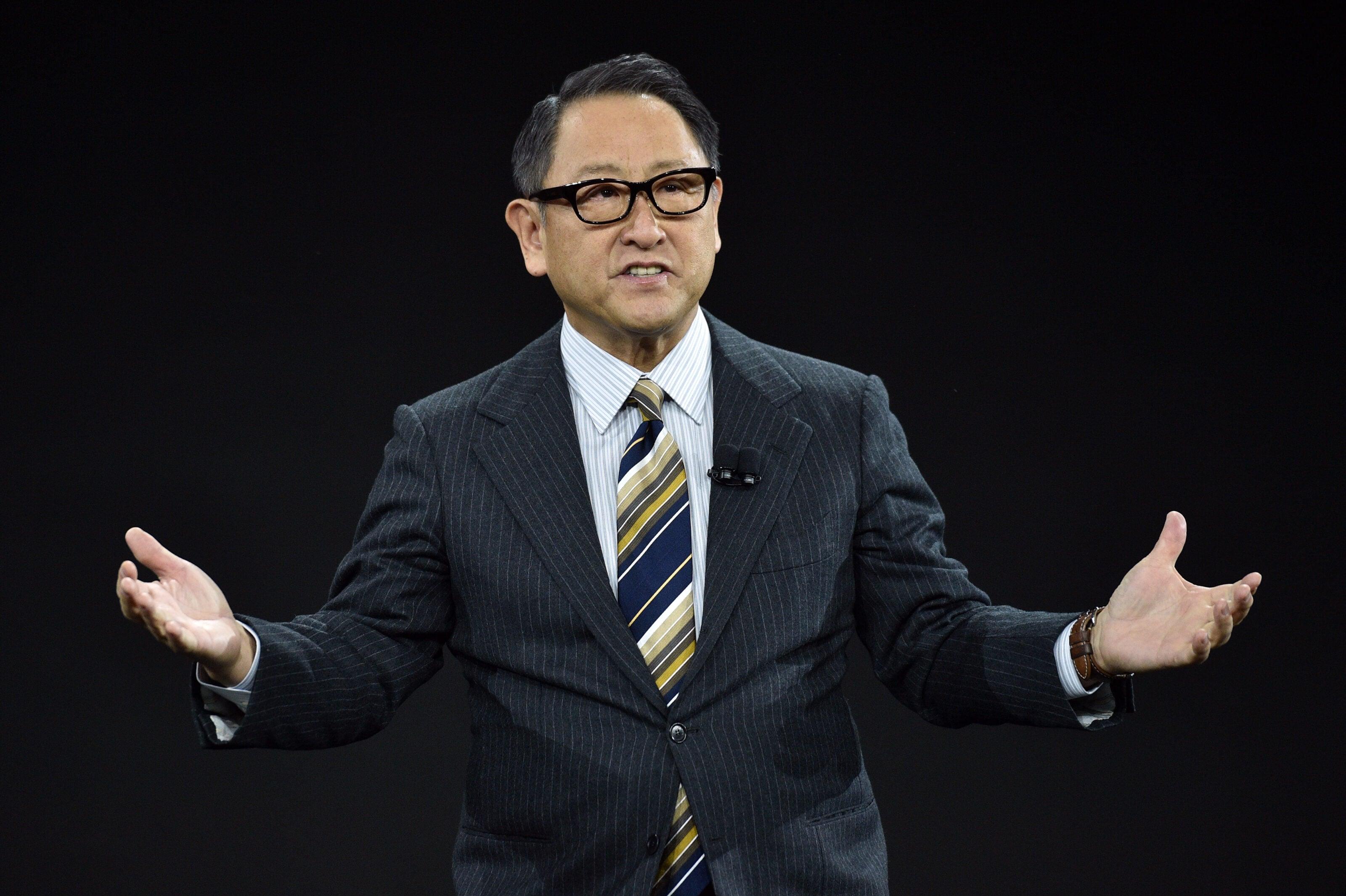

Toyota chairman Akio Toyoda has gone on record with one of the most personal statements he has made in years about the electric vehicle transition. Speaking to Carwow at Fuji Speedway, Toyoda said the industry's rush to battery-electric vehicles "was the biggest fear for me" over recent years. The former Toyota president then admitted: "I feel very alone."
The timing is notable. Toyoda's comments come as Honda has just scrapped three dedicated EV programs, GM has walked back EV production targets, and Mercedes-Benz has explicitly extended combustion lifespans. The conversation about EV pace has shifted dramatically in 12 months. Toyoda, who has been publicly cautious about a single-technology bet for years, now looks vindicated.
The full Toyoda quote
"Everybody shifting to EV, that was the biggest fear for me," Toyoda told Carwow. He went on to explain why. "Only three or four years ago, I was the only one to say I love the smell, I love the sounds, I love engines and I want to keep the jobs for engine suppliers. But it seems to me I'm the only one. I feel very alone."
The quote works on three levels. Personal, because Toyoda is genuinely a car enthusiast. Industrial, because thousands of jobs are tied to engine development and supply chains. Strategic, because Toyota's product strategy has been built around hedging across hybrid, plug-in hybrid, hydrogen and battery-electric simultaneously.
That hedging approach took plenty of criticism in 2022 and 2023 from analysts who argued Toyota was being too cautious. In 2026, the calculus has reversed. Hybrid sales are dominating most major Western markets. Toyota's deep hybrid lineup, including the Camry, RAV4, Corolla, Yaris Cross and Kluger, is winning customers other brands are losing.
Why Toyoda's comments matter for Australian buyers
Toyota Australia is one of the most successful Toyota markets globally on a per-capita basis. Local buyers consistently favour the hybrid range over pure electric alternatives. Toyoda's stated commitment to multiple powertrain technologies reads as a guarantee that Toyota Australia will continue receiving strong hybrid product allocation rather than being forced into EV-only roadmaps that don't suit local buyer preferences.
The Toyota RAV4 is already Australia's most popular medium SUV by a significant margin. The hybrid version dominates the model mix. Toyota Australia recently announced the RAV4 PHEV would launch locally earlier than initially planned, reflecting demand for electrified-but-not-fully-electric options.
If Toyoda's broader strategic line holds, the next-generation RAV4, Camry, Kluger and Prado will all retain hybrid powertrains alongside any incoming pure EV options. Australian buyers shopping in 2027 and 2028 should expect a wider, not narrower, Toyota product range.
The Gazoo Racing context
Toyoda was speaking at Fuji Speedway during a round of Japan's Super Taikyu endurance series. Toyota was running several experimental vehicles in the event, including a hydrogen-powered GR Yaris and a mid-engined GR Yaris development prototype. The mid-engined prototype is the test bed for the new MR2 mid-engine sports car.
This context matters. The Gazoo Racing program is Toyoda's personal project and remains the public face of Toyota's commitment to combustion engineering. The GR Yaris and GR Corolla have been runaway successes locally. The incoming MR2 will be the next Gazoo Racing halo product. The G20E 2.0-litre turbo engine being developed for the MR2 is also planned for the next GR Corolla.
Toyota Australia has been the most disciplined market for Gazoo Racing allocation. The 2026 GR Yaris and GR Corolla allocation remains tight, with deliberate scarcity to manage demand. Toyoda's comments suggest Australian Gazoo Racing buyers should not expect any pullback on the combustion lineup over the next product cycle.
What the industry pullback actually looks like
Toyoda's framing of being "alone" was true two years ago. It is no longer true today. Honda's announced shift to a multi-energy platform replaces three cancelled EV programs. Volkswagen, Ford, GM and Stellantis have all quietly extended combustion lifespans in major markets. Mercedes-Benz publicly acknowledged its EV-only by 2030 target is now flexible.
The industry has moved closer to Toyota's position, not further away. For Australian buyers, the practical impact is that Toyota's hybrid strategy is now the industry mainstream. Buyers no longer have to defend the choice of a Toyota hybrid to friends and family who insisted full EV was the only sensible 2026 purchase.
Should buyers wait for Toyota EVs?
Toyota Australia has been deliberately measured on pure EV launches. The bZ4X has been the lead model. Several other Toyota EVs are planned but timing has slipped multiple times. Toyoda's chairman comments don't push Toyota toward more aggressive EV launches. They reinforce the existing measured pace.
If you want a pure electric Toyota in 2026, buy a bZ4X or wait for the C-HR EV. If you want a Toyota hybrid, the existing lineup is mature, well-priced and well-supported. Toyoda's comments are essentially a public commitment that the hybrid range will continue receiving investment alongside any incremental EV expansion.
The industry has come to Toyota's position, not the other way around. Australian buyers can plan accordingly.
Carseekers tracks the Toyota Australia lineup, pricing and dealer offers across every state. Toyota remains the safest mainstream new car purchase in Australia for buyers prioritising long-term reliability and broad service network coverage.
Considering finance for your next car? Loanseekers can help you explore car loan options.
The finer details
Your questions answered.
What did Akio Toyoda say about electric vehicles?
Toyota chairman Akio Toyoda told Carwow that the industry's rush to battery-electric vehicles "was the biggest fear for me." He went on to say he feels "very alone" in defending combustion engines and the jobs tied to engine development and manufacturing.
Is Toyota slowing its EV rollout?
Toyota has been deliberately measured rather than slowing. The brand continues developing battery electric models like the bZ4X and C-HR EV, but is also investing heavily in hybrids, plug-in hybrids and hydrogen technology. Toyoda's comments reinforce this multi-technology strategy rather than signalling a pullback.
Will Toyota Australia get more EVs?
Yes, but at a deliberate pace. The bZ4X is the current lead EV in Australia. Further Toyota EVs are planned but timing has been measured. Toyota Australia has been clear that the hybrid lineup will continue expanding alongside any incremental EV launches.
Why is Toyota investing in hydrogen instead of just EVs?
Toyota argues different markets and use cases benefit from different powertrains. Hydrogen is positioned for heavy commercial transport and specific markets like Japan where hydrogen infrastructure is more developed. The strategy is to hedge across all available zero or low-emission technologies.
Is the Toyota RAV4 PHEV available in Australia?
Yes. Toyota Australia launched the RAV4 PHEV earlier than initially planned, reflecting strong local demand for plug-in hybrid SUVs. Talk to your local Toyota dealer about current stock and waiting times, which can be lengthy for hybrid and PHEV RAV4 models.
Are other car makers following Toyota's hybrid strategy?
Increasingly yes. Honda has scrapped three dedicated EV programs and moved to a multi-energy platform. Volkswagen, Ford, GM and Stellantis have all extended combustion lifespans. Mercedes-Benz has softened its EV-only by 2030 target. The industry has shifted significantly toward Toyota's hedged approach.