
BMW has whipped the covers off the Vision BMW Alpina at the Concorso d'Eleganza Villa d'Este on Lake Como, and it carries more weight for Australian luxury buyers than the average concept-car splash. This is the design template for the production Alpina range from 2027 onward, now that the tuning house is fully inside the BMW tent.
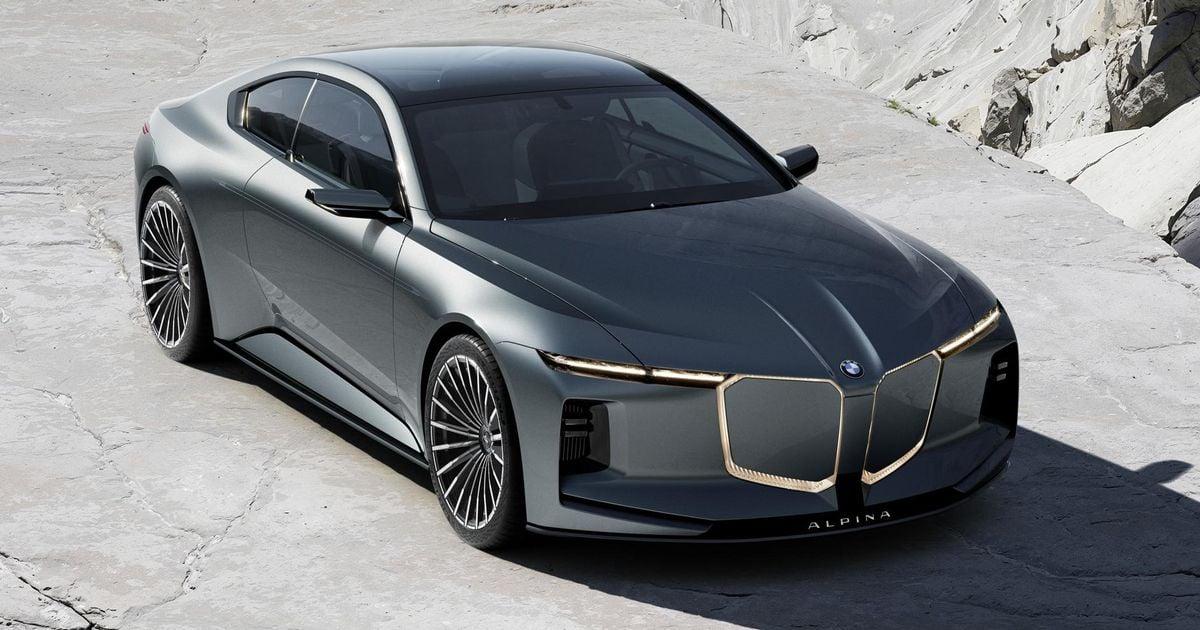
The concept itself is a 5.2-metre V8-powered grand tourer with a coupe silhouette. It almost certainly shares its underpinnings with the BMW 8 Series that went out of production in April 2026, but the styling is completely distinct. Alpina says the new car is heavily inspired by the original B7 coupe based on the E26-era 6 Series, and the design DNA is unmistakable.
What matters from a Carseekers buyer perspective is what comes next. Production cars are coming, the brand has a sales target, and the positioning above BMW but below Rolls-Royce is now official.
The shark nose returns, with a twist
The most striking design element is the shark nose with a deep double kidney grille framed in illuminated trim. Curiously, the grille is completely closed off despite the V8 sitting behind it, a deliberate nod to the brand's future direction where electric Alpina models are part of the plan even though this concept is petrol.
Alpina's signature deco lines on the flanks have been reworked. They are no longer pinstripe decals but subtle painted-under-clearcoat detailing, which is a more durable and arguably more premium approach.
The rear end carries a sharply angled, arrowhead-like profile, and the thin LED tail-light strips use crystal-cut lighting elements that match the running lights up front. Wheel sizes are properly grand-tourer scale: 22-inch front, 23-inch rear.
Signature Alpina cues are all present, including the 20-spoke wheel design, Alpina lettering on the chin spoiler and exhaust tips, and the proportions of a long-bonnet, short-deck GT.
Interior reads more Rolls-Royce than BMW
The cabin signals everything about where Alpina is being positioned. Full-grain leather sourced from the Alps lines the interior. Crystal-style switches handle the electric windows, seat adjusters and drive-mode selector. Between the rear seats sits a storage cabinet with a glass water bottle and matching crystal glasses.
That detail alone tells you who the production cars are for. It is not the BMW M-car driver. It is the buyer who would otherwise be cross-shopping a Bentley Continental GT or a Rolls-Royce Spectre, and who wants something with more performance heritage but less brand ostentation.
The tech package borrows from the latest BMW Neue Klasse playbook. The four-spoke steering wheel, Panoramic Vision head-up display strip and rhomboid infotainment screen all carry over from the facelifted BMW 7 Series and the upcoming Neue Klasse EVs.
Why a V8 in 2026?
This is the question that matters. BMW Alpina has just shown a V8-powered halo car at a moment when most luxury brands are scrambling to demonstrate EV credibility. The decision is not accidental.
First, the Alpina brand has always sat slightly off-cycle to mainstream BMW. While BMW M chases performance peaks with the BMW M5 and BMW M3, Alpina has historically focused on long-distance refinement, big-displacement torque and bespoke trim. A V8 fits that brief better than a stack of electric motors.
Second, Alpina buyers globally are not yet ready to give up the engine. Production Alpinas from 2027 onward are expected to include combustion options for as long as regulation allows, with electric models slotting in alongside rather than replacing them.
Third, the closed-off grille on the concept gives BMW Alpina the ability to slot in an electric drivetrain on the same body without a redesign. That is a deliberate hedge.
What this means for Australian buyers
Alpina has always been a niche play in Australia. The previous Bovensiepen family era saw small numbers of cars trickle in through BMW Group Australia, mostly the B7, B8 Gran Coupe and XB7 SUV. Numbers were tiny and pricing was strictly six-figure plus.
The new BMW-owned strategy targets roughly 2500 cars globally per year, which Oliver Viellechner, BMW Alpina's CEO, has confirmed is not changing substantially from where the brand was. That is still a small business, but with BMW's full distribution muscle behind it, allocation to Australia is likely to be more reliable than it was under the old arrangement.
The first production model is expected to be a 7 Series derivative arriving in 2027, followed by an BMW X7 variant after that. Both will need to land between BMW's own flagship pricing and Rolls-Royce territory. That suggests roughly the $300,000 to $450,000 bracket before on-road costs, depending on configuration.
For reference, a current Rolls-Royce Ghost starts around $675,000 plus on-roads in Australia, and a BMW 760i M Sport sits around $300,000 plus on-roads. Alpina needs to find clear daylight between those two, which is the gap BMW has clearly identified.
Buyer behaviour to watch
This matters at the dealership in three concrete ways.
First, if you are currently shopping a BMW 7 Series or X7 at the top of the range and you are not in an urgent rush, waiting for the 2027 Alpina variants will give you a more bespoke alternative for similar money on paper. The catch is allocation, which on a 2500-cars-per-year global volume will be tight.
Second, BMW dealers are not going to volunteer that an Alpina variant is coming when they are trying to move current 7 Series stock. That is normal sales behaviour. If you suspect you might prefer the Alpina trim, ask directly about expected timing and any expression-of-interest list.
Third, the existing BMW i7 electric flagship will likely see softer pricing through 2026 as buyers wait to see what the Alpina alternative looks like. End-of-financial-year deals on the current i7 are worth checking now rather than later.
What is not coming
The Vision BMW Alpina is explicitly not slated for production in this exact form. The 5.2-metre coupe template will inform the 7 Series-based production car, but expect the production version to be more conservative in dimensions and styling.
Alpina is also unlikely to encroach on M-division territory. The brand has been clear it is not chasing Nurburgring lap times. The focus is on long-distance comfort, refined power delivery and bespoke materials, which is the gap M-cars have moved away from as they got progressively more track-focused.
Don't expect a hot Alpina version of the BMW M3 or BMW M4. The early Alpina range under BMW is firmly anchored to the larger 7 Series and X7 platforms.
The bigger picture
What BMW is doing with Alpina mirrors what other premium groups have done with sub-brands. Mercedes uses Maybach to sit above its core S-Class. Audi has used the RS naming, and to a lesser extent the now-defunct Horch concept, to test similar positioning. Lexus has the LM as a top-tier statement piece.
What is different about Alpina is that it comes with genuine engineering heritage and a recognisable brand identity that already exists in the luxury collector market. That gives BMW a credible asset to deploy without having to manufacture a new badge from scratch.
For the Australian luxury car market, which has watched Chinese brands like Denza, Zeekr and Maextro start to nibble at the bottom of the luxury segment, the resurrection of Alpina is BMW reinforcing its top end. The strategy is to push upward into territory that Chinese competitors cannot easily reach, while ceding some ground at the entry level.
When the first production Alpina arrives in Australian showrooms in 2027, Carseekers will have the full pricing, spec and dealer-allocation breakdown. Until then, the Vision concept tells you exactly what to expect: long, low, V8-powered, crystal-trimmed and unapologetically expensive.
Considering finance for your next car? Loanseekers can help you explore car loan options.
The finer details
Your questions answered.
When will the new BMW Alpina arrive in Australia?
The first production BMW Alpina under the new BMW-owned structure is a 7 Series derivative due in 2027, followed by an X7-based variant after that. Allocation to Australia will be tight given Alpina is targeting just 2500 sales globally per year.
How much will the new BMW Alpina cost in Australia?
Pricing has not been confirmed, but the positioning between the BMW 7 Series and Rolls-Royce suggests roughly the $300,000 to $450,000 bracket before on-road costs depending on configuration. The Vision concept itself is not for sale.
Is the Vision BMW Alpina going into production?
Not in this exact form. The 5.2-metre coupe is a design template that will inform production cars from 2027, starting with a 7 Series-based model. Expect the production version to be more conservative in dimensions and trim.
Will BMW Alpina compete with BMW M cars?
No. Alpina is being positioned as a luxury grand-tourer brand focused on long-distance refinement and bespoke materials, not lap times. There will be no Alpina version of the M3, M4 or other M cars, and the focus is firmly on the 7 Series and X7 platforms.
Does the Vision BMW Alpina have a V8?
Yes, the concept is powered by a V8 engine despite having a completely closed-off front grille. The closed grille design lets BMW switch to an electric drivetrain on the same body in future without a styling overhaul, so the production range will likely include both petrol and electric options.
How does BMW Alpina sit relative to Rolls-Royce?
BMW owns both brands. Alpina is being positioned above BMW but below Rolls-Royce, filling a gap currently occupied by cars like the Bentley Continental GT and Mercedes-Maybach S-Class. The aim is bespoke materials and grand-tourer character without the formal Rolls-Royce stature.