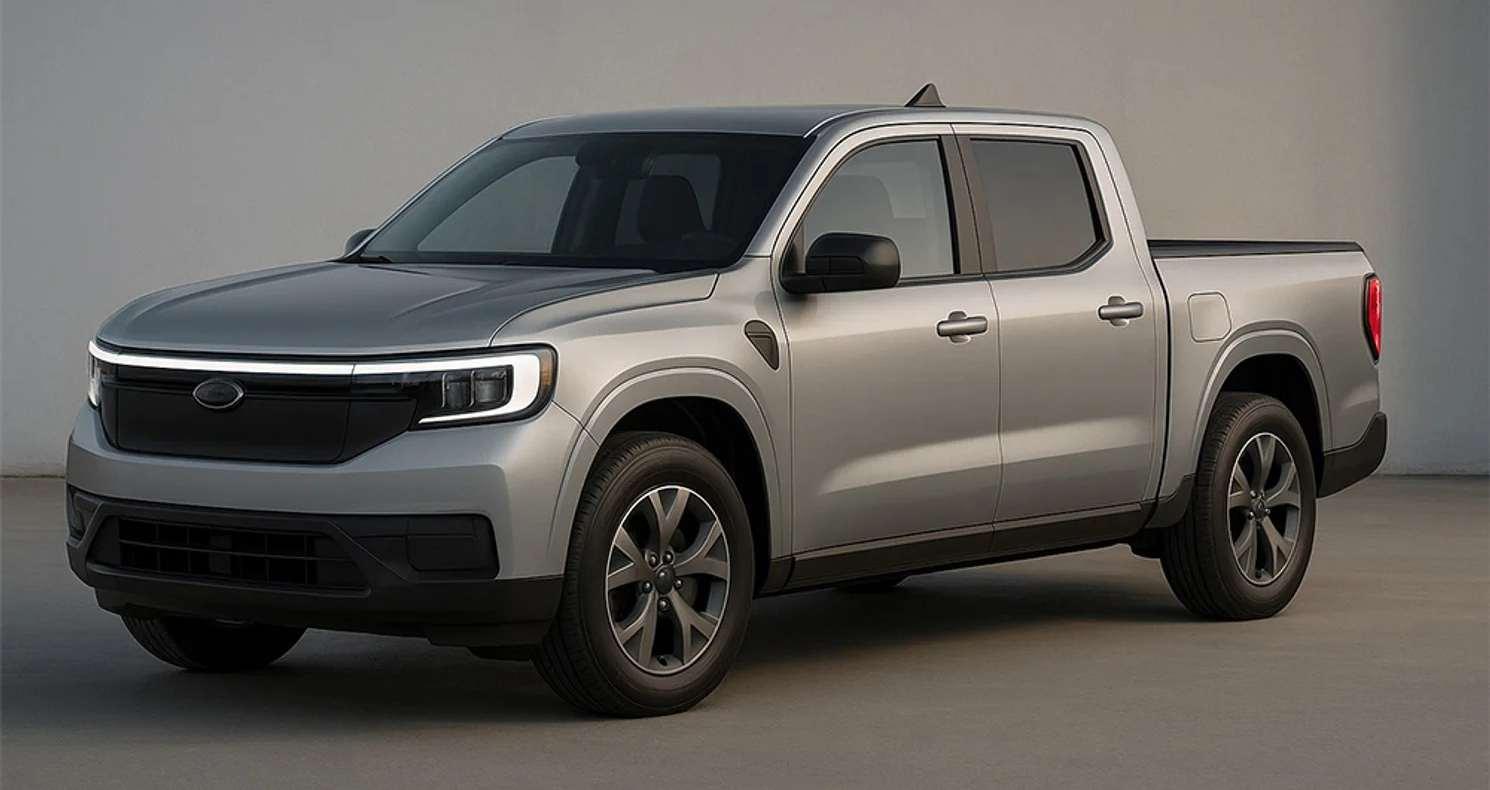

Ford's long-rumoured small electric ute is moving from concept to road. Prototypes have been spied testing in California, heavily camouflaged, and the early details suggest the Blue Oval is building exactly the kind of lifestyle ute the Australian market is starting to ask for. Expected to wear the Ranchero name, the new ute is due in 2027 and sits on a brand-new low-cost EV platform Ford has been quietly developing for two years.
Here's what we know, what we don't, and why Australian ute buyers should be paying attention even though the launch is more than 18 months away.
The car that's coming
The spy shots show a dual-cab body smaller than the existing Maverick, which itself is one size below the Ranger. The tray is closer to a Holden Commodore or Ford Falcon ute footprint than to a HiLux or Ranger tray. That's a deliberate positioning choice. Ford isn't building this car to compete with the dual-cab workhorse segment. It's building it for buyers who used to choose a Falcon ute for the lifestyle, not the load.
The biggest engineering change is the move away from a ladder-frame chassis. The new ute is being built on a unibody EV platform with SUV-style dynamics. That means it won't be a heavy-hauler or a rock crawler. It's an urban workhorse designed to carry timber, surfboards, bikes and tools rather than a boat or a caravan.
Ford has assembled a dedicated "skunkworks" team in California to develop the underlying low-cost EV platform that will underpin the Ranchero. Ford boss Jim Farley described the team last year: "We recruited the most technically skilled and creative professionals from inside and outside Ford to drive a radical change in how we develop an electric vehicle. The work of this highly talented team has evolved into a critical enabler of our electric vehicle strategy. These electric vehicles will be lower cost, and not compromised in any way."
The Ranchero is reportedly the first vehicle to launch on this new platform, with other bodystyles to follow.
Why the lifestyle ute segment is getting hot
Ford is not alone here. BYD is preparing the Mako to sit underneath the Shark 6 in its Australian ute lineup, aimed at the same lifestyle buyer. Toyota has been spotted testing a Corolla Cross based ute in South America, with strong rumours of a similar Maverick-rival product for the US market on RAV4 underpinnings.
The pattern is clear. The big established utes (Ranger, HiLux, Triton, Navara, F-150) are still selling but increasingly losing buyers who don't need the tray for actual work. Those buyers are moving back toward smaller, more efficient lifestyle utes that fit in suburban driveways, sip fuel, and don't punish daily-driving comfort the way a dual-cab does.
For Australia specifically, this segment has been empty since the death of local manufacturing took the Falcon and Commodore utes with it. Importers haven't replaced that buyer type. The Ranchero, if Ford prices it right and brings it to right-hand drive, could revive a category that hasn't existed here in nearly a decade.
Where this leaves the Ranger
The new Ranchero will not replace the Ranger. They're different cars for different buyers. The Ranger continues to dominate the dual-cab segment for tradies, fleets, and tow-load buyers. The Ranger PHEV is Ford's electrified play in that segment and has its own update due in 2026. Ford is unlikely to discontinue either car to make room for the Ranchero.
What the Ranchero does is fill a hole at the bottom of Ford's ute lineup that lifestyle buyers currently leave entirely. A buyer who wants a ute for surfboards and a kayak rack, not a 3.5-tonne tow rating, is currently being pushed up to a Ranger or sideways to an SUV. Neither answer is right. The Ranchero is the better answer.
Australian availability and pricing
Ford has not confirmed the Ranchero for Australia. The Maverick has been on Ford's tease list for years without arriving locally, partly because of right-hand drive engineering cost and partly because Ranger sales have been too important to disturb.
The difference with the Ranchero is the new platform. Building right-hand drive is easier when the platform is being engineered from a clean sheet rather than retrofitted. Ford has also said the new low-cost EV platform is targeting global markets including Europe, which means right-hand drive engineering is on the table from the start.
Indicative pricing in the US is expected to start in the high US$20,000s to low US$30,000s, which translates loosely to AU$40,000 to AU$50,000 once duties, GST and dealer margin are layered on. If Ford lands the Ranchero in Australia at that price point in 2027, it will be one of the most disruptive ute launches in a decade.
What buyers should do now
For Australian buyers eyeing the lifestyle ute segment over the next two to three years:
First, the Ranchero is two years away even in best-case scenarios. If you need a ute right now, the current options remain the dual-cab Ranger, the BYD Shark 6, the HiLux (including the BEV variant landing Q1 2026), and the Ranger PHEV. None of these are direct Ranchero competitors, which is the point.
Second, watch the BYD Mako closely. It's the closest Chinese rival to the Ranchero on positioning and is expected to launch in Australia ahead of the Ford. If you genuinely want a lifestyle ute, the Mako may be your first real option.
Third, expect dealer urgency on bigger utes through 2027 as the Ranchero category begins to consume share. Buyers shopping a current Ranger or F-150 should see better pricing flexibility as the lifestyle ute segment opens up.
You can compare current Ranger, Ranger PHEV, HiLux and BYD Shark 6 pricing on Carseekers to see where the segment sits today before the Ranchero generation arrives.
The lifestyle ute is back. Ford is one of the bigger names betting on it. Whether the Ranchero name actually lands in Australia is still a question, but the underlying car looks like the most credible attempt yet to bring this segment back to life.
Considering finance for your next car? Loanseekers can help you explore car loan options.
The finer details
Your questions answered.
When does the Ford Ranchero launch?
Ford's new small electric ute, expected to wear the Ranchero name, is due to launch in 2027. The car is being built on a new low-cost EV platform developed by Ford's California skunkworks team, with other bodystyles to follow on the same platform.
Will the Ford Ranchero come to Australia?
Ford has not confirmed the Ranchero for Australia, but the new EV platform is being engineered from the ground up for global markets including Europe, which makes right-hand drive engineering significantly easier than retrofitting an existing platform. Australian availability is more likely than for the existing Maverick.
How does the Ford Ranchero compare to the Ranger?
The Ranchero is significantly smaller than the Ranger, with a tray closer in size to the old Holden Commodore or Ford Falcon utes. It uses a unibody EV platform with SUV-style dynamics rather than a ladder-frame chassis, which means it's not designed for heavy hauling or rock crawling. It targets lifestyle buyers, not tradies.
How much will the Ford Ranchero cost in Australia?
Ford has not confirmed Australian pricing. Indicative US pricing is expected to start in the high US$20,000s to low US$30,000s. Loosely translated for Australian duties, GST and dealer margin, that suggests an AU$40,000 to AU$50,000 entry price if Ford brings the Ranchero here in 2027.
Will the Ford Ranchero replace the Ranger?
No. The Ranger and Ranchero are different cars for different buyers. The Ranger continues to dominate the dual-cab segment for tradies, fleets and tow-load buyers, with a PHEV update due in 2026. The Ranchero fills a smaller-lifestyle-ute hole at the bottom of Ford's ute lineup that's currently empty.
What rivals does the Ford Ranchero face in Australia?
The closest rival is the BYD Mako, due in Australia underneath the existing Shark 6 ute. Toyota is also testing a Corolla Cross based small ute in South America, and a related larger model based on the RAV4 has been hinted at for North America. The lifestyle ute segment will get crowded fast.