A new study commissioned by Supercheap Auto and conducted by market research firm YouGov has put a hard number on something most Australian mechanics have been seeing in their workshops for the past two years. 64 per cent of drivers have skipped or are considering skipping routine vehicle maintenance because of cost pressures, and most of them are convinced their cars are still safe to drive.
The data is uncomfortable, particularly the gap between actual roadworthiness and driver confidence in that roadworthiness. Carseekers thinks the numbers are worth a close read for any Australian driver currently weighing whether to skip a service to cover this week's grocery bill.
The headline numbers
43 per cent of survey respondents cited financial constraints as the reason for delaying or skipping car servicing. That is unsurprising on its own. Cost-of-living pressures have squeezed household budgets across the country, and a $400 to $700 vehicle service is exactly the kind of discretionary spend that gets pushed three or six months down the road.
The more alarming finding is the confidence gap. Two out of five owners who delayed or skipped maintenance still rated themselves as very confident their vehicles remained safe to drive. For drivers who only carry out corrective work (fixing things after they break, rather than scheduled preventative maintenance), that confidence figure rises to 49 per cent.
One in three of those corrective-only drivers admitted to actually experiencing issues caused by skipping preventative care. The other two-thirds presumably either had not yet hit a failure point, or had attributed problems to other causes.
Why confidence is the wrong metric
Driver Safety Australia managing director Russel White summed up the issue cleanly. "Confidence doesn't equal roadworthiness, and when basic maintenance is ignored, the risks can be serious."
That is exactly the right framing. The most dangerous failure modes in modern cars rarely announce themselves before they happen. A failing brake hydraulic line does not warn you. A worn tyre that has dropped below 1.6mm of tread does not warn you. A failing thermostat that lets the engine overheat on a 40-degree day in the Hume Highway median does not warn you.
Drivers who have not had a problem yet conclude their car is fine. The car is not fine. It is simply still working, which is not the same thing.
The categories that genuinely matter
Not every aspect of a scheduled service is equally critical to roadworthiness. If you are budgeting tightly, the following items should be non-negotiable.
Tyres. Tread depth, sidewall condition and pressure are checked at every service for a reason. A tyre below 3mm of tread loses braking performance in the wet, and the legal minimum of 1.6mm is dangerously inadequate in rain. If your tyres have not been checked in twelve months, get them checked tomorrow.
Brakes. Brake pads, rotors and brake fluid all deteriorate. Spongy pedal feel or grinding noises are late warning signs that a failure is already in progress. Brake fluid should be flushed every two years regardless of how the car feels.
Oil. Engine oil is the single cheapest piece of preventative maintenance with the largest downstream cost if you skip it. Modern long-life synthetic oils tolerate longer intervals than the old 5,000km service schedules, but they do not tolerate being ignored for two or three years. A seized engine bill will dwarf a decade of servicing costs.
Coolant. Cooling system condition is often overlooked, particularly on older cars. Australian summers are punishing on cooling systems, and a failed thermostat or pump on the open highway in February will cook an engine within minutes.
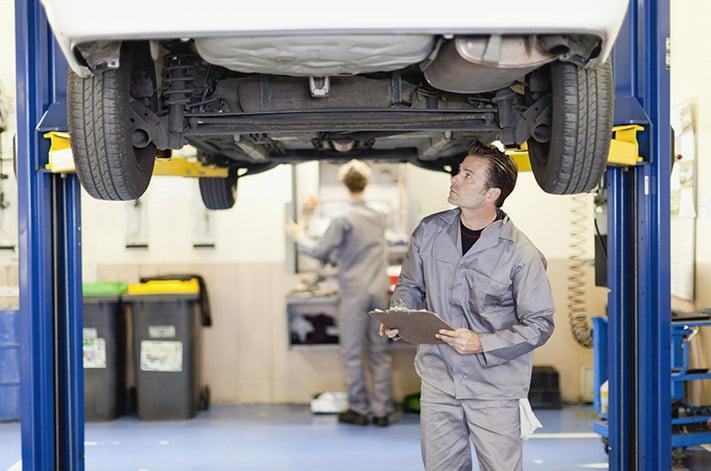
If money is genuinely tight, talk to your mechanic about a safety-focused inspection rather than a full scheduled service. A reputable workshop will check the critical items for $80 to $150 and flag what genuinely needs attention versus what can defensibly wait another six months.
Where dealers and independents differ
27 per cent of vehicle owners surveyed reported that they found the cost of servicing or parts too high. That number is at least partly a function of dealership pricing.
A capped-price service from a dealer typically runs between $300 and $700 depending on brand, model and how complex the service is. The same labour at a reputable independent workshop can come in 30 to 50 per cent cheaper, particularly on cars that are out of warranty and no longer need genuine parts for warranty preservation reasons.
Under Australian Consumer Law, you do not lose your manufacturer warranty by servicing at an independent shop, provided the work is done to manufacturer specification with appropriate-quality parts and the service intervals are met. That is worth understanding, because many dealers will imply or outright state otherwise.
For a car that is more than five years old and out of warranty, an independent specialist for your brand is almost always the better cost equation. For a car still under warranty, the dealer service is the safer choice for warranty preservation, but you should be comparing capped-price quotes across dealers in your area rather than defaulting to the closest one.
Insurance is the silent risk
The other factor most drivers do not think about when skipping a service is what happens at claim time. Australian comprehensive insurance policies typically require that the vehicle is kept in roadworthy condition. If you have an accident in a car with bald tyres, failed brakes, or other clearly neglected mechanical issues, an insurer can and sometimes does reduce or reject a claim.
That is not common, but it does happen. A $400 service that fixes worn brake pads is meaningfully cheaper than a $40,000 claim that an insurer partially refuses to pay because the contributing failure was preventable.
The fuel cost trade-off
7 per cent of survey respondents reported that they were prioritising their overall transport budget to cover fuel expenses. That is a particularly difficult trap, because skipping services often means a car that is less fuel efficient, which compounds the cost pressure that drove the skipping in the first place.
A poorly-tuned engine with dirty air filters, worn spark plugs (on petrol cars), or running on degraded oil can easily use 5 to 10 per cent more fuel than a well-maintained example. On a 15,000km annual driving habit, that is between $200 and $400 a year in extra fuel, which is roughly what a small annual service costs.
The maths is uncomfortable but real. Skipping the $400 service to save money often costs you $300 to $400 a year in extra fuel anyway, plus the long-term cost of accelerated wear on the bits you stopped maintaining.
What buyers should actually do
First, do not skip the service entirely. Talk to your mechanic about prioritising the critical safety items if the full scheduled service is genuinely beyond reach this month.
Second, get a written safety inspection rather than relying on your own assessment. A professional sees things your dashboard does not show you.
Third, if you are still under capped-price servicing with a manufacturer, shop the price across multiple dealers in your area before booking. Capped-price servicing is a ceiling, not a fixed quote. Some dealers will offer discounted rates on capped-price services to retain you for future work.
Fourth, if you are out of warranty, find an independent specialist for your brand. The savings are real, the work is often better, and you keep your full consumer-law rights to manufacturer warranty support on any items still covered.
The Carseekers view
The Supercheap data is a flashing warning light, not just a cost-of-living story. The cars Australians are driving today are more complex than the cars of even a decade ago, and modern vehicle electronics, hybrid drivetrains and advanced driver assistance systems all need maintenance to function correctly.
A bald tyre, a degraded brake fluid, or a failed thermostat will not warn you before they bite. The cheapest insurance against that is a $400 service that may genuinely save your life, your insurance claim, or someone else's.
If money is genuinely tight, talk to a mechanic you trust. Most will work with you to prioritise the critical items. What none of them will do is tell you the car is safe when it is not.
Considering finance for your next car? Loanseekers can help you explore car loan options.
The finer details
Your questions answered.
How many Australians are skipping car servicing in 2026?
According to a new Supercheap Auto and YouGov study, 64 per cent of Australian drivers have skipped or are considering skipping routine vehicle maintenance. Financial constraints were cited by 43 per cent of those respondents as the reason for delaying or avoiding servicing.
Will I lose my new car warranty by servicing at an independent mechanic?
No. Under Australian Consumer Law, your manufacturer warranty remains valid as long as work is done to manufacturer specification with appropriate-quality parts and the service intervals are met. Dealers sometimes imply otherwise, but the law is on your side.
Which car service items are most critical for safety?
Tyres (tread depth, pressure, sidewall condition), brakes (pads, rotors, fluid), engine oil and coolant are the four non-negotiable items. If your budget is tight, ask your mechanic for a safety-focused inspection of just these items rather than skipping the workshop entirely.
Can my insurer reject a claim if my car has not been serviced?
Yes, it is possible. Australian comprehensive insurance policies typically require the vehicle to be kept in roadworthy condition. If neglected maintenance contributed to an accident, an insurer can reduce or refuse a claim. It is uncommon but it does happen, particularly for clearly preventable failures.
How much can skipping a service cost me in extra fuel?
A poorly maintained engine can use 5 to 10 per cent more fuel than a well-serviced equivalent. On 15,000km of annual driving, that is roughly $200 to $400 a year in additional fuel cost, which often offsets the savings from skipping a basic service in the first place.
Is it cheaper to service at a dealer or an independent workshop?
While the car is under warranty, dealer servicing is usually the safer choice for warranty preservation. Once out of warranty, an independent specialist for your brand can be 30 to 50 per cent cheaper for the same work. Always compare capped-price service quotes across dealers in your area before booking.