Toyota has axed another upcoming electric vehicle. The latest is the Lexus LF-ZC sedan, which would have been a key premium EV for the luxury arm just as Chinese rivals are landing premium-positioned electric cars by the dozen. The cancellation leaves Toyota even more exposed at the top of the EV market and raises an obvious question for Australian buyers: is Toyota stumbling, or is there a plan underneath the headlines?
The short answer is that Toyota almost certainly has a plan, and a fair part of it runs through joint ventures in China most Australian buyers haven't heard of yet. Here's how to read what the world's biggest carmaker is actually doing.
How Toyota got here
In 2021 Toyota stood up at a global press event and committed to launching 30 new EVs by 2030. Three and a half years from the deadline, the brand has launched about three and a half: the bZ4X, the bZ4X Touring, a Chinese-market electric HiLux, and the C-HR EV. That's a meaningful gap between commitment and delivery.
The reason is a strategic pivot. Two years ago Toyota looked at the global EV market, decided that adoption was slower than the early projections suggested, and shifted resources back into hybrid powertrains where it had pioneered the segment. Toyota Australia's former vice president of sales Sean Hanley said it plainly in early 2025: "The plain truth is that demand for battery electric vehicles in markets around the world is not living up to the hype."
For a while that call looked right. Hybrid sales boomed globally, RAV4 and Corolla Hybrid kept selling in record numbers, and EV penetration plateaued in several major markets. Toyota saved itself an estimated A$100 billion of EV development capex by delaying.
The fuel crisis flipped the script
March 2026 changed everything. The Iran conflict, the Strait of Hormuz blockade, and the resulting collapse of oil and refined fuel supply through the channel sent petrol and diesel prices climbing. Australia, which imports refined fuel from countries like Malaysia that depend on Middle Eastern crude, was particularly exposed.
The consumer response was sharp. Australian EV sales for cars (sedans and hatches), which had been down 61.9 per cent year-on-year in January 2025, swung to up 77.4 per cent. EV SUV sales swung from down 12 per cent to up 150 per cent. That's not a gentle drift back to EVs. That's the kind of demand pulse that resets product strategy.
And yet Toyota keeps cancelling EVs. The Lexus LF-ZC is the most recent. Earlier in 2025 the brand quietly de-scoped several of its planned bZ-series cars. The pattern looks like a brand that misjudged the market and is now too slow to recover.
Three plays Toyota may actually be running
The more interesting reading is that Toyota knows exactly what it's doing and is positioning for three possible outcomes.
First, the bet that EV demand is a fuel-crisis spike rather than a permanent reset. Toyota likely believes consumers will return to hybrids once the conflict eases and petrol pricing stabilises. This is the most likely scenario, but it has a flaw. Buyers who switched to EVs because of the fuel crisis aren't switching back to petrol with the same casualness as before. The fuel crisis has become a catalyst, not a transient event.
Second, the bet on solid-state battery breakthrough. Toyota has spent years signalling that solid-state batteries are coming and could leapfrog the current EV chemistry on cost, range and charging speed. The trouble is that Chinese battery makers like CATL, and carmakers like Chery and BYD, are reportedly testing solid-state cells in prototypes already. Recent Toyota commentary has even cast doubt on whether the technology will ever reach mass production in the form originally promised. If the solid-state breakthrough comes from a Chinese supplier first, the Toyota plan needs a Plan C.
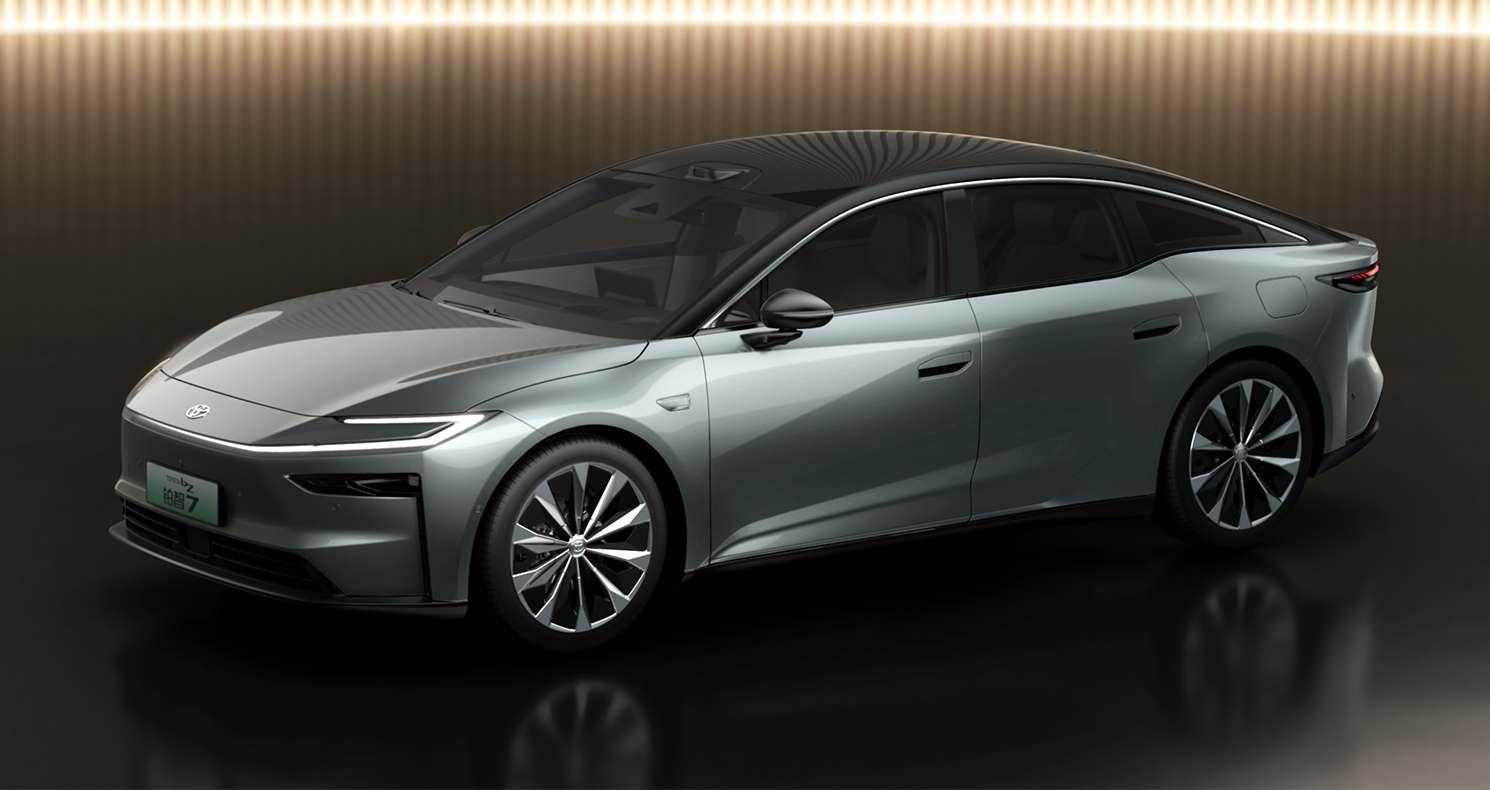
Third, and most pragmatically, the China joint-venture play. Toyota has two major Chinese partners: Guangzhou Automobile Group (GAC) and First Automotive Works (FAW). The Toyota-GAC joint venture is producing Chinese-market versions of the bZ3X, bZ4X, and the new bZ7 fastback. The bZ7 in particular is one of the better-looking Toyotas of the past decade, which is a low bar given the brand's reputation for whitegoods-on-wheels styling, but a real strategic asset.
The play is straightforward. Toyota uses its global manufacturing reach and its Chinese partnerships to source EVs designed and built in China, and exports them to markets like Australia under the Toyota badge. The cars would land with Chinese cost economics and modern Chinese EV tech, but with Toyota dealer support, warranty network and brand trust.
What Toyota Australia is signalling
The local team is starting to telegraph this strategy. The new Toyota Australia vice president of sales John Pappas has talked openly about Toyota's global footprint as an asset. "The beautiful thing, the benefit of being such a global company like Toyota, and being in around 180 markets all around the world, and having so many manufacturing plants, that enables us to assess whether it's sourcing of the vehicle, spec, powertrain."
That's executive language for "we will buy our way back into competitiveness on EVs, including by sourcing Chinese-built Toyotas if that's what the market needs." It's a notable shift from the more cautious tone of the previous administration.
What buyers should do right now
For Australian buyers shopping electric in 2026, the practical takeaways are:
First, don't write off Toyota's EV range entirely. The bZ4X is now reasonably priced after a quiet update, and the C-HR EV gives Toyota a credible small-SUV EV. They're not class-leading, but they're competitive and supported by Australia's strongest dealer network.
Second, expect more Toyota EVs to arrive than the cancellation headlines suggest. The brand will plug gaps with Chinese joint-venture product over the next 18 to 24 months. If you can wait, the most interesting Toyotas of the late 2020s may turn out to be the ones built in Guangzhou.
Third, the hybrid Toyotas remain the safe Australian buy. The RAV4 hybrid still dominates the mid-size SUV segment for a reason. The Toyota Corolla hybrid and Camry hybrid both continue to deliver strong fuel economy at retail pricing that's hard to beat. Buyers who want a Toyota and don't strictly need an EV can keep buying hybrid without worrying about being on the wrong side of strategy.
Fourth, watch the cross-shop carefully. The fuel crisis has narrowed the gap between Toyota hybrid running costs and EV running costs for low-kilometre drivers. For high-kilometre drivers, the EV economics now beat Toyota hybrid by a wider margin than they did a year ago. Run the actual numbers for your driving profile before committing.
You can compare current Toyota hybrid and EV prices alongside the Chinese rivals on Carseekers before talking to a dealer, which is the cleanest way to test what Toyota's local strategy actually means for your wallet.
The bigger picture
Toyota is not finished as an EV maker. It's playing for time, hedging against a transient EV demand spike, and quietly setting up the option to flood Australia with Chinese-built Toyota EVs if that's what the market demands. The Lexus LF-ZC cancellation looks like weakness. It's more likely a recognition that the next round of Toyota EVs needs to come from a different production base.
The brand has been written off before. Each time, the world's biggest carmaker has reorganised, absorbed the lessons and come back stronger. Australian buyers should expect the same now. The interesting question is which Toyota EV badge you'll see in showrooms two years from now, and which Chinese factory it came out of.
Considering finance for your next car? Loanseekers can help you explore car loan options.
The finer details
Your questions answered.
Why is Toyota cancelling EVs in 2026?
Toyota's stated reason is that EV demand has not lived up to early projections, leading the brand to redirect investment into hybrid powertrains where it has a market lead. The cancellations have continued even after the March 2026 fuel crisis surged EV demand again, suggesting Toyota expects the spike to fade or is repositioning to source future EVs from Chinese joint ventures.
Will Toyota sell Chinese-built EVs in Australia?
It's increasingly likely. Toyota has two major Chinese joint ventures, with GAC and with FAW, producing cars like the bZ3X, bZ4X and the new bZ7 fastback. The new Toyota Australia sales chief John Pappas has talked openly about using Toyota's global manufacturing network to source product, which is executive language for Chinese-built Toyotas appearing in Australian showrooms.
How is the fuel crisis impacting EV demand in Australia?
Australian EV car sales swung from down 61.9 per cent year-on-year in January 2025 to up 77.4 per cent in 2026. EV SUV sales swung from down 12 per cent to up 150 per cent. The pulse is the largest in EV history domestically and reflects the impact of the Strait of Hormuz blockade on petrol and diesel pricing.
Should I buy a Toyota bZ4X in 2026?
The bZ4X is now a competitive small-to-mid EV in Australia after a quiet update and some price discipline, supported by the country's strongest dealer network. It's not class-leading on range or charging speed, but it's a safe, well-supported buy at a reasonable price. Heavy EV users may want to look at the Kia EV3 or BYD Sealion 7 for a sharper tech package.
Will Toyota's solid-state battery save the brand's EV strategy?
Probably not in the form originally promised. Chinese battery makers like CATL and carmakers like Chery and BYD are reportedly already testing solid-state cells in prototypes, and recent Toyota commentary has cast doubt on whether the technology will reach mass production in the form Toyota first signalled. The breakthrough may arrive from China first.
Is the Toyota RAV4 hybrid still a safe buy in 2026?
Yes. The RAV4 hybrid remains the default mid-size family SUV in Australia for a reason and still beats most Chinese rivals on resale and dealer support. The fuel crisis has narrowed the running-cost advantage versus EVs for high-kilometre drivers, but for typical suburban family use the hybrid RAV4 is still one of the smartest buys in the segment.