Solid-state batteries have been the 'five years away' technology in automotive circles for over a decade. Every year, some combination of manufacturer announcement and trade publication coverage promises the breakthrough is imminent. BYD, the world's largest EV maker by volume, has just delivered the most credible counterargument yet: its existing lithium-ion Blade battery is already good enough that solid-state may not be needed for mass-market EVs in the near term.
Stella Li, executive vice president of BYD Auto, made the statement plainly in an interview with international media: "At this point in time, our second-generation Blade battery is much better in terms of efficiency and cost. I don't think that solid-state is ready for the mass market yet."
For Australian buyers evaluating their first EV purchase — or planning their next — this assessment carries weight. BYD is not a small player hedging against technology risk. It manufactures more EVs than any other company on Earth.
What Solid-State Batteries Actually Offer
Understanding why BYD's claim matters requires understanding what solid-state batteries are supposed to deliver.
Conventional lithium-ion batteries use a liquid electrolyte to carry charge between the positive and negative terminals. Solid-state batteries replace that liquid with a solid material — typically ceramic, glass, or a polymer compound.
The theoretical advantages are significant: double the energy density of conventional lithium-ion cells by weight, better temperature stability (which reduces the risk of thermal runaway), and higher charge rate tolerance. In a car, those advantages translate to longer range for the same battery weight, faster charging, and potentially better safety in severe conditions.
The commercial problem is cost. A recent Bloomberg report put the cost of conventional lithium-ion batteries manufactured in China at approximately A$117 per kilowatt-hour. Solid-state packs, according to battery manufacturer Sunwoda, still cost around A$391 per kilowatt-hour — more than three times higher. No manufacturer has yet shipped a genuine production solid-state battery in any automotive application.
BYD's Counter-Argument: Flash Charging
BYD's strategic response to solid-state's appeal is to make its existing Blade battery technology good enough that the advantages of solid-state become redundant for most buyers.
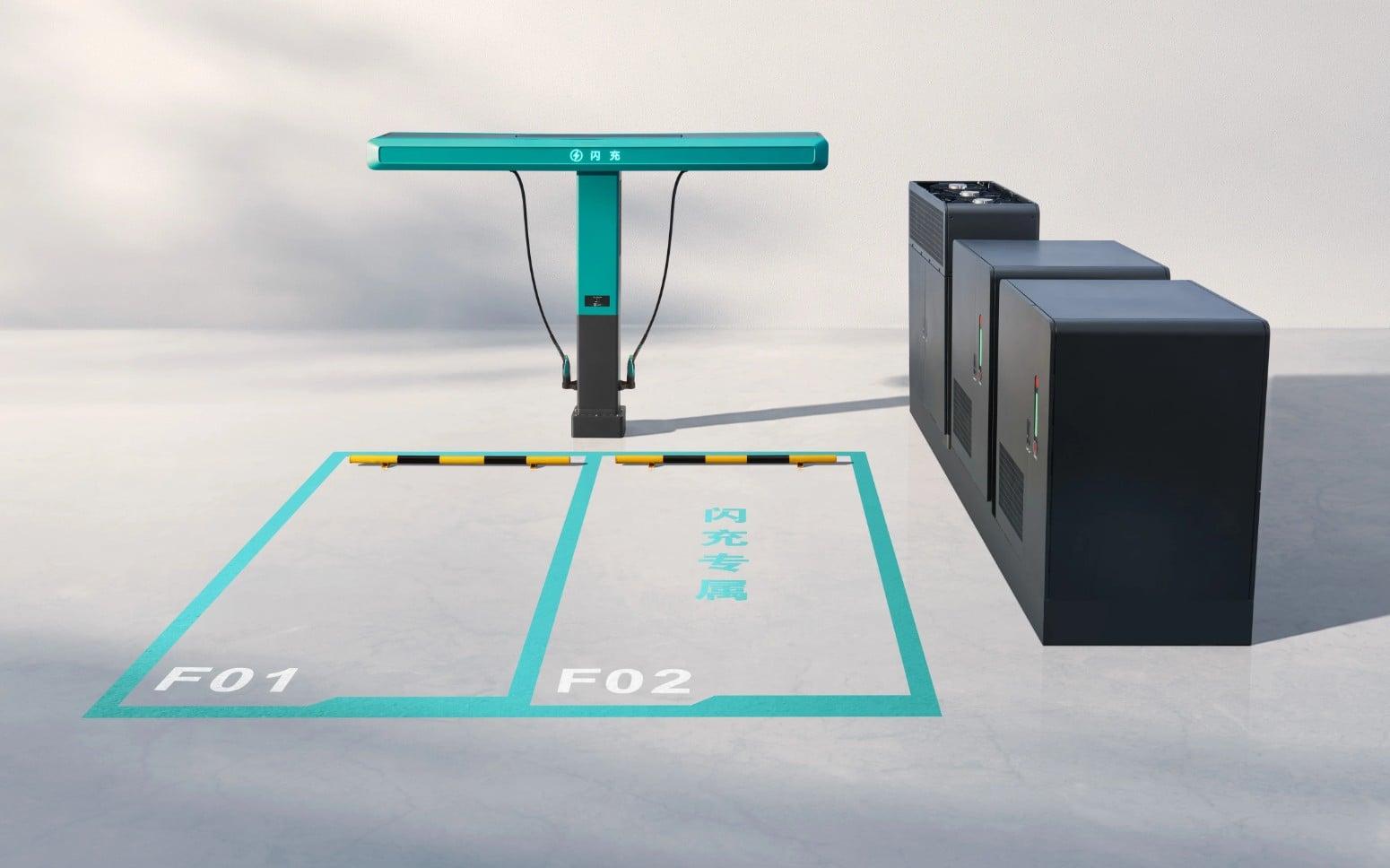
The Flash Charging network is the centrepiece of that response. BYD has unveiled chargers capable of up to 1500kW in China, with global rollout planned. The speed: 10 to 97 per cent charge in approximately nine minutes, or 70 per cent in five minutes.
For context, 1500kW is nearly four times faster than typical existing rapid chargers and approaches the theoretical charging advantages that solid-state battery chemistry would enable. If a buyer can charge their existing lithium-ion EV in nine minutes, the practical benefit of a different chemistry that might charge in six minutes becomes marginal.
BYD's argument, stripped down: close the performance gap on charge speed using infrastructure, not chemistry, and the cost advantage of conventional lithium-ion persists.
What CATL Is Doing
BYD isn't the only Chinese battery giant making moves that affect the solid-state conversation. CATL — the world's largest battery manufacturer by capacity — has recently announced batteries compatible with 3000kW charging rates and featuring higher energy density.
Critically, CATL's new cells achieve this without solid-state chemistry. Instead, CATL has developed viable sodium-ion chemistry that it says will enter production before the end of 2026. Sodium-ion batteries use a different ionic carrier than lithium-ion cells and can be manufactured more cheaply at scale.
The collective message from both BYD and CATL is consistent: the future is not necessarily solid-state. It's better lithium-ion and adjacent chemistries, supported by faster charging infrastructure, at much lower cost.
What Chinese Manufacturers Are Still Doing with Solid-State
Not all Chinese manufacturers are walking away. Changan, Chery, and Dongfeng all claim to be in testing phases with solid-state battery technology. SAIC and Nio have already introduced semi-solid-state batteries as a bridging technology between conventional lithium-ion and true solid-state.
So the picture is more nuanced than 'solid-state is dead'. It's that the commercial viability gap — three times the cost versus lithium-ion — means solid-state remains a niche and premium technology for now. BYD and CATL are betting that closing the charge speed gap through infrastructure and improved cell chemistry is a faster path to mass-market value than waiting for solid-state costs to fall.
What This Means for Australian EV Buyers
For anyone considering an EV purchase in 2026, the immediate takeaway is straightforward: do not wait for solid-state batteries to come to market before buying. The technology is not arriving in mainstream price brackets within the next two to three years.
The more relevant battery developments to track are charging speed infrastructure — specifically, whether ultra-fast chargers like BYD's Flash network reach Australia — and continued energy density improvements to conventional lithium-ion cells, which are producing longer real-world range with each product generation.
BYD's lineup in Australia, including models powered by Blade battery technology, already represents the state of the art in mass-market EV chemistry. Carseekers can help you compare current EV options across the Australian market and understand which models offer the best real-world range and charging compatibility for your driving patterns.
Considering finance for your next car? Loanseekers can help you explore car loan options.
The finer details
Your questions answered.
Should I wait for solid-state batteries before buying an EV in Australia?
No. Solid-state batteries are not arriving in mainstream price brackets within the next two to three years. BYD — the world's largest EV maker — has said its second-generation Blade battery outperforms solid-state on cost and efficiency for mass-market use. Current lithium-ion EVs are improving significantly with each generation.
What are solid-state batteries and why are they important?
Solid-state batteries replace the liquid electrolyte in conventional lithium-ion cells with a solid material. The theoretical benefits include double the energy density by weight, faster charging, and better thermal stability. The commercial problem is cost — currently more than three times higher than conventional lithium-ion cells — and no manufacturer has shipped a true solid-state production car battery yet.
What is BYD's Flash Charging and when is it coming to Australia?
BYD's Flash Charging network offers up to 1500kW of charging power in China, capable of charging a compatible vehicle from 10 to 97 per cent in approximately nine minutes. BYD has indicated global rollout plans, but specific Australian timing and infrastructure locations have not been announced.
How does BYD's Blade battery compare to other EV batteries?
The Blade battery uses lithium iron phosphate (LFP) chemistry in a cell-to-pack design that eliminates module casing to improve energy density. It has strong safety credentials and good thermal stability. The second-generation Blade improves on cost and efficiency, and BYD claims it outperforms solid-state batteries at current commercial production costs.
Is CATL making solid-state batteries?
CATL is not pursuing solid-state for near-term production. Instead, CATL has developed sodium-ion chemistry batteries compatible with 3000kW charging rates, with production entry planned before end of 2026. Both CATL and BYD are pursuing faster charging and higher density through improved conventional and adjacent chemistries rather than solid-state.
Which EV brands use BYD's Blade battery in Australia?
BYD's own models sold in Australia — including the Atto 1, Atto 3, Seal, Sealion 6, and Shark 6 — use Blade battery technology. Some models from other manufacturers also source BYD cells through supply agreements, though BYD Australia vehicles are the most direct way to access Blade battery technology in the local market.