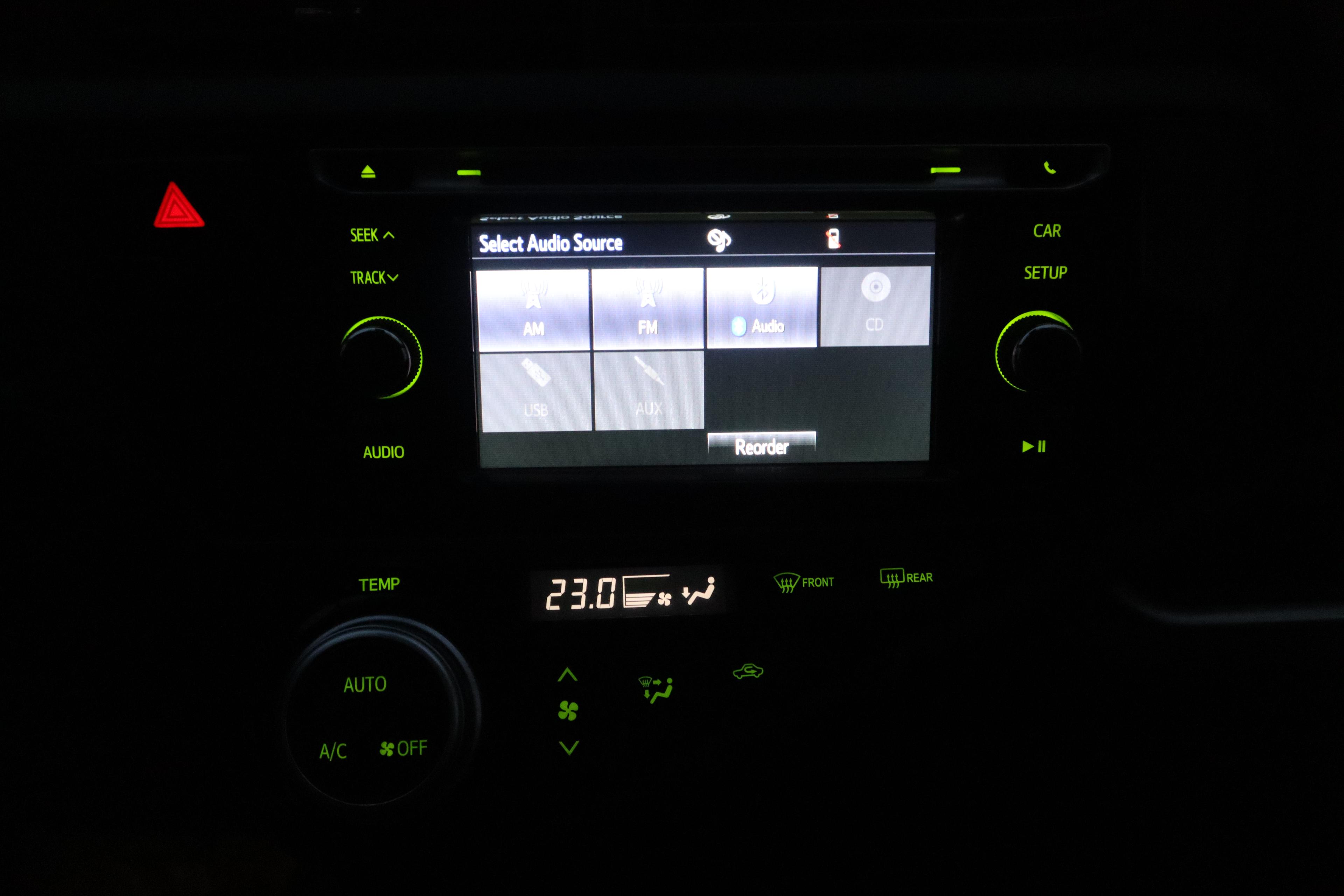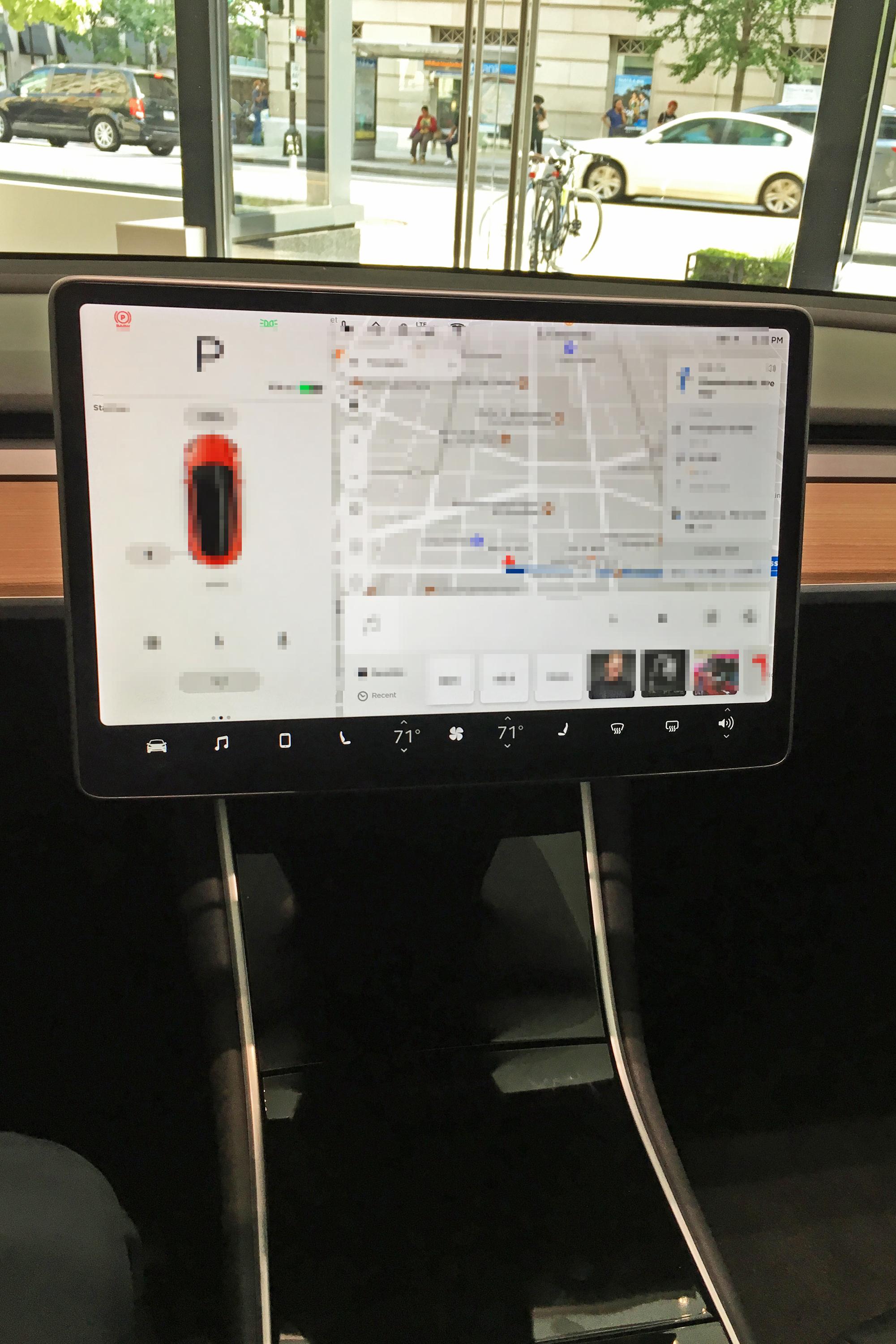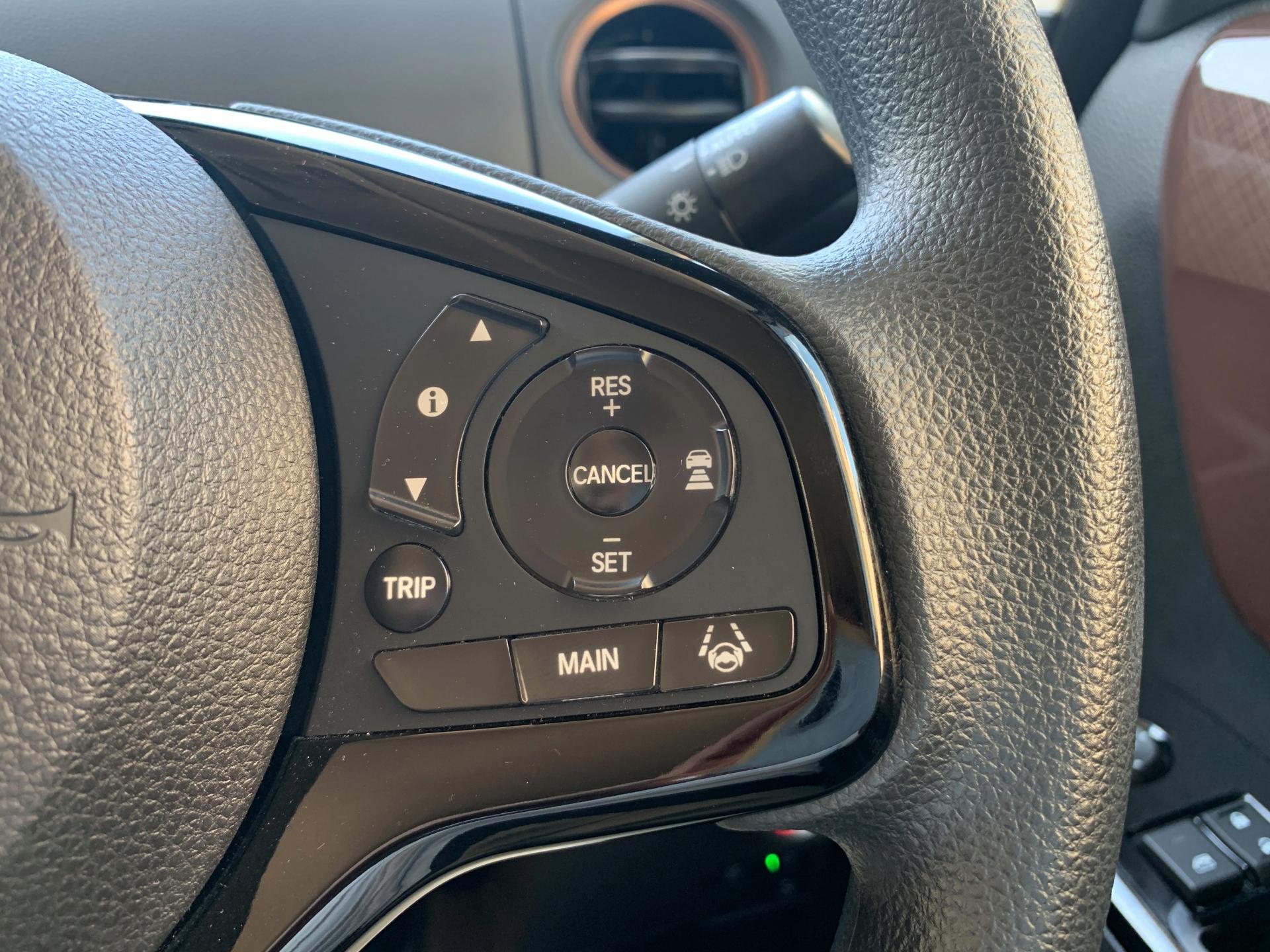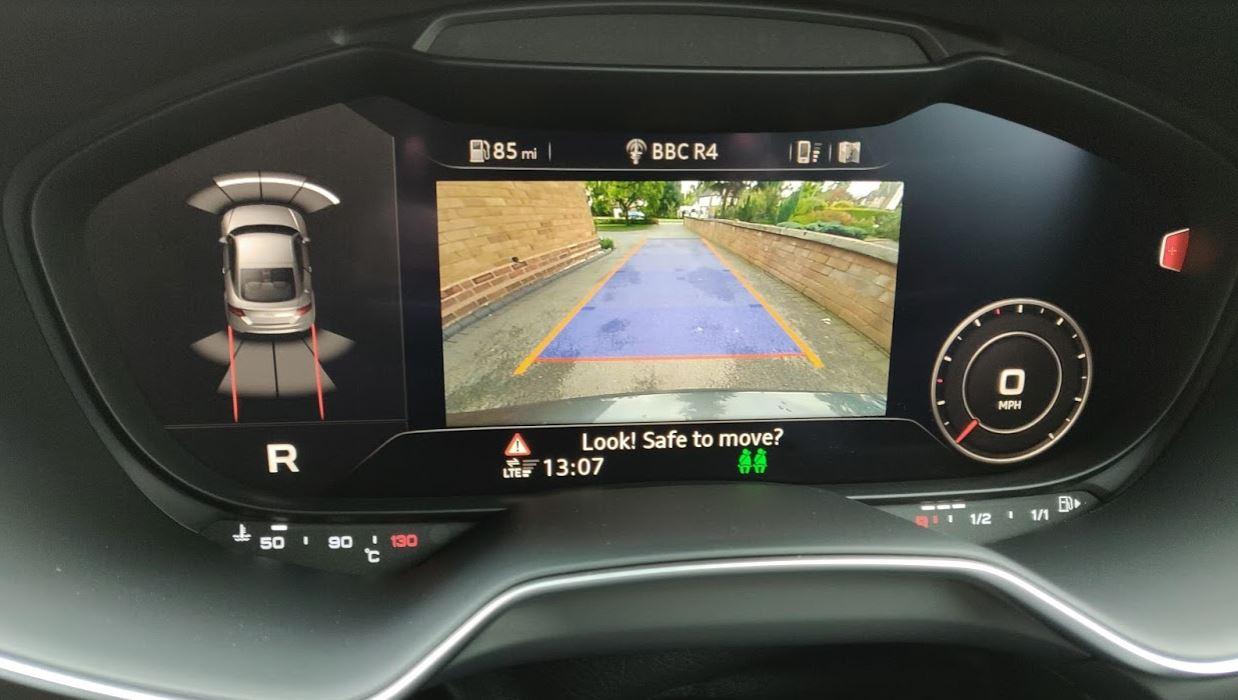

An Audi TT reversing-camera display. Illustrative parking-aid context; it does not replace the driver checking the surroundings. Previews may crop the photograph.
Photo: Badgernet · CC BY-SA 4.0
Car visibility needs checking from your own driving position. Set the seat, steering wheel and mirrors before judging a bonnet line, rear window or parking display.
A camera can add useful information while leaving the driver responsible for checking the surroundings. Tesla's Australian reversing-camera instructions explicitly warn against depending on the camera to establish that the area is clear and say dirty or obstructed lenses can affect performance.
Check direct sightlines while stationary
Use the position in which you would actually drive, including your normal glasses if needed. Check mirror adjustment, over-shoulder views and whether head restraints or the intended passenger arrangement affect what you can see.
Ask where the manual describes blind areas and camera coverage. Do not use the camera picture to assume there is no unseen area around a nearby wheel, bumper or pillar.
Try the regular second driver's seating position too. A car that suits one person's height may need a separate check for the other driver.
Learn what each display actually shows
With the vehicle safely parked, ask the demonstrator to explain camera selection, guide lines, image stitching and any sensors fitted to that exact variant. Identify how to recognise an unavailable or obstructed view.
Read the manual's limitations and cleaning instructions. A screen offering several views is not proof that every obstacle, person or surface will be detected.
Our physical-control discussion is useful for general interface questions. For parking, the relevant task is whether you can understand the information and controls without losing awareness of the surroundings.
Use an ordinary, controlled parking task
Choose a lawful, quiet area with the seller's agreement. Make normal observations and manoeuvre at an appropriate low speed, stopping if uncertain. Use a different empty space rather than forcing a close approach.
Do not position a person behind the car, deliberately approach an object to test braking, or use a child as a visibility target. Ask for professional instruction where the car's size or controls are unfamiliar.
Record three outcomes: direct view acceptable, display understandable, and ordinary parking task manageable. Note conditions not assessed, such as night visibility or a loaded cabin, and arrange a suitable retest if those are essential.
Test your real parking constraints
Measure your garage or usual bay and compare the vehicle's dimensions and door-opening needs from its official specification. Seek permission for any home visit, and keep people clear during movement.
A successful short demonstration is a fit check, not a promise of collision avoidance. Include the exact parking equipment in the written quote. For car-finance information, see Loanseekers after checking the equipment on the written vehicle quote.